When most people hear the word “superhero,” they picture capes, lasers, dramatic landings, and someone saving the world while somehow keeping their hair perfectly windswept. Then the pandemic arrived, looked around, and said, “Actually, the real heroes are wearing scrubs, grocery aprons, delivery uniforms, face masks, teaching headsets, and occasionally pajama pants during a video call.”
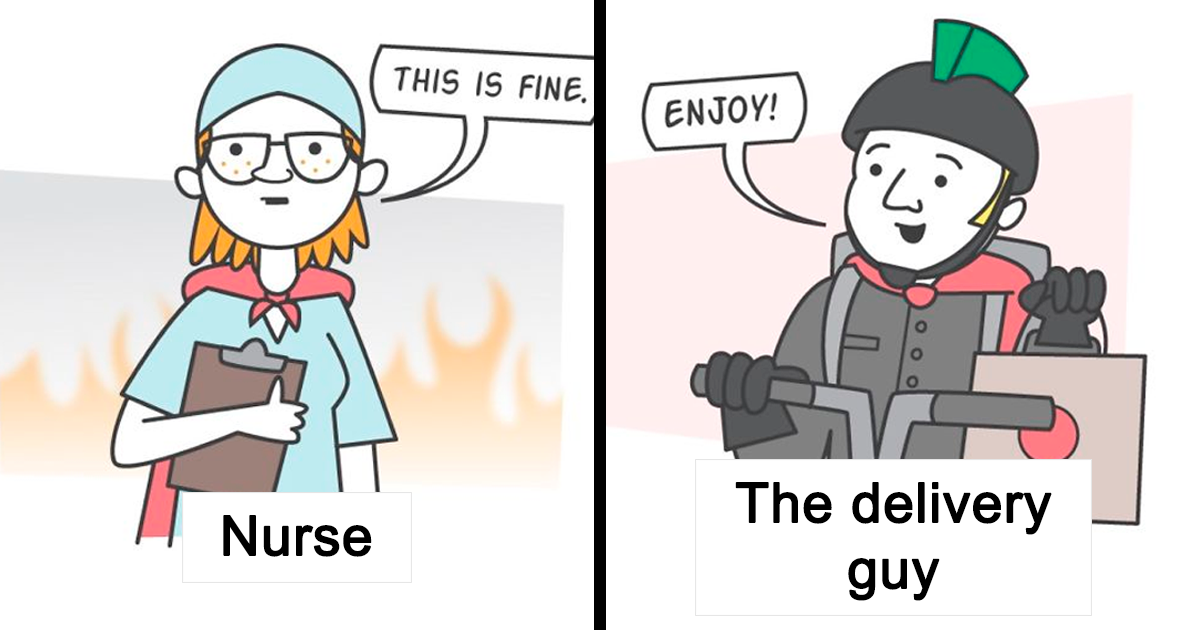
That is what made artist Dustin Rogers’ pandemic superhero comic hit such a universal nerve. Instead of drawing muscular legends from a fictional universe, he highlighted the everyday people who kept communities functioning when normal life suddenly felt like a group project nobody remembered signing up for. His illustrations were funny, warm, and painfully accurate: the pandemic did not need one perfect hero. It needed millions of ordinary people doing small, difficult, useful things.
The idea behind “7 types of superheroes of this pandemic” still matters today because it reframes heroism. You do not need a secret cave, a billionaire budget, or a radioactive spider with suspicious timing. Sometimes being a superhero means staying home when you are sick, delivering medicine to a neighbor, teaching kids through a laptop, checking on an anxious friend, or simply not losing your entire personality in the toilet paper aisle.
Why Pandemic Superheroes Felt So Relatable
The COVID-19 pandemic changed the way people thought about work, safety, community, and responsibility. Suddenly, jobs that were often overlooked became impossible to ignore. Health care workers treated patients in exhausting conditions. Grocery clerks kept shelves moving. Delivery drivers became lifelines. Teachers rebuilt classrooms online. Parents turned kitchen tables into command centers. Public health workers tried to explain risk in a world where everyone had apparently become an amateur epidemiologist after reading three posts on social media.
Art helped people process all of that. A comic can say what a press conference cannot: fear is real, gratitude is necessary, and humor is sometimes emotional duct tape. Rogers’ illustrations worked because they did not turn pandemic workers into distant statues. They made them human. That matters. When we recognize the person behind the mask, uniform, screen, or steering wheel, gratitude becomes more than a polite phrase. It becomes a habit.
The 7 Types Of Pandemic Superheroes
Here are seven pandemic superhero types inspired by the spirit of the original comic and the real-life roles people played during one of the most stressful periods in modern history.
1. The Health Care Defender
The Health Care Defender is the most obvious pandemic superhero, and for good reason. Doctors, nurses, respiratory therapists, EMTs, pharmacists, hospital cleaners, lab technicians, and long-term care staff stood at the front of the crisis when information was changing fast and resources were often stretched thin.
Their superpower was not invincibility. In fact, the opposite made their work heroic. They were tired, worried, and human, yet they continued showing up. They explained frightening diagnoses, comforted families through screens, administered vaccines, managed oxygen, cleaned rooms, filled prescriptions, and carried emotional weight that no cape could hide.
A specific example is the nurse who held a patient’s hand when family could not visit. Another is the pharmacist who calmly answered the same vaccine question for the 400th time without turning into a cartoon thundercloud. These moments were not cinematic, but they were enormous. They reminded us that medicine is not only science; it is service performed under pressure.
2. The Supply Chain Guardian
Before the pandemic, many people gave very little thought to how food, medicine, paper towels, and household basics reached store shelves. Then the supply chain sneezed, and everyone suddenly became deeply emotionally invested in flour, disinfectant wipes, and yeast.
The Supply Chain Guardian includes truck drivers, warehouse workers, farmworkers, food processors, stockers, cashiers, and retail employees. These workers helped keep daily life from completely grinding to a halt. They handled crowded stores, anxious customers, shifting safety rules, and the occasional person who treated a checkout line like the final battle scene of an action movie.
Their power was movement. They kept goods moving when fear made everything feel stuck. Every grocery bag, restocked shelf, and delivered shipment represented many invisible hands. The pandemic taught us that “essential worker” is not a slogan. It is a reminder that comfort depends on labor we often fail to see.
3. The Delivery And Transportation Hero
If the pandemic had a sidekick with four wheels and a GPS app, it would be the Delivery and Transportation Hero. Postal workers, package carriers, rideshare drivers, public transit operators, food delivery workers, and medical transport teams helped connect people to what they needed while many were isolated at home.
They brought groceries to older adults, medicine to vulnerable patients, laptops to remote workers, school supplies to students, and takeout to people who had officially entered the “I cannot cook one more meal” stage of lockdown. Their work was practical, but it was also psychological. A package on the porch could feel like proof that the outside world still existed.
Their superpower was connection. They closed the distance between people and supplies. They helped households stay safer by reducing unnecessary trips. And yes, they also delivered enough banana bread ingredients to suggest that America collectively became one giant bakery with Wi-Fi.
4. The Sanitation And Infrastructure Protector
Every superhero team has a member who does the unglamorous work that keeps everyone else alive. During the pandemic, sanitation workers, janitors, custodians, utility crews, wastewater operators, plumbers, electricians, internet technicians, and maintenance teams played that role.
They kept water running, trash collected, hospitals clean, power steady, and internet connections alive. Without them, remote work would have become “remote panic,” online school would have turned into a frozen-screen tragedy, and every household appliance would have chosen the worst possible time to develop a mysterious noise.
The pandemic revealed how much modern life depends on infrastructure. Clean spaces, safe buildings, electricity, reliable plumbing, waste removal, and broadband access are not background details. They are the stage on which public health happens. The Sanitation and Infrastructure Protector may not always get applause, but society notices immediately when this hero is absent.
5. The Teacher And Caregiver Champion
Teachers became video producers, tech support agents, counselors, classroom managers, and motivational speakers almost overnight. Parents and caregivers became assistant teachers, snack coordinators, emotional referees, and full-time “please mute your microphone” specialists.
The Teacher and Caregiver Champion includes educators, school staff, childcare workers, parents, grandparents, disability support workers, and home health aides. Their mission was not simply to keep children busy. It was to preserve learning, routine, emotional security, and human connection during a time of disruption.
Examples were everywhere: a teacher dropping off printed packets for a student without reliable internet, a parent helping with math while answering work emails, a caregiver protecting an immunocompromised loved one, or a school counselor checking in on students who had gone quiet. These were not small things. They were acts of stability in a world that had temporarily misplaced its instruction manual.
6. The Science And Public Health Signal Booster
The pandemic produced a second outbreak: confusion. People were flooded with charts, rumors, miracle cures, scary headlines, contradictory posts, and relatives who suddenly had very strong opinions about virology. In that environment, the Science and Public Health Signal Booster became essential.
This superhero includes researchers, epidemiologists, public health workers, science writers, data analysts, local health departments, community organizers, and responsible communicators. Their job was to turn complicated information into practical guidance: when to test, when to mask, how ventilation helps, why vaccination matters, what symptoms to watch for, and how to reduce risk without turning daily life into a spreadsheet of doom.
Their superpower was clarity. They did not always have perfect answers because science develops through evidence, not magic. But they helped communities make better decisions with the best information available. In a crisis, good communication is not decoration. It is part of the response.
7. The Everyday Kindness Avenger
This is the superhero most of us can become. The Everyday Kindness Avenger does not need a formal title. This person checks on neighbors, shops for someone at higher risk, donates to a food bank, supports local businesses, wears a mask when appropriate, stays home when sick, shares accurate information, tips service workers, or simply gives another human being a little extra patience.
During the pandemic, kindness often looked boring from the outside. It looked like canceling plans, washing hands, calling a lonely friend, dropping soup on a porch, or not arguing with a cashier about a store policy they did not personally write in a candlelit boardroom. But boring kindness saved energy, reduced harm, and made hard days easier.
This hero matters because community health is cumulative. One thoughtful action may seem tiny. Thousands of thoughtful actions become a safety net. The Everyday Kindness Avenger proves that ordinary people do not have to fix the whole world to improve the part of it within reach.
What These Pandemic Superheroes Teach Us About Community
The seven superhero types share one lesson: resilience is not individual toughness alone. It is a network. A nurse depends on clean hospital rooms. A teacher depends on internet access. A family depends on grocery workers. A delivery driver depends on warehouse teams. A public health message depends on trust. A vulnerable neighbor depends on someone remembering to call.
The pandemic exposed weaknesses, but it also exposed relationships. It showed that society is not a collection of isolated people heroically doing their own thing. It is a living system. When one part is unsupported, the whole system feels it. When one part is strengthened, everyone benefits.
That is why the superhero metaphor works so well. It turns abstract gratitude into characters we can recognize. It also invites readers to ask, “Which one am I?” Maybe you were the caregiver. Maybe you were the delivery person. Maybe you were the person staying home to protect others. Maybe you were the friend sending memes at 2 a.m. because laughter was the only emotional currency still inflation-proof.
How Art Helped People Cope During The Pandemic
Pandemic art did more than decorate social media feeds. It helped people name what they were feeling. Illustrations, comics, murals, songs, window signs, and sidewalk chalk turned fear and gratitude into something visible.
Artists like Rogers used humor to soften a hard topic without dismissing it. That balance is difficult. Too much seriousness can overwhelm people. Too much comedy can feel careless. The best pandemic art walked the line by saying, “This is scary, but we are still human, and humans are wonderfully weird.”
Other artists also celebrated essential workers through portraits and public projects. These works mattered because recognition can fight invisibility. When a grocery worker, nurse, janitor, or delivery driver sees their role reflected in art, the message is clear: your work counts. You are not just background scenery in someone else’s crisis.
How We Can Be Pandemic Superheroes In Everyday Life
The word “pandemic” may sound like a chapter from the recent past, but the habits it taught us still apply. Respiratory viruses continue to circulate. Communities still face emergencies. People still get sick, isolated, overworked, or overwhelmed. The superhero mindset remains useful because it is really about responsibility and care.
You can be a health-minded hero by staying home when ill, improving airflow when gathering indoors, keeping up with recommended vaccines, and respecting people who take extra precautions. You can be a community hero by supporting local workers, donating when possible, volunteering, or offering help before someone has to ask. You can be a communication hero by sharing reliable information instead of forwarding panic in a group chat like it is a cursed family heirloom.
Most importantly, you can be a patience hero. Crises make people edgy. Lines move slowly. Systems break. Everyone becomes tired. A little patience will not solve everything, but it can keep a hard moment from becoming harder.
Related Experiences: Small Superhero Moments From Pandemic Life
One of the most memorable experiences related to pandemic superheroes was the sudden realization that “ordinary” people were holding everything together. Before the pandemic, a trip to the grocery store could feel routine, maybe even annoying if someone blocked the cereal aisle with a cart parked diagonally like a tiny SUV. During the pandemic, that same trip felt different. The cashier behind the plexiglass was not just scanning soup cans. They were standing in public for hours while many others stayed protected at home. That changed the meaning of a simple “thank you.”
Another common experience was learning how powerful neighborly help could be. In many communities, people created phone trees, shared extra supplies, delivered food, and checked on older residents. Some wrote notes and slipped them under doors: “I’m going to the store. Do you need anything?” It was not dramatic, but it was deeply human. No theme music played. No one burst through a wall. Still, a bag of groceries left safely on a porch could feel like a rescue mission.
Families also discovered unexpected forms of heroism at home. Parents worked while supervising school lessons, helping children manage anxiety, and trying not to scream into a throw pillow during printer problems. Teachers learned new platforms, adjusted lesson plans, and found ways to make students feel seen through small squares on a screen. Caregivers protected vulnerable relatives with careful routines that were emotionally exhausting but rooted in love.
There were also moments of humor that helped people survive the heaviness. People baked bread like the national emergency depended on sourdough starters. Pets became coworkers with terrible boundaries. Video meetings introduced the world to accidental filters, frozen faces, and the universal sentence: “You’re on mute.” These funny moments did not erase grief or stress, but they gave people a release valve.
Perhaps the most lasting experience was understanding that heroism is not always loud. Sometimes it is quiet consistency. It is the bus driver arriving before sunrise. The janitor disinfecting a classroom. The nurse calling one more family. The friend sending one more message. The person choosing caution because someone else’s health matters. The pandemic’s superheroes were not perfect. They were tired, imperfect, occasionally cranky, and sometimes fueled by coffee that tasted like emotional support. That is exactly why they mattered. They showed that courage is not the absence of fear; it is useful action taken while fear is sitting in the passenger seat giving unsolicited directions.
Conclusion: The Cape Was Optional All Along
“Artist Illustrates 7 Types Of Superheroes Of This Pandemic And We All Can Be At Least One Of Them” is more than a clever title. It is a reminder that heroism became visible in unexpected places: hospitals, grocery stores, delivery routes, classrooms, utility trucks, public health offices, and living rooms.
The pandemic challenged communities in painful ways, but it also revealed how much people can do for one another. The most powerful superheroes were not always the strongest or the loudest. They were the helpers. They were the steady ones. They were the people who kept showing up, kept caring, and kept choosing responsibility when it would have been easier to look away.
And the best part? This kind of superhero story is still open. Every day offers a chance to become one of them, even in a small way. No cape required. Comfortable shoes strongly recommended.