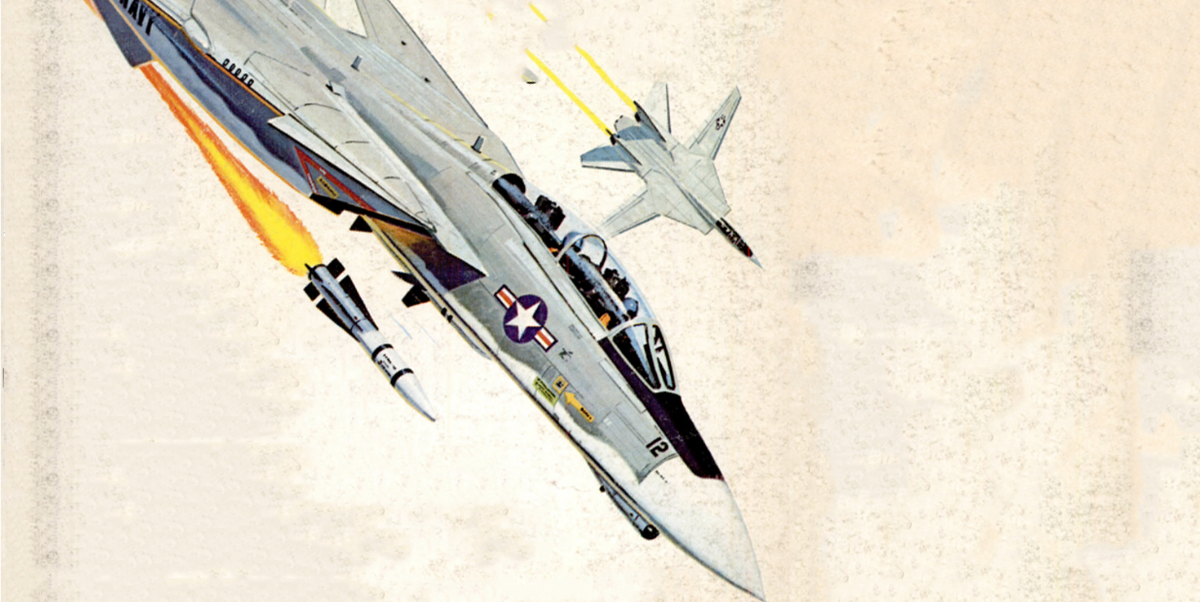
The U.S. Navy has never been shy about dramatic entrances. Give it a flat-top aircraft carrier, a few acres of ocean, a catapult that looks like it was invented by a caffeinated thunder god, and suddenly a fighter jet becomes more than an airplane. It becomes policy, deterrence, engineering, theater, and yes, a very loud reminder that the sea is not just blue waterit is a runway with waves.
So when people talk about “a hot new fighter for the Navy,” they are usually talking about two connected stories. The first is the F-35C Lightning II, the carrier-based stealth fighter already changing what a Navy air wing can see, share, and strike. The second is F/A-XX, the Navy’s planned next-generation carrier fighter that is expected to replace the F/A-18E/F Super Hornet in the 2030s. One is the new star on deck. The other is the mysterious sequel being written behind classified doors. Think of it as “Top Gun,” but with more software updates and fewer beach volleyball montages.
Why the Navy Needs a New Fighter Era
Aircraft carriers remain one of America’s most visible tools of power projection. A carrier strike group can sail near a crisis zone without asking a host nation for runway access, which is diplomatically useful and logistically elegant. But the world around the carrier has changed. Long-range missiles, advanced air defenses, electronic warfare, drones, satellites, and cyber-enabled targeting have made the skiesand the seas beneath themfar more contested.
That is why the Navy is not simply shopping for a faster jet with a sharper nose. The modern Navy fighter must be a flying sensor, a data node, a strike aircraft, an air-defense platform, and a teammate for unmanned systems. It needs range because the Pacific is enormous. It needs stealth because sophisticated radar networks are not impressed by patriotic paint schemes. It needs networking because the best aircraft in the battle may be the one that finds the target first and quietly shares the picture.
The old question was, “How fast can it fly?” The new question is, “How well can it survive, connect, decide, and help the entire force fight smarter?” That is a bigger assignment than outrunning danger. It is about outthinking it.
The F-35C: The Navy’s Carrier-Based Stealth Fighter
The F-35C is the Navy’s carrier variant of the Joint Strike Fighter family. Compared with the F-35A used by the Air Force and the F-35B used for short takeoff and vertical landing operations, the F-35C is built for the brutal life of catapult launches and arrested landings aboard aircraft carriers. In plain English: it has to be thrown into the air and then caught by a giant steel cable while landing on a moving ship. Your Monday commute suddenly seems gentle.
To handle that punishment, the F-35C uses larger wings, reinforced landing gear, and folding wingtips that help save precious deck space. Those larger wings also support longer range and better low-speed handling during carrier approaches. The aircraft is designed to carry weapons internally for stealthier missions and externally when the airspace is less dangerous and the mission calls for more payload.
But the real magic is not just the shape of the jet. It is the way the F-35C gathers and fuses information. Its sensors, radar, electronic warfare systems, and data links help pilots build a broad picture of the battlespace. The aircraft can detect, classify, and share information with other aircraft, ships, and commanders. In a carrier strike group, that turns the fighter into more than a shooter. It becomes an airborne scout with teeth.
What Makes the F-35C Different?
The F-35C brings three major advantages to naval aviation: stealth, sensor fusion, and reach. Stealth helps it operate in contested environments where older aircraft may be detected earlier. Sensor fusion reduces pilot workload by combining multiple streams of information into a clearer tactical picture. Greater range matters because carriers may need to operate farther from shore-based threats while still projecting airpower inland or across wide ocean spaces.
The Navy’s older fighters are still highly capable, but the F-35C adds a different kind of value. It can help find targets for other platforms, guide weapons, support air defense, and feed information across the carrier strike group. In a modern fight, the aircraft that sees first may matter as much as the aircraft that shoots first. Ideally, it does both.
The Super Hornet Is Still the Workhorse
Before anyone starts writing a retirement speech for the F/A-18E/F Super Hornet, let’s be fair: the Super Hornet has earned its coffee mug. It entered fleet service in 1999 and became the backbone of the Navy’s carrier air wing. It performs air superiority, strike, escort, reconnaissance, close air support, suppression of enemy air defenses, and even aerial refueling. If Navy aviation had a reliable pickup truck with afterburners, this would be it.
The Block III Super Hornet upgrade extends the aircraft’s relevance with better networking, an advanced cockpit, service-life improvements, and reduced radar signature features. The Super Hornet will continue flying for years because carrier air wings need capacity as well as advanced capability. A stealth fighter is powerful, but numbers still matter. So do maintenance, training pipelines, weapons integration, and day-to-day availability.
That said, the Super Hornet was not designed for the most demanding future threat environments. It can be upgraded, but every platform eventually reaches the point where adding more technology is like asking a flip phone to run a film studio. Possible? No. Entertaining? Briefly.
F/A-XX: The Next Big Thing on the Horizon
The Navy’s future fighter program, commonly known as F/A-XX, is intended to replace the F/A-18E/F Super Hornet and complement the F-35C. It is expected to be a sixth-generation, carrier-capable aircraft within the Navy’s broader Next Generation Air Dominance effort. Public details remain limited, but the broad direction is clear: more range, more survivability, deeper networking, better sensors, and the ability to operate with unmanned teammates.
Unlike the F-35C, which is already in service, F/A-XX remains in development and source-selection territory. Boeing and Northrop Grumman have been widely reported as the leading competitors, while Lockheed Martin has reportedly fallen out of the competition. As of mid-2026, the Navy’s decision was expected to be a major milestone because the selected contractor will shape the future carrier air wing for decades.
What F/A-XX Is Expected to Do
The Navy does not need F/A-XX to be merely “another fighter.” It needs an aircraft built for the Indo-Pacific reality: huge distances, heavily defended airspace, advanced enemy sensors, and the need to coordinate with ships, submarines, satellites, drones, and other aircraft. The future fighter will likely emphasize long-range air dominance, strike capability, electronic warfare resilience, and command of unmanned systems.
That last point matters. The future of naval aviation will not be a lone heroic pilot doing everything while dramatic music plays. It will be a connected team of crewed and uncrewed platforms. A future fighter may control or coordinate drones that scout ahead, carry extra weapons, jam enemy systems, refuel aircraft, or absorb risk in places too dangerous for crewed aircraft. The pilot remains central, but the aircraft becomes a quarterback instead of a solo act.
Why Range Is the New Speed
For decades, fighter conversations loved speed. Mach numbers sound fantastic at dinner parties, assuming your dinner party is mostly aerospace engineers and one confused uncle. But for Navy fighters, range is becoming just as important as speed, and maybe more so.
The Pacific theater is vast. Potential operating areas can stretch across thousands of miles. If carriers must stay farther from shore because of anti-ship missile threats, their aircraft need longer legs. A fighter that can fly farther, loiter longer, and return safely gives commanders more options. It can hold distant targets at risk, defend wider areas, and reduce dependence on vulnerable refueling patterns.
This is where the F-35C’s larger internal fuel load helps, and where F/A-XX is expected to push even further. The Navy’s challenge is simple to describe and difficult to solve: keep the carrier relevant even when threats try to push it away from the fight.
MQ-25 Stingray: The Fighter’s Quiet Best Friend
No discussion of the Navy’s future fighter should ignore the MQ-25 Stingray, an unmanned carrier-based refueling aircraft. It is not a fighter, but it may become one of the most important enablers of fighter operations. By taking over some aerial refueling duties, MQ-25 can free Super Hornets from tanker missions and help extend the reach of the carrier air wing.
The MQ-25 concept is practical and futuristic at the same time. It does not need to win a dogfight. It needs to launch from a carrier, meet aircraft in the sky, pass gasaviation fuel, not the awkward kindand help fighters go farther. That sounds humble until you remember that range can decide whether a carrier air wing can reach the fight at all.
In the broader picture, MQ-25 is also a stepping stone toward more unmanned carrier aviation. It teaches the Navy how to operate autonomous aircraft from the most demanding runway on Earth: a pitching, rolling, crowded flight deck where everything is loud, heavy, hot, and moving. That experience will matter when future fighters team with more advanced drones.
Stealth Is Important, but It Is Not a Magic Cloak
Stealth is often misunderstood. It does not make an aircraft invisible. It reduces detectability, complicates enemy tracking, and can delay an adversary’s ability to build a reliable firing solution. That delay is valuable. In air combat, a few seconds can feel like a luxury hotel stay.
The F-35C uses low-observable design to improve survivability, especially when paired with electronic warfare, mission planning, and smart tactics. Future aircraft like F/A-XX are expected to go further, likely combining stealth shaping, advanced materials, electronic attack, passive sensing, and networking. The goal is not to disappear like a magician under stage lighting. The goal is to make the enemy’s kill chain slower, weaker, and less confident.
The Software Side of the New Navy Fighter
Modern fighters are flying computers wrapped in composite materials and jet fuel. That is both thrilling and occasionally inconvenient. The F-35 program has shown how powerful software-defined combat aircraft can be, but also how challenging upgrades, logistics, spare parts, and sustainment can become. Advanced fighters require advanced maintenance ecosystems, secure supply chains, trained technicians, and constant software improvement.
This is one reason the Navy’s future fighter decision is so important. F/A-XX will not simply be judged by its first flight or its glossy artist rendering. It will be judged by how easily it can be upgraded, repaired, integrated with new weapons, connected to unmanned systems, and sustained across decades of carrier deployments. A beautiful aircraft that spends too much time waiting for parts is not a fighter; it is very expensive deck decoration.
Costs, Readiness, and the Unromantic Reality
Every hot new fighter arrives with a cold budget conversation. Stealth aircraft are expensive to develop, buy, fly, maintain, and upgrade. The F-35 has delivered major capability, but it has also faced scrutiny over sustainment costs, mission-capable rates, software delays, and depot maintenance capacity. These are not side issues. They determine how many aircraft are ready when commanders need them.
The Navy must balance three competing needs: keep today’s aircraft ready, buy enough F-35Cs to modernize the fleet, and fund F/A-XX for tomorrow. Meanwhile, shipbuilding, submarines, missiles, drones, personnel, and maintenance all want their share of the same defense budget pie. Unfortunately, the pie is not infinite, even if Pentagon paperwork sometimes appears to be.
That balancing act explains why F/A-XX has attracted so much attention. Delays could affect when the Navy fields a replacement for the Super Hornet. Moving too quickly without solving cost and sustainment questions could create problems later. The ideal path is fast enough to meet the threat and disciplined enough not to produce a hangar queen with a gold-plated maintenance manual.
What This Means for Carrier Air Wings
The carrier air wing of the future will likely look more mixed than the carrier air wing of the past. F-35Cs will provide stealth, sensing, and strike power. Super Hornets will remain important during the transition. EA-18G Growlers will continue electronic attack missions. E-2D Advanced Hawkeyes will provide airborne command and control. MQ-25 will extend range. Eventually, F/A-XX may become the centerpiece of a new air wing built around crewed-uncrewed teaming.
That mix matters because no single aircraft wins a modern conflict alone. The Navy’s advantage comes from integration. A destroyer may launch a missile based on data from an aircraft. A fighter may receive targeting information from another sensor. A drone may refuel a jet that protects the carrier. A submarine, satellite, aircraft, and surface ship may all contribute pieces of the same puzzle.
Specific Example: From Super Hornet to F-35C to F/A-XX
Imagine a future carrier operation in a contested region. A Super Hornet might carry a large weapons load for a strike mission. An F-35C could fly ahead in a stealthier configuration, detect threats, and share targeting data. An EA-18G Growler could jam enemy radars. An MQ-25 could refuel aircraft to extend the mission. In the 2030s, an F/A-XX might coordinate multiple unmanned systems while performing air dominance and strike roles at longer ranges.
This is the real story behind the “hot new fighter.” It is not one jet replacing another in a neat handoff. It is an evolving combat ecosystem. The aircraft carrier is becoming less like a floating airport and more like a mobile command hub for crewed aircraft, drones, sensors, weapons, and networks.
Experience Section: What the New Navy Fighter Era Feels Like Up Close
To understand why a new Navy fighter matters, picture the flight deck of an aircraft carrier at night. The ocean is black, the deck is crowded, and every person seems to be moving with choreographed urgency. Jet exhaust shimmers across the non-skid surface. Colored jerseys identify sailors by job: yellow for aircraft directors, green for catapult and arresting gear crews, purple for fuel handlers, red for ordnance, white for safety and medical roles, and brown for plane captains. It looks chaotic until you realize it is one of the most disciplined workplaces on Earth.
Now imagine adding an F-35C to that environment. Its folding wingtips, stealthy profile, and advanced cockpit do not remove the old carrier rituals. The jet still needs maintainers, fuel, weapons, inspections, launch crews, and recovery teams. What changes is the amount of information moving with it. Before the aircraft even launches, mission data, threat libraries, sensor plans, and network settings matter. The fighter is not just carrying missiles; it is carrying a digital brain prepared for a specific battlespace.
For pilots, the experience is different from legacy aircraft because the aircraft helps organize the fight. Instead of forcing the pilot to mentally stitch together separate radar, infrared, electronic, and communication inputs, the F-35C is designed to present a fused picture. That does not make flying easy. Carrier aviation remains brutally demanding. But it changes the pilot’s role from sensor operator and stick-and-rudder aviator into something closer to tactical manager, information broker, and strike fighter pilot rolled into one.
For maintainers, the new fighter era brings pride and pressure. Stealth coatings, advanced avionics, diagnostics, and software-driven systems require specialized training. A tiny panel, sensor fault, or data issue can matter. The glamour belongs to the jet in photographs, but readiness belongs to the people turning wrenches, checking systems, and solving problems at inconvenient hours. Every “hot new fighter” depends on very tired professionals with flashlights, checklists, and the patience of saints.
For the Navy as an institution, the experience is a culture shift. Carrier aviation grew up around human skill, mechanical toughness, and repeatable procedures. Those still matter. But the future adds autonomy, artificial intelligence, unmanned refueling, software updates, and machine-to-machine networking. The next generation of naval aviators may think of drones not as separate aircraft but as teammates. They may treat data links with the same seriousness earlier generations gave to fuel states and weapons counts. The flight deck will still smell like jet exhaust and hydraulic fluid, but the invisible architecture above it will be made of code, sensors, and secure communications.
That is what makes this moment fascinating. The Navy is not abandoning its carrier tradition. It is upgrading it. The catapult still fires, the arresting wire still catches, and the ocean still refuses to sit still. But the fighter launching into the dark is becoming smarter, more connected, and more central to a larger web of combat power. If that is not a hot new fighter story, what is?
Conclusion: The Navy’s Fighter Future Is Bigger Than One Jet
A hot new fighter for the Navy is not just about sleek lines, stealth coatings, or impressive speed. It is about how naval aviation adapts to a world where distance, data, drones, and survivability define combat power. The F-35C is already giving carrier strike groups a stealthy, sensor-rich aircraft that can transform how the fleet sees and fights. The F/A-XX promises the next leap: longer range, deeper integration, and a design shaped for the high-end threats of the 2030s and beyond.
The Super Hornet will remain essential during the transition, and the MQ-25 Stingray may quietly become one of the most important range-extending tools in the air wing. Together, these aircraft show the Navy’s real direction: not one miracle machine, but a smarter, more connected carrier force. The future fighter is hot because it represents more than horsepower. It represents a new way of fighting from the sea.
Note: This article is based on publicly available information from U.S. Navy, NAVAIR, GAO, defense industry, and reputable U.S. defense reporting sources current to June 2026.