Earth has many ways to remind us that the ground beneath our feet is less “solid foundation” and more “extremely slow-moving geological machinery.” In late July 2025, that machinery shifted dramatically off Russia’s Kamchatka Peninsula, producing a magnitude-8.8 megathrust earthquakeone of the most powerful earthquakes recorded by modern instruments.
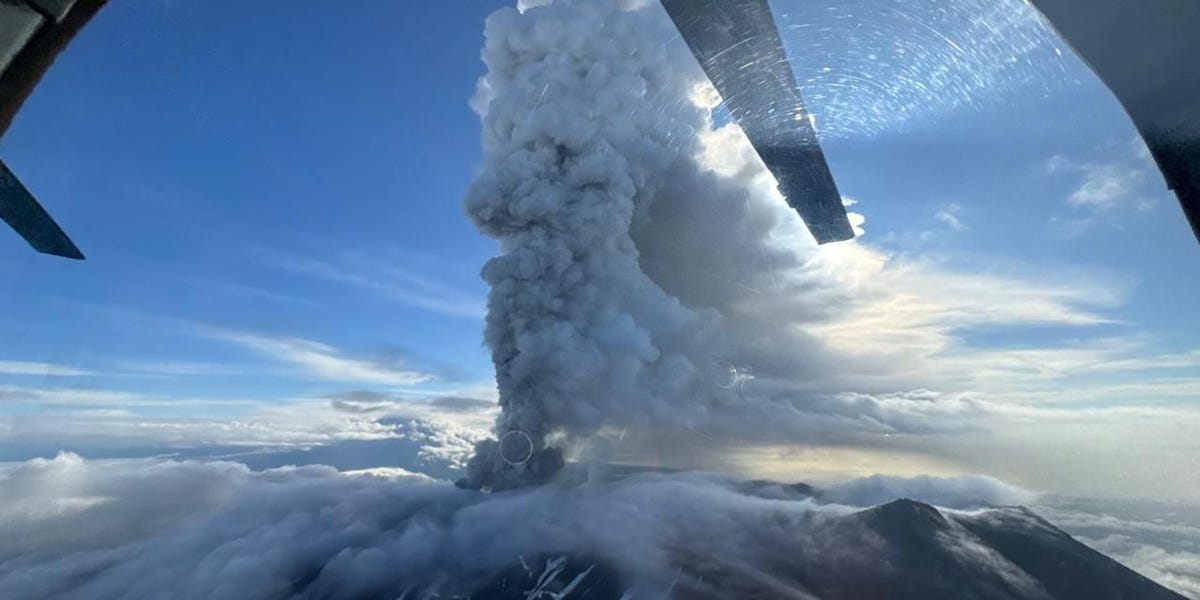
The earthquake generated a Pacific-wide tsunami, displaced parts of the peninsula, launched a vigorous aftershock sequence, and was followed by heightened activity at several of Kamchatka’s volcanoes. Russian scientists described the spectacle as a rare “parade of volcanic eruptions.” That phrase sounds almost festive, but this was no marching band. It involved towering ash plumes, glowing lava, aviation warnings, and a volcano erupting for the first historically confirmed time in centuries.
Did the massive earthquake actually cause all those volcanic eruptions? The honest scientific answer is more interesting than a simple yes or no. The quake probably disturbed multiple volcanic systems, but several volcanoes were already active or restless. In other words, the earthquake may not have lit every fireit may have kicked several already-warm furnaces.
What Happened During the Kamchatka Earthquake?
At 11:24 a.m. local time on July 30, 202511:24 p.m. UTC on July 29a magnitude-8.8 earthquake struck beneath the Pacific Ocean east of the Kamchatka Peninsula. The United States Geological Survey classified it as a shallow megathrust earthquake caused by reverse faulting along the Kuril-Kamchatka subduction zone.
A megathrust earthquake occurs where one tectonic plate is forced beneath another. Along Kamchatka, the Pacific Plate descends beneath the overriding plate at the Kuril-Kamchatka Trench. The plates do not glide past each other politely. Their boundary can lock for decades or centuries while strain accumulates. When the fault finally slips, an enormous section of Earth’s crust can move within minutes.
The 2025 rupture extended across hundreds of miles of the plate boundary. USGS analysis placed the event among the largest earthquakes measured since modern seismic monitoring began and identified it as the strongest worldwide since Japan’s magnitude-9.1 Tohoku earthquake in 2011. It was also Kamchatka’s largest earthquake since the devastating 1952 event in the same broad region.
The Earthquake Was Part of a Larger Sequence
The magnitude-8.8 mainshock did not appear without warning signs of regional seismic activity. Ten days earlier, a magnitude-7.4 earthquake struck offshore in approximately the same area. Numerous earthquakes followed before the mainshock, including events above magnitude 6.
That earlier magnitude-7.4 event is now described as a foreshock, although scientists could not have labeled it that at the time. An earthquake becomes a foreshock only after a larger earthquake occurs nearby. Before that happens, it is simply an earthquake with a very unsettling résumé.
After the mainshock, thousands of aftershocks continued to shake the region. Large earthquakes rearrange stress across nearby faults, so aftershock sequences can persist for months or even years. Some aftershocks were powerful enough to create additional concern about coastal hazards and unstable volcanic slopes.
A Pacific-Wide Tsunami Followed
Because the earthquake occurred beneath the ocean at a subduction zone, tsunami warning centers quickly issued alerts across the Pacific. Warnings, watches, or advisories affected Russia, Japan, Hawaii, Alaska, the U.S. West Coast, Pacific islands, and parts of Central and South America.
The tsunami was most dangerous near its source. Coastal flooding and damaging waves were reported in parts of Kamchatka and the Kuril Islands. Farther away, wave heights were generally less destructive than initially feared, although unusual currents and surges reached ports from Japan to California.
NASA’s Surface Water and Ocean Topography satellite happened to pass over the traveling tsunami, allowing researchers to observe the wave structure across a broad section of open ocean. The measurements captured not only the leading wave but also smaller waves trailing behind it. Such data can help scientists improve tsunami models, especially in the difficult area close to deep-ocean trenches.
Satellite radar later showed that the earthquake permanently shifted portions of Kamchatka. Some areas moved significantly eastward or southeastward. That is the scale involved in a magnitude-8.8 event: coastlines do not merely shake; pieces of a peninsula can change address.
Then the Volcanoes Became Much More Active
Within hours and days of the earthquake, observers reported intensified or renewed activity at multiple volcanoes across Kamchatka. Depending on how scientists defined an eruption, unrest, or continuing activity, reports referred to six or seven affected volcanoes.
The most frequently named volcanoes included:
- Klyuchevskoy, also called Klyuchevskaya Sopka
- Krasheninnikov
- Shiveluch
- Bezymianny
- Karymsky
- Avachinsky
Thermal activity was also detected at Mutnovsky, sometimes described as the seventh volcano in the sequence. However, increased heat or unrest does not automatically qualify as a confirmed eruption, which helps explain why different reports produced different totals.
Klyuchevskoy Intensified First
Klyuchevskoy, the tallest active volcano in Eurasia and one of Kamchatka’s most energetic peaks, began producing stronger activity immediately after the earthquake. Glowing material was visible near the summit, lava descended its flanks, and ash plumes rose high enough to create serious aviation concerns.
However, Klyuchevskoy was not sleeping peacefully before the quake. Monitoring records showed that its 2025 eruptive period had begun months earlier. Scientists therefore cautioned that the earthquake probably intensified an existing eruption rather than creating one from nothing.
By August 6, activity had strengthened enough for aviation authorities to raise the color code to red temporarily. Ash reached more than 20,000 feet above sea level, and ashfall was reported in the village of Klyuchi, approximately 19 miles north of the volcano.
Krasheninnikov Delivered the Biggest Surprise
The most remarkable development occurred at Krasheninnikov, a remote volcanic complex inside the Kronotsky Nature Reserve. On August 2, the volcano produced an ash plume and lava activity in what scientists described as its first historically observed eruption in centuries.
Estimates differ slightly regarding its previous activity. Some evidence places the last lava flow around 1463, while volcanic databases assign an approximate date closer to 1550. Either way, Krasheninnikov had not put on a confirmed modern performance for a very long time.
Its eruption shortly after the magnitude-8.8 earthquake made coincidence difficult to ignore. Strong seismic waves may have changed pressure inside the magma system, opened pathways through fractured rock, or encouraged gases dissolved in magma to form expanding bubbles. Yet scientists could not immediately prove which mechanismif anyprovided the final push.
Several Other Volcanoes Were Already Active
The Smithsonian Institution’s Global Volcanism Program showed that several members of the so-called parade had active eruptive histories before the earthquake. Shiveluch had been in a long-running eruptive phase, Bezymianny had been active since late 2024, Karymsky’s latest eruptive period began in April 2025, and Klyuchevskoy had also been active since spring.
This does not mean the earthquake had no effect. It means headlines must be interpreted carefully. A regional earthquake can strengthen explosions, change gas flow, increase lava output, disturb hydrothermal systems, or trigger volcanic earthquakes without independently creating an entirely new eruption.
Can an Earthquake Really Trigger a Volcanic Eruption?
Yes, but only under particular conditions. According to the USGS, a nearby tectonic earthquake can help trigger an eruption when a volcano already contains enough eruptible magma and significant pressure has accumulated within its storage system.
An earthquake is therefore more like a final shove than a magical magma generator. It cannot fill an empty volcano with molten rock. It can, however, disturb a pressurized system that was already close to failure.
Static Stress Changes
When a fault ruptures, surrounding rock is permanently stretched, compressed, or sheared. These static stress changes can extend well beyond the fault itself. If stress decreases along fractures above a magma reservoir, magma may find it easier to rise. If stress increases, fluids may be squeezed into new pathways.
Even small pressure changes can matter inside a volcanic system that is already balanced near a critical threshold. Imagine carrying a tray of overfilled drinks across a crowded room. A gentle tap is harmless when the glasses are half empty. When they are full to the rim, one bump can turn the carpet into a regrettable chemistry experiment.
Dynamic Shaking
Seismic waves radiating from a large earthquake repeatedly compress and stretch rock. This dynamic shaking may move magma, disturb crystals, alter permeability, or shake loose material blocking volcanic conduits.
Powerful seismic waves can also affect volcanoes hundreds or thousands of miles away. Most distant responses involve small earthquake swarms, changes in spring flow, or altered gas emissions rather than full eruptions. Confirmed earthquake-triggered eruptions remain relatively uncommon because a volcano must already be primed.
Bubble Formation and Gas Pressure
Magma contains dissolved gases such as water vapor, carbon dioxide, and sulfur dioxide. When pressure changes, those gases can form bubbles, much as carbon dioxide escapes when a bottle of soda is opened.
Earthquake shaking may promote bubble growth or bring bubbles together. Expanding gas makes magma more buoyant and can increase pressure beneath a blocked vent. The famous “shaken soda bottle” comparison is imperfect, but it captures the central idea: shaking matters most when a pressurized container is already full of gas-rich liquid.
Hydrothermal Disturbance
Some volcanoes contain extensive networks of hot groundwater, steam, and chemically altered rock. Earthquake shaking can rearrange these hydrothermal systems, open cracks, close others, or suddenly convert hot water into steam.
Such changes may produce steam-driven explosions even without fresh magma reaching the surface. They can also weaken volcanic slopes, increasing the risk of landslides or debris flows.
Why Kamchatka Is Built for Geological Drama
Kamchatka extends into the northwestern Pacific Ring of Fire, the horseshoe-shaped belt where many of Earth’s earthquakes and volcanic eruptions occur. The peninsula contains dozens of active volcanoes, including some of the world’s largest and most explosive stratovolcanoes.
Subduction is responsible for both major hazards. The descending Pacific Plate produces powerful earthquakes along the plate boundary. As the slab sinks deeper, water released from its minerals helps lower the melting temperature of the overlying mantle. The resulting magma rises and feeds Kamchatka’s volcanic arc.
Earthquakes and volcanoes are therefore neighbors because they share the same tectonic setting. Their activity can overlap even when one does not directly cause the other. Establishing causation requires more than placing two dramatic events next to each other on a calendar.
What Risks Did the Volcanic Parade Create?
Volcanic Ash and Aviation
The most immediate widespread danger came from volcanic ash. Kamchatka sits beneath important flight routes connecting Asia and North America. Fine ash can drift hundreds of miles and remain difficult to see, especially at night or inside clouds.
When ash enters a jet engine, it can melt, coat internal components, damage sensors, and reduce or eliminate thrust. Aircraft therefore avoid ash clouds rather than attempting to fly through them with fingers crossed and the seat-belt sign illuminated.
The Kamchatka Volcanic Eruption Response Team used aviation color codes to communicate the changing threat. Red indicated that a major ash-producing eruption was underway or imminent, while orange signaled heightened unrest or an eruption with limited ash emissions.
Ashfall Near Communities
Although much of Kamchatka is sparsely populated, communities near active volcanoes can still receive ashfall. Ash irritates the eyes and lungs, reduces visibility, contaminates water, damages machinery, and places extra weight on roofs.
Volcanic ash is not soft fireplace ash. It consists of tiny fragments of rock, minerals, and volcanic glass. Cleaning it with dry sweeping can simply launch it back into the air, providing residents with the least enjoyable snow globe imaginable.
Lahars, Landslides, and Meltwater
Many Kamchatka volcanoes are covered by snow and ice. Hot volcanic material can rapidly melt that ice, producing muddy flows of water, rock, and debris called lahars. These flows can rush down river valleys far beyond the area threatened by lava.
Strong earthquakes may also destabilize steep volcanic slopes. Even without a major eruption, landslides can block rivers, damage roads, or generate local waves if large amounts of debris enter lakes or coastal water.
What Scientists Still Need to Determine
The timing of the Kamchatka eruptions strongly suggests that the earthquake influenced at least some volcanic systems. The case for an earthquake connection appears especially compelling at Krasheninnikov because its eruption followed centuries without historically confirmed activity.
Nevertheless, timing alone cannot reveal the complete sequence below ground. Scientists must compare seismic records, satellite heat measurements, ground deformation, gas emissions, ash chemistry, and magma composition from before and after the earthquake.
Researchers will look for signs that magma began rising only after the mainshock. They will also test whether volcanic earthquake swarms changed when strong seismic waves passed through the peninsula. Chemical changes in erupted lava may reveal whether deeper magma entered a shallow reservoir or whether an existing batch of magma simply found a new path upward.
The result may not be one explanation for every volcano. Klyuchevskoy could have intensified because its conduit was already open, while Krasheninnikov may have responded through fracturing, pressure changes, or bubble growth. Each volcano has its own plumbing system, and unfortunately none comes with a neatly labeled inspection hatch.
Experiencing a Cascading Earthquake and Volcanic Crisis
The following section is a realistic composite based on documented earthquake, tsunami, ashfall, and evacuation experiences. It is not presented as personal eyewitness testimony.
A major earthquake rarely feels like a single event with a tidy beginning and end. For people near Kamchatka’s coast, the first experience would have been prolonged shakingstrong enough to move furniture, rattle windows, cut power, and make standing difficult. During an earthquake this large, time can feel distorted. Four minutes of shaking is not “just four minutes” when walls are creaking and every object in the room appears eager to become airborne.
Once the shaking weakens, attention immediately shifts toward the ocean. A phone alert, emergency siren, radio bulletin, or shouted warning can turn confusion into urgent movement. Coastal residents do not have the luxury of waiting to see a wave. They must move inland or uphill while checking on children, older relatives, neighbors, and anyone who needs transportation.
Roads may be damaged, communications may be overloaded, and aftershocks can begin before people reach safety. Each aftershock raises the same question: Is this merely another aftershock, or the beginning of something larger? That uncertainty creates a particular kind of exhaustion because the body remains prepared to run even when there is nowhere else to go.
In communities farther across the Pacific, the physical shaking was absent, but the warnings created their own tense experience. Residents in Hawaii and other coastal regions moved away from shore as officials forecast possible tsunami arrival times. Traffic thickened on evacuation routes, stores closed, harbors were cleared, and people waited on higher ground while watching official updates.
A tsunami does not always arrive as a towering wall of water. It may appear as a rapidly rising tide, a strong surge, a sudden retreat, or violent currents that reverse repeatedly. The first wave may not be the largest, and dangerous currents can continue for hours. That makes waiting frustrating but essential. Returning early because the ocean “looks normal” is one of the most dangerous decisions a person can make.
Then comes the volcanic dimension. In Kamchatka, a clear day can change as an ash plume spreads across the sky. Sunlight becomes muted, distant mountains disappear, and fine gray material begins settling on roofs, roads, vehicles, and vegetation. The air may smell faintly of sulfur, although dangerous volcanic gases are not always detectable by smell.
People close windows, bring animals indoors, protect water supplies, and wear well-fitting masks when outside. Drivers slow down because ash reduces visibility and makes roads slippery. Engines and air filters require special attention because ash can damage machinery with the enthusiasm of microscopic sandpaper.
For aviation workers and travelers, the crisis feels different. Flight routes can change with little notice as ash advisories are updated. A volcano hundreds of miles from an airport may still disrupt international travel if winds carry ash into major air corridors. Passengers see a delay notification; meteorologists and dispatchers see a moving three-dimensional hazard that jet engines must avoid entirely.
The psychological strain may last longer than the visible emergency. Residents continue feeling aftershocks, monitoring volcano alerts, and sleeping lightly in case another warning arrives. Some experience “phantom shaking,” the sensation that the ground is moving when it is not. Others repeatedly check the ocean, rooftops, pets, emergency bags, and news feeds.
Yet cascading disasters also reveal the practical value of preparation. Communities that know evacuation routes move faster. Families with water, medication, masks, flashlights, radios, and copies of important documents spend less time searching during the crisis. Accurate alerts prevent panic from becoming paralysis.
The Kamchatka sequence demonstrates that emergency planning cannot treat earthquakes, tsunamis, landslides, and volcanic eruptions as completely separate problems. In an active subduction zone, one event can overlap with another. Preparedness must be flexible enough for the ground, ocean, and atmosphere to misbehave at the same time.
Conclusion: A Rare Event With an Important Scientific Warning
The magnitude-8.8 Kamchatka earthquake was extraordinary even before volcanic activity intensified. It ruptured a vast section of a major subduction zone, generated a trans-Pacific tsunami, moved portions of the peninsula, and produced a long sequence of powerful aftershocks.
The subsequent volcanic “parade” made the event even more scientifically valuable. Several volcanoes were already erupting, meaning the earthquake did not awaken every peak from dormancy. However, the timing, increased intensity, thermal changes, and historic eruption of Krasheninnikov indicate that the earthquake probably disturbed multiple magma and hydrothermal systems.
The central lesson is not that every large earthquake will unleash nearby volcanoes. Most do not. The lesson is that a volcano already loaded with eruptible magma and pressure may respond to even a relatively small additional disturbance. A magnitude-8.8 megathrust earthquake is not a small disturbance. It is Earth rearranging the furnitureand occasionally shaking open a few geological cabinets in the process.
Editorial note: This article synthesizes information from the U.S. Geological Survey, Smithsonian Global Volcanism Program, NASA Earth Observatory, NOAA and U.S. Tsunami Warning Centers, the Kamchatka Volcanic Eruption Response Team, the Associated Press, ABC News, Live Science, Popular Mechanics, Time, Eos, Nature Communications, and university-based seismology experts. The exact degree to which the earthquake triggered individual eruptions remains under scientific investigation.