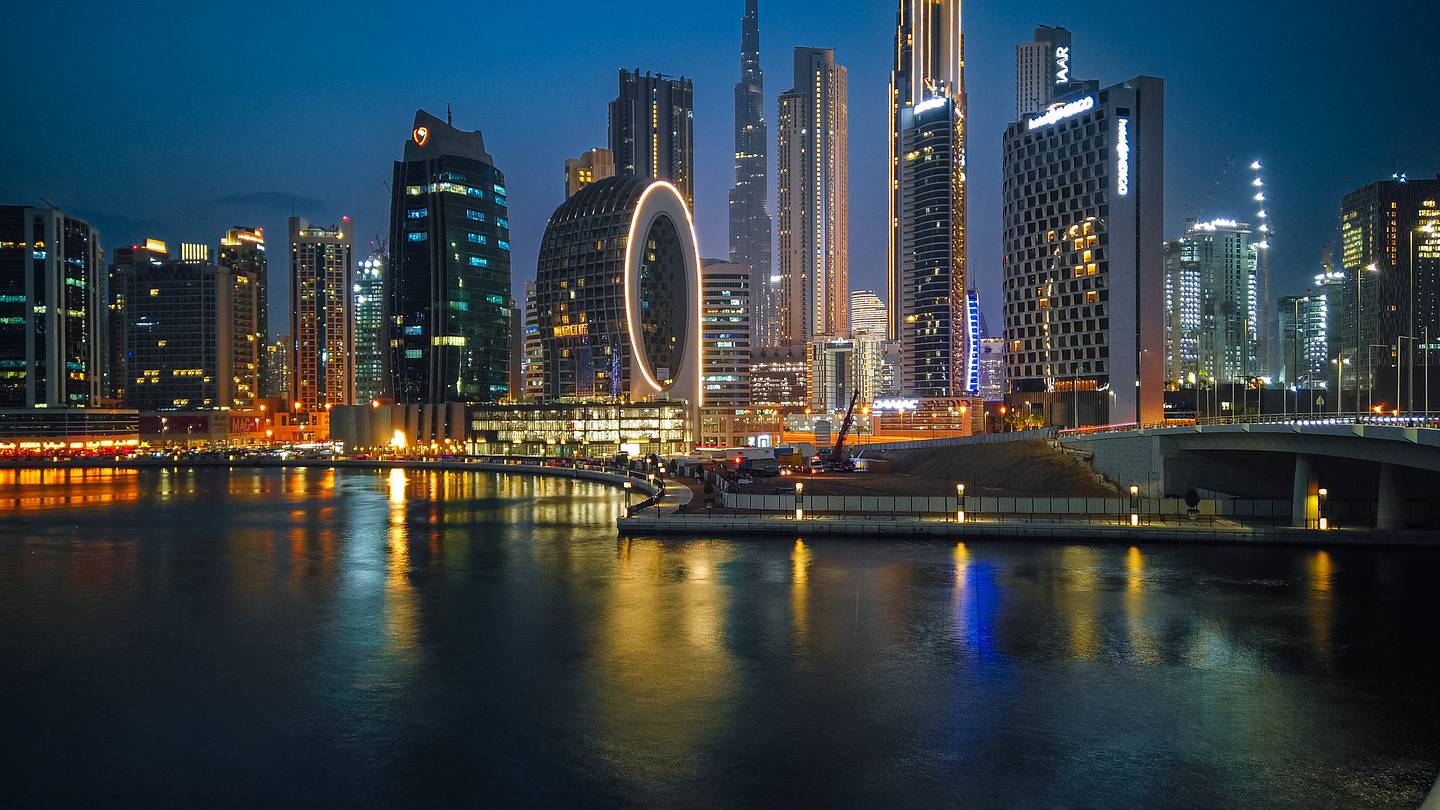
Some cities spread out like a picnic blanket. Others stand up, straighten their tie, and decide the clouds need neighbors. The world’s tallest skylines are not just collections of shiny towers; they are economic scoreboards, engineering laboratories, architectural flexes, and, occasionally, the reason your neck hurts after sightseeing.
For this ranking, “tallest skyline” means the average height of a city’s 50 tallest buildings. That matters because a city with one giant tower and a lot of short buildings may look dramatic from one angle, but a truly tall skyline keeps the vertical drama going block after block. Think of it as the difference between one very tall basketball player and an entire starting lineup that can dunk without stretching.
How the Tallest Skylines Were Ranked
There are several ways to measure a skyline. You can count the number of skyscrapers, compare the tallest single building, measure total building height, or rank cities by the average height of their tallest towers. This article uses the average-height approach because it captures how tall a skyline feels in real life. A skyline is not just one famous spire on a postcard; it is the full wall of towers you see from a waterfront, bridge, rooftop bar, airplane window, or traffic jam that suddenly becomes scenic.
Most skyscraper databases use 150 meters, or about 492 feet, as a common threshold for skyscrapers. Supertall buildings rise above 300 meters, while megatall buildings exceed 600 meters. The cities below are the places where high-rise construction has become part of the urban identity, from Dubai’s desert-defying towers to New York’s stone-and-glass canyons and Shenzhen’s futuristic forest of finance centers.
Quick Ranking: The 20 Tallest Skylines on Earth
| Rank | City | Country | Average Skyline Height | Signature Skyline Feature |
|---|---|---|---|---|
| 1 | Dubai | United Arab Emirates | 323.9 m | Burj Khalifa and supertall clusters |
| 2 | New York City | United States | 299.1 m | One World Trade Center and Midtown supertalls |
| 3 | Shenzhen | China | 296.1 m | Ping An Finance Center and dense modern towers |
| 4 | Shanghai | China | 264.4 m | Shanghai Tower and Pudong skyline |
| 5 | Guangzhou | China | 256.8 m | CTF Finance Centre and Pearl River towers |
| 6 | Chicago | United States | 247.0 m | Willis Tower and classic skyscraper heritage |
| 7 | Hong Kong | China | 242.4 m | Victoria Harbour and dense mountain-backed towers |
| 8 | Chongqing | China | 234.7 m | Riverfront high-rises and dramatic terrain |
| 9 | Kuala Lumpur | Malaysia | 233.3 m | Merdeka 118 and Petronas Twin Towers |
| 10 | Wuhan | China | 225.4 m | Yangtze River high-rise districts |
| 11 | Jakarta | Indonesia | 223.2 m | Fast-growing business towers |
| 12 | Mumbai | India | 220.9 m | Residential skyscrapers and coastal density |
| 13 | Tianjin | China | 218.6 m | CTF Finance Centre and Binhai development |
| 14 | Nanning | China | 217.7 m | Modern towers in a rising regional hub |
| 15 | Bangkok | Thailand | 217.3 m | MahaNakhon and luxury high-rise districts |
| 16 | Singapore | Singapore | 216.9 m | Marina Bay and tightly planned vertical growth |
| 17 | Nanjing | China | 216.2 m | Zifeng Tower and modern commercial clusters |
| 18 | Tokyo | Japan | 211.7 m | Layered skyline with newer tall districts |
| 19 | Toronto | Canada | 209.1 m | Downtown towers and CN Tower backdrop |
| 20 | Melbourne | Australia | 208.2 m | Australia 108 and Southbank high-rises |
The 20 Tallest Skylines on Earth, Explained
1. Dubai, United Arab Emirates
Dubai sits at the top because it does not merely build tall; it builds as if gravity sent a weakly worded email and Dubai marked it as spam. The Burj Khalifa, at 828 meters, dominates the global height conversation, but the city’s ranking comes from a broader family of supertall towers. Dubai Marina, Downtown Dubai, and Business Bay create a skyline that looks almost computer-generated, except the elevators are real and the views are very expensive.
2. New York City, United States
New York’s skyline has history, muscle, and a habit of reinventing itself every decade. One World Trade Center gives Lower Manhattan its symbolic peak, while Midtown’s super-slender residential towers add new vertical drama near Central Park. New York is not the newest skyline on this list, but it may be the most cinematic. Even pigeons there seem to fly with better branding.
3. Shenzhen, China
Shenzhen is what happens when a fishing-town-turned-tech-megacity discovers reinforced concrete and ambition at the same time. The Ping An Finance Center rises to about 599 meters, but the real story is the density of tall buildings around it. Shenzhen’s skyline feels young, fast, and unapologetically modern, like a city that skipped adolescence and went straight to wearing a tailored suit.
4. Shanghai, China
Shanghai’s skyline is most famous for Pudong, where the Shanghai Tower, Shanghai World Financial Center, and Jin Mao Tower create one of the world’s great skyscraper trios. The 632-meter Shanghai Tower twists upward with a futuristic elegance that makes nearby towers look like they are standing at attention. Across the river, the Bund adds the perfect contrast: old-world stone facing new-world glass.
5. Guangzhou, China
Guangzhou’s skyline rises along the Pearl River with the confidence of a city that has been trading with the world for centuries. The Guangzhou CTF Finance Centre, at 530 meters, anchors a cluster of office, hotel, and residential towers. Add the glowing Canton Tower nearby, and the nighttime view becomes less “business district” and more “sci-fi festival with excellent dim sum.”
6. Chicago, United States
Chicago is skyscraper royalty. The city helped pioneer the modern high-rise, and Willis Tower remains one of the most recognizable tall buildings on Earth. Unlike some newer skylines, Chicago has layers: historic masonry, muscular modernism, riverfront glass, and postmodern icons. It is not just tall; it is architecturally educated. Chicago’s skyline has read the textbook because it helped write it.
7. Hong Kong, China
Hong Kong may not lead this average-height ranking, but few skylines are more intense. Mountains push the city toward the harbor, and the result is a vertical wall of residential and commercial towers. From Victoria Peak, Hong Kong looks like a circuit board plugged directly into the sky. The skyline is dense, glittering, and dramatic enough to make other cities check their posture.
8. Chongqing, China
Chongqing earns its spot with a skyline shaped by rivers, hills, bridges, and rapid development. Its towers do not sit on a flat postcard grid; they climb, stack, and appear around bends in the Yangtze and Jialing rivers. The result is a skyline with cinematic depth. It is tall, yes, but it also feels three-dimensional in a way few cities can match.
9. Kuala Lumpur, Malaysia
Kuala Lumpur has long been a skyline favorite thanks to the Petronas Twin Towers, once the tallest buildings in the world. Now Merdeka 118 has pushed the city even higher, giving Malaysia one of the most spectacular vertical landmarks on the planet. Kuala Lumpur’s skyline blends Islamic geometry, corporate ambition, tropical greenery, and enough observation decks to make acrophobes politely decline lunch plans.
10. Wuhan, China
Wuhan’s skyline reflects the scale of central China’s urban transformation. Straddling the Yangtze River, the city has developed major high-rise districts that mix offices, residences, hotels, and commercial towers. Its skyline may be less internationally famous than Shanghai or Hong Kong, but its vertical growth is impossible to ignore. Wuhan is the quiet overachiever who suddenly walks into the room with a 225-meter average.
11. Jakarta, Indonesia
Jakarta’s skyline is rising quickly, powered by finance, hospitality, residential demand, and the energy of one of Asia’s largest urban economies. The city’s towers gather along major business corridors, where glass high-rises compete with tropical haze, traffic, and monsoon clouds. Jakarta’s vertical future is complicated by infrastructure and environmental challenges, but visually, the city is already reaching for the upper leagues.
12. Mumbai, India
Mumbai’s skyline is shaped by pressure: limited land, huge population, coastal geography, and a real estate market that has learned to look upward. Residential skyscrapers dominate many of its vertical districts, especially around central and south Mumbai. The city’s skyline is still evolving, and with many tall projects in the pipeline, Mumbai may climb higher in future rankings. It has the ambition; now it needs the elevators.
13. Tianjin, China
Tianjin combines historic treaty-port architecture with new high-rise development, especially around business districts and the Binhai area. The Tianjin CTF Finance Centre gives the skyline a major supertall signature. While the city may not receive as much global skyline attention as Beijing or Shanghai, its tallest towers show how Chinese vertical development extends well beyond the country’s most famous megacities.
14. Nanning, China
Nanning is one of the more surprising names on the list, which is exactly why skyline rankings are fun. The city has become a regional hub with a growing collection of tall commercial and residential towers. Its skyline does not yet have the global fame of Dubai or New York, but its average height proves that the world’s vertical map is changing fast.
15. Bangkok, Thailand
Bangkok’s skyline is colorful, chaotic, elegant, and occasionally shaped like a pixelated ribbon, thanks to King Power MahaNakhon. Luxury residences, hotels, and office towers rise above temples, markets, canals, and traffic that appears to have developed its own weather system. The city’s tall buildings feel less like a single skyline and more like several skylines stitched together by street food and skytrain tracks.
16. Singapore
Singapore’s skyline is not the tallest because it builds recklessly; it is tall because it plans carefully. Height limits, airport considerations, land scarcity, and design controls have produced a skyline that feels polished rather than chaotic. Marina Bay, Raffles Place, and Tanjong Pagar deliver the vertical drama, while greenery and public space soften the steel-and-glass edges. Singapore is proof that density can wear a tailored jacket.
17. Nanjing, China
Nanjing’s modern skyline is anchored by towers such as Zifeng Tower, while new commercial districts continue expanding the city’s vertical profile. As a former capital with deep historical roots, Nanjing offers a fascinating contrast between ancient walls, temples, lakes, and modern skyscrapers. It is one of those cities where the past and future do not just meet; they share a very tall elevator.
18. Tokyo, Japan
Tokyo is enormous, but historically it has been more mid-rise than supertall because of earthquake engineering, aviation rules, and complex urban patterns. That is changing. Newer districts such as Toranomon and Azabudai are adding taller peaks to a skyline already famous for its endless density. Tokyo’s skyline is less about one postcard silhouette and more about a horizon that never seems to stop.
19. Toronto, Canada
Toronto’s skyline is expanding at a remarkable pace. The CN Tower remains its most famous vertical landmark, even though it is a tower rather than a skyscraper. Around it, downtown residential and office towers keep multiplying, turning the waterfront into one of North America’s most dynamic high-rise scenes. Toronto feels like a city actively being drawn upward in real time.
20. Melbourne, Australia
Melbourne closes the list with a skyline led by residential towers such as Australia 108 and the high-rise cluster of Southbank. The city’s vertical growth pairs with its famous street-level culture: laneways, cafes, trams, and arts venues. That contrast gives Melbourne its charm. You can drink a flat white in a tiny alley and then look up at a tower that seems to have wandered in from the future.
What These Tall Skylines Tell Us About Modern Cities
Height Is About Money, Land, and Identity
Skylines grow tall for practical reasons first. Dense cities need more room for homes, offices, hotels, and services. Expensive land encourages developers to stack usable space vertically. Financial districts like tall towers because they signal confidence, prestige, and proximity to other powerful businesses. In plain English: if land is pricey and ambition is high, buildings start doing push-ups.
Asia Dominates the Vertical Century
One of the clearest patterns is Asia’s dominance. China alone places multiple cities in the top 20, while Malaysia, Indonesia, Thailand, Singapore, India, and Japan also appear. This reflects rapid urbanization, large populations, infrastructure investment, and intense competition among cities to become regional business hubs. The skyscraper, once associated most strongly with Chicago and New York, has become a global language.
The Best Skylines Balance Height With Character
A skyline can be tall and still feel forgettable if every tower looks like the same blue-glass rectangle. The most memorable skylines combine height with identity. Dubai has theatrical ambition. New York has density and history. Hong Kong has mountains and harbor drama. Chicago has architectural lineage. Singapore has planning discipline. Tokyo has endless urban texture. Great skylines are not just tall; they have personality.
Experience: What It Feels Like to Visit the World’s Tallest Skylines
Seeing a tall skyline in photos is one thing. Standing inside one is another. The first surprise is that skyscrapers change your sense of scale. In Dubai, the Burj Khalifa does not simply appear tall; it seems to rearrange the distance between the sidewalk and the sky. You look up, keep looking, adjust your stance, look again, and eventually accept that your neck has become part of the sightseeing budget.
New York offers a different experience. Its skyline is not just viewed from one famous spot; it surrounds you. Walk through Lower Manhattan and the buildings become canyons. Cross the Brooklyn Bridge and the skyline becomes a layered sculpture. Stand in Midtown and the towers press in from every direction, reflecting taxis, clouds, old stone, new glass, and the mood of eight million people trying to get somewhere immediately.
Hong Kong may be the most theatrical skyline to experience in person. From the Star Ferry, the towers rise behind the harbor like a glowing wall. From Victoria Peak, the city looks impossibly dense, with buildings squeezed between green mountains and blue water. It is one of the few skylines that can make silence happen in a crowd. People stop, lift their phones, and temporarily forget how to blink.
Shanghai and Shenzhen feel like cities designed with tomorrow in mind. Shanghai gives you the drama of Pudong, where the Shanghai Tower twists above its neighbors like a glass tornado that went to architecture school. Shenzhen feels faster and sharper, with towers that seem to have arrived yesterday and already scheduled a meeting for tomorrow. Both cities show how quickly a skyline can become a symbol of national and economic transformation.
Chicago is the place to visit if you want to understand skyscrapers, not just photograph them. An architecture river cruise there is almost required homework, except the classroom floats and the professor points at masterpieces. You learn why structure matters, why setbacks changed cities, and why the skyline feels so balanced. Chicago’s towers do not just say “look how tall we are.” They say, “Let us explain why this works.”
In Southeast Asia, Kuala Lumpur, Bangkok, Singapore, and Jakarta each offer a different skyline mood. Kuala Lumpur is iconic and symbolic, with Merdeka 118 and the Petronas Twin Towers giving the city a ceremonial quality. Bangkok is energetic and unpredictable, with luxury towers rising above a city that never seems to run out of motion. Singapore is controlled and elegant, especially around Marina Bay at night. Jakarta feels like a skyline still in the middle of its big reveal.
The best advice for experiencing these skylines is simple: see them at three levels. First, view them from far away, where the full silhouette makes sense. Second, walk at street level, where you feel the weight and texture of the buildings. Third, go up an observation deck, rooftop bar, or hilltop viewpoint, because skylines are at their best when they make you feel small in a good way. A great skyline is not just a view; it is a reminder that cities are human ambition made visible.
Conclusion
The 20 tallest skylines on Earth show how dramatically cities have changed in the last century. Chicago and New York helped invent the skyscraper age, but today the race reaches from Dubai to Shenzhen, Kuala Lumpur to Melbourne, and Mumbai to Toronto. Some skylines are famous because of one legendary tower. Others earn their ranking through clusters of high-rises that reshape entire districts.
What makes these skylines fascinating is not height alone. It is the story behind the height: land scarcity, economic growth, engineering courage, urban planning, tourism, national pride, and the universal human urge to build something that makes people look up and say, “Well, that seems ambitious.” Whether you love skyscrapers or think cities should calm down and drink herbal tea, there is no denying their power. The tallest skylines on Earth are modern civilization written vertically.