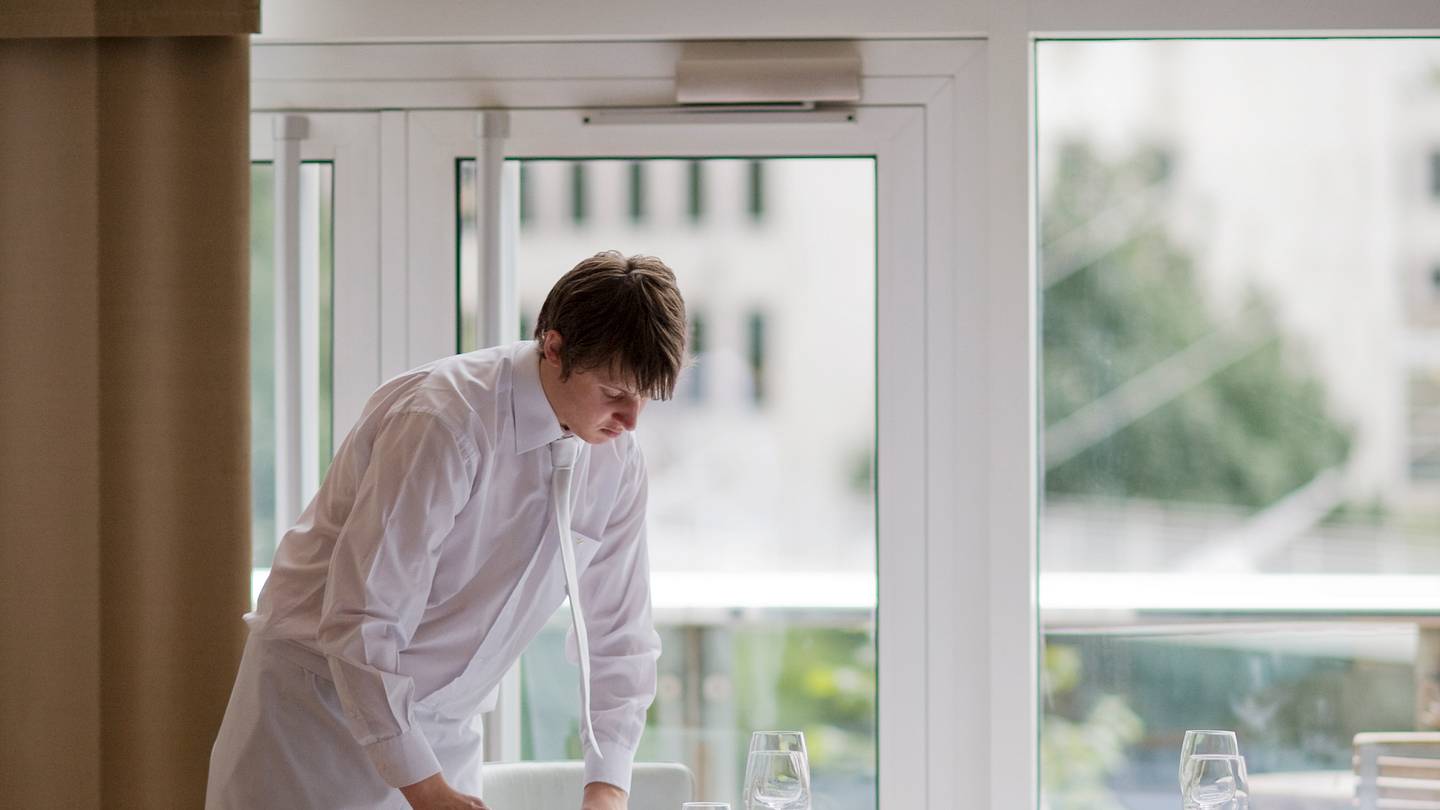
At first glance, the phrase “busing a table” sounds like it should involve a city route, a folding door, and someone yelling, “Move to the back, please!” But in restaurant language, busing a table means clearing away used plates, glasses, utensils, napkins, crumbs, and the tiny mountain of sugar packets someone mysteriously opened but did not use. It is one of those everyday phrases that feels perfectly normal until you pause and ask, “Wait, why are we using transportation vocabulary to talk about dirty dishes?”
The short answer is that busing a table comes from the restaurant word busboy, which is linked to omnibus, an old word meaning something like “for all” or “serving many purposes.” Over time, omnibus boy was shortened to busboy, and the job of clearing tables became known as busing or bussing. Language, like a busy diner on Sunday morning, loves shortcuts.
The Quick Answer: Why Do We Say “Busing a Table”?
We say “busing a table” because restaurant workers who cleared and reset tables were historically called busboys. The word busboy is widely understood as a shortened form of omnibus boy, referring to a helper who handled many different tasks in the dining room. These workers did not just remove plates. They refilled water, carried dishes, reset silverware, cleaned spills, stocked service stations, and generally kept the restaurant from turning into a very expensive obstacle course.
There is also another theory: the restaurant verb bus, meaning to clear tables, may have been influenced by the use of wheeled carts for carrying dishes. In that sense, dirty plates were being “bused” away from the table much like passengers were transported by bus. Either way, the phrase points to movement, service, and the quiet work that keeps a restaurant running smoothly.
The Origin of the Word “Bus”: From Omnibus to Restaurant Slang
To understand why it is called busing a table, we need to start with the older word omnibus. In Latin, omnibus means “for all.” In the 19th century, the word was used for large public vehicles that carried many passengers. Eventually, English speakers shortened omnibus to bus. That is how we got the everyday word for the vehicle that takes people to school, work, downtown, or occasionally three blocks past their stop because they were looking at their phone.
But omnibus did not only suggest transportation. It also carried the idea of doing many things or serving many people. That matters because an omnibus boy in a restaurant was not a specialist with one narrow task. He was a general helper. He did whatever needed doing: clearing dishes, setting tables, carrying water, fetching supplies, assisting servers, and making sure the dining room did not look like a plate tornado had passed through.
How “Omnibus Boy” Became “Busboy”
As American restaurant language developed, omnibus boy became busboy. This kind of shortening is common in English. We cut words down because we are busy, impatient, and apparently allergic to syllables. Omnibus became bus. Omnibus boy became busboy. Then the action performed by the busboy became busing or bussing.
Originally, the word busboy reflected the gender assumptions of the time, when the job was usually described as male. Today, many restaurants prefer the more inclusive term busser. A busser may be any person responsible for clearing, cleaning, and resetting tables. The work is the same essential restaurant choreography, minus the outdated job title.
Busing or Bussing: Which Spelling Is Correct?
Both busing and bussing appear in American English, but busing is often treated as the simpler modern spelling. Bussing is also common in restaurant writing, especially when people talk about bussing tables. The extra s helps some readers avoid pronouncing the word like “byoo-zing,” although English spelling is already a haunted house, so no one is fully safe.
There is one funny complication: buss is an old-fashioned word meaning “kiss.” So, technically, bussing tables could look like you are romantically greeting the furniture. Do not do that. The table has been through enough. In restaurant usage, both busing tables and bussing tables are understood to mean clearing and resetting the table for the next guests.
What Does Busing a Table Mean in a Restaurant Today?
In modern restaurant service, busing a table means removing items that guests no longer need and preparing the table for continued service or for the next party. It can happen during the meal, after the meal, or between seatings. Good busing is fast, clean, organized, and almost invisible when done well.
Pre-Busing During the Meal
Pre-busing means clearing items before the guests leave. For example, if everyone has finished their appetizers, a server or busser may remove the empty plates before the main course arrives. This keeps the table comfortable and prevents the dining surface from becoming a ceramic parking lot.
Pre-busing is not just about neatness. It creates room for new courses, reduces clutter, and helps servers read the pace of the table. A guest with an empty soup bowl and a faraway look in their eyes is probably ready for the next thing. A guest still guarding one final French fry like treasure may need another minute.
Full Busing After Guests Leave
After guests leave, the table must be fully cleared, wiped, sanitized, and reset. Plates go to the dish area. Glasses are separated. Silverware is collected. Napkins are removed. Condiments are straightened. Chairs are pushed in. Menus, QR cards, flowers, candles, or table tents are returned to their proper positions. The goal is simple: make the table look as if no one recently fought a heroic battle with pancakes and syrup.
Why Busing Tables Matters More Than People Realize
Many diners only notice busing when it goes wrong. If plates sit too long, the table feels messy. If someone clears too aggressively, guests feel rushed. If the table is not reset quickly, the host stand gets backed up, the waitlist grows, and hungry people begin staring at empty tables like detectives studying a crime scene.
Great restaurant busing supports the entire dining room. It improves table turnover, helps servers manage more guests, keeps the restaurant cleaner, and protects the rhythm of service. A good busser may not be the person taking the order, but they are often the reason the meal feels smooth.
It Helps Servers Focus on Hospitality
Servers juggle greetings, orders, timing, refills, allergies, special requests, payment issues, and the occasional guest who wants to know whether the soup is “emotionally spicy.” When bussers clear plates and reset tables efficiently, servers have more time to focus on communication and guest experience.
It Improves Table Turnover
Restaurants depend on table turnover, especially during busy lunch and dinner rushes. A table that sits dirty for ten minutes is not just messy; it is unavailable. Quick, careful busing helps the host seat new guests faster without making the previous guests feel pushed out the door.
It Supports Cleanliness and Food Safety
Busing also helps maintain sanitation. Used plates, napkins, spills, and food scraps need to be removed promptly. Tables and chairs must be cleaned between guests. Service stations need clean silverware, fresh glassware, and stocked supplies. It may not look glamorous, but neither does a sticky ketchup ring under your elbow.
Examples of Busing in Different Types of Restaurants
At a Classic Diner
In a diner, busing is often quick, direct, and high-volume. The busser may clear coffee mugs, syrup bottles, toast plates, and baskets in one efficient sweep. The goal is to reset the booth fast because three people are already waiting by the door, and one of them has strong opinions about hash browns.
At a Fine-Dining Restaurant
In fine dining, busing is slower and more precise. Staff may clear plates from multiple guests at the same time, crumb the table between courses, replace silverware, and reset glassware according to the next wine pairing. Here, busing is part of the performance. When done well, it feels graceful rather than mechanical.
At a Casual Family Restaurant
In a casual restaurant, bussers often work as all-purpose support. They may clean tables, run food, refill water, bring extra napkins, sweep under high chairs, and help servers recover from the aftermath of a toddler discovering marinara sauce. The job requires speed, patience, and the emotional strength to face a booth full of cracker crumbs.
Common Misconceptions About Busing a Table
Misconception 1: Busing Is Just Picking Up Plates
Picking up plates is only part of the job. Proper busing includes sorting dishes, protecting glassware, handling silverware safely, wiping and sanitizing surfaces, checking seats and floors, restocking supplies, and resetting the table correctly. It is part cleaning, part logistics, part timing, and part upper-body workout.
Misconception 2: Anyone Can Do It Well Without Training
Almost anyone can remove a plate. Not everyone can do it gracefully in a packed dining room while avoiding guests, servers, chairs, purse straps, toddlers, and the one person who suddenly leans back at exactly the wrong moment. Good bussers learn routes, timing, balance, and communication.
Misconception 3: Customers Should Always Stack Their Plates
Many guests stack plates because they want to help. The intention is kind, but the result is not always helpful. Servers and bussers often have a system for clearing. A guest-made stack may be unstable, too heavy, or mixed with napkins and silverware in a way that makes it harder to carry. If you want to help, move items slightly toward the edge of the table and let the staff handle the rest.
Restaurant Etiquette: Should You Help Bus Your Own Table?
At quick-service restaurants, cafes, and food courts, self-busing is often expected. You may see a station marked for trays, trash, compost, recycling, or dishes. In that setting, clearing your own table is polite and helpful.
At full-service restaurants, the answer is more delicate. You do not need to bus your own table. In fact, over-helping can sometimes interrupt the staff’s rhythm. The best move is usually simple: place used utensils on the plate, keep the table accessible, avoid creating a leaning tower of dishes, and let the server or busser do their job. You can be helpful without auditioning for a shift.
Why the Phrase Has Survived
Busing a table has survived because it is short, useful, and deeply embedded in American restaurant culture. The phrase captures the movement of clearing things away and returning the table to service. It also reflects the history of restaurant labor, where support staff performed many different tasks “for all” parts of the dining room.
Language often keeps old job titles long after the workplace changes. We still say “dial a phone” even though most phones no longer have dials. We say “hang up” even though no receiver is being placed on a hook. In the same way, busing carries a piece of restaurant history into modern service.
So, Why Is It Called “Busing” a Table?
It is called busing a table because the work was associated with the busboy, a restaurant helper whose title likely came from omnibus boy. The word omnibus suggested service for many purposes, and a busboy was exactly that: a helper for many needs in the dining room. Another influence may have been the movement of dishes on carts, connecting the idea of “bus” with carrying things away.
Today, the phrase simply means clearing, cleaning, and resetting a table. But behind that simple action is a long trail of word history, restaurant teamwork, and practical service wisdom. The next time someone says they are busing a table, you can picture not a public transit vehicle, but a hardworking person rescuing a dining room from the natural chaos of humans eating bread.
Experiences and Observations: The Hidden Choreography of Busing a Table
Anyone who has spent time in a busy restaurant knows that busing a table is not as simple as it looks from the dining side of the room. From the guest’s perspective, plates disappear, glasses are refilled, crumbs vanish, and the table magically resets. From the staff side, it is more like controlled weather. You are watching every table, every server, every tray, every spill, and every guest who might suddenly stand up while you are carrying eight water glasses.
One of the clearest lessons from restaurant work is that timing matters. Clear too soon, and guests feel rushed. Clear too late, and the table feels neglected. The best bussers develop a quiet sense of timing. They notice when everyone has pushed their plates away, when conversation has shifted from eating to relaxing, and when the server is about to bring dessert menus. They move in at the right moment, not with dramatic flair, but with calm efficiency.
There is also a surprising amount of strategy in how items are removed. Plates with sauce should not be stacked carelessly on top of clean-looking bread plates. Knives should not be hidden under napkins. Glasses need balance. A bus tub can become heavy faster than expected, especially when it contains thick diner mugs, steak plates, and the emotional weight of five unfinished side salads. Experienced bussers learn to sort as they go because the dish station has its own rhythm, too.
Another experience many restaurant workers share is learning how much guests appreciate a clean table, even if they never mention it. People may not say, “Wow, excellent crumb management tonight,” but they feel the difference. A clean table makes the meal more comfortable. It gives guests room to talk, order another drink, split dessert, or simply sit without staring at the wreckage of the previous course.
The job also teaches teamwork in a very practical way. A server may be stuck taking an order from a large party while another table needs clearing. A host may need a clean four-top immediately. A bartender may need glassware. A good busser becomes the link between these moving pieces. They are not just cleaning; they are helping the whole restaurant breathe.
There is humor in the work, too. You discover that children can distribute fries across a floor with impressive artistic commitment. You learn that one table can use twelve napkins for two sandwiches. You witness guests stack plates into structures that would make engineers nervous. You also learn that the smallest gestures matter: a fresh napkin, a cleared appetizer plate, a quick wipe after a spill, a reset table ready just in time for the next hungry group.
That is why the phrase busing a table carries more meaning than its plain definition suggests. It is a small phrase for a big behind-the-scenes job. It represents movement, awareness, cleanup, hospitality, and the constant reset that makes restaurant life possible. Without bussers, dining rooms would slow down, servers would drown in side tasks, and tables would become museums of abandoned forks. With them, the room keeps moving, guests keep eating, and the restaurant keeps its rhythm.
Conclusion
The phrase “busing a table” may sound odd at first, but its history makes sense once you trace it back through busboy, omnibus boy, and the broad support role that restaurant helpers performed. What began as a practical job title became a common restaurant verb. Today, busing a table means clearing away the old and preparing for what comes next. In other words, it is the restaurant version of a fresh start, usually with fewer crumbs.
SEO Tags
Note: This HTML body is written as an original, web-ready synthesis based on real dictionary, etymology, labor, and restaurant-service information, with citation placeholders intentionally omitted for clean publication.