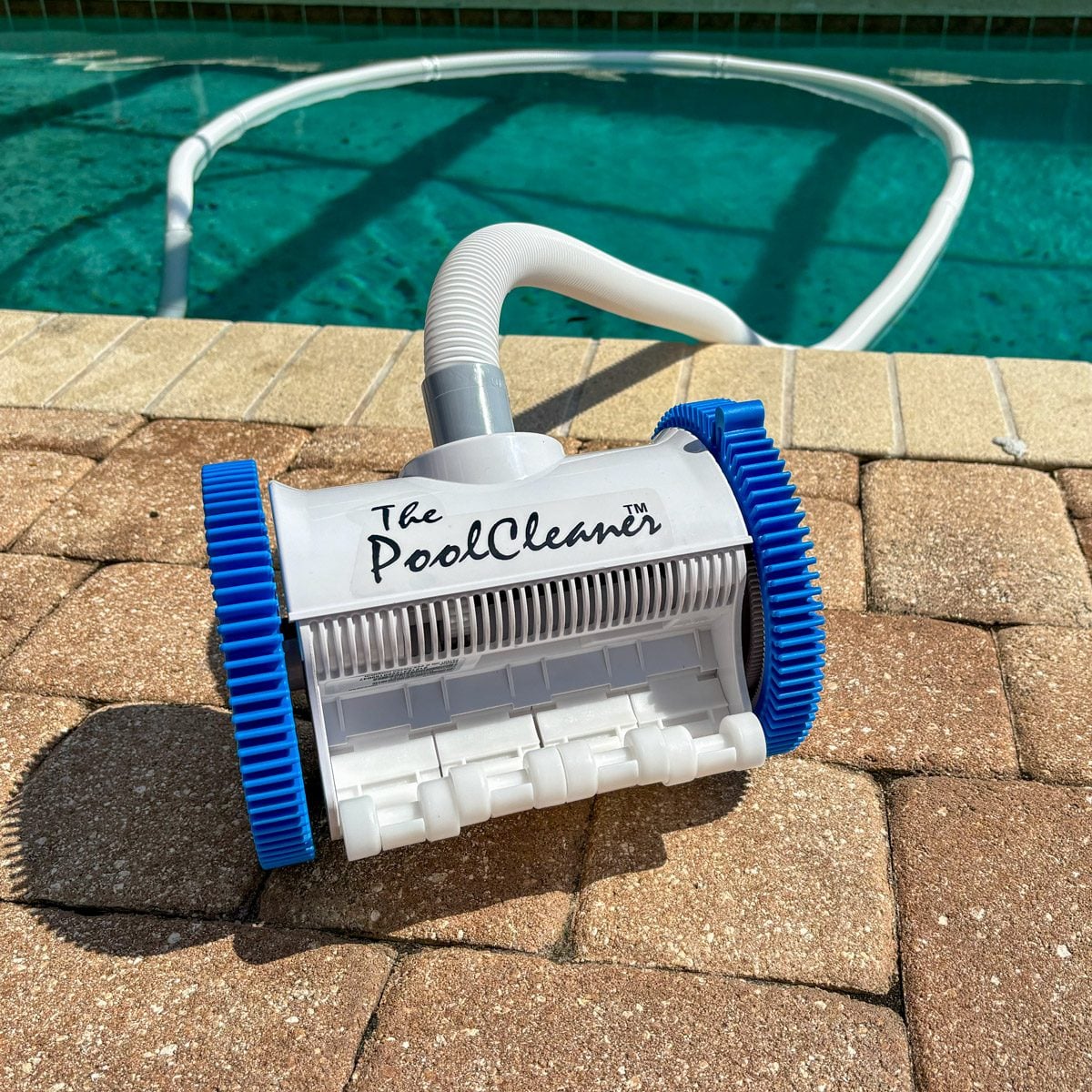
Automatic pool cleaners make an appealing promise: connect a hose, walk away, and return to a sparkling pool while feeling suspiciously productive. The 2-Wheel Hayward PoolCleaneralso known by its Poolvergnuegen nametakes the old-school suction-cleaner approach and adds chunky tires, programmed steering, and a turbine designed to swallow debris without throwing a mechanical tantrum.
Does it actually make pool maintenance easier, or does it spend the afternoon repeatedly head-butting the same step? We evaluated its design, setup requirements, documented hands-on performance, long-term owner feedback, and maintenance needs to determine where this Hayward suction pool cleaner excels and where expectations should remain safely in the shallow end.
Editorial note: This review synthesizes manufacturer documentation, professional product testing, retailer specifications, and recurring owner experiences. It does not claim that this publication conducted an independently documented laboratory test.
What Is the 2-Wheel Hayward Pool Cleaner?
The Hayward 2-Wheel PoolCleaner is an automatic suction-side cleaner for in-ground swimming pools. Instead of using a power cord, rechargeable battery, or separate booster pump, it connects to the pool’s skimmer or dedicated suction port. Water moving through the pool’s existing pump and filtration system powers both the cleaner’s wheels and its vacuuming action.
Hayward identifies the white open-line version as model W3PVS20JST. The cleaner is marketed primarily for average-size in-ground pools, while the four-wheel model is intended for larger pools where additional traction is needed to pull a longer hose. Retail specifications commonly rate the two-wheel version for pools up to approximately 16 by 32 feet and list about 33 feet of hose.
Quick Verdict
The Hayward PoolCleaner 2-Wheel is a strong choice for pool owners who want reliable floor cleaning without paying for a premium robotic cleaner. Its simple suction-powered design, replaceable components, capable steering system, and impressive debris handling make it especially attractive for standard residential pools.
However, it is not a magic underwater butler. It depends on a clean filter, correct hose length, adequate pump flow, and careful suction adjustment. Wall, stair, and waterline coverage can vary significantly with pool shape and surface.
Key Features and Specifications
| Cleaner type | Automatic suction-side pool cleaner |
|---|---|
| Recommended pool type | In-ground residential pools |
| Drive system | Two-wheel drive |
| Power source | Existing pool pump and filtration system |
| Connection | Skimmer or dedicated suction port |
| Included hose | Approximately 33 feet, depending on package and seller |
| Typical pool size | Up to approximately 16 by 32 feet |
| Primary cleaning area | Pool floor; wall and step performance varies |
| Notable technology | Self-adjusting turbine vanes, programmed steering, roller skirts, interchangeable suction throats |
How the Hayward 2-Wheel Pool Cleaner Works
Self-Adjusting Turbine Vanes
Inside the cleaner is a turbine that converts water flow into wheel movement. Its flexible vanes adjust as debris passes through, helping the machine maintain power while allowing leaves and other moderately large material to move through the intake.
This is one of the cleaner’s most useful features. Basic suction vacuums can become clogged by a leaf that approaches the intake with too much confidence. The Hayward design provides more clearance and gives the vanes room to flex rather than immediately jam. Hayward also supplies interchangeable suction throats so owners can better match the opening to pump flow and expected debris.
Programmed Steering
The cleaner does not map the pool or use cameras. Instead, an internal steering mechanism periodically reverses the left wheel, causing the machine to rotate and leave in a different direction.
The two-wheel model uses several turning sequences ranging from roughly 90 to 450 degrees and generally travels about eight to ten feet before changing direction. Its route can look random, but the changing turn patterns are designed to improve coverage over a long cleaning session. Think less “precision military operation” and more “determined turtle with a surprisingly effective schedule.”
Roller Skirts and Tire Treads
Flexible skirts surround the intake and adjust when the cleaner travels across drains, transitions, or uneven surfaces. This helps preserve suction instead of allowing a large gap to open beneath the cleaner.
The front tires have raised tread sections intended to improve traction and help the unit cross obstacles. Wear indicators are molded into the tires so owners can see when replacement is due. Optional tires may be necessary on especially smooth fiberglass, ceramic-tile, or glass-tile surfaces.
Setup: Easy, but Calibration Matters
Mechanical assembly is relatively straightforward. Hose sections connect to one another, the leader hose attaches to the cleaner, and the opposite end connects to either the skimmer assembly or a dedicated suction line.
The important work happens before the cleaner begins wandering around underwater. The pump basket and skimmer basket should be emptied, the filter should be clean, and major storm debris should be removed manually. Otherwise, reduced circulation may make a perfectly healthy cleaner behave as though it has entered early retirement.
Getting the Hose Length Right
The assembled hose should reach the farthest point in the pool with roughly one or two additional hose sections available for movement. A hose that is too short may prevent shallow-end coverage or cause the cleaner to fall onto its side. Too much hose can tangle, coil, or interfere with steering.
Hoses should be stored straight rather than tightly coiled. If a section develops a curve, placing it straight in warm sunlight may help relax the material. The leader hose should not be used as a handle for dragging the machine across the deck unless kinked hoses are part of your decorating plan.
Prime the Hose Before Connecting It
All air should be removed from the cleaner and hose before the pump begins drawing through them. Each hose section can be submerged and filled with water before the connection is completed. Allowing the system to pull a large pocket of air may cause the pump to lose prime or introduce bubbles through the return jets.
Adjust the Wheel Speed
Correct flow is essential. Current Hayward guidance for this cleaner family recommends counting rotations of the right front wheel while keeping the operating cleaner just below the water’s surface. The target is generally between 11 and 14 revolutions per minute.
Below that range, the cleaner may move slowly, struggle with inclines, or miss sections of the pool. Excessive flow can make it climb too aggressively, suck air near the waterline, or wear parts faster. Flow can be corrected using the regulator valve, pool valves, pump speed, or the appropriate interchangeable throat.
Cleaning Performance
Pool-Floor Coverage
Floor cleaning is the Hayward PoolCleaner’s strongest skill. Its wide intake and close contact with the surface allow it to pick up dust, grit, insects, small leaves, and ordinary backyard debris. Independent testing has found the cleaner effective and relatively hands-off, including in the deep end, although complete coverage can require a long operating period.
The route may appear inefficient because the cleaner can cross one section several times before discovering an untouched corner. Over a longer pump cycle, however, the programmed turns generally provide respectable coverage in pools without unusually complicated geometry.
Leaves and Larger Debris
The flexible turbine is less likely to choke on ordinary leaves than many narrow-throat suction cleaners. That does not mean it should be sent into a pool containing half a tree. Large piles, long twigs, stones, toys, and heavy post-storm debris should still be removed before operation.
Because collected material travels into the pool’s filtration system, pools surrounded by trees may benefit from an inline leaf canister. A canister intercepts larger debris before it reaches the pump basket and also makes cleanup more convenient.
Walls, Steps, and the Waterline
Wall-climbing claims deserve context. The tires and skirts can help the cleaner climb sloped transitions and portions of some walls, and independent testers have observed good deep-end wall performance under favorable conditions. Other pools may see only partial climbing before the steering mechanism turns the cleaner back toward the floor.
Surface texture, wall angle, pump flow, tire condition, and hose buoyancy all affect climbing. Small steps, benches, tanning ledges, and sharp corners remain difficult for most suction cleaners. Anyone expecting robotic-style scrubbing from floor to waterline may find the two-wheel model underqualified for the job.
What We Like
- Strong everyday floor cleaning: It handles common dirt, sediment, insects, and moderate leaf debris effectively.
- No separate electrical equipment: The cleaner operates through the existing pool pump.
- Simple mechanical construction: There are no batteries, software updates, mobile apps, or underwater charging drama.
- Useful low-flow design: Turbine vanes and interchangeable throats help adapt the unit to different circulation systems.
- Good obstacle maneuverability: Raised tire treads and roller skirts help it cross drains and uneven transitions.
- Replaceable wear parts: Tires, skirts, turbine components, gears, and body parts are available separately.
- Quiet operation: It avoids the repetitive pulsing noise associated with some diaphragm-style cleaners.
What Could Be Better
- Coverage takes time: The non-mapping steering pattern may require several hours to reach the entire floor.
- Performance depends on the pool system: A dirty filter, clogged basket, air leak, or low pump speed quickly reduces movement.
- The skimmer may be occupied: Pools without a dedicated suction line can lose normal surface-skimming performance while the cleaner is attached.
- Wall cleaning is inconsistent: It should not be purchased solely as a waterline or stair-cleaning solution.
- Debris enters the pool filter: Owners must monitor the pump basket, skimmer, and filter pressure.
- Setup is sensitive: Hose length and flow calibration make a noticeable difference.
Maintenance and Common Problems
Routine maintenance is uncomplicated. Inspect the intake and turbine for trapped debris, rinse the swivel, check hoses for leaks, and examine the tires and skirts for wear. Hoses should be removed carefully and stored straight in a shaded location.
The Cleaner Does Not Move
Begin with the pool system rather than immediately disassembling the cleaner. Confirm that the pump is running at an appropriate speed, the filter is clean, the baskets are empty, and the cleaner hose is fully primed. Bubbles from the return jets may indicate a suction-side air leak.
If circulation appears normal, switch off the pump and inspect the turbine chamber for pebbles, twigs, or compacted leaves. Hayward’s troubleshooting guidance also recommends checking whether the right front wheel turns smoothly by hand. Resistance can indicate an obstruction, while skipping may suggest a worn hub or drive component.
It Stays in One Part of the Pool
Check hose length, hose float placement, return-jet direction, and whether the hose swivel moves freely. Return fittings aimed across the pool can push the hose and quietly sabotage coverage. Pointing returns downward often reduces that interference.
It Climbs Too High
Excessive climbing usually indicates too much suction, although worn tires or skirts may also change how tightly the cleaner seals against the surface. Reduce flow until the right wheel returns to the recommended range.
Two Wheels or Four Wheels?
The two-wheel model is designed for average residential pools and includes a shorter hose. It is lighter, less expensive, and perfectly capable when the farthest point of the pool is within its reach.
The four-wheel version is better suited to larger pools, long hose runs, and layouts with substantial deep ends. The extra wheels do not automatically make it clean twice as well; they primarily add traction and stability while pulling more hose. Hayward itself distinguishes the two-wheel cleaner for average pools and the four-wheel cleaner for larger installations.
Who Should Buy the Hayward 2-Wheel Pool Cleaner?
This cleaner is well suited to owners of standard-size in-ground pools who already run their circulation pump daily and want dependable, low-fuss floor maintenance. It is particularly appealing to people who prefer repairable mechanical equipment over an expensive robot with proprietary electronics.
It also makes sense for pools that collect moderate amounts of leaves and sediment, provided the filtration system is healthy and the owner is willing to empty baskets regularly.
Who Should Consider Something Else?
A robotic cleaner may be a better investment for owners who want independent filtration, active brushes, scheduled cycles, predictable waterline coverage, or minimal dependence on pump settings. A pressure-side cleaner may be preferable in pools that constantly collect heavy leaves and already have suitable pressure plumbing.
The two-wheel Hayward is also less appropriate for very large pools, elaborate free-form designs, extensive steps, or layouts where a 33-foot hose cannot comfortably reach every area. In those situations, the four-wheel version or an appropriately sized robot deserves consideration.
Our Extended Experience With the Hayward 2-Wheel Cleaner
The ownership experience begins less like opening a futuristic gadget and more like assembling a cheerful underwater tractor. There is no charging station, control box, or phone-pairing ritual. The cleaner body feels mechanically purposeful, while the large tires and broad intake suggest that Hayward expects it to encounter actual backyard debris rather than a carefully staged sprinkle of sand.
Connecting the hose sections is easy, but determining the correct number requires more attention. The goal is not to use every section simply because it came in the box. Once the cleaner can reach the farthest pool corner with a little extra length, additional hose may create more trouble than opportunity. Straightening the sections before installation also reduces the tendency for the hose to pull the cleaner into a repeating path.
The most important part of the experience is flow adjustment. At insufficient flow, the cleaner looks healthy but unmotivated. It creeps forward, turns reluctantly, and may never reach a shallow shelf. Increase the flow gradually, and the wheels develop a steady, confident rhythm. The 11-to-14-RPM check is worth performing because guessing by eye is surprisingly unreliable. “It seems fast enough” is not an internationally recognized unit of pool maintenance.
Once calibrated, the machine’s movement becomes oddly entertaining. It advances in a straight line, pauses for its steering sequence, reverses one wheel, pivots, and sets off on another route. Individual movements do not always make sense. At times it revisits a clean patch as though checking whether the dirt has returned. Given enough operating time, however, those varied turns begin to reach areas that initially appeared forgotten.
Fine material is where the cleaner makes the most visible difference. Dust, dead insects, grit, and small organic debris disappear into the intake without requiring repeated manual vacuuming. Moderate leaves usually pass through the turbine, although a leaf canister becomes a wise addition in heavily landscaped yards. It is easier to empty a transparent canister than to repeatedly open a pump lid and negotiate with a basket full of soggy foliage.
Obstacle handling is another highlight. The raised front treads give the cleaner a chance to cross a main drain rather than settling onto it permanently. Adjustable skirts help maintain suction as the body tilts over uneven areas. No cleaner is immune to every drain cover or sharp transition, but this design handles common interruptions better than many flat-disc suction vacuums.
Wall performance is more variable. In a pool with sufficient flow, grippy surfaces, and gradual curves, the cleaner may climb well into the deep-end walls. In another pool, it may rise a short distance and turn back. That behavior is not necessarily a fault; the machine’s primary mission is cleaning the floor. Steps and narrow ledges remain the places where a brush or manual vacuum may still need to report for duty.
Long-term ownership appears refreshingly practical. Tires display visible wear markers, and common internal components can be replaced rather than forcing owners to discard the entire cleaner. Retail feedback includes reports of units operating for many years, although longevity naturally depends on chemical balance, storage, operating hours, and timely replacement of wear parts.
The experience is therefore less “press one button and forget the pool exists” and more “set it up correctly and let a durable machine handle most routine floor debris.” For many pool owners, that is exactly the right bargain.
Final Verdict: Is the Hayward 2-Wheel Pool Cleaner Worth It?
Yesfor the right pool. The Hayward PoolCleaner 2-Wheel combines capable suction, useful obstacle clearance, straightforward mechanics, and strong everyday floor cleaning. It is quieter and more durable-looking than many entry-level suction cleaners, while remaining simpler and generally less costly than a sophisticated robotic unit.
Its biggest limitation is not cleaning power but dependence on proper conditions. The hose must be the right length, the pump and filter must be healthy, and suction must be calibrated rather than cranked to maximum. Owners who complete those steps are likely to see steady, effective performance with relatively little daily intervention.
Buy it for routine floor cleaning, repairable construction, and convenient pump-powered operation. Do not buy it expecting perfect stair scrubbing, guaranteed waterline coverage, or intelligent mapping. It is an underwater workhorsenot a submarine with artificial intelligenceand that honest simplicity is a large part of its appeal.