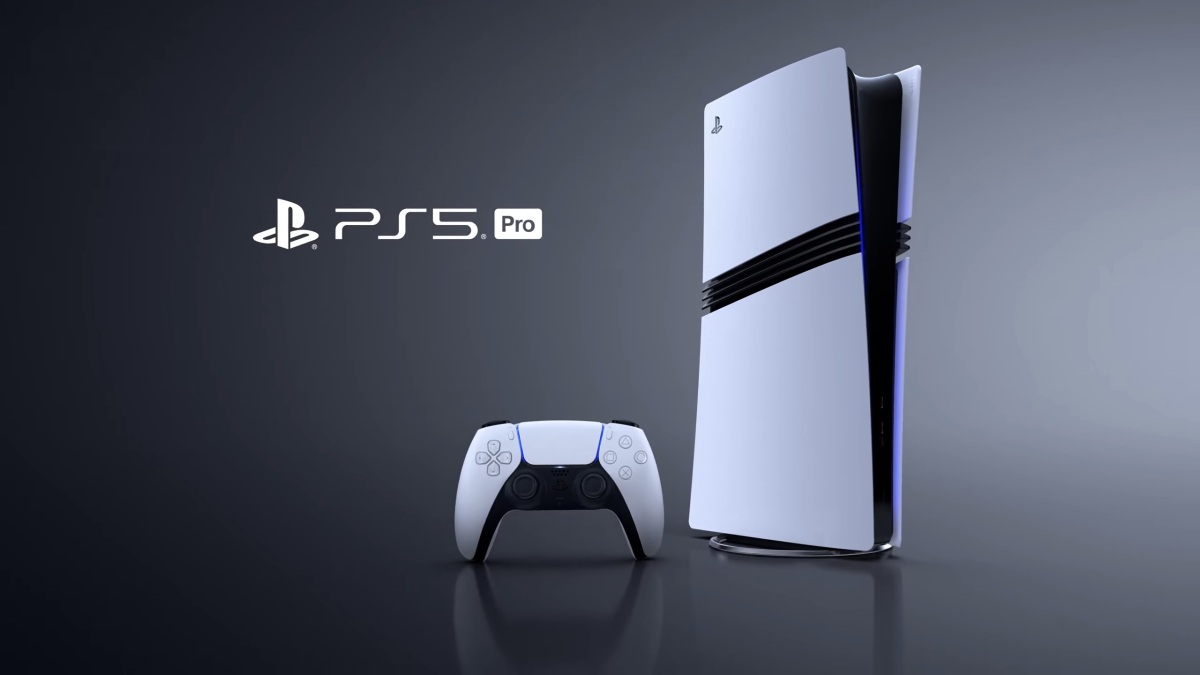
Sony’s most powerful PlayStation console arrived with a simple promise and a complicated price tag: deliver the visual detail of a game’s Fidelity mode without forcing players to surrender the smooth frame rates of Performance mode. In other words, the PS5 Pro wants to end one of modern gaming’s most irritating menu decisions.
The official reveal introduced a familiar-looking console with a substantially upgraded graphics system, improved ray tracing, artificial-intelligence-powered image reconstruction, and a larger 2TB solid-state drive. Sony launched the PS5 Pro in the United States on November 7, 2024, at an original suggested retail price of $699.99. That made it a premium mid-generation refresh rather than a replacement for the standard PlayStation 5.
So, what did that first look actually reveal? More importantly, were the improvements meaningful enough to justify calling the machine “Pro,” or did Sony simply add racing stripes to the same enormous white spaceship?
The PS5 Pro Reveal Focused on One Familiar Problem
PS5 games often ask players to choose between two imperfect options. Fidelity mode typically offers sharper textures, denser environments, higher resolutions, and more advanced lighting, but it may target only 30 frames per second. Performance mode usually aims for 60 frames per second, but the image can become softer and some visual effects may be reduced.
Lead system architect Mark Cerny presented the PS5 Pro as an attempt to reduce that compromise. Rather than introducing a new generation, a new controller, or exclusive games, Sony concentrated on giving developers more graphics power. The goal was to approach Fidelity-level image quality while maintaining the responsiveness associated with Performance mode.
That distinction matters. The PS5 Pro does not make every game fundamentally different. It does not add new missions to Marvel’s Spider-Man 2, teach Kratos fresh jokes, or make your online teammates suddenly understand the objective. Its job is to display existing and upcoming PlayStation games with cleaner images, steadier performance, and more sophisticated lighting.
The “Big Three” PS5 Pro Upgrades
Sony organized the technical pitch around three major improvements: a larger graphics processor, more capable ray tracing, and PlayStation Spectral Super Resolution, commonly shortened to PSSR.
A Faster and Larger GPU
According to Sony’s reveal specifications, the PS5 Pro GPU contains 67% more compute units than the graphics hardware in the standard PS5. Its memory is also 28% faster. Sony said those changes could enable rendering that is up to 45% faster during gameplay.
Those percentages do not mean every title automatically receives 45% more frames. Performance depends on the game engine, developer patches, resolution targets, and whether the original bottleneck came from the graphics processor or the CPU. Still, the larger GPU gives developers considerably more room to improve resolution, effects, and frame-rate stability.
Advanced Ray Tracing
Ray tracing simulates how light interacts with surfaces, producing more convincing reflections, shadows, illumination, and refraction. It can make wet streets reflect signs accurately, allow glass buildings to mirror their surroundings, and prevent shiny objects from looking like they were coated in discount plastic wrap.
The problem is that ray tracing is computationally expensive. On the original PS5, developers frequently reduce resolution or frame rate when enabling advanced ray-traced effects. Sony said the PS5 Pro can calculate certain ray-tracing workloads at approximately twiceand sometimes three timesthe speed of the standard system.
Games such as Gran Turismo 7, Marvel’s Spider-Man 2, and Hogwarts Legacy demonstrated why this matters. More accurate reflections and lighting can remain active without forcing the same severe performance sacrifice required on the base console.
PlayStation Spectral Super Resolution
PSSR may be the most important PS5 Pro feature over the long term. It is Sony’s machine-learning-based upscaling technology, designed to reconstruct a sharper high-resolution image from a lower internal rendering resolution.
The basic idea is practical. Rendering every frame at a very high native resolution requires enormous graphics power. Rendering at a lower resolution is easier, but the resulting picture can look blurry. PSSR analyzes the image and adds reconstructed detail, allowing developers to pursue higher frame rates without producing a picture that resembles a livestream viewed through a foggy window.
Early analysis of games such as Final Fantasy VII Rebirth showed one of the clearest potential benefits. The game’s original Performance mode could look noticeably soft on a standard PS5. PS5 Pro enhancements produced a sharper presentation while retaining fluid 60-fps gameplay. Reviewers generally found PSSR impressive, although some games displayed reconstruction artifacts or required additional developer updates.
PS5 Pro Design: Familiar, Taller, and Striped
The first official images did not reveal a radical redesign. The PS5 Pro retained Sony’s curved white side panels, black center section, and vertical profile. Its proportions fell somewhere between the original PS5 and the PS5 Slim, while three black stripes across the middle distinguished it from its less expensive relatives.
It remained a large console. Nobody was likely to mistake it for a streaming stick, a router, or anything that could politely disappear inside a small entertainment cabinet.
The retail package included the console, one standard DualSense wireless controller, a 2TB SSD, and a preinstalled copy of Astro’s Playroom. Existing accessoriesincluding PlayStation VR2, PlayStation Portal, DualSense Edge, the Access controller, and Sony’s compatible headsetscontinued to work with the system.
The user interface and basic operating experience also remained familiar. Moving from a standard PS5 to a PS5 Pro was intended to feel like upgrading the engine rather than learning to drive an entirely new car.
The 2TB SSD Is a Quietly Important Upgrade
The original launch-model PS5 shipped with an 825GB SSD, only part of which was available for games. The PS5 Pro included 2TB of internal storage, giving owners much more room before they needed to delete a giant release just to install another giant release.
That is a practical improvement in an era when blockbuster games can consume well over 100GB. Players juggling titles such as Call of Duty, Final Fantasy VII Rebirth, Gran Turismo 7, and several live-service games can fill a smaller drive surprisingly quickly.
The console also retained an internal M.2 expansion slot and support for external USB storage. Wi-Fi 7 support provided another forward-looking upgrade, although actual network performance still depends on compatible equipment, internet service, local congestion, and whether someone else in the house is streaming four movies at once for reasons nobody fully understands.
The Missing Disc Drive Became the Biggest Hardware Controversy
Despite its premium launch price, the PS5 Pro did not include an optical disc drive. It was sold as a digital console, although buyers could attach the removable Ultra HD Blu-ray drive designed for the PS5 Slim. At launch, that accessory cost an additional $79.99 in the United States.
The vertical stand was also sold separately. That combination made the complete price feel even less friendly to physical-game collectors. A customer who wanted the console, disc drive, and stand had to spend considerably more than the headline price before purchasing a single new game.
This decision was especially awkward for enthusiaststhe exact audience Sony was targeting. Many long-time PlayStation owners had accumulated shelves of PS4 and PS5 discs. Asking those customers to pay extra merely to retain access to their physical libraries made the word “premium” sound suspiciously similar to “accessories not included.”
Which Games Demonstrated the PS5 Pro Difference?
Sony’s first-look presentations highlighted a mixture of first-party and third-party games, including:
- Final Fantasy VII Rebirth
- Marvel’s Spider-Man 2
- Horizon Forbidden West
- The Last of Us Part II Remastered
- Ratchet & Clank: Rift Apart
- Gran Turismo 7
- Hogwarts Legacy
- EA Sports F1 24
- Demon’s Souls
- Stellar Blade
More than 50 enhanced games were available around the console’s launch, with developers applying the additional power in different ways. Some added new Pro-specific modes. Others increased rendering resolution, strengthened ray tracing, stabilized frame rates, or used PSSR to improve image clarity.
Final Fantasy VII Rebirth became an especially persuasive example because its sharper Pro presentation addressed a visible weakness in the base game’s Performance mode. Spider-Man 2 demonstrated how high-quality reflections and dense city detail could coexist with smoother movement. Racing games benefited from clearer distant objects, realistic reflections, and high-refresh-rate options that were easier to appreciate during rapid motion.
The improvements varied by title, however. A PS5 Pro label did not guarantee that every enhancement would be dramatic. Developer effort remained essential, and some changes were easier to see on a large 4K display or gaming monitor than on a smaller television viewed from across the room.
What About Older PS4 and Unpatched PS5 Games?
PS5 Pro Game Boost was designed to improve performance or image quality in supported backward-compatible games. Sony said the system could play more than 8,500 PS4 titles, with selected games benefiting from faster or smoother frame rates.
However, Game Boost should not be confused with a handcrafted PS5 Pro patch. A developer-created update can introduce targeted graphics modes, tuned PSSR support, improved reflections, or carefully selected resolution settings. Automatic boosting is generally more limited because the console must work within the behavior of the original software.
There were also no PS5 Pro-exclusive games. Standard PS5 owners continued to receive the same game releases. The Pro offered a more polished version of the experience rather than access to a separate library, which was good news for consumers and less exciting news for anyone hoping the machine would unlock a secret sequel to Bloodborne.
Does the PS5 Pro Completely Eliminate Graphics Modes?
Not entirely. Sony’s pitch emphasized reducing the choice between Fidelity and Performance settings, but developers remained free to offer multiple modes. Some enhanced games included several combinations of resolution, ray tracing, frame rate, and PSSR.
This flexibility can be useful. Owners of 120Hz televisions may prefer a 40-fps or high-frame-rate mode with variable refresh rate. Competitive players may still select the fastest available setting, while cinematic-game fans may prioritize maximum visual quality.
The meaningful change is that the options generally start from a stronger hardware foundation. A PS5 Pro Performance mode can look closer to the standard PS5’s Fidelity mode, while a Pro Fidelity setting may add effects that the original hardware cannot sustain as comfortably.
Independent reviews reached a similar conclusion: the Pro is clearly more capable, but the visibility of the improvement depends on the game, screen, seating distance, and sensitivity of the player. The closer and better the display, the easier it becomes to appreciate fine detail, distant objects, reduced shimmering, and improved reflections.
Who Is the PS5 Pro Really For?
The PS5 Pro was never designed to be the automatic choice for every PlayStation customer. Sony representatives and industry analysts consistently described the target audience as highly engaged enthusiasts who wanted the strongest console performance available.
It made the most sense for players who:
- Use a large 4K television or high-quality gaming monitor.
- Own a 120Hz display with HDMI 2.1 and variable refresh rate.
- Notice resolution changes, unstable frame rates, reconstruction artifacts, and ray-tracing quality.
- Prefer console convenience but want performance closer to a high-end gaming PC experience.
- Are entering the PlayStation ecosystem and want the most capable model.
- Play many enhanced first-party and major third-party games.
It made less sense for someone already satisfied with a regular PS5, using a modest 1080p display, sitting far from the television, or primarily playing indie games that do not push the hardware. A standard PS5 remained capable of running the same library and delivering excellent results.
The base console was not suddenly transformed into a decorative bread warmer because a faster version existed. For most players, it remained the stronger value.
First-Look Verdict: Impressive Technology, Difficult Value
The first look at the PS5 Pro revealed an intelligently focused upgrade. Sony did not waste its additional hardware budget on a new interface or decorative gimmicks. It attacked the most persistent weakness of contemporary console graphics: the frustrating trade-off between sharp visuals and responsive frame rates.
The faster GPU, improved ray tracing, and PSSR technology created meaningful gains in the right games. Reviewers frequently praised the clarity of enhanced Performance modes, the stability of demanding titles, and the ability to retain attractive lighting effects at or near 60 frames per second.
Nevertheless, the value argument remained complicated. The original $699.99 launch price was already high, and the separate disc drive and stand made the total cost harder to defend. The PS5 Pro was an excellent demonstration of what premium console hardware could accomplish, but it was not an essential upgrade for everyone who already owned a PS5.
That tension defined the machine. It was simultaneously the best PlayStation 5 and the easiest PlayStation 5 to skip. Engadget, Wired, Tom’s Guide, Digital Trends, GamesRadar, TechRadar, GameSpot, Ars Technica, and The Verge generally agreed that the hardware produced genuine improvements; their disagreement centered on how much those improvements mattered relative to the price.
Extended Experience: What the PS5 Pro First Look Means in Everyday Gaming
Based on demonstrations and hands-on reports, the PS5 Pro experience is not best described as a dramatic “before and after” transformation. It is closer to putting on an updated pair of prescription glasses. The room is the same, the furniture has not moved, and your favorite game has not developed an entirely new personality. Yet small details become easier to see, edges appear cleaner, movement feels steadier, and returning to the softer image can suddenly be more noticeable than expected.
Imagine starting Final Fantasy VII Rebirth and choosing a mode that preserves the responsiveness of 60-fps gameplay without making Cloud’s hair, distant signs, and detailed environments look unusually soft. The benefit is not limited to a frozen screenshot. Greater image stability matters while the camera is moving, characters are fighting, effects are filling the screen, and the game is trying to display a detailed landscape without turning every distant object into sparkling confetti.
In Marvel’s Spider-Man 2, the improvement is easier to appreciate while swinging rapidly through New York. A higher frame rate makes motion more responsive, while enhanced reflections and image reconstruction help buildings retain detail as they rush past. You are not necessarily stopping on every rooftop to count reflected windows, but the complete scene can feel cleaner and more coherent.
That experience also depends heavily on the display. On a 65-inch 4K OLED viewed from a reasonable distance, improved contrast, ray-traced reflections, stable frame rates, and sharper fine detail can combine into a noticeably more polished picture. On an older 1080p television across a large room, the difference may shrink from “premium upgrade” to “perhaps that tree looks slightly nicer.”
A 120Hz screen adds another layer. Games that support 40-fps modes, variable refresh rate, or higher-frame-rate settings can offer a useful middle ground between traditional 30- and 60-fps choices. The result can feel smoother than a standard quality mode while preserving more graphical detail than an aggressive performance setting.
The 2TB SSD may produce the most immediate everyday benefit. You can keep a larger rotation of games installed without performing the familiar storage-management ceremony: inspect library, sigh deeply, delete a 140GB game, and discover two days later that a friend wants to play it.
The missing disc drive changes the experience in a less pleasant way. A digital-only player can unpack the console, transfer data, download games, and continue normally. A physical collector must locate and purchase the optional drive, attach it, register it, and accept that a premium system arrived without the component needed to read an existing library.
Ultimately, the PS5 Pro experience rewards attention. Players who care about frame pacing, edge clarity, distant detail, lighting quality, and display technology are more likely to appreciate it every time they play. Someone who simply wants to sit down, launch a game, and have fun may enjoy the improvement without ever feeling that the standard PS5 was inadequate.
That is both the console’s greatest strength and its biggest obstacle. The PS5 Pro does not rescue bad games, create additional free time, or prevent an online opponent from celebrating an easy goal as though they just won the World Cup. What it does is remove more technical friction, allowing ambitious games to look sharper and run more smoothly. For the right player, that refinement can be difficult to give up once it becomes familiar. For everyone else, it remains an impressive luxury rather than a necessary purchase.
Conclusion
Our first official look at the PS5 Pro showed a console built for enthusiasts rather than the mass market. Its upgraded GPU, advanced ray tracing, PSSR upscaling, 2TB SSD, and support for enhanced games addressed real weaknesses in the standard PS5 experience.
The machine’s most convincing achievement was not simply generating prettier screenshots. It allowed developers to pursue sharper images and smoother gameplay at the same time. That made visually demanding releases feel more polished and helped selected Performance modes avoid the softness seen on the original console.
Still, stronger graphics could not erase the concerns surrounding price, subtle differences in some games, or the absence of an included disc drive. The PS5 Pro represented the finest version of Sony’s current-generation console ideabut “finest” and “best value” were not always the same thing.
Note: Prices and availability mentioned in this article refer to the original United States launch information and may change over time. The article synthesizes official PlayStation materials and reporting or hands-on analysis from established U.S. gaming and technology publications.