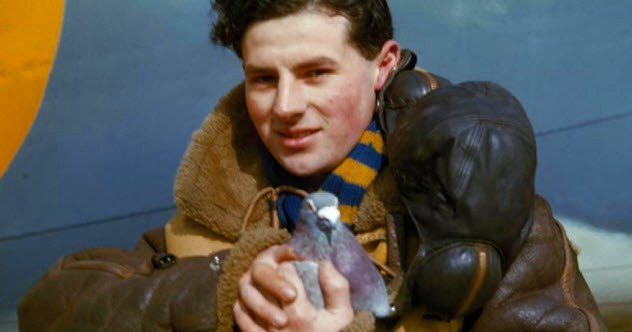
Before encrypted radios, satellites, and smartphones made it possible to send a message while standing in line for coffee, armies had a much smaller communications department with feathers, excellent navigation skills, and absolutely no interest in office politics. Wartime pigeons carried messages through gunfire, storms, enemy territory, and the general chaos of battle.
These heroic messenger pigeons were not ordinary city birds waiting near a park bench for a dropped French fry. They were trained homing pigeons, carefully bred and conditioned to return to their lofts with crucial information attached to small containers on their legs. In an era when wires were cut, radios failed, and runners could be intercepted, a pigeon could be the difference between a rescue mission, a military disaster, and a very unhappy commander.
This list of the top 10 heroic wartime pigeons celebrates birds whose missions became part of military history. Some helped stop friendly fire. Some alerted rescuers to stranded aircrews. Others carried intelligence from occupied Europe or brought early news from the Normandy landings. Their stories are remarkable not because pigeons were magically fearless, but because they were trained animals sent into dangerous situations created by humans. That distinction matters. So does their legacy.
Why Messenger Pigeons Were So Valuable in War
Homing pigeons had one major military advantage: they could return to a familiar loft even when released far away. A soldier, pilot, resistance worker, or reconnaissance unit could write a brief message, secure it in a lightweight capsule, and release the bird. The pigeon would fly home, where handlers collected the message and passed it along.
That sounds charming until you remember the conditions. A wartime pigeon might face artillery smoke, rain, exhaustion, hawks, enemy gunfire, predators, and the deeply unfair expectation of being a tiny bird with the responsibility level of a communications officer. Yet pigeons proved dependable enough that military forces in both world wars trained and deployed them in large numbers.
Not every mission succeeded, and not every famous story is perfectly documented. Wartime legends often grow extra feathers over time. Still, the pigeons below are associated with well-recorded acts of endurance, lifesaving communication, and exceptional service.
The Top 10 Heroic Wartime Pigeons
1. Cher Ami: The Pigeon Who Helped Save the Lost Battalion
No list of heroic war pigeons can begin anywhere else. Cher Ami, whose French name translates to “Dear Friend,” became the best-known American messenger pigeon of World War I after carrying a desperate message from trapped U.S. soldiers in France.
In October 1918, elements of the U.S. 77th Division were cut off in the Argonne Forest. The soldiers were surrounded, low on supplies, and suffering from friendly artillery fire. Attempts to communicate failed, leaving carrier pigeons as one of the few remaining options.
Cher Ami was released with a message urging American artillery to stop shelling the trapped troops. During the flight, the bird was hit and badly injured, suffering a chest wound and severe damage to a leg. Despite this, Cher Ami reached the loft and delivered the message.
The bird became a symbol of the U.S. Army Signal Corps Pigeon Service and later received the French Croix de Guerre. For decades, Cher Ami’s sex was debated, but modern DNA analysis confirmed that this famous pigeon was male. History sometimes takes a century to update a personnel file.
2. G.I. Joe: The Bird That Stopped a Friendly Bombing Run
G.I. Joe was a U.S. Army pigeon whose 1943 mission in Italy became one of the most celebrated stories of World War II animal heroism. The situation involved the Italian village of Calvi Vecchia, which had been scheduled for an Allied bombing raid because German forces were believed to be there.
British troops captured the village ahead of schedule, but communication problems meant the planned airstrike had not been canceled. Radio contact was unavailable or ineffective, leaving little time to warn the air base that friendly troops had already moved into the target area.
G.I. Joe was released with the cancellation message and flew roughly 20 miles in about 20 minutes. The pigeon arrived just in time to prevent the bombing from going ahead as planned. The mission is often credited with saving British soldiers and civilians in the village from a tragic friendly-fire attack.
G.I. Joe later received the PDSA Dickin Medal, a major award for animal gallantry in wartime service. It is hard not to admire a bird whose job description included “prevent catastrophic airstrike before lunch.”
3. Winkie: The Oil-Soaked Rescue Messenger
Winkie was a Royal Air Force carrier pigeon who helped save the crew of a downed aircraft in the North Sea during World War II. In February 1942, an RAF aircraft was forced to ditch in the sea after coming under attack during a mission over Norway.
The crew could not radio their position. Their emergency option was Winkie, who was released despite terrible weather and difficult flying conditions. The bird returned to its loft covered in oil and exhausted from the journey.
Handlers recognized that Winkie’s arrival meant an aircraft was in trouble. By analyzing the flight timing and other details, rescue services were able to narrow down the likely location of the missing crew. A rescue operation followed, and the airmen were saved.
Winkie became one of the first recipients of the PDSA Dickin Medal. The story is a reminder that in wartime, even a soaked pigeon arriving home can be the beginning of a rescue.
4. White Vision: Nine Hours Through Brutal Weather
White Vision earned her place among heroic wartime pigeons after helping save an RAF aircrew in 1943. She was aboard a flying boat that was forced to ditch in difficult conditions off the coast of Scotland.
With the aircraft unable to communicate its position effectively, White Vision was released with a message. She flew through bad visibility, severe weather, and strong headwinds for approximately nine hours before reaching her loft.
Her message contributed to the rescue of 11 crew members. That is an extraordinary achievement for any messenger, especially one navigating cold skies with no dashboard, no map screen, and no helpful voice saying, “In 500 feet, turn slightly left.”
White Vision received the Dickin Medal for gallantry, honoring the difficult conditions under which she completed the mission.
5. Mary of Exeter: The Pigeon Who Refused to Quit
Mary of Exeter was a British carrier pigeon whose story reads like a wartime adventure novel, except the protagonist has wings and a much stronger work ethic than most fictional spies. She carried messages from occupied France back to England during World War II.
Mary completed several successful intelligence missions and survived repeated attempts to stop her. She was wounded in the neck and breast during one mission and survived an attack by a trained hawk. German forces understood the value of messenger pigeons and sometimes used hawks to intercept them.
As if enemy fire and aerial predators were not enough, Mary also survived when her loft was damaged by bombing. She remained a powerful symbol of endurance and received the Dickin Medal for her service.
Mary of Exeter represents the resilience of wartime messenger pigeons. She did not merely complete a single dramatic flight; she endured repeated danger and kept serving.
6. Commando: The Undercover Intelligence Carrier
Commando was a pigeon with a name that sounds as if it should come with sunglasses and a tiny action-movie soundtrack. In reality, this bird served as a messenger in some of the most dangerous intelligence operations of World War II.
Commando carried messages connected to agents in occupied France, helping move intelligence across enemy-held territory. The bird reportedly completed more than 90 wartime missions, an astonishing record considering how many ways a pigeon could fail to return during a conflict.
Commando received the Dickin Medal for three particularly important missions completed in 1945. Those missions involved carrying intelligence from occupied territory back to Britain, where it could be used by Allied planners.
Unlike the more public rescue stories, Commando’s service reflects the quiet world of wartime espionage. No dramatic speeches. No medals pinned to a uniform. Just a small bird flying home with information that could matter enormously.
7. Royal Blue: The First to Bring News From a Forced Landing
Royal Blue was one of the earliest World War II pigeon heroes and served with the RAF pigeon service. The bird became famous for delivering a message from a forced-landed aircraft on the European mainland in October 1940.
The mission occurred during the early, uncertain period of the war, when crews flying over enemy territory faced the possibility of being isolated without reliable radio contact. Royal Blue was released after an aircraft was forced down and flew back to England with a message.
Royal Blue’s successful return provided vital news from the stranded crew and demonstrated how useful pigeons could be when radio systems were unavailable, damaged, or too risky to use. The bird later received the Dickin Medal for gallantry.
Royal Blue’s contribution is especially important because it helped prove that pigeons were not simply a leftover technology from an earlier war. They still had a place in modern combat communication.
8. Gustav: D-Day’s Feathered News Courier
On June 6, 1944, the Allied invasion of Normandy began. D-Day involved ships, aircraft, paratroopers, armored vehicles, secrecy, and an enormous amount of planning. It also involved Gustav, a messenger pigeon carrying one of the first reports from the Normandy landings back to England.
Gustav was released from a ship off the Normandy beachhead with a dispatch from a war correspondent. The message reported that Allied troops had landed and that the invasion was underway.
Flying against powerful headwinds, Gustav reached his home loft in England after several hours in the air. The message was then passed along for publication. In a strange but wonderful historical twist, one of the earliest reports from D-Day arrived not through a radio transmission but on the leg of a pigeon.
Gustav received the Dickin Medal for delivering the first message from the Normandy beaches from a ship off the beachhead. Sometimes breaking news really did come with feathers attached.
9. Paddy: The Fastest Messenger From Normandy
Paddy was another D-Day pigeon, but this bird became famous for speed. Released during the Normandy operations in June 1944, Paddy carried a message back to England faster than the other pigeons dispatched on the mission.
That may sound like a competitive race, and in a way it was. But the stakes were far more serious than a trophy and a bag of premium seeds. The faster the message arrived, the faster military leaders and news organizations could receive information from the invasion zone.
Paddy earned the Dickin Medal for recording the best return time with a message from the Normandy operations. The bird’s flight is remembered as an example of how speed, reliability, and instinct could turn a small animal into a valuable military asset.
In modern terms, Paddy was a high-speed communications system with no battery life warning and an impressive ability to ignore weather forecasts.
10. Duke of Normandy: The Paratroopers’ Link to Home
The Duke of Normandy was another pigeon connected to the D-Day invasion. This bird carried a message from paratroopers of the 21st Army Group who were operating behind enemy lines on June 6, 1944.
Paratroopers faced some of the most dangerous conditions of the invasion. They landed at night, often far from their intended drop zones, and had to organize quickly in unfamiliar territory while under threat from German forces.
The Duke of Normandy became the first pigeon to arrive with a message from these airborne troops on D-Day. That message gave Allied command valuable confirmation from soldiers operating in a chaotic and dangerous part of the battlefield.
The bird later received the Dickin Medal. The Duke of Normandy may not have worn a parachute, but the mission placed him in the middle of one of history’s most important military operations.
What These Hero Pigeons Teach Us About Wartime Communication
The stories of wartime pigeons are not just charming history. They show how communication systems depend on redundancy. Radios fail. Telephone lines are cut. Equipment breaks. Weather interferes. Human messengers become trapped or injured. Military planners understood that no single tool could be trusted in every circumstance.
Pigeons provided a low-tech backup system that was difficult to jam, did not require electricity, and could operate in places where human movement was too dangerous. Their limitations were real: a pigeon could generally fly only toward its home loft, and every mission carried risk. But when the alternative was silence, a trained bird could be invaluable.
These birds also complicate the idea of military heroism. They did not volunteer, understand political goals, or receive orders in the human sense. Their courage was instinct, training, conditioning, and endurance. The humans who trained and deployed them carried the responsibility for sending them into danger.
That does not make their stories less moving. It makes them more humanly complicated. The pigeons remind us that war draws animals into its machinery, often without choice, and that their contributions deserve recognition alongside the people who cared for, trained, and depended on them.
Experiencing the Legacy of Top 10 Heroic Wartime Pigeons
Learning about heroic wartime pigeons can change the way people look at an ordinary bird perched on a streetlight. Modern city pigeons are often treated as background noise: they gather near train stations, patrol outdoor cafés, and appear to hold suspiciously organized meetings around discarded snacks. Yet their wartime relatives carried messages that affected rescue missions, battlefield decisions, and intelligence operations.
The most powerful way to experience this history is to approach it as more than a list of unusual animal stories. Cher Ami, G.I. Joe, Winkie, White Vision, Mary of Exeter, and the other birds were part of carefully designed communications networks. Behind every flight were pigeon handlers, military planners, loft keepers, aircrew members, resistance workers, and soldiers waiting for information. A pigeon’s arrival at a loft could mean that someone was alive, a mission had succeeded, or a disaster had been avoided.
Museum collections help make this history feel real. Seeing preserved artifacts, wartime photographs, message capsules, pigeon loft equipment, or service records can turn a famous name into something more tangible. Cher Ami, for example, is preserved in the Smithsonian’s National Museum of American History. The display is not merely about a bird; it is about the fragile chain of events surrounding one message in October 1918.
There is also an emotional contrast in these stories. Pigeons are physically small, while war is unimaginably large. A battle can involve thousands of soldiers, artillery, aircraft, tanks, maps, and military headquarters. Then, suddenly, the success of communication may depend on a bird weighing less than a pound. That contrast makes the stories memorable. History is often moved by grand decisions, but it can also pivot on a tiny message capsule attached to a pigeon’s leg.
For classrooms, families, or history enthusiasts, wartime pigeon stories offer an accessible entry point into broader subjects. They can lead to discussions about World War I trench warfare, the D-Day invasion, military communication, animal welfare, intelligence networks, and the ethics of using animals in conflict. They also encourage curiosity about how people solved problems before digital technology. When a radio did not work, the answer was sometimes not another machine. Sometimes it was a trained bird with an incredible sense of direction.
These stories can also create a deeper appreciation for redundancy in everyday life. Today, people rely on phones, internet connections, navigation apps, and cloud services. Most of the time, these tools work so smoothly that it is easy to forget how quickly modern communication can fail during storms, disasters, blackouts, or emergencies. Wartime pigeon networks were built around the idea that communication must survive when ordinary systems collapse. That lesson remains surprisingly modern.
Finally, remembering heroic wartime pigeons should include a note of respect. Their achievements were real, but so were the dangers they faced. These birds were not decorations, mascots, or amusing side characters in a history book. They were working animals placed in extraordinary circumstances. Their legacy deserves both admiration and thoughtfulness.
Note: These stories honor the birds’ documented service while recognizing that animals did not choose the wars in which humans used them.
Conclusion: Small Birds, Enormous Impact
The top 10 heroic wartime pigeons prove that military history is not made only by generals, aircraft, and armored vehicles. Sometimes it is shaped by a homing pigeon flying through rain, smoke, gunfire, and exhaustion with a message that cannot afford to be late.
Cher Ami helped stop friendly fire. G.I. Joe prevented a bombing raid from striking Allied troops. Winkie and White Vision contributed to aircrew rescues. Mary of Exeter, Commando, and Royal Blue carried intelligence under dangerous conditions. Gustav, Paddy, and the Duke of Normandy helped deliver vital news during the Normandy invasion.
They were small, vulnerable, and extraordinarily useful. Their stories remain a tribute to endurance, training, communication, and the unexpected ways history can take flight.