Cardiac arrest does not wait for a quiet room, a convenient schedule, or a trained medical team standing nearby with dramatic TV lighting. It can happen at a basketball game, in an office hallway, at a family barbecue, in a school gym, or while someone is standing in line for coffee. One minute a person is talking; the next, their heart has stopped pumping blood effectively. That is why the urgent need for widespread CPR and AED access is not just a medical issue. It is a community survival issue.
In the United States, hundreds of thousands of people experience out-of-hospital cardiac arrest every year, and most do not survive. The difference between life and death often comes down to what happens in the first few minutes. Emergency medical services are essential, but even the fastest ambulance cannot magically teleport through traffic. During those critical minutes, a bystander with basic CPR skills and quick access to an automated external defibrillator, or AED, may become the most important person in the room.
The good news? CPR is learnable. AEDs are designed for ordinary people, not just doctors, nurses, or the neighbor who owns three stethoscopes for reasons no one fully understands. With clear voice prompts, simple pad placement, and built-in safety features, AEDs can guide a responder step by step. But for this lifesaving chain to work, people need training, confidence, and devices that are visible, maintained, and easy to reach.
Why Cardiac Arrest Is So Time-Sensitive
Cardiac arrest happens when the heart suddenly stops beating effectively. Unlike a heart attack, which is usually caused by blocked blood flow to part of the heart muscle, cardiac arrest is often an electrical problem. The heart may quiver, beat chaotically, or stop producing a usable rhythm. Blood stops moving to the brain and vital organs. Without immediate action, brain damage can begin within minutes.
This is why “wait and see” is a terrible strategy. It belongs with expired yogurt, mystery leftovers, and software updates that appear right before a meeting. When someone collapses, is unresponsive, and is not breathing normally, the correct response is to call 911, start CPR, and get an AED as quickly as possible.
CPR Buys Time
Cardiopulmonary resuscitation, better known as CPR, keeps oxygen-rich blood moving through the body when the heart cannot do the job. Chest compressions do not “restart” the heart in most cases. Instead, they act like a manual pump, helping preserve brain and organ function until defibrillation or advanced medical care can restore a normal rhythm.
Hands-only CPR is especially important for public education because it removes one of the biggest barriers: fear of mouth-to-mouth breathing. For teens and adults who suddenly collapse, pushing hard and fast in the center of the chest can be enough to make a major difference until help arrives. The rhythm is commonly described as about 100 to 120 compressions per minute. In real life, that means moving with purpose, not politely tapping someone like you are asking a cat to leave your keyboard.
An AED Can Restart a Shockable Heart Rhythm
An automated external defibrillator analyzes the heart rhythm and determines whether a shock is needed. If a shockable rhythm is present, the AED delivers an electrical shock that may help the heart reset into a normal rhythm. If no shock is advised, the device will not deliver one. That safety feature matters because it gives untrained or lightly trained bystanders confidence to act.
AEDs are made for public use. They provide voice and visual instructions, tell users when to stand clear, and guide responders back to CPR after analysis or shock delivery. In other words, the machine is not expecting you to become a cardiologist in 30 seconds. It is expecting you to turn it on, listen, and follow directions.
The Survival Gap: What Happens When No One Acts
The painful truth is that many cardiac arrest victims do not receive immediate bystander help. Fear, confusion, lack of training, and poor AED visibility all contribute to delay. People may worry about hurting the person, doing CPR incorrectly, being sued, or making the situation worse. But in cardiac arrest, doing nothing is almost always worse.
Every minute without CPR and defibrillation reduces the chance of survival. A person in cardiac arrest cannot wait for everyone nearby to hold a committee meeting. The chain of survival must begin immediately: recognize the emergency, call 911, start CPR, use an AED, and continue care until professionals arrive.
Most Emergencies Happen Where People Live, Work, Learn, and Play
Cardiac arrest is not limited to hospitals or high-risk medical settings. It happens in homes, schools, airports, churches, gyms, offices, shopping centers, sports fields, restaurants, and community events. That means CPR and AED access must be treated like fire extinguishers: not optional decorations, but basic safety tools.
No one says, “We probably do not need fire exits because firefighters are trained professionals.” We understand that early action matters in a fire. The same logic applies to cardiac arrest. The ambulance is coming, but the first few minutes belong to the people already there.
Why CPR Training Should Be Widespread
CPR training should not be reserved for healthcare workers, lifeguards, teachers, coaches, or people who enjoy laminated certification cards. It should be a normal life skill, like swimming, driving safely, or knowing not to put aluminum foil in the microwave.
Training Builds Confidence
Many bystanders freeze because they are afraid of doing the wrong thing. A short CPR class can turn panic into action. Training teaches people how to recognize cardiac arrest, call emergency services, perform chest compressions, use an AED, and rotate with another rescuer if available.
Confidence matters. A person who has practiced compressions on a manikin is more likely to act than someone whose entire CPR knowledge comes from a movie scene where the patient wakes up coughing after three dramatic chest pushes. Real CPR is harder, louder, and less cinematicbut far more useful.
Schools Are a Natural Place to Start
Teaching CPR in schools can create generations of lifesavers. High school students are fully capable of learning hands-only CPR and AED basics. Many states already require or encourage CPR education before graduation, but access remains uneven. A student should not need to live in the “right” zip code to learn how to save a life.
School-based CPR programs also ripple outward. Students share what they learn with parents, siblings, friends, and teammates. A 45-minute lesson in a gym class can become a household conversation. That is public health with sneakers on.
Workplaces Need More Than a Poster in the Break Room
Workplaces should treat CPR and AED readiness as part of basic safety planning. Offices, factories, warehouses, hotels, and retail stores often have many people gathered for long hours. If cardiac arrest occurs, coworkers are likely to be the first responders before EMS arrives.
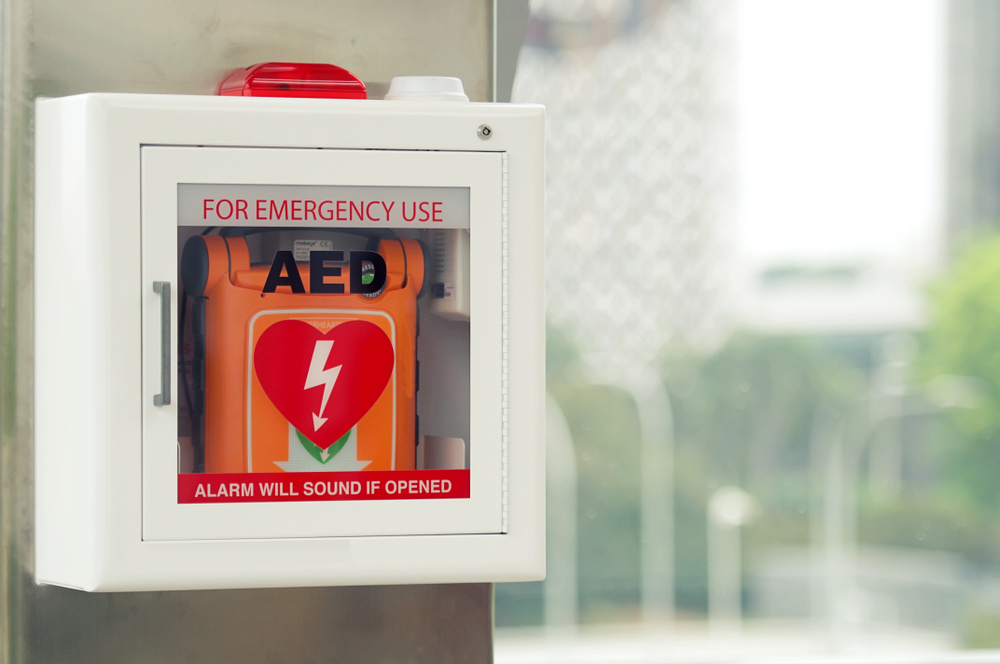
A strong workplace program includes visible AED placement, regular device checks, employee training, emergency response drills, and clear signage. The AED should not be locked in a manager’s office behind a plant, three file cabinets, and a password-protected door. It should be easy to find, easy to reach, and ready to use.
Why AED Access Must Be Expanded
CPR is vital, but CPR and AED use together create a stronger chance of survival. For many sudden cardiac arrests, especially those involving ventricular fibrillation, defibrillation is the treatment that can restore an effective rhythm. The problem is not that AEDs are too complicated. The problem is that too many people cannot find one quickly enough.
Public AEDs Should Be Visible and Mapped
AED placement should be strategic. Devices belong in high-traffic areas, sports facilities, schools, airports, community centers, large workplaces, houses of worship, and places where EMS response may take longer. But placement alone is not enough. AEDs need clear signs, open access, and registration with local emergency systems when possible.
Imagine needing an AED and hearing, “I think there is one somewhere near the vending machines, unless they moved it during renovations.” That is not a plan. That is a scavenger hunt with terrible stakes.
AED Maintenance Is Not Optional
An AED is only useful if it works. Pads expire. Batteries drain. Devices need inspection. Schools, businesses, and public facilities should assign responsibility for checking AED status, replacing parts, and documenting maintenance. A dusty AED with expired pads is a false sense of security wearing a plastic case.
Maintenance should be simple, scheduled, and recorded. Many modern AEDs have status indicators that show whether the device is ready. Organizations should include AED checks in routine safety inspections, just as they do with fire alarms, emergency lights, and first-aid kits.
Common Myths That Keep People From Helping
Myth 1: “I Might Hurt the Person”
Chest compressions can cause injuries, especially in older adults. But cardiac arrest is already life-threatening. A sore rib is not the main concern when the heart has stopped pumping. The goal is survival with the best possible brain function, and immediate CPR can help make that possible.
Myth 2: “I Need to Be Certified to Use an AED”
Certification is valuable, but AEDs are designed so laypeople can use them in an emergency. The device gives instructions and will only advise a shock when it detects a shockable rhythm. Training helps, but lack of a current card should not stop someone from turning on an AED and following the prompts.
Myth 3: “Someone Else Will Do It”
This is one of the most dangerous assumptions in an emergency. In crowds, people often hesitate because they believe another person is more qualified. The better approach is direct action: point to someone and say, “Call 911.” Point to another person and say, “Get the AED.” Then start compressions.
What Communities Can Do Right Now
Improving CPR and AED access does not require a miracle. It requires planning, funding, training, and follow-through. Communities can build stronger emergency response systems by focusing on practical steps.
Make CPR Training Easy to Access
Offer low-cost or free CPR training at schools, libraries, workplaces, recreation centers, and community events. Short hands-only CPR sessions can reach people who may not have time for a full certification course. Full certification should still be available for those who need or want it, but basic lifesaving education should be widely accessible.
Place AEDs Where People Gather
Public facilities should review where people spend time and where cardiac emergencies are most likely to occur. Gyms, pools, athletic fields, senior centers, transportation hubs, and large event venues should be priorities. Rural communities may need additional attention because longer EMS response times can make early bystander action even more critical.
Create Cardiac Emergency Response Plans
An emergency plan should answer simple questions: Who calls 911? Who starts CPR? Who retrieves the AED? Where is the AED located? How will staff guide EMS to the patient? How often will drills happen? A plan that lives only in a binder no one opens is not much better than no plan at all.
Use Technology to Connect People and Devices
AED registries and responder alert apps can help connect trained volunteers with nearby emergencies and available devices. Technology cannot replace human courage, but it can shorten the distance between a person in crisis and the help they need.
Specific Examples of CPR and AED Readiness
Consider a high school basketball game. A parent collapses in the bleachers. In a well-prepared school, one staff member calls 911, another brings the AED from a clearly marked wall cabinet, and a coach begins CPR. The AED is applied within minutes. By the time EMS arrives, the person has already received the two interventions most likely to preserve life: compressions and defibrillation.
Now imagine the same emergency in a school where no one knows where the AED is, the cabinet is locked, or the pads expired last year. The difference is not medical knowledge. It is preparation.
Or think about a workplace. An employee collapses during a morning meeting. A trained coworker recognizes abnormal breathing, starts chest compressions, and sends someone for the AED near the elevator. The team has practiced this during an annual safety drill, so people move quickly instead of staring at each other like the office printer just started speaking Latin.
These examples show why CPR and AED access must be built into everyday environments. Emergencies feel sudden, but readiness can be planned.
Experience-Based Reflections: What CPR and AED Access Feels Like in Real Life
Anyone who has been near a medical emergency knows that the first few seconds feel strange. Time stretches. People look around for leadership. Someone says, “Is he okay?” Someone else says, “Call somebody.” The room fills with uncertainty. This is the moment where training proves its value. It gives ordinary people a script when their brain is trying to panic in surround sound.
A CPR class may seem simple when you are practicing on a manikin in a bright room with an instructor nearby. You learn where to place your hands, how deep to press, how fast to push, and how to let the chest rise fully between compressions. You practice using an AED trainer that calmly tells you what to do. At the time, it may feel repetitive. But repetition is the point. In a real emergency, people do not rise to the level of a motivational quote. They fall back on what they have practiced.
One powerful experience many trainees describe is the surprise of how physical CPR feels. Good compressions take effort. Your shoulders, arms, and core work together. After a couple of minutes, you understand why rescuers should switch when another trained person is available. CPR is not a symbolic gesture. It is active, tiring, lifesaving work.
Another common experience is realizing how helpful an AED actually is. People often imagine AEDs as intimidating medical equipment. Then they open one and hear clear instructions. The device says when to attach pads, when not to touch the person, whether a shock is advised, and when to resume CPR. That voice guidance can cut through chaos. It feels less like operating a machine and more like having a calm coach in the room.
Families also benefit from CPR awareness. Many cardiac arrests happen at home, which means the person who needs help may be a spouse, parent, grandparent, sibling, neighbor, or friend. This makes training deeply personal. Learning CPR is not only about helping a stranger at the airport, although that matters too. It may be about helping the person sitting across from you at dinner.
Community events can make CPR education feel less frightening. Demonstrations at health fairs, school open houses, youth sports sign-ups, and workplace wellness days can invite people to try compressions for the first time. The barrier drops when training is friendly, brief, and practical. No one needs to be embarrassed for not knowing. The whole point is to learn before the emergency, not during it.
There is also an emotional side to AED access. Seeing a clearly marked AED in a public space sends a message: someone thought ahead. Someone cared enough to prepare. That matters in schools, where parents trust adults to protect children. It matters in gyms, where people push their bodies. It matters in workplaces, where employees spend much of their lives. Prepared spaces feel different because safety is not hidden; it is visible.
The most important lesson from real-world CPR and AED readiness is simple: courage becomes easier when systems support it. A trained person is more likely to act. A visible AED is more likely to be used. A practiced emergency plan is more likely to work. The goal is not to turn every citizen into a paramedic. The goal is to make the first five minutes less deadly.
Conclusion
The urgent need for widespread CPR and AED access is clear. Cardiac arrest is sudden, brutal, and unforgiving, but it is not hopeless. When bystanders recognize the emergency, call 911, start CPR, and use an AED quickly, survival becomes more possible. Schools, workplaces, public venues, and neighborhoods all have a role to play.
CPR training should be common. AEDs should be visible, maintained, mapped, and easy to reach. Emergency plans should be practiced, not buried in paperwork. Most of all, communities should replace fear with readiness. Because when a heart stops, the question is not whether ordinary people can help. They can. The question is whether we have prepared them to act in time.
Note: This article is written for general educational and public safety purposes. It is based on current U.S. public health, emergency response, and cardiac arrest guidance. In an emergency, call 911 immediately and follow dispatcher instructions.