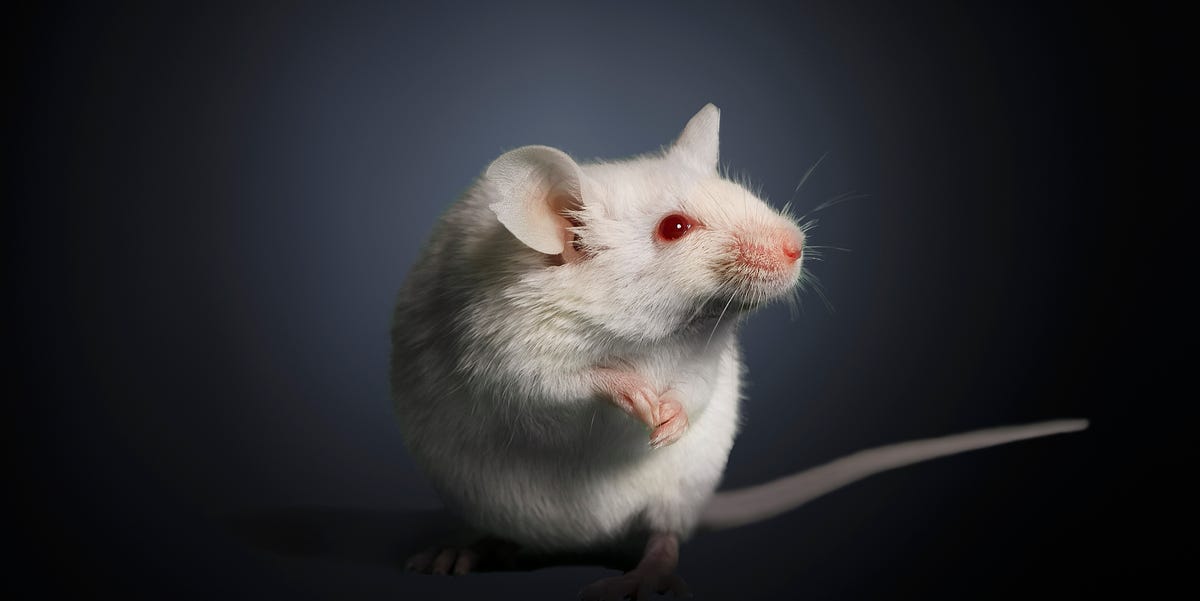
Before you picture a tiny mouse in a robe levitating a Cheerio with the Force, let’s dial the drama down to science-sized proportions. The wild headline about “Jedi” mice comes from a genuinely fascinating idea in animal behavior: some researchers now think rodents may use ultrasonic vocalizations not only to communicate, but also to improve what they smell. In other words, the squeaks humans cannot hear may do more than flirt, fuss, or signal emotion. They may actually help mice manipulate odor particles in the air around them.
That is a pretty enormous claim, and to be fair, it is still a proposal, not a settled fact. But it is the kind of proposal that makes scientists sit up straighter in their swivel chairs. Why? Because if it turns out to be right, it could change how researchers interpret decades of rodent studies on communication, behavior, emotion, and even disease models. It could also open the door to new technologies inspired by the strange but effective tricks animals use every day while humans are busy inventing fancy gadgets and then calling them “disruptive.”
So what exactly are these alleged ultrasonic powers? Why are mice being compared to Jedi? And what does all this mean for neuroscience, animal behavior, and our understanding of smell itself? Let’s unpack the squeaky mystery.
What the “Jedi Mice” Headline Actually Means
The phrase “Jedi mice” is catchy media shorthand, but the underlying idea is more specific and more interesting. A 2024 review paper proposed that rodents may coordinate ultrasonic vocalizations with sniffing in a way that changes how inhaled particles are deposited inside the nose. If that happens, mice and rats may be using sound to improve olfactory sampling, especially during social encounters when identifying another animal quickly matters.
That is a very different story from the old, simpler interpretation that ultrasonic vocalizations are mostly rodent love songs. For years, many scientists treated these high-frequency sounds as social signals, especially in courtship. Male mice, for example, produce ultrasonic calls during mating-related situations, and pups also emit distress-related calls in certain contexts. Those ideas are not wrong. But the newer theory suggests the sounds may serve multiple purposes, with one of them being sensory enhancement.
And that is where the “Jedi” nickname comes in. The proposal suggests rodents may be influencing particles in their nearby environment with sound. Not mind control. Not telekinesis. Not mouse wizardry. But something arguably cooler: a biological form of acoustic manipulation that may help them gather more useful information from scent.
Why Ultrasonic Vocalizations Matter in the First Place
Mice and rats live in worlds that are far richer in smell and sound than humans usually notice. Much of their vocal behavior happens above the upper limit of human hearing, which is why a room full of mice can seem quiet even when, from a mouse perspective, the place is basically hosting a nonstop group chat.
These ultrasonic vocalizations, often called USVs, show up in many social situations. Pups may call when separated. Adults vocalize in courtship, territorial settings, and social investigation. Researchers have spent years studying these sounds because they offer a window into rodent behavior, social interaction, and development. In laboratory science, mouse USVs have become especially valuable in research tied to communication, neurodevelopment, and disorders with social-behavior components.
That is part of what makes the new theory such a big deal. If scientists have been assuming these calls are mainly social messages, but some of them are also helping rodents shape the scent information they receive, then the meaning of a lot of earlier results may need a second look. The squeak may not just be saying, “Hello there.” It may also be helping the animal smell who “there” is.
The Strange Clue: Mice Sniff Right After They Vocalize
One reason this theory gained traction is timing. Earlier research found that rodent ultrasonic vocalizations are tightly linked to active sniffing. Rather than happening randomly, vocal output often appears locked to specific phases of the sniffing cycle. That is not the kind of detail scientists ignore, because biology loves synchronization for a reason.
Think of it this way: if a behavior happens right before another behavior over and over again, it is fair to ask whether the first one is setting the stage for the second. The proposed answer here is yes. Rodents may emit a high-frequency sound and then immediately sniff because the sound changes how tiny particles behave near the nostrils. If those particles cluster or move differently, the next sniff may deliver a sharper or more informative chemical sample.
This idea fits with what scientists already know about smell. Olfaction is not just passive inhaling. It is an active sensing process. The speed and pattern of airflow through the nose can change odor detection and coding. In mice, nasal airflow rate affects how odor information is represented in the olfactory bulb. So if airflow matters, and sniffing matters, then adding sound into the mix is not ridiculous. It is weird, yes. But science is full of weird things that later become textbook material.
How Sound Could Help Mice Smell Better
Here is the heart of the theory: ultrasonic vibrations may influence airborne particles, including the chemical clusters that carry scent information. This is not pure fantasy. In engineering and acoustics, researchers have long studied acoustic agglomeration, a process in which sound waves cause fine particles to cluster into larger ones. That principle has been explored in fields such as air purification, emissions control, and aerosol handling.
Now imagine shrinking that idea down to a rodent’s face. A mouse emits an ultrasonic vocalization. The sound interacts with nearby particles. Those particles behave differently than they would in silence. The mouse then sniffs, and the altered particle pattern changes what reaches sensory surfaces in the nose. The result could be improved detection of pheromones or other socially relevant chemical cues.
If true, that would make the rodent’s vocal system part of an active sensory tool kit rather than just a broadcasting device. The mouse would not simply be sending information outward. It would also be shaping information coming back in. That is the sort of elegant sensory loop evolution loves to build.
Even better, it would explain why vocalization and sniffing seem so closely paired. The sound would not be an afterthought. It would be step one in a fast, coordinated sequence: vocalize, alter the local particle field, inhale, interpret.
There’s Another Important Piece: How Mice Make These Sounds
One reason scientists take this proposal seriously is that mouse ultrasonic vocalizations are not mystical blurps from nowhere. They are produced by specific physical mechanisms in the larynx. Research has shown that mice generate these sounds through an intralaryngeal jet mechanism rather than the sort of vocal-fold vibration humans use for ordinary speech.
That matters because the sounds are not just symbolic; they are physical events with real aerodynamic consequences. Once you start thinking of USVs as high-frequency airflow-and-sound phenomena rather than just “calls,” the idea that they might influence nearby particles becomes easier to imagine. The mouse is not merely talking. It is engineering a momentary acoustic environment around its own snout.
Suddenly the whole thing sounds less like science fiction and more like the kind of cross-disciplinary discovery that happens when behavior, physics, and neuroscience finally sit at the same lunch table.
Why Scientists Are Excited, but Still Cautious
This is the part where good science puts on sensible shoes. The “Jedi mice” idea is exciting, but it is not proven in the strongest possible way yet. The 2024 paper is a review and hypothesis paper, not a final courtroom verdict delivered by a jury of lab coats. It lays out a compelling argument, draws connections across existing research, and proposes a new framework for understanding rodent vocalizations. What it does not do is close the case forever.
That means the next step is experimental testing. Researchers would need to directly measure whether ultrasonic vocalizations change particle behavior near the nose, whether that changes what enters the olfactory system, and whether those effects alter behavior in consistent, repeatable ways. They would also need to separate this possible function from the better-known communication roles USVs already seem to play.
In short, the theory is plausible, provocative, and absolutely worth testing. But honest science reporting has to keep the verbs under control. “May.” “Could.” “Might.” These are not buzzkills. They are the seatbelts of serious writing.
What This Could Change in Neuroscience and Animal Research
If the hypothesis holds up, the ripple effects could be enormous. Rodent ultrasonic vocalizations are widely used in research on social behavior and communication. They are especially important in work involving mouse models of neurodevelopmental and neurological conditions. Scientists study USVs in contexts relevant to autism spectrum disorders, Rett syndrome, emotional processing, and other brain-related questions because the sounds can reveal how animals interact, respond, and develop.
But if some of those vocalizations are partly sensory tools, then researchers may need to reinterpret what a change in USV behavior really means. A mouse that vocalizes differently may not simply be “more social” or “less social.” It may be sampling its environment differently. That could affect how scientists design experiments, analyze results, and connect rodent behavior to human biology.
There is also a broader conceptual payoff. Modern neuroscience increasingly recognizes that senses do not operate in neat little boxes. Smell, sound, movement, and emotion interact. Newer work on mice has even shown that smell and sound signals can converge in brain circuits involved in social behavior. So the “Jedi mice” theory fits a bigger trend in science: the realization that animals sense the world through coordinated systems, not isolated channels.
Could This Lead to New Technology?
Possibly, and that is one of the most exciting side plots in this story. Human engineers already use sound to manipulate matter in certain settings. If rodents really evolved a biological version of particle management for sensory gain, nature may have solved a problem humans are only beginning to understand well.
That could inspire new approaches in aerosol control, targeted sensing, micro-particle handling, or even medical diagnostics. Bio-inspired technology often works this way. We study how animals solve problems under tight physical constraints, then steal the design with as much dignity as possible. Velcro got there first. Night-vision ideas drew from animals. Efficient underwater motion learned from fish. So yes, today it is “weird mice science,” and tomorrow it could become “surprisingly normal engineering.”
Related Experiences: What This Topic Feels Like in the Real World
One of the most interesting experiences related to the “Jedi mice” idea is how often humans underestimate the sensory worlds of other animals. If you have ever watched a mouse pause, lift its head, twitch its whiskers, and sniff the air with intense concentration, you have already seen the surface of this mystery. To us, it looks like a tiny animal being twitchy. To the mouse, that moment may be loaded with data: who passed by, whether food is near, whether danger is hiding somewhere in the room, and whether another animal is friend, stranger, rival, or potential mate.
For researchers, the experience is even more dramatic. A scientist may spend years recording mouse vocalizations and social behavior, assuming the sounds are messages aimed at other mice. Then a new theory appears and says, “What if the sound is also helping the caller itself?” That kind of moment is thrilling and slightly annoying, which is science in a nutshell. It is thrilling because a new explanation suddenly makes odd data points feel less random. It is annoying because it means older interpretations may need to be reexamined. Every lab notebook in the room suddenly looks like it might be hiding a footnote from the future.
There is also a very practical experience here for anyone who has dealt with mice around a home, barn, shed, or storage room. People often notice that mice seem uncannily good at finding food, tracking movement, and navigating cluttered spaces in low light. We usually blame smell, which is fair. But this theory adds a richer possibility: their sensory efficiency may not come from smell alone, but from a coordinated package of sniffing, sound production, whisker contact, and fast decision-making. In other words, the mouse may not be a tiny genius burglar. It may simply be using a sensory toolkit humans barely perceive.
Students and readers also experience this story as a reminder that science does not only move forward by collecting more data. Sometimes it advances because someone asks a different question. The “Jedi mice” hypothesis did not emerge from discovering a glowing new organ or a secret mouse superchip. It emerged from noticing patterns that did not fully fit the usual explanation. Why are the sounds so tightly linked to sniffing? Why assume a call is only a signal to others? Why not ask whether it also changes the caller’s own perception? That shift in viewpoint is one of the most powerful experiences in science: the moment when familiar evidence suddenly supports a new way of seeing.
And then there is the engineering experience. For people who work with aerosols, acoustics, microfluidics, or biomimicry, this idea lands like an unexpected invitation. It says that evolution may have experimented with particle control in living animals long before humans built fancy lab systems to do similar things. That is humbling. Nature has had a very long research budget and absolutely no meetings. When animal behavior overlaps with physics and design, scientists get a rare treat: a clue that biology might be hiding a technology lesson in plain sight.
So the real experience of this topic is not just “wow, mice are weird.” It is something much better. It is the experience of realizing that the world is fuller, stranger, and more engineered than it first appears. A mouse squeak you cannot hear may be part message, part sensory tool, and part evolutionary master class. That is not magic. But honestly, it is close enough to make the Jedi comparison feel a little earned.
Final Takeaway
The headline about “Jedi” mice is flashy, but the science beneath it is genuinely worth your attention. Researchers are proposing that rodents may use ultrasonic vocalizations to do more than communicate. They may also use them to shape how odor particles behave, improving what they smell during key moments of exploration and social interaction.
That theory has not been fully proven yet, and that distinction matters. Still, the idea brings together several solid pieces of existing science: mice communicate ultrasonically, those calls are tightly linked to active sniffing, airflow affects odor processing, and sound can influence particle behavior. Put all of that together, and suddenly the supposedly ridiculous idea starts to sound surprisingly reasonable.
So no, mice are probably not using the Force. But they may be doing something almost as impressive: turning sound into a tool for sharper sensing. And if that holds up, the tiniest squeak in the lab may end up rewriting a very big chapter in how we understand animal perception.