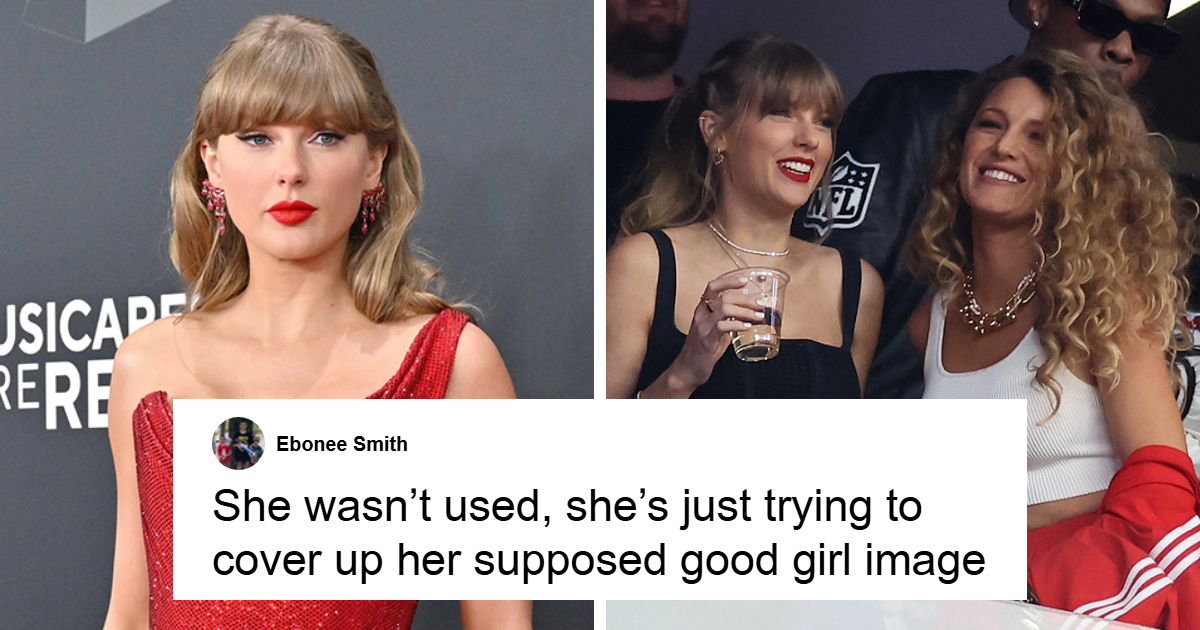
Editor’s note: This article summarizes publicly reported claims, court filings, and media accounts surrounding Taylor Swift, Blake Lively, Justin Baldoni, Ryan Reynolds, and the legal controversy connected to It Ends With Us. Allegations, private-source claims, and disputed legal positions are clearly framed as such.
Introduction: When Friendship, Fame, and a Movie Lawsuit Collide
Celebrity friendships usually look glamorous from the outside: dinner photos, birthday tributes, football-suite cameos, and the kind of Instagram energy that makes ordinary group chats feel like they need better lighting. But the Taylor Swift and Blake Lively situation proved that even the most sparkling Hollywood friendship can become complicated when it is pulled into litigation, headlines, and the court of public opinion.
The headline-grabbing claim is dramatic: Taylor Swift reportedly believes Blake Lively “used her” during an infamous penthouse meeting with Justin Baldoni, Lively’s It Ends With Us co-star and director. According to entertainment reporting, Swift allegedly felt blindsided by being brought into a tense creative dispute and later being referenced in legal filings. The situation became even messier when Lively allegedly described Swift and Ryan Reynolds as her “dragons,” a Game of Thrones-style metaphor that may have sounded powerful in a private message but landed like a flaming trebuchet once it entered public discourse.
At the center of the story are three overlapping dramas: the behind-the-scenes conflict on It Ends With Us, the legal battle between Lively and Baldoni, and the reported strain between Lively and Swift. The result is a pop-culture storm where every text, meeting, subpoena, and anonymous source became another breadcrumb for fans, lawyers, and entertainment writers to examine under a microscope.
The Background: Why It Ends With Us Became a Legal Firestorm
It Ends With Us, based on Colleen Hoover’s bestselling novel, was always going to attract attention. The book has a massive readership, the film starred Blake Lively and Justin Baldoni, and the story deals with domestic violence and complex relationship trauma. That meant the movie was not just another glossy romance adaptation. It carried emotional weight, fan expectations, and a lot of pressure.
During production and promotion, rumors of tension between Lively and Baldoni began circulating. Those rumors eventually became legal claims. Lively accused Baldoni and others connected to the film of sexual harassment and retaliation, including an alleged effort to damage her reputation after she raised concerns. Baldoni denied the allegations and filed counterclaims, arguing that Lively and her team had attempted to take control of the film and harm his reputation.
In other words, what started as behind-the-scenes friction became a full-blown Hollywood legal saga. The film’s message about abusive relationships was almost swallowed by the off-screen conflict surrounding its stars. That irony was not lost on audiences. A movie intended to spark conversations about survival and safety became attached to a public battle about power, control, image management, and competing narratives.
The Penthouse Meeting: What Reportedly Happened?
The now-infamous penthouse meeting reportedly took place at Blake Lively and Ryan Reynolds’ New York home. According to Baldoni’s side, the meeting involved discussions about a rewritten scene from It Ends With Us, particularly a rooftop scene important to the film’s emotional structure. Baldoni’s legal filings alleged that he felt pressured to accept Lively’s version of the scene and that the presence or influence of Ryan Reynolds and Taylor Swift played into that pressure.
That is where the story becomes especially explosive. Swift’s connection to the film, according to her representative, was limited to licensing her song “My Tears Ricochet” for use in the movie. Her team publicly rejected the idea that she had creative involvement, emphasizing that she did not work on casting, editing, scoring, or production notes. Still, her name appeared in the dispute because Baldoni’s side claimed she was part of the atmosphere surrounding Lively’s rewrite push.
Entertainment reports later claimed Swift felt she had been used or strategically placed in the situation. According to those reports, Swift allegedly did not know Baldoni would be at the apartment when she arrived and believed the timing made her presence look more intentional than it was. If true, that would explain why she might have felt uncomfortable. Showing up to see a friend is one thing. Accidentally becoming a symbolic power player in a film dispute is another. That is not “girls’ night.” That is “please forward all communications to counsel.”
The “Dragon” Text: A Metaphor That Took on a Life of Its Own
One of the strangest details in the controversy is the alleged “dragon” text. In Baldoni’s complaint, Lively allegedly compared herself to Khaleesi from Game of Thrones and referred to Ryan Reynolds and Taylor Swift as her protective “dragons.” In a private context, the metaphor may have been meant as playful shorthand for loyal supporters. In a legal filing, however, it sounded like a celebrity-power flex.
The phrase became instantly memorable because it compressed the entire drama into one vivid image: Blake Lively as the queen, Ryan Reynolds and Taylor Swift as fire-breathing defenders, and Justin Baldoni as the person standing uncomfortably close to the flames. For SEO purposes, “Taylor Swift Blake Lively dragons” practically wrote itself. For public relations purposes, it was less convenient.
Reports suggested Swift did not appreciate being characterized that way. That reaction makes sense. Swift has spent years carefully managing her public image, especially after previous public disputes taught her how quickly a narrative can harden. Being described as someone else’s “dragon” could make her look like an enforcer in a conflict she says she had no real role in. Even a close friend might not want to be mythologized into a legal strategy.
Why Taylor Swift Reportedly Felt “Used”
The word “used” is powerful because it suggests more than discomfort. It suggests that someone’s fame, name, loyalty, or presence was allegedly leveraged for someone else’s advantage. In Swift’s case, the reporting centers on the idea that her celebrity status may have been invoked to add pressure or credibility during a creative disagreement.
Swift is not merely a famous friend. She is one of the most influential entertainers in the world. Her name can change the temperature of a story instantly. If Taylor Swift is mentioned in a lawsuit, that lawsuit is no longer just entertainment-industry news; it becomes global pop-culture news. That is precisely why her representative criticized the subpoena as a move that would draw public interest and create tabloid attention.
From Swift’s reported perspective, the problem was not just that she was mentioned. It was that her private friendship with Lively appeared to become part of a public legal narrative. That is a nightmare scenario for any celebrity who values control over her brand. For Swift, whose career has repeatedly intersected with public storytelling, media framing, and loyalty tests, being dragged into someone else’s dispute may have felt especially invasive.
Blake Lively’s Side: Friendship, Context, and Disputed Meaning
It is important not to flatten the story into a cartoon. Lively’s side has disputed Baldoni’s interpretation of events and has framed the larger case around serious allegations of harassment and retaliation. Her attorneys have argued that selected texts can be misleading without context. That matters, because private messages often sound exaggerated, emotional, sarcastic, or theatrical when extracted from their original setting.
Many people have sent dramatic texts to friends that would look ridiculous in court. “I’m dead,” “I will destroy him,” “you are my dragon,” or “I need wine immediately” can all be jokes, venting, or emotional shorthand. In a lawsuit, however, those same messages can become evidence, headlines, and memes. The legal system is not famous for appreciating group-chat humor.
Lively’s supporters would argue that focusing too heavily on the Swift angle distracts from the underlying allegations about the working environment on It Ends With Us. That argument has appeared throughout the public response to the case: the more attention Swift receives, the easier it becomes for the original misconduct allegations to be overshadowed by celebrity gossip.
Justin Baldoni’s Side: Pressure, Power, and Creative Control
Baldoni’s side has denied Lively’s allegations and argued that the dispute is about reputation, creative control, and competing narratives. His legal team claimed Lively used her influence, her husband’s influence, and potentially Swift’s cultural power to steer the film and pressure him into accepting changes.
That argument taps into a broader Hollywood issue: who gets final say when an actor-producer, director, studio, source-material author, and marketing machine all have stakes in a project? Film sets can be collaborative, but collaboration gets messy when the collaborators disagree about tone, messaging, and ownership. Add A-list celebrity spouses and superstar friends into the room, and the power dynamics become even harder to parse.
Whether Baldoni’s interpretation is persuasive is a legal and factual question. But as a public narrative, it was undeniably sticky. “Director says he felt pressured by Blake Lively, Ryan Reynolds, and Taylor Swift” is the kind of sentence that activates every entertainment-news alarm bell within a 50-mile radius.
The Subpoena: How Taylor Swift Was Pulled Deeper Into the Case
Swift’s name moved from gossip to legal relevance when she was subpoenaed as a witness. Her team pushed back forcefully, saying her connection to the film was limited to music licensing and that the subpoena appeared designed to use her fame to generate attention. Later, the subpoena was withdrawn, but the court allowed relevant text messages between Lively and Swift to be produced as part of discovery.
This is where the story became more than celebrity chatter. Once private texts enter a court record, they can reshape public perception. The messages reportedly showed Swift and Lively discussing Baldoni and the film dispute. People later reported that Swift wanted to stay away from the drama after private messages were unsealed, which is perhaps the most relatable celebrity statement possible. Nobody wants their texts read by strangers, especially if those strangers include lawyers, journalists, and the internet’s most caffeinated comment sections.
What the Unsealed Texts Changed
The unsealed texts complicated the narrative. On one hand, Swift’s representatives had emphasized that she had no creative role in the film. On the other hand, reported messages suggested she was at least emotionally supportive of Lively and had some awareness of the conflict. That does not necessarily mean she was a decision-maker. Friends discuss work problems all the time. But in a lawsuit, emotional support can be reframed as influence.
ABC News reported that some texts included Lively asking Swift to express excitement about a revised scene, while People reported that Swift later praised Lively after the New York Times article about Lively’s complaint was published. These details made the friendship look more involved than Swift’s team wanted the public to believe, even if involvement as a friend is very different from involvement as a producer, writer, or strategist.
The key distinction is this: being supportive is not the same as controlling a movie. But in celebrity litigation, nuance often gets shoved out of the limousine first.
Why This Story Became So Addictive Online
The Taylor Swift, Blake Lively, and Justin Baldoni drama has all the ingredients of viral entertainment news: famous people, private texts, legal filings, friendship fallout, a beloved book adaptation, and one wildly memeable dragon metaphor. It also invites fans to pick teams, which is exactly how the internet turns complicated disputes into sporting events.
For Swift fans, the story may feel like another example of Taylor being pulled into someone else’s mess. For Lively supporters, the focus on Swift may feel like a distraction from serious allegations. For Baldoni supporters, the texts may seem to support his claims about pressure and influence. For casual observers, it is a reminder that Hollywood friendships are not immune to workplace politics, legal consequences, or awkward screenshots.
SEO Analysis: The Keywords Behind the Scandal
Main Search Intent
Readers searching for “Taylor Swift Blake Lively used her” want to know whether Swift and Lively are fighting, what happened at the penthouse meeting, how Justin Baldoni is involved, and whether the claims are proven. The best answer is not a simple yes or no. The accurate answer is that multiple reports claim Swift felt used, but the legal facts are more complex and contested.
Related Search Terms
Related keywords include “Taylor Swift Blake Lively friendship,” “Blake Lively Justin Baldoni lawsuit,” “It Ends With Us controversy,” “Taylor Swift subpoena,” “Blake Lively dragons text,” and “Ryan Reynolds penthouse meeting.” These terms reflect the layered nature of the story: entertainment, law, friendship, and reputation management all in one very crowded elevator.
What This Means for Taylor Swift and Blake Lively’s Friendship
Celebrity friendships are brands, whether the celebrities intend them to be or not. Swift and Lively’s friendship had long been viewed as warm, loyal, and glamorous. Swift referenced Lively and Reynolds’ children in her music, Lively directed Swift’s “I Bet You Think About Me” video, and the two were frequently seen together at public events. That history is why the alleged strain became such a big story.
People are fascinated when a famous friendship appears to crack because it feels both distant and familiar. Most people have experienced a version of this: a friend brings your name into a situation you did not agree to join, or your private support gets interpreted as public endorsement. The celebrity version simply comes with court filings and paparazzi photos.
Whether Swift and Lively fully repair their friendship is unknown. But the controversy shows how fragile trust can become when private loyalty enters a public dispute. Once a friendship becomes evidence, it is hard to make it feel private again.
Experience-Based Reflection: What Regular People Can Learn From This Celebrity Drama
The Taylor Swift and Blake Lively story may seem like rarefied Hollywood chaos, but the emotional lesson is surprisingly ordinary: do not volunteer your friends for your battles without their clear consent. Most people will never have a penthouse meeting with a movie director, a global pop star, and Ryan Reynolds in the same apartment. Frankly, most of us are lucky if we can get three friends to agree on brunch. But the core issue is familiar.
Imagine a workplace disagreement where you casually mention that your powerful friend, respected colleague, or influential family member agrees with you. Maybe you think you are just showing support. Maybe you believe their opinion proves you are not being unreasonable. But if that person did not agree to be part of the conversation, they may feel exposed. Their name becomes a tool. Their reputation becomes leverage. Their private loyalty becomes public currency.
That is why boundaries matter, even among close friends. A good friend can listen, comfort, advise, and even encourage you. But that does not mean they automatically consent to being cited, quoted, tagged, forwarded, or used as backup. In everyday life, this can happen in smaller ways: “My friend who is a lawyer says you’re wrong,” “My husband thinks your idea is terrible,” or “Everyone agrees with me.” Those phrases can escalate conflict because they turn a two-person disagreement into a social-pressure campaign.
The second lesson is about private messages. Texts feel casual when we send them. We exaggerate, joke, vent, and use dramatic language. But texts are also records. In a dispute, they can be screenshotted, forwarded, subpoenaed, or read in the least generous tone imaginable. A message that sounded funny at midnight can sound ruthless in a legal exhibit. That does not mean people should text like robots, but it does mean sensitive conflicts deserve caution.
The third lesson is about fame and friendship. When one friend has a much bigger platform, their presence carries extra weight. Taylor Swift does not enter a room as “just Taylor” in the public imagination. Her name changes the perceived power balance. That may be unfair, but it is real. In normal life, the same dynamic appears when someone brings in a boss, parent, attorney, influencer, or wealthy friend. Power changes the emotional weather.
Finally, this drama reminds us that loyalty should not require public sacrifice. A healthy friend does not make your reputation collateral damage. Support should be offered freely, not extracted through pressure, timing, implication, or guilt. If the reports are accurate, Swift’s frustration was not simply about being mentioned. It was about feeling that her friendship had been converted into a strategic asset. That is the kind of thing that can make even a long friendship suddenly feel unsafe.
So yes, this story has celebrities, lawsuits, and dragons. But underneath the spectacle is a very human warning: protect your friendships from becoming weapons. A friend can stand beside you without being pushed in front of you like a shield.
Conclusion: The Real Story Is About Control of the Narrative
The claim that Taylor Swift believes Blake Lively “used her” during the infamous penthouse meeting with Justin Baldoni sits at the intersection of friendship, fame, and legal strategy. The most reliable way to understand it is not as a simple feud story, but as a case study in how quickly private relationships can become public evidence.
Swift’s team has consistently emphasized that her official connection to It Ends With Us was limited. Lively’s side has argued that context matters and that the focus should remain on the underlying allegations. Baldoni’s side has argued that Swift’s presence and influence are relevant to understanding the pressure he says he experienced. Between those positions is a messy reality: celebrity friendships can become powerful symbols even when the people involved never intended them to be.
Whether Swift and Lively’s friendship rebounds or remains strained, the controversy has already changed how the public sees it. The penthouse meeting, the “dragon” text, the subpoena, and the unsealed messages transformed a private bond into a public storyline. And once the internet gets a storyline with dragons, lawyers, and Taylor Swift, it does not let go easily.