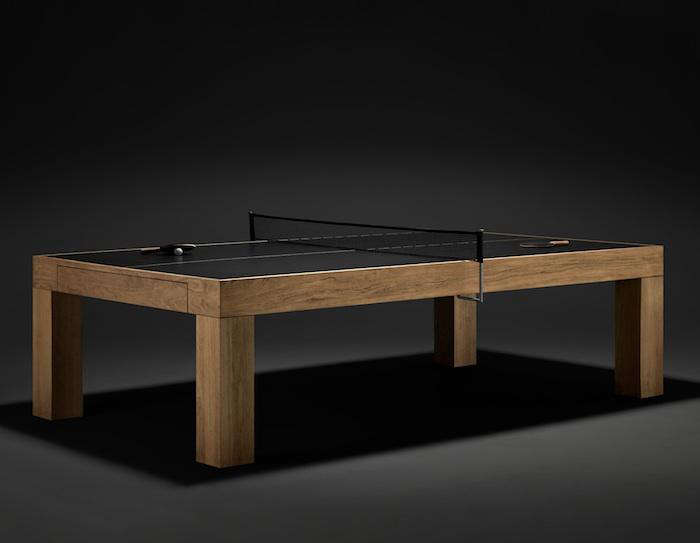
A standard ping pong table is usually designed to disappear into a basement, garage, or recreation room. The James Perse Ping Pong Table takes the opposite approach. It wants the best spot in the houseand, judging by its solid-teak construction, minimalist profile, and furniture-grade details, it may deserve it.
Created as part of the James Perse furniture collection, this limited-edition table transforms an ordinary game into a piece of understated California luxury. It is regulation size, handcrafted in the United States, and designed to convert into a dining or conference table with an optional teak top. In other words, it can host a competitive tournament at 4 p.m., a dinner party at 7 p.m., and an awkward budget meeting the following morning.
That versatility helps explain why the table has attracted attention from interior-design publications, luxury buyers, architects, and people who believe a plastic folding game table would emotionally damage their living room.
What Is the James Perse Ping Pong Table?
The James Perse Ping Pong Table, currently described by the brand as a Limited Edition Hybrid Table, is a full-size indoor table tennis table built from solid teak. It measures 108 inches long, 60 inches wide, and 30 inches high, matching the familiar regulation dimensions of nine feet by five feet.
Its primary features include a matte playing surface, a removable leather-bound net, an upholstered storage drawer, four custom handmade paddles, and James Perse-branded table tennis balls. An optional solid-teak conversion top can be added after the net is removed, allowing the piece to function as a dining table, meeting table, or oversized workspace.
This is not a lightweight folding table that can be rolled behind the furnace when guests arrive. It is intended to remain visible as a permanent architectural element within a room. The design treats table tennis equipment the way a luxury furniture maker might approach a dining table: clean proportions, substantial materials, concealed storage, and very little visual clutter.
The Design Philosophy Behind the Table
James Perse is best known for clothing that combines premium materials with a relaxed West Coast appearance. His interiors and furniture follow a similar formula: simplify the shape, improve the materials, and remove anything that looks unnecessarily busy.
The Ping Pong Table fits that philosophy almost perfectly. Its silhouette is rectilinear and restrained, with thick teak supports and a dark playing surface. There are no neon graphics, exposed folding brackets, giant logos, or cup holders shaped like basketball hoops. From a distance, it looks more like a modern dining table than sporting equipment.
This approach reflects the broader James Perse idea of “understated luxury”creating objects and spaces that feel expensive without appearing fragile or overly formal. The result is furniture that can sit comfortably in a minimalist beach house, a contemporary office, a hotel lounge, or a modern family game room.
The table also appeared prominently at the company’s Marina del Rey headquarters, where it was positioned near a bar rather than hidden in a conventional employee recreation area. That placement captured the product’s purpose: work, leisure, architecture, and social activity are not treated as separate categories. Sometimes the meeting ends with a backhand smash. Productivity experts may object, but the office probably has excellent morale.
Materials and Construction
Solid Teak Structure
The defining material is solid teak, a dense hardwood valued in high-end furniture for its strength, dimensional stability, rich grain, and natural oils. Teak brings warmth to a category normally dominated by painted steel frames, laminated fiberboard, and visible wheels.
The wood also helps the table visually connect with other furniture. Place a typical competition table in a carefully designed room and it may look as though a community center has suddenly opened for business. Place the James Perse table in the same space and it can complement oak flooring, linen upholstery, leather seating, stone walls, and neutral architectural finishes.
Earlier editorial coverage described the teak as environmentally farmed. However, prospective buyers who need detailed sourcing or certification information should request current documentation directly from the manufacturer rather than relying on older product descriptions.
Matte Playing Surface
A table tennis surface must do more than look handsome. It needs to provide a predictable rebound while minimizing glare. The James Perse design uses a dark matte top that creates a crisp contrast with the teak frame and white ball.
Dark surfaces are common on serious table tennis tables because bright reflections can interfere with ball tracking. Here, the practical finish also supports the table’s minimalist appearance. The top remains visually quiet when the table is not being used, rather than announcing itself like an arcade machine waiting for quarters.
Leather-Bound Removable Net
The removable leather-bound net is one of the table’s most distinctive details. A standard nylon net would work perfectly well, but it would not reinforce the furniture-quality character of the design.
Because the net can be removed, the center of the table becomes unobstructed when the optional conversion surface is installed. This is essential to the hybrid concept. Instead of dedicating an entire room to an object used only during game nights, owners can turn the same footprint into a functional dining, conference, craft, or project area.
Integrated Accessory Drawer
An upholstered, formed drawer stores the four handmade paddles and branded balls. This detail solves one of the least glamorous problems in recreational sports: accessories have a mysterious ability to migrate into closets, kitchen cabinets, toy boxes, and car trunks.
Integrated storage keeps the equipment close without leaving it scattered across the tabletop. It also allows the table to return to furniture mode quickly. Remove the net, put away the paddles, add the conversion top, and the evidence of an aggressively contested match disappears.
Size, Space, and Playability
The James Perse table meets the standard nine-foot-by-five-foot format. That means its footprint is identical to that of a full-size competition table, but the table itself is only part of the space calculation.
For relaxed household play, a room approximately 17 feet long and 9 to 11 feet wide can provide basic movement around a regulation table. More experienced players will appreciate substantially more clearance, particularly behind each end. Serious forehand loops require room, confidence, and at least one family member willing to relocate a decorative floor lamp.
Measure the room before ordering. Include baseboards, doors, columns, built-in cabinets, seating, and traffic paths. A table may technically fit between two walls while still leaving players trapped in a form of stationary table tennis that resembles an unusually polite argument.
Lighting matters as well. Use broad, even illumination above the playing area and avoid intense fixtures that reflect directly from the top. Nearby furniture should be lightweight or positioned beyond the active zone. Fragile sculptures, low pendant lights, and drinks placed at paddle height are courageous decorating decisions, but not necessarily intelligent ones.
The official current product description identifies the table as suitable for indoor use. Although teak is often associated with outdoor furniture, buyers should follow the manufacturer’s current placement and care guidance. A luxury indoor table is not automatically a patio table simply because the wood once heard about rain.
How the Dining and Conference Conversion Works
The optional teak top is arguably the feature that makes the table easier to justify. Without it, the James Perse Ping Pong Table is an exceptionally attractive recreational object. With it, the table becomes a multipurpose investment that can earn its floor space every day.
Once the net is removed and the conversion panels are positioned, the table can serve as a long dining surface. At nine feet, it can accommodate a sizable group, depending on the chairs and leg placement. It can also work as a conference table, collaborative design surface, fabric-cutting table, puzzle station, or generously proportioned home office desk.
Convertible game tables are increasingly popular in design-focused homes because formal rooms are being asked to do more. A dining room may also be a homework zone, weekend office, holiday buffet, and family entertainment space. A table that changes function without looking improvised is particularly valuable in open-plan interiors.
Owners should still protect the conversion top with appropriate pads, placemats, or coasters. Teak is durable, but durability is not permission to leave red wine, hot cookware, permanent markers, and a toddler with artistic ambitions unsupervised.
Price and Availability
The James Perse Ping Pong Table belongs firmly in the luxury furniture market. Historical editorial listings have shown different five-figure prices at different times. Cool Hunting listed the table at $14,500 in 2013, while a 2015 Architectural Digest feature referenced a retail price of $25,000. Pricing, configuration, delivery costs, and availability may have changed since those reports.
For that reason, shoppers should request a current quote from James Perse or an authorized showroom. They should also confirm whether the quoted amount includes the teak conversion top, delivery, installation, accessories, and any finish customization.
Five-figure table tennis tables are not unique to James Perse. The wider luxury market includes concrete, marble, walnut, leather, metal, and artist-designed tables that frequently sell from the mid-teens into the tens of thousands of dollars. Some collectible pieces reach dramatically higher prices.
By contrast, a dependable household ping pong table can cost several hundred dollars, while premium mainstream models often remain below a few thousand. The James Perse premium is therefore not primarily about accessing the sport. It is about craftsmanship, materials, visual restraint, integrated storage, brand identity, and the ability to place a regulation table in a sophisticated interior without apologizing to the architect.
Who Should Consider Buying It?
Design-Focused Homeowners
The table makes the most sense for homeowners who treat furniture as part of the architecture. Its teak frame and restrained geometry can anchor a large entertainment room without introducing the industrial appearance of a folding sports table.
Luxury Hospitality and Residential Projects
Interior designers may consider it for boutique hotels, private clubs, premium apartment amenities, vacation homes, executive lounges, and resort residences. It offers an activity while preserving the visual standard expected in a curated environment.
Creative Offices
In a spacious office, the hybrid format can support meetings during the day and recreation afterward. The concept is especially suitable for creative studios and companies that favor informal collaboration over rows of identical cubicles under fluorescent lights.
Families That Actually Play
Beautiful furniture should still be used. A household that plays regularly will receive more value from the table than one that treats it as a giant teak monument to hypothetical fun. The best luxury products improve everyday life, not just real-estate photographs.
Potential Drawbacks
The first drawback is obvious: cost. This table is priced against designer furniture, not sporting-goods-store equipment. A buyer focused exclusively on competitive performance can find many excellent regulation tables for far less.
The second issue is mobility. Many conventional tables fold vertically and roll on casters. The James Perse table is designed more like permanent furniture. That creates a cleaner appearance and substantial presence, but it also means owners should plan the location carefully.
Third, the table requires a large room. Adding a dining top solves the question of functional versatility, but it does not make a nine-foot object physically smaller.
Finally, owners may become suspiciously protective during play. The first time a guest sets a sweating glass directly on the teak, the evening could evolve from friendly doubles into a detailed seminar on coaster usage.
Care and Maintenance
Use a soft microfiber cloth for routine dusting. Clean the playing surface according to the manufacturer’s instructions, avoiding abrasive pads, harsh solvents, excessive moisture, and furniture polish that could alter the finish or rebound characteristics.
Wipe spills promptly, particularly when the conversion top is being used for dining. Keep the table away from persistent direct sunlight, extreme heat, and major humidity changes unless the manufacturer confirms that the selected finish is suitable for those conditions.
Teak naturally changes in appearance over time. Before applying oil, wax, or another treatment, ask the manufacturer whether it is appropriate for the original finish. An enthusiastic do-it-yourself treatment can produce a color that is technically “richer” but emotionally closer to an airport steakhouse.
Inspect the net, hardware, drawer, and levelers periodically. A regulation-size table must remain stable and level to produce reliable play. If the ball consistently rolls toward one player before the serve, the problem may be the floornot a highly localized gravitational event.
How It Compares With a Conventional Ping Pong Table
A conventional indoor table usually prioritizes affordability, folding storage, mobility, quick assembly, and bounce consistency. These are sensible priorities for garages, basements, schools, clubs, and multipurpose recreation rooms.
The James Perse table prioritizes permanence, material quality, visual integration, concealed storage, and multifunctional use. It still provides a regulation-size playing area, but it approaches the category from the perspective of furniture design.
Neither approach is universally better. A folding competition-style model is more practical for players who need mobility or solo playback. The James Perse model is more compelling for buyers who want the table to remain at the center of a carefully designed room.
Living With a James Perse Ping Pong Table: A Realistic Experience
The ownership experience begins before the first serve. A full-size solid-teak table requires planning, accurate measurements, and professional delivery. This is not the sort of package most people slide through the front door while holding a cup of coffee. The delivery route, stairs, elevator dimensions, doorway clearance, and final room position should be confirmed in advance.
Once installed, the first impression is likely to be visual rather than athletic. The teak gives the room a warmer, more residential character than a typical game table. With the net removed, visitors may initially assume it is a custom dining or work table. That confusion is part of the appeal. The table does not scream for attention; it waits calmly until someone discovers the paddles.
During play, the experience is less casual than the design suggests. Because the dimensions are regulation size, rallies feel legitimate. Beginners have enough space to develop proper timing, while experienced players can serve, block, drive, and attack without adjusting to a miniature surface. The sturdy furniture-style base should also feel more grounded than inexpensive folding frames, provided the table has been correctly leveled.
The integrated drawer becomes surprisingly important. Paddles and balls are always available, so a five-minute game can begin without a scavenger hunt. That convenience encourages spontaneous play. Someone finishes a phone call, opens the drawer, and suddenly four adults are debating whether a serve clipped the edge. No video review exists, but everyone will request one.
The table also changes how a room is used socially. Traditional seating encourages conversation among people who already know one another. A game table gives guests something to do together, reducing the pressure to maintain perfect small talk. Children can play with grandparents, coworkers can compete after a meeting, and dinner guests can rotate through quick games while food is being prepared.
Converting the table changes the mood again. Remove the net, store the equipment, and install the teak top. The same object becomes calm and architectural. It can hold serving dishes for a party, laptops during a planning session, or a large puzzle during a quiet weekend. That flexibility makes the table feel less like sporting equipment occupying valuable space and more like a central household platform that happens to support wicked topspin.
There are practical lessons, of course. Seating should be easy to move before play. Pendant lights must hang high enough to avoid both heads and paddles. Decorative objects need a safe relocation plan. Guests should know where drinks belong. Owners may also want a small supply of ordinary practice balls because branded balls have a remarkable talent for rolling under the heaviest piece of furniture in the building.
Most importantly, the table should not become too precious to use. Minor signs of life are inevitable whenever furniture hosts games, meals, projects, and gatherings. The purpose of the James Perse Ping Pong Table is not simply to look immaculate. Its real value appears when the room becomes more active, social, and enjoyable because the table is there.
Final Verdict
The James Perse Ping Pong Table is an unusual combination of regulation sporting equipment, luxury furniture, and multifunctional interior design. Its solid-teak construction, removable leather-bound net, integrated accessory drawer, handmade paddles, and optional conversion top distinguish it from ordinary recreational tables.
It is not the economical choice, the portable choice, or the obvious choice for a cramped room. It is the choice for someone who wants ping pong without surrendering a carefully considered interiorand who appreciates the slightly ridiculous pleasure of playing a basement game on furniture worthy of a luxury residence.
For the right home, office, hotel, or private club, the table can do more than support a rally. It can become the social center of the room, switching effortlessly between games, meals, meetings, and celebrations. That is a great deal of responsibility for one table, but at least it comes with four paddles.
Editorial note: Product specifications were checked against current and historical manufacturer and design-publication information. Prices and availability can change, so buyers should obtain a current written quote and care instructions before ordering.