Note: This article is for general education and does not replace medical care. Knee swelling can be simple, stubborn, or sneaky, so use home care wisely and seek help when symptoms point to something more serious.
Why Knee Swelling Happens in the First Place
A swollen knee can feel like your leg has secretly rented storage space inside the joint. One day you are walking normally, and the next your knee looks puffy, stiff, warm, or too tight to bend. This swelling may happen after a fall, a sports twist, a long run, a weekend of yard work, or even a medical condition that has been quietly building in the background.
The knee is a busy joint. It carries body weight, bends, straightens, rotates slightly, absorbs impact, and somehow expects appreciation for all of it. When tissues inside or around the knee are irritated, the body may send extra fluid to the area. That fluid can collect inside the joint, around the kneecap, in the soft tissues, or behind the knee. The result is swelling, pain, stiffness, and the classic “why does my knee suddenly look like a grapefruit?” moment.
Common causes include ligament sprains, meniscus tears, tendon irritation, bursitis, osteoarthritis, gout, rheumatoid arthritis, overuse injuries, infections, and trauma. A swollen knee after a clear injury may be easier to understand. A swollen knee with no obvious reason deserves more attention, especially if it is hot, red, very painful, or accompanied by fever.
How to Reduce Knee Swelling Quickly at Home
The fastest safe approach is to calm the irritation, limit fluid buildup, protect the joint, and avoid turning a small problem into a three-act drama. Most mild swelling from minor strain or overuse can improve with simple first-aid steps during the first 24 to 48 hours.
1. Rest the Knee Without Becoming a Couch Statue
Rest means reducing activities that make swelling worse, not declaring retirement from movement forever. Stop running, jumping, squatting, climbing lots of stairs, or pushing through pain. If walking hurts, shorten your steps or use support if available. The goal is to give irritated tissues time to settle.
However, total immobility for too long can make the knee stiff. Gentle movement within a comfortable range may help maintain circulation and prevent the joint from feeling locked up. Think “quiet recovery,” not “zero movement unless snacks are involved.”
2. Apply Ice the Smart Way
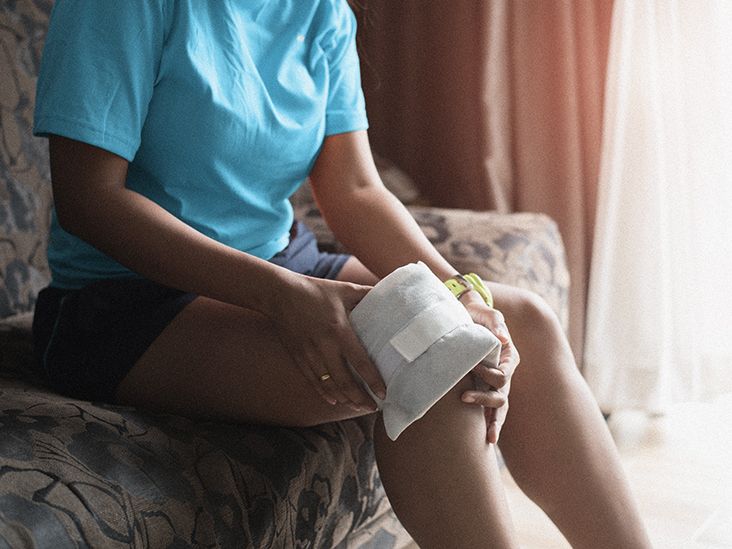
Ice is often useful for swelling that comes from a recent injury, overuse flare, or inflammation. Use a cold pack, bag of frozen vegetables, or ice wrapped in a thin towel. Apply it for about 15 to 20 minutes at a time, then let the skin return to normal temperature before icing again.
Never place ice directly on bare skin. Frostbite is not a bonus feature. During the first day or two after a minor injury, icing several times daily can help reduce swelling and discomfort. If your knee becomes numb, blotchy, unusually painful, or irritated from cold, stop and let the skin recover.
3. Use Compression for Support
A compression bandage or knee sleeve can help limit swelling and provide a sense of stability. The wrap should feel snug, not like it is auditioning to cut off circulation. Loosen it if your foot tingles, changes color, feels cold, or swelling increases below the wrap.
Start wrapping below the knee and move upward with even pressure. Avoid bunching the bandage behind the knee, where it can dig in and irritate the skin. Compression is helpful, but it is not a substitute for diagnosis if the knee is severely swollen or unstable.
4. Elevate the Knee Above Heart Level
Elevation helps gravity do some of the work. Lie down and prop the leg on pillows so the knee is above the level of your heart. This position may help fluid drain away from the knee area, especially after activity.
For best results, elevate the leg while resting and combine it with ice and compression. Sitting with your foot on a low stool is better than nothing, but true elevation works best when the leg is comfortably raised higher.
5. Consider Over-the-Counter Pain Relief Carefully
Nonsteroidal anti-inflammatory drugs, such as ibuprofen or naproxen, may reduce pain and swelling for some people. Acetaminophen may help pain, but it does not reduce inflammation in the same way. Always follow the product label and avoid mixing medications without medical advice.
People with kidney disease, stomach ulcers, bleeding problems, heart conditions, high blood pressure, medication interactions, or pregnancy should speak with a healthcare professional before using anti-inflammatory medicines. “It was in the cabinet” is not the same as “it is safe for me.”
What Not to Do When Your Knee Is Swollen
When a knee swells, the wrong move can stretch recovery from a quick fix into a long negotiation. Avoid playing through sharp pain. Do not keep running “just to test it.” Do not use deep massage on a freshly injured, swollen knee, especially if there is bruising or severe tenderness. Also, avoid heat during the early stage of a sudden injury because heat may increase blood flow and make swelling worse.
Heat can be useful later for stiffness, chronic arthritis discomfort, or tight muscles, but timing matters. A newly swollen knee usually prefers cold, rest, and protection. Save the heating pad for situations where swelling has calmed and stiffness is the main complaint.
Do not drain knee fluid yourself. Do not ignore a swollen knee that follows a major fall, sports injury, car accident, or twisting event. And please do not let the internet convince you that every swollen knee needs a miracle supplement, magnetic gadget, or wrap that looks like it belongs on a spaceship.
Quick Relief Plan for the First 48 Hours
For mild swelling after overuse or a minor twist, this simple plan can help:
First Day
Rest from painful activity. Ice the knee for 15 to 20 minutes at a time. Use light compression during the day if comfortable. Elevate the leg whenever possible. Keep walking limited and gentle. Avoid alcohol-heavy celebrations of your “knee recovery journey,” because inflammation already has enough enthusiasm.
Second Day
Continue ice if swelling remains. Check whether pain, stiffness, and puffiness are improving. If the knee feels better, try gentle bending and straightening within a pain-free range. If the knee feels worse, becomes more swollen, or cannot bear weight, it is time to seek medical advice.
After 48 Hours
If swelling is clearly improving, gradually return to light activity. If swelling persists, keeps returning, or limits normal walking, schedule a medical evaluation. Lingering swelling may mean the knee needs a closer look.
Gentle Exercises After Swelling Starts to Improve
Once the worst swelling and pain calm down, gentle movement may help restore comfort and function. The key word is gentle. This is not the moment to prove your knee is secretly an Olympic machine.
Heel Slides
Lie on your back or sit with your leg extended. Slowly slide your heel toward your body, bending the knee only as far as comfortable. Slide it back out. Repeat slowly for several repetitions.
Quad Sets
Sit or lie with the leg straight. Tighten the thigh muscle by gently pressing the back of the knee toward the floor or bed. Hold for a few seconds, then relax. This can help wake up the quadriceps without stressing the knee too much.
Straight Leg Raises
If you can tighten the thigh without pain, try lifting the straight leg a few inches while lying down. Lower it slowly. Stop if pain increases or the knee feels unstable.
For arthritis-related swelling, long-term improvement often depends on strengthening the muscles around the knee, improving flexibility, managing weight when needed, and choosing low-impact activities such as walking, cycling, or water exercise. A physical therapist can create a plan that fits your knee instead of forcing your knee to fit a random online routine.
When Knee Swelling Needs Medical Help
Home care is reasonable for mild swelling that improves quickly. But some symptoms are red flags. Seek urgent medical care if you have severe pain, major swelling after an injury, a visible deformity, inability to bear weight, fever, chills, redness, warmth, or a knee that feels hot and looks angry. A swollen, red, feverish joint can signal infection, and that is not a “wait and see” situation.
You should also contact a healthcare provider if swelling does not improve after a few days, keeps coming back, follows a popping sound, causes locking or catching, limits motion, or makes the knee feel unstable. A doctor may examine your knee, compare it with the other side, check your range of motion, order imaging such as an X-ray or MRI, or remove a small fluid sample to look for infection, crystals, blood, or inflammation.
Medical treatment depends on the cause. It may include physical therapy, prescription medications, joint aspiration, corticosteroid injection, antibiotics for infection, bracing, or surgery for certain structural injuries. The right treatment starts with the right diagnosis.
Common Causes and What They Feel Like
Sprain or Ligament Injury
A ligament sprain may happen after a twist, awkward landing, or sudden direction change. Swelling can appear quickly, and the knee may feel unstable. Severe ligament injuries need medical evaluation, especially if walking is difficult.
Meniscus Tear
The meniscus is cartilage that helps cushion the knee. A tear may cause swelling, pain along the joint line, catching, locking, or trouble fully bending or straightening the knee. Some tears improve with conservative care, while others need specialist treatment.
Arthritis
Osteoarthritis can cause swelling that builds slowly or flares after activity. Rheumatoid arthritis and other inflammatory conditions can also cause swelling, warmth, stiffness, and pain. Arthritis care usually focuses on movement, strengthening, weight management when appropriate, medication, and long-term joint protection.
Bursitis
Bursitis happens when a small fluid-filled sac around the knee becomes irritated. It may cause swelling at the front, side, or back of the knee, especially after kneeling, repetitive pressure, or overuse.
Gout or Pseudogout
Crystal-related arthritis can cause sudden swelling, warmth, and intense pain. The knee may become extremely tender. Medical testing can help confirm the cause and guide treatment.
Infection
An infected joint can become swollen, hot, red, and very painful. Fever may occur. This needs urgent medical care because joint infections can damage tissue quickly.
How to Prevent Knee Swelling From Coming Back
Prevention starts with respecting the knee’s workload. Warm up before exercise, increase activity gradually, wear supportive shoes, strengthen the hips and thighs, and avoid sudden jumps in mileage or intensity. If you run, do not increase distance too quickly. If you lift, learn proper form. If you kneel often, use padding. Your knees appreciate basic workplace benefits.
Maintaining a healthy body weight can reduce stress on the knee joints. Low-impact exercise can build strength without pounding the joint. Stretching the calves, hamstrings, quadriceps, and hip muscles may also improve movement patterns. If swelling returns repeatedly after the same activity, the activity may need adjustment rather than more willpower.
Experience-Based Insights: What Real Knee Swelling Teaches People
Many people learn about knee swelling the hard way: not from a textbook, but from one ordinary moment when the joint suddenly announces, “I have feedback.” A common example is the weekend athlete who plays basketball after months away, lands awkwardly, feels a twist, and notices swelling by evening. The first mistake is often denial. They walk around, climb stairs, and tell everyone it is “probably fine.” By the next morning, the knee is stiff, puffy, and deeply unimpressed. The lesson is simple: early rest matters. Stopping activity soon after pain begins can prevent extra irritation.
Another familiar situation is the long-walk vacation knee. Someone spends a full day exploring museums, city streets, subway stairs, and scenic viewpoints. The knee does not hurt much during the fun, but later it swells and feels tight. This is often an overuse pattern. The useful experience here is pacing. Alternating activity with rest, wearing supportive shoes, and icing after a demanding day can make recovery easier. Knees love adventure, but they prefer adventures with breaks.
People with arthritis often describe swelling as a “flare” rather than a sudden injury. One day the knee is manageable; the next it feels warm, full, and cranky after gardening, standing too long, or changing exercise routines. The experience-based strategy is to track patterns. If swelling appears after deep squats, long hills, or kneeling, those movements may need modification. A physical therapist can help replace painful movements with safer strengthening exercises.
Compression sleeves are another area where experience helps. Some people find light compression comforting during daily activity, while others wrap too tightly and create more discomfort. The practical rule is comfort plus circulation. A sleeve should support the knee, not bully it. If the lower leg tingles or the foot looks different, loosen it immediately.
Ice also teaches patience. Many people use it once and expect movie-style healing in twenty minutes. In reality, icing works best as part of a repeated plan: rest, ice, compression, elevation, and avoiding the activity that caused the flare. It reduces discomfort and swelling signals, but it does not repair a torn ligament or erase arthritis. Quick relief is possible; instant magic is not.
The most important experience is knowing when not to tough it out. A knee that is hot, red, severely swollen, unstable, locked, or unable to hold weight deserves medical attention. The same goes for swelling with fever or swelling that does not improve. Many people delay care because they fear bad news, but early diagnosis often means better options and less downtime. In knee care, being sensible early is usually faster than being stubborn first.
Conclusion
Reducing knee swelling quickly starts with smart basics: rest painful activity, apply ice safely, use gentle compression, elevate the leg, and consider over-the-counter medicine only when appropriate. As swelling improves, gentle movement and strengthening can help restore function. But quick care should never mean careless care. Severe swelling, fever, redness, inability to bear weight, deformity, locking, or swelling that refuses to improve should be checked by a healthcare professional.
Your knee is not being dramatic for no reason. Swelling is a message. Sometimes it says, “Take a break.” Sometimes it says, “We need a doctor.” Learning the difference can save time, pain, and a surprising amount of limping around the kitchen.