Some headlines sound like they were cooked up during a late-night dare. This is one of them. A toilet that turns poop into ash? Backed by Bill Gates? Built with Samsung? It sounds like the kind of invention you would expect to find somewhere between a science fair, a startup pitch deck, and the world’s weirdest home renovation show.
But this story is not a joke, and it is not just another shiny-tech curiosity. It sits at the intersection of public health, engineering, sanitation, climate pressure, and one very uncomfortable truth: billions of people still do not have access to safe sanitation. That means the humble toilet, yes, the same household fixture most people ignore until it stops working, is still one of the world’s most important pieces of infrastructure.
That is why the partnership between Bill Gates’ philanthropic sanitation efforts and Samsung’s research arm matters. The goal is not to create a luxury gadget for rich people who think a heated toilet seat is a personality trait. The goal is to develop a household-use system that can safely process human waste, kill pathogens, recycle treated water, and reduce solid waste into ash, all without depending on traditional sewer infrastructure.
Once you get past the headline, the project starts to look less like a novelty and more like a serious attempt to solve one of the oldest, dirtiest, and most expensive global problems on Earth.
Why This Story Exists at All
To understand why anyone would spend years reinventing the toilet, you have to start with the sanitation crisis itself. Safe sanitation is not a niche issue reserved for policy reports and conference badges. It affects health, safety, dignity, school attendance, environmental contamination, and economic productivity. When people lack safe toilets, waste often ends up in pits, waterways, open land, or poorly managed systems that spread disease instead of containing it.
For families living in dense informal settlements, flood-prone neighborhoods, or places without reliable water or sewer service, a standard flush toilet is not a realistic option. Sewers are expensive to build, costly to maintain, and water-hungry in a world where water stress is already a serious challenge. In many places, the “normal” model of sanitation is simply not available, and copying it everywhere is not financially or physically practical.
That is the basic logic behind the Reinvent the Toilet movement championed by the Gates Foundation. Instead of assuming every community needs a mini version of a big-city sewer network, the idea is to design toilets that treat waste safely on-site or near-site, with little or no need for water, sewer connections, or large centralized infrastructure.
In other words, the project begins with an unglamorous but critical question: what if the toilet had to do more of the work itself?
What Bill Gates and Samsung Actually Built
It is a prototype, not a product in your local home store
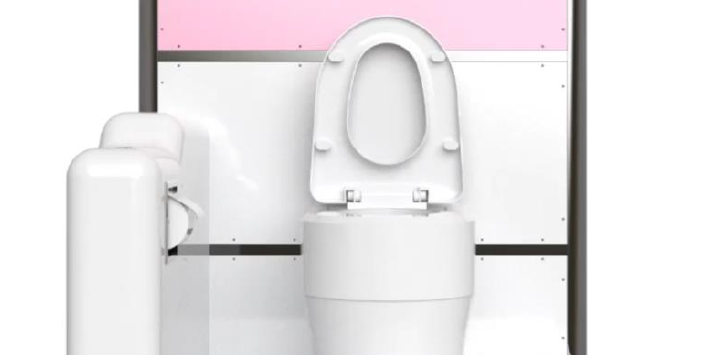
Samsung announced in 2022 that its Advanced Institute of Technology had completed a project with the Bill & Melinda Gates Foundation that resulted in a household-use prototype of a reinvented toilet. The research effort began in 2019, which means this was not a casual side quest between smartphone launches. It was a multi-year engineering program aimed at developing core sanitation technology that could potentially be commercialized later.
That distinction matters. This is not a mass-market consumer toilet sitting on a warehouse shelf waiting for someone to compare it with marble backsplash samples. It is a tested prototype built to meet performance targets set for safer, more practical sanitation in places where conventional infrastructure is weak, missing, or unsustainable.
How the toilet works
The eye-catching part of the story is the ash, and yes, that part is real. Samsung said the system uses heat-treatment and bioprocessing technologies to kill pathogens in human waste and make the outputs safer for the environment.
Here is the plain-English version of the process:
- Solid waste is dehydrated.
- It is then dried further.
- After that, it is combusted into ash.
- Liquid waste goes through a biological purification process.
- The treated water is designed to be fully recycled within the system.
That means the toilet is not just hiding waste. It is actively treating it. The ash is important because it represents a dramatic reduction in volume and a safer end product than raw fecal waste. The biological treatment of liquids matters for similar reasons: it is about reducing contamination risk and closing the loop on water use as much as possible.
In sanitation engineering, that is a big deal. In headline terms, it means your leftovers from lunch stop being a pathogen problem and end up as a small amount of ash. Not elegant dinner conversation, perhaps, but impressive engineering.
Why Samsung’s role is significant
Samsung’s involvement is more important than the novelty factor suggests. A lot of sanitation breakthroughs begin in research labs and never make the painful journey into large-scale manufacturing. Samsung brings industrial R&D experience, component engineering, modular design expertise, and the sort of scale thinking that small research teams usually do not have.
Samsung also said it planned to offer royalty-free licenses for patents related to the project to developing countries during the commercialization stage. That move signals something important: the ambition here is not merely to invent a clever toilet, but to make it easier for the underlying technology to move toward broader use where it is needed most.
From Odd Headline to Serious Public-Health Tool
The story gets much more serious when you look at what unsafe sanitation does to public health. Poor sanitation contributes to the spread of diarrheal disease and other infections, especially where waste contaminates water, food, or the surrounding environment. Children are hit hardest. Diarrheal disease remains a major killer of young children globally, and better sanitation, safe water, and hygiene are among the most direct ways to reduce that burden.
This is why Bill Gates has spent years trying to drag toilets into the innovation conversation. He has repeatedly argued that sanitation is one of those world-changing fields that gets wildly less attention than it deserves, probably because nobody wants to put “fecal sludge management” on a holiday card.
Yet the logic is hard to argue with. A better toilet can reduce disease exposure, protect local water sources, make neighborhoods cleaner, reduce odor and insects, improve safety, and preserve dignity. It can also reduce the need for costly sewage infrastructure in places where that infrastructure may take decades to build, if it is built at all.
Seen through that lens, the Samsung prototype is not a quirky one-off. It is a tool in a much larger battle against preventable illness and environmental contamination.
Where This Toilet Fits in the Bigger Reinvent the Toilet Movement
The Samsung prototype did not appear out of nowhere. It belongs to a broader ecosystem of sanitation innovation that the Gates Foundation helped catalyze through the Reinvent the Toilet Challenge, launched in 2011. The challenge pushed researchers, universities, engineers, and companies to design toilets that can safely manage human waste without relying on conventional sewers, large water inputs, or energy-heavy infrastructure.
Over the years, that challenge has produced a wide range of ideas. Some systems aim to transform waste into clean water. Others recover energy. Some use membranes, thermal treatment, or advanced oxidation. Others focus on nutrient recovery, safer sludge handling, or compact off-grid processing for households and communities.
That is why it would be a mistake to think the Samsung model is the reinvented toilet. It is one branch of a larger design family. The specific Samsung version emphasizes pathogen control, recycled treated water, and thermal conversion of solids into ash. Other research groups have pursued different routes depending on cost, context, climate, maintenance needs, and user behavior.
In practical terms, this is exactly what a healthy innovation field should look like. There is no universal toilet magic wand. A school in one region, an apartment cluster in another, and a rural household somewhere else may all need different sanitation solutions. The better question is not “Which futuristic toilet wins?” It is “Which systems can work reliably, affordably, and safely in the real world?”
Can It Actually Change the World?
Reasons for optimism
There are good reasons this technology gets attention. First, it addresses the sanitation problem where it actually lives: at the point where waste is produced. That matters because transporting untreated waste through broken systems or into unsafe disposal areas is exactly where so many health risks begin.
Second, the system is designed for household use, which suggests an attempt to make advanced treatment technology compact and practical rather than purely experimental. That is not easy. Shrinking serious waste-treatment processes into something small, safe, efficient, and usable in daily life is the kind of challenge that eats engineers for breakfast.
Third, the commercialization discussion matters. Plenty of promising sanitation ideas die in the valley between prototype and manufacturing. Samsung’s interest in pushing toward scalable production gives the project more credibility than a laboratory concept with no industrial path forward.
Reasons for caution
At the same time, it would be silly to pretend that one prototype solves global sanitation. Turning waste into ash is impressive. Deploying the technology at scale, at the right price, with dependable maintenance, replacement parts, user trust, and local manufacturing support is much harder.
Any real-world rollout would have to answer practical questions. How much will units cost? How durable are they in hot, humid, or dusty environments? How often do parts need replacement? Can they be serviced locally? Will users trust a system that behaves differently from familiar toilets? Can governments, nonprofits, and private partners finance adoption at meaningful scale?
That is where sanitation technology usually stops being a chemistry problem and starts becoming a systems problem. Hardware matters. But so do supply chains, financing, training, behavior change, regulation, and local acceptance. Toilets, it turns out, are social technology as much as mechanical technology.
Why the Story Resonates So Much
Part of the appeal here is obvious: “poop into ash” is a headline with built-in click power. It is weird, vivid, and impossible to ignore. But the deeper reason the story sticks is that it flips our assumptions. Most people think of toilets as finished technology. We assume humanity solved that chapter a long time ago and moved on to apps, rockets, and folding phones.
Not quite.
For much of the world, sanitation is still unfinished business. The toilet remains a frontline technology. It sits at the center of disease prevention, urban development, women’s safety, child health, and environmental protection. That means a better toilet is not a punchline. It is infrastructure, medicine, dignity, and climate adaptation rolled into one surprisingly awkward object.
And maybe that is why Bill Gates keeps talking about it. He understands something many industries forget: the technologies that save the most lives are not always the glamorous ones.
Related Experiences: What This Kind of Toilet Could Mean in Real Life
To make sense of the Samsung-and-Gates toilet, it helps to stop thinking like a headline writer and start thinking like a person who has lived without safe sanitation. For many households, the daily experience is not just inconvenience. It is planning your life around where and when it is safe to relieve yourself. It is worrying about children getting sick. It is dealing with smell, insects, flooding, contamination, and the quiet stress of knowing that waste is never really contained.
In neighborhoods with shared or poorly maintained latrines, a simple trip to the toilet can become a health risk or a safety issue, especially at night. Women and girls often bear a heavier burden in these situations because privacy and security are part of sanitation too, not decorative extras. Children may avoid filthy school toilets. Caregivers may spend time dealing with preventable illness instead of work or school. A sanitation problem quickly becomes a life problem.
That is why a household system that treats waste on-site could change everyday experience in ways that sound small on paper but feel huge in practice. Less odor means less stress inside and around the home. Less exposed waste means fewer flies and lower contamination risk. No need for a sewer hookup can matter enormously in places where formal infrastructure is absent or unreliable. Water recycling also matters where every liter counts and flushing clean water down the drain is either impossible or wasteful.
There is also the emotional side. Dignity is an overused word in development writing, but here it fits. Safe sanitation changes how people feel about their homes, their routines, and their health. It can make a house feel more secure, a school feel more usable, and a community feel more respected. Toilets are private, but the consequences of bad sanitation are painfully public.
There is another experience worth considering: the experience of the workers and technicians who manage waste systems. In many places, unsafe sanitation means someone eventually has to handle untreated waste in dangerous conditions. Technologies that neutralize waste earlier, reduce its volume, and make outputs safer can lower occupational risk too. That is not as catchy as “future toilet burns poop,” but it is one of the most meaningful benefits in the long run.
And then there is the community-level experience during climate stress. Flooding, heavy rain, and damaged infrastructure can turn fragile sanitation systems into contamination machines almost overnight. A compact toilet that safely processes waste closer to the source could add resilience when centralized systems fail. That matters more every year as climate extremes pressure aging infrastructure and vulnerable settlements alike.
So while the ash makes the headline memorable, the real story is about everyday life becoming cleaner, safer, and more manageable. Better sanitation means fewer compromises, fewer hazards, and fewer moments where people have to choose between privacy, convenience, and health. That is the experience hiding behind the engineering, and it is the reason this strange little story deserves serious attention.
Conclusion
Bill Gates and Samsung working on a toilet that turns poop into ash sounds like a headline designed to make people laugh first and think later. But once you look under the lid, it becomes a story about practical innovation aimed at one of the world’s most persistent public-health challenges.
The Samsung prototype is not just a flashy sanitation stunt. It is part of a broader effort to create toilets that can safely process waste without relying on vast sewer systems or endless water supplies. By dehydrating and combusting solid waste into ash, biologically treating liquids, and aiming for scalable commercialization, the project points toward a future where sanitation can be safer, more local, and more adaptable.
No, this will not solve the global sanitation crisis overnight. But it does prove that the toilet is still a frontier technology, and that clever engineering can matter just as much in a bathroom as it does in a laboratory. Sometimes the future arrives with rockets. Sometimes it arrives with ash in a chamber where nobody wants to ask too many follow-up questions.