Archeology has a rude habit of wrecking tidy history lessons. Just when we think we have the ancient world neatly filed away in labeled drawers, somebody brushes dirt off a footprint, unrolls a scorched scroll, or pulls an oddly advanced gadget from a shipwreck andboomthe timeline starts sweating. That is exactly why archeological finds remain so irresistible. They do not just decorate museum cases. They argue with textbooks.
Some discoveries push back the dates of human migration. Others reveal that ancient people were far more inventive, connected, artistic, and globally aware than we once imagined. A few finds even expose how modern myths got built in the first place. In other words, history is not a frozen monument. It is more like a draft with coffee stains, missing pages, and constant edits from people holding trowels.
Below are 50 fascinating archeological finds that genuinely changed how we understand humanity, migration, religion, technology, power, trade, and daily life. Some are world-famous. Some are nerd-famous, which is honestly an even stronger endorsement.
Why These Archeological Finds Matter
The most important archaeological discoveries do more than look impressive under glass. They force historians to ask better questions. Was civilization really born only after farming? Did people reach the Americas later than we thought? Were ancient societies isolated, or were they trading, traveling, and borrowing ideas constantly? Could prehistoric humans create fine art, sophisticated rituals, and surprisingly advanced technology? Again and again, the evidence says yesoften earlier and more dramatically than expected.
50 Archeological Finds That Rewrote History
Origins, Migration, and the Deep Human Past
- White Sands footprints: These ancient human tracks in New Mexico helped push human presence in North America far earlier than the old Clovis-first model once allowed. Suddenly, the peopling of the Americas looked much older and much messier.
- Monte Verde: This Chilean site became one of the great spoiler alerts in archaeology by showing that humans were in South America earlier than many researchers once believed possible.
- Laetoli footprints: Preserved footprints in volcanic ash showed early hominins walking upright millions of years ago. Bipedalism was not some late upgradeit arrived astonishingly early.
- Lucy: The famous Australopithecus afarensis skeleton made human evolution feel tangible. She helped prove that walking on two legs predates the big-brain phase of our story.
- Ardi: The partial skeleton of Ardipithecus ramidus complicated the old cartoon version of human evolution and suggested that our earliest ancestors were not simply chimp-like creatures with better posture.
- Dmanisi skulls: Fossils from Georgia challenged simplistic ideas about early human species by showing striking variation within one ancient population. Human evolution looked less like a ladder and more like a crowded family reunion.
- The Denisova finger bone: A tiny bone fragment from Siberia revealed an entirely new branch of ancient humans through DNA. Imagine discovering a whole human group from what sounds like the least dramatic object imaginable.
- Homo floresiensis: The so-called “hobbit” from Indonesia shattered assumptions about what human evolution was supposed to look like. Small-bodied, odd, and very real, this species reminded everyone that prehistory had range.
- Ranis Cave remains: Bone fragments and tools from Germany helped show that Homo sapiens occupied northern Europe earlier than once thought and may have overlapped with Neanderthals there for longer than expected.
- Shanidar Cave burials: Neanderthal remains and burial evidence helped weaken the old stereotype of Neanderthals as graceless cave brutes. They increasingly look social, adaptive, and emotionally complex.
Art, Belief, and the First Big Ideas
- Chauvet Cave paintings: These remarkably sophisticated images proved that very early humans were already master image-makers. Prehistoric art was not primitive doodlingit was visionary.
- Lascaux Cave art: The paintings in France helped reveal a Paleolithic world rich with symbolism, observation, and artistic control. Ancient people clearly did not wait for “civilization” to become creative.
- Göbekli Tepe: This site in Turkey upended the old theory that organized religion followed farming. Here, massive ritual architecture appears before full-scale agriculture, which is one heck of a plot twist.
- Çatalhöyük: This sprawling Neolithic settlement suggested that dense communities, symbolic life, and complex social organization existed before cities as we usually define them.
- Must Farm: Nicknamed “Britain’s Pompeii,” this Bronze Age settlement preserved textiles, tools, food remains, and domestic details so well that ancient daily life suddenly became vivid rather than vague.
- Stonehenge: Excavations around the monument continue to show that it was part of a larger ritual landscape, not just a lonely ring of mysterious rocks designed to confuse tourists and delight drone footage.
- The Amesbury Archer: This richly furnished burial near Stonehenge suggested long-distance mobility and status in Bronze Age Britain. The ancient world was more connected than people used to assume.
- The Rosetta Stone: Few finds changed history more literally. By helping scholars decipher hieroglyphs, it reopened ancient Egypt’s written voice after centuries of silence.
- The Dead Sea Scrolls: These manuscripts transformed the study of Judaism, early Christianity, and the textual history of the Hebrew Bible. Ancient religious history became much less fuzzy and much more exciting.
- The Library of Ashurbanipal: Cuneiform tablets from Nineveh preserved myths, records, and the Epic of Gilgamesh, proving that ancient Mesopotamia had a deep literary and administrative culture.
Texts, Technology, and Proof That Ancient People Were Not “Basic”
- The Amarna Letters: This archive of diplomatic correspondence showed that Late Bronze Age rulers were engaged in international politics, marriage alliances, and strategic complaints that sound surprisingly modern.
- Vindolanda tablets: These thin Roman writing tablets from Britain offer intimate glimpses of frontier lifeshopping lists, military notes, and social invitations. Empire, it turns out, also ran on paperwork.
- The Antikythera Mechanism: This shipwreck device stunned historians by revealing an ancient Greek machine capable of modeling celestial cycles. It was basically a mechanical mic drop from antiquity.
- The Uluburun shipwreck: Cargo from this Bronze Age wreck showed a massive trade network linking the eastern Mediterranean. Luxury goods, raw materials, and ideas were already crossing great distances.
- Sutton Hoo: The ship burial in England forced a rethink of the so-called Dark Ages by showing extraordinary craftsmanship, wealth, and international connections in early medieval Britain.
- The Staffordshire Hoard: This find of Anglo-Saxon gold and weapon fittings revealed elite warfare, artistry, and belief systems in early medieval England with dazzling, slightly intimidating clarity.
- Pompeii: Excavations there froze a Roman town in brutal detail. Far from abstract dates and emperors, we got graffiti, kitchens, workshops, street life, and the ordinary chaos of a living city.
- Herculaneum scrolls: Carbonized papyrus scrolls buried by Vesuvius preserved a lost ancient library. New imaging methods have made them even more important, proving technology can rescue voices from literal ash.
- Ötzi the Iceman: This naturally preserved body turned into a gold mine of information about Copper Age diet, mobility, medicine, violence, and clothing. One frozen traveler gave scholars years of homework.
- The Terracotta Army: Thousands of life-size figures at Qin Shi Huang’s mausoleum revealed the scale of imperial ambition, labor organization, and artistic specialization in early China.
Power, Wealth, and Societies That Were Far More Sophisticated Than Expected
- Sanxingdui bronzes: These striking artifacts from China forced a broader view of early Chinese civilization, showing that powerful regional cultures flourished outside the old central narrative.
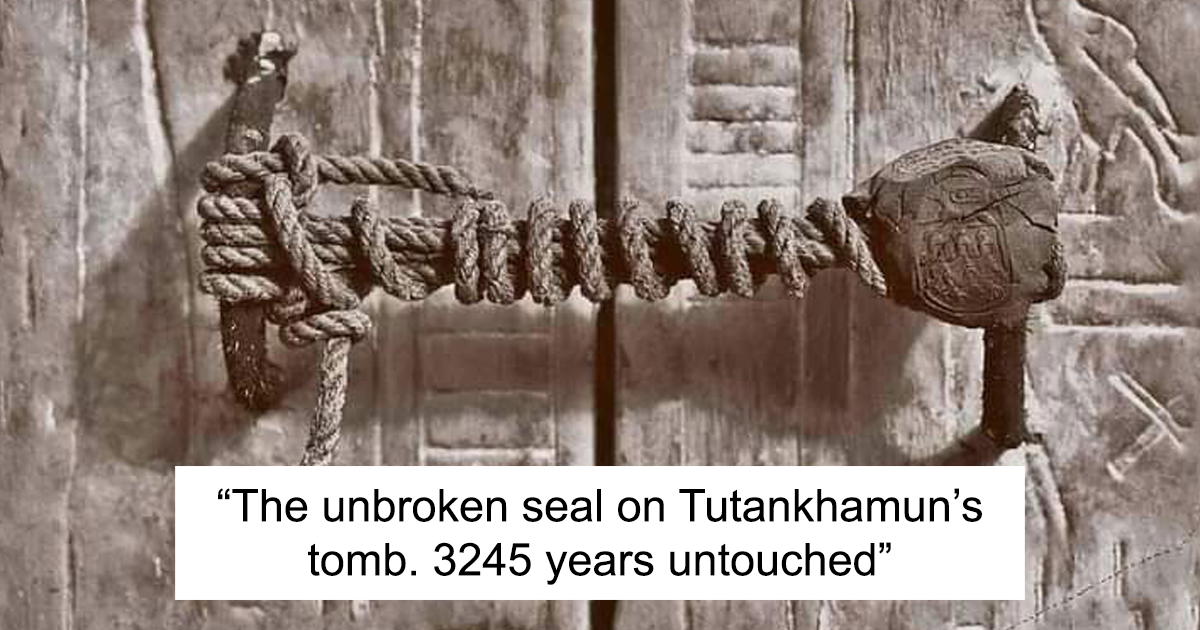
- King Tut’s tomb: The near-intact burial electrified the world and expanded understanding of Egyptian royal life, funerary practices, craftsmanship, and the politics of the 18th Dynasty.
- The Royal Tombs of Ur: These burials revealed elite ceremony, luxury goods, and organized state power in ancient Mesopotamia. Early cities were not experimentingthey were fully performing.
- The Griffin Warrior tomb: This Mycenaean burial in Greece yielded exquisite objects that reshaped ideas about cultural exchange between Minoan and Mycenaean worlds.
- The Pylos Combat Agate: This tiny engraved gemstone was so finely crafted that it made experts reconsider what Bronze Age artisans were technically capable of producing.
- Petra: The Nabataean city showed how trade, engineering, and water management could sustain urban splendor in an unforgiving landscape. Desert kingdoms were not side characters.
- Akrotiri: The buried settlement on Santorini preserved architecture and frescoes that illuminated Aegean life before the classical Greek era. Bronze Age sophistication was on full display.
- The Riace Bronzes: These Greek statues offered rare evidence of high-level bronze artistry that survived antiquity. They also reminded everyone how much ancient art has simply vanished.
- The Pazyryk carpet: Preserved in ice, this ancient textile demonstrated that nomadic groups possessed remarkable technical skill and aesthetic sophistication.
- Tollund Man: This bog body provided a startlingly intimate look at Iron Age life, death, ritual, and preservation. Archaeology occasionally feels less like history and more like eye contact across time.
The Americas and the Collapse of Old Assumptions
- Caral: This Peruvian site showed that complex urban society emerged early in the Americas, helping break the lazy idea that civilization only “really” happened in a few Old World centers.
- Cahokia: North America’s great pre-Columbian city and newer work around it have challenged outdated myths of disappearance and “lost civilization,” emphasizing continuity and Indigenous resilience.
- L’Anse aux Meadows: Norse remains in Newfoundland proved that Europeans reached North America long before Columbus, which rather awkwardly rearranged a very familiar origin story.
- Templo Mayor: Excavations in the heart of Mexico City revealed the sacred center of Tenochtitlan and helped restore the scale and power of the Mexica capital.
- The Nazca Lines: These geoglyphs continue to reshape understanding of ritual landscapes, movement, and symbolic expression in ancient Peru. Also, yes, they remain magnificently weird.
- The Lord of Sipán: This richly furnished Moche tomb transformed knowledge of elite power, ritual, and artistry on Peru’s north coast.
- The Lady of Cao: Her burial disrupted assumptions that political and ritual authority in ancient Andean societies was exclusively male.
- Amazon lidar discoveries: Remote sensing revealed extensive urbanized and engineered landscapes hidden beneath forest cover, changing old views that Amazonian populations were sparse and simple.
- Richard III’s remains: Found beneath a parking lot, the English king’s skeleton linked archaeology, genetics, and history in spectacular fashion and showed how physical evidence can challenge long-standing legend.
- Jamestown burials: Excavated remains and associated artifacts helped deepen understanding of survival, rank, religion, and hardship in one of early English America’s most studied settlements.
What These Finds Really Tell Us
If there is one grand lesson in all of this, it is that the past was never as simple as the hand-me-down version many of us learned in school. Ancient people migrated earlier, traded farther, wrote more, built bigger, experimented more boldly, and adapted more creatively than older narratives allowed. Archaeological discoveries keep demolishing the old habit of underestimating people who lived before us.
They also remind us that history is often written by what survives. A cave’s dry air, a bog’s chemistry, a volcanic disaster, a lucky collapse, a frozen mountain pass, or a desert jar can determine what future generations know. That means every new archeological find is not just an object. It is a survivor. And survivors can be very persuasive.
The Human Experience of Discovering the Ancient World
One reason stories about archeological finds hit so hard is that they create a strange emotional double exposure. You are standing in the present, probably holding a phone, maybe sipping coffee, maybe pretending you were only going to read one quick article, and then suddenly you are staring at a footprint, a comb, a bead, a loaf of bread carbonized by a volcano, or a letter scratched onto a Roman tablet. The past stops acting like a chapter heading and starts behaving like a room you can almost enter.
That feeling is especially powerful with well-preserved finds. A fingerprint in clay. A repaired shoe. A woven textile. A set of gaming pieces. A child’s footprint next to an adult one. None of these things sound flashy in isolation, yet they can be more moving than crowns and gold. Treasure dazzles, but ordinary objects whisper. And whispers are often what stay with you.
There is also a humbling quality to archaeology that makes it different from many other kinds of history. Written records often favor rulers, priests, conquerors, and people who had the luxury of being listened to. Material culture is more democratic. It preserves cooks, soldiers, potters, sailors, shepherds, weavers, children, migrants, and people who never expected to become evidence. A cracked bowl can say more about daily life than a royal inscription trying very hard to sound impressive.
For readers, museum-goers, and travelers, the experience of learning about these finds can feel almost physical. You see a Bronze Age textile and immediately understand that somebody sat there twisting fibers by hand. You read a frontier invitation from Roman Britain and realize ancient people also worried about schedules, social obligations, and whether anyone was actually going to show up. You look at a preserved body like Ötzi or Tollund Man and feel the uncanny shock of meeting history face-to-face, without the comforting blur of centuries.
There is, of course, a thrill factor too. Archeology is one of the few fields where “we found something under a parking lot” can turn into international news. It combines detective work, science, patience, disaster, luck, and the occasional dirt-covered revelation that sends scholars into a happy panic. But the deeper appeal is not just surprise. It is recognition. These finds matter because they keep proving that ancient people were not flat, faceless “others.” They were ingenious, emotional, mobile, political, vain, spiritual, practical, funny, violent, tender, and deeply human.
That may be why the best archeological discoveries do not simply tell us what changed in history. They change how history feels. They collapse distance. They remind us that civilization was not built by abstract forces moving neatly across maps. It was built by real people carrying tools, making mistakes, inventing rituals, burying loved ones, telling stories, repairing objects, and leaving behind scraps of themselves in the ground. Archaeology does not just recover the past. It restores texture to it. And once you have felt that texture, even briefly, history becomes much harder to treat like a dead subject.
Conclusion
The most interesting archeological finds do not merely fill gaps in the recordthey redraw the record itself. From White Sands and Monte Verde to the Dead Sea Scrolls, the Antikythera Mechanism, Sutton Hoo, and the lost cities of the Amazon, these discoveries prove that human history is far older, stranger, and more interconnected than older narratives suggested. The dirt, as always, keeps the best receipts.