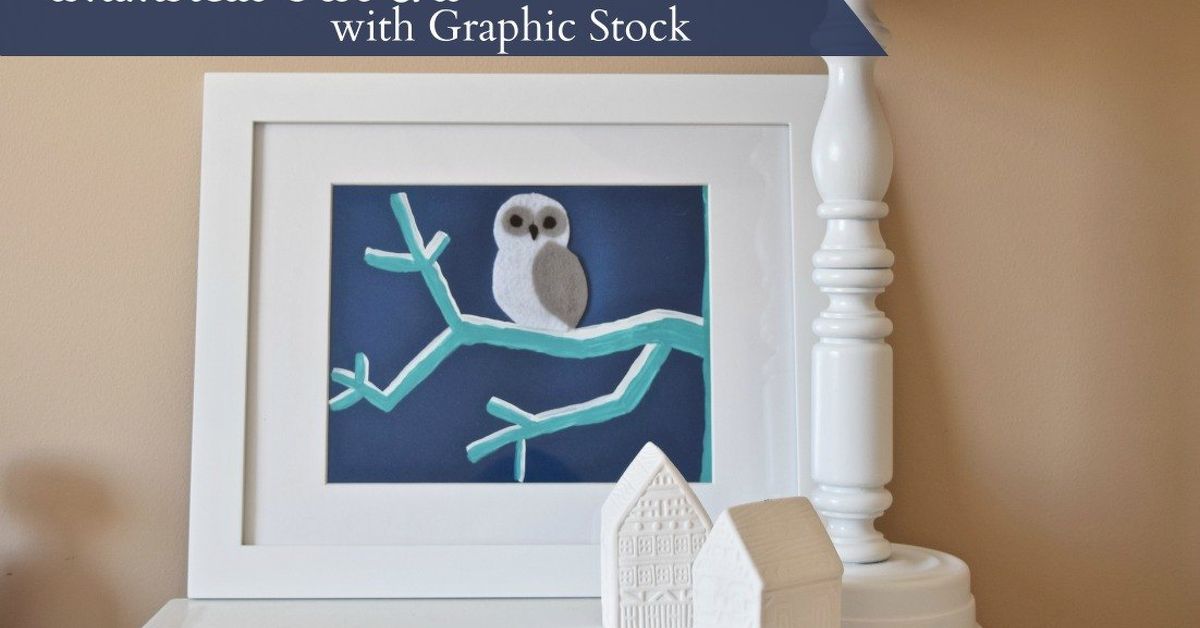
Owls already look as though nature designed them during a particularly imaginative coffee break. They have enormous eyes, compact bodies, dramatically expressive faces, and the remarkable ability to stare at humans as if they have just reviewed our life choices. It is no wonder that artists continually transform these mysterious birds into playful paintings, charming sculptures, storybook characters, nursery prints, and delightfully eccentric home decorations.
Whimsical owl art combines recognizable owl features with exaggeration, fantasy, humor, and decorative design. An artist might give an owl a crown of wildflowers, place it inside a moonlit library, dress it in a tiny waistcoat, or build its feathers from swirling geometric patterns. The result can be cute, elegant, surreal, humorous, or all four at once.
Although colorful owl illustrations feel perfectly at home in modern nurseries and digital art shops, the owl has inspired artists for centuries. Museums preserve owl images made from bronze, bone, pottery, ink, paint, stone, textiles, and printmaking materials. Contemporary whimsical owl artwork therefore belongs to a surprisingly long visual traditionone that ranges from ancient ceremonial objects to modern imaginative prints.
What Is Whimsical Owl Art?
Whimsical owl art is artwork that presents an owl through imaginative rather than strictly realistic visual language. The bird remains identifiable, but its proportions, colors, surroundings, or personality are playfully altered. A realistic wildlife painting might carefully reproduce every feather of a great horned owl. A whimsical version might give the same bird turquoise wings, spiral-shaped eyebrows, striped socks, and a suspiciously well-organized tea party.
The word whimsical does not necessarily mean childish. Whimsy can be subtle and sophisticated. An artist may use restrained colors, elegant lines, and a single unexpected detail, such as an owl carrying a lantern through a dark forest. Other artists turn the whimsy dial all the way up, creating rainbow plumage, floating mushrooms, miniature castles, and stars that appear to have wandered away from their assigned constellations.
Common characteristics of whimsical owl artwork
- Oversized or unusually expressive eyes
- Simplified bodies made from circles, ovals, and triangles
- Bright, unexpected, or highly coordinated color palettes
- Patterned feathers featuring dots, waves, leaves, flowers, or geometric shapes
- Human accessories such as glasses, hats, scarves, books, or musical instruments
- Fantasy settings involving moons, enchanted forests, clouds, and glowing plants
- A strong sense of personality, emotion, or visual storytelling
These characteristics allow artists to balance familiarity with surprise. Viewers recognize the owl immediately, yet the imaginative details invite them to linger and explore.
Why Owls Are Perfect Subjects for Whimsical Art
Some animals require considerable artistic persuasion before they look whimsical. Owls arrive prepared.
Their faces naturally attract attention
Owls have forward-facing eyes, prominent facial disks, curved beaks, and large heads. These features create a face-like arrangement that people easily read as alert, curious, grumpy, wise, startled, or deeply unimpressed. In real owls, the facial disk also serves an important purpose by collecting and directing sound toward the ears. Some species possess asymmetrically positioned ear openings that help them locate prey with remarkable precision.
For an artist, those biological features become an instant character-building kit. Slightly tilt the eyes and the owl looks skeptical. Raise the feather tufts and it appears surprised. Add spectacles and it suddenly seems qualified to manage an obscure university archive.
Their shapes simplify beautifully
An owl can be constructed from a few basic forms: one oval body, two large circles for the eyes, a small triangle for the beak, and a pair of wing shapes. This makes owl art approachable for beginners, children, illustrators, ceramic artists, and professional designers alike.
Those simple forms also support abstraction. Paul Manship’s bronze owl sculpture demonstrates how stylization and exaggerated features can emphasize an animal’s decorative character and personality without requiring strict realism.
Owls carry mystery without needing special effects
Many owls hunt at night or during dim periods around dawn and dusk. Their low-light vision, strong hearing, soft feathers, and quiet flight make them highly effective predators. Cornell Lab resources describe fringed flight feathers and downy surfaces that help reduce noise as an owl moves through the air.
That nighttime lifestyle gives owl art a ready-made atmosphere. Add a crescent moon, dark pine branches, and a few glowing stars, and the image already feels like the opening page of a story.
A Brief History of Owls in Art
Whimsical owl illustrations may feel contemporary, but artists have been fascinated by owl forms for thousands of years. The bird’s appearance, hunting ability, and nocturnal habits have supported many interpretations. However, there is no single universal meaning of an owl. Its role changes according to the culture, time period, artist, and purpose of the object.
Ancient owl figures and ceremonial objects
Artists of the ancient Moche culture on Peru’s northern coast frequently represented owls in metalwork, ceramics, wood, and bone. One small bone owl in the Metropolitan Museum of Art includes carefully carved feather patterns and visible feather tufts, with red cinnabar worked into its incised lines. A Moche shield ornament also presents the owl as a powerful bird with extended wings and gripping talons. Scholars cannot identify one certain interpretation, although nocturnal hunting and predatory strength may have contributed to its importance.
Owl-shaped vessels appear in several ancient American artistic traditions, proving that artists have long recognized the bird’s naturally sculptural body. Its rounded torso conveniently becomes a container, while the eyes, beak, and wings provide decoration. In other words, the owl may have been destined to become pottery before pottery knew what hit it.
The owl as a companion of wisdom
In classical Greek and later European imagery, the owl became strongly associated with Athena, known in Roman tradition as Minerva. She was connected with wisdom, strategy, warfare, and the arts. Museum collections preserve objects and prints in which an owl appears as her companion or identifying attribute.
This association still influences modern owl artwork. Glasses, books, graduation caps, maps, and writing desks frequently appear in whimsical owl designs because viewers quickly understand the visual joke: this bird knows things, and it may charge overdue-library fines.
Owls in Japanese and natural-history art
Japanese artists have depicted owls perched on pine branches and interacting with other birds. A seventeenth-century hanging scroll attributed to Soga Nichokuan uses ink to explore the owl’s form, while a late-eighteenth-century print by Kitagawa Utamaro includes a horned owl with two bullfinches.
In nineteenth-century natural-history illustration, John James Audubon and printmaker Robert Havell Jr. presented owls with dramatic poses and carefully observed details. National Gallery of Art holdings include images of barn, snowy, long-eared, and great horned owls. These prints are naturalistic, but their theatrical branches, dark skies, gestures, and compositions continue to inspire fantasy-oriented artists.
Modern, surreal, and contemporary interpretations
Modern artists have repeatedly used owls as flexible symbols and imaginative forms. Joseph Cornell incorporated owl imagery into poetic and surreal compositions associated with night and mystery. The Art Institute of Chicago preserves Cornell works in which an owl is dramatically illuminated or positioned within dreamlike visual structures.
Arshile Gorky’s The Leaf of the Artichoke Is an Owl received its curious title after Surrealist writer André Breton imaginatively connected an artichoke leaf with an owl. The painting demonstrates a central principle of whimsical art: an object does not need to resemble an owl perfectly if shape, suggestion, and imagination complete the transformation.
Ruth Asawa, Max Ernst, Pablo Picasso, Morris Graves, and other modern artists also explored owl subjects through lithography, drawing, sculpture, and experimental imagery. Their works range from recognizable birds to symbolic or highly abstract forms.
One of the most celebrated owl images in twentieth-century printmaking is Kenojuak Ashevak’s The Enchanted Owl. Produced through the West Baffin Eskimo Cooperative, the print turns an Arctic owl into a powerful, symmetrical, brilliantly patterned presence. Its bold design shows how stylization can preserve an animal’s essential character while moving far beyond literal description.
Popular Styles of Whimsical Owl Art
Storybook owl illustrations
Storybook owls often live in cozy tree houses, deliver letters, teach woodland classes, or embark on moonlit adventures. Their rounded forms, expressive poses, and gentle colors make them popular for children’s books, nursery wall art, classroom posters, and personalized gifts.
Successful storybook owl art usually contains a narrative clue. A satchel suggests a journey. A lantern implies a nighttime mission. A stack of pancakes raises serious questions but also makes the image memorable.
Bohemian and folk-inspired owls
Bohemian owl artwork favors layered patterns, botanical motifs, warm earth tones, saturated jewel colors, and decorative symmetry. Feathers may resemble flower petals, paisley shapes, woven textiles, or hand-painted tiles.
Artists borrowing from folk traditions should distinguish personal inspiration from the direct copying of culturally specific symbols. Museum collections demonstrate that owl objects come from many distinct communities and artistic practices. For example, the National Museum of the American Indian documents a hand-built and painted Cochiti Pueblo owl figure as a specific artwork connected to a specific communitynot as evidence of one interchangeable “Native owl style.”
Gothic and celestial owl art
Gothic whimsical owls inhabit midnight-blue skies, old libraries, candlelit towers, and forests where every mushroom appears to know a secret. Common elements include crescent moons, constellations, keys, antique clocks, ravens, crystals, and dark botanical borders.
The best examples balance darkness with charm. An owl can appear mysterious without becoming frightening. A tiny teacup, floral crown, or glowing moth can soften the composition while preserving its nocturnal mood.
Minimalist owl designs
Minimalist owl art reduces the subject to essential lines and shapes. Two circles, a beak, a curved outline, and a branch may be enough. This style works particularly well for logos, modern prints, embroidery patterns, greeting cards, and small decorative objects.
Minimalism also rewards careful use of negative space. The unpainted area around an owl can suggest moonlight, snow, mist, or silence without adding visual clutter.
Surreal and humorous owl art
Surreal owl artwork ignores ordinary logic with admirable confidence. Owls may become hot-air balloons, merge with trees, wear elaborate architecture as hats, or contain miniature landscapes within their wings.
Humorous owl art uses facial expressions and human behavior. A sleepy owl clutching coffee, an office owl surrounded by paperwork, or a chef owl angrily guarding a pie can communicate a complete joke without a caption.
How to Create Whimsical Owl Art
1. Begin with a recognizable silhouette
Start with the broad head, upright body, and prominent eyes. Even when the final piece becomes highly stylized, these anchor points help the viewer recognize the subject immediately.
2. Choose one dominant personality
Decide whether the owl is curious, scholarly, sleepy, adventurous, dramatic, cheerful, or hilariously annoyed. Shape the eyebrows, eyelids, posture, accessories, and color palette around that personality.
3. Exaggerate selectively
Whimsy becomes stronger when one or two features receive special emphasis. Enlarge the eyes, lengthen the feather tufts, shrink the feet, or make the wings resemble a patterned cape. Exaggerating everything equally can create noise rather than charm.
4. Build a deliberate color palette
Three to five major colors usually provide enough variety without making the composition resemble an overturned craft drawer. Earth tones create rustic or woodland moods. Pastels feel gentle and nursery-friendly. Deep blues, violets, and metallic accents suit celestial themes. Bright complementary colors create energy and a more contemporary appearance.
5. Use patterns to create feather rhythm
Instead of painting every feather realistically, divide the wings and chest into decorative zones. Fill them with scallops, dots, spirals, diamonds, leaves, stars, or repeating brush marks. Vary the scale of the patterns so the image remains lively.
6. Add an environment that tells a story
A branch alone creates a portrait. A branch above a glowing village creates a story. Ask what happened immediately before the pictured moment and what might happen next. That question can suggest props, lighting, weather, and background details.
7. Preserve a few real owl characteristics
Even fantasy artwork becomes more convincing when it borrows details from actual species. North America is home to a wide variety of owls, including tiny elf owls, pale barn owls, long-legged burrowing owls, powerful great horned owls, and nearly white snowy owls. Their different facial shapes, feather markings, body proportions, and habitats offer far more inspiration than a generic brown cartoon bird.
Materials That Work Well for Owl Artwork
Whimsical owl art adapts to nearly every medium, which is another reason the subject remains popular.
- Watercolor: Ideal for soft feathers, glowing skies, loose botanical details, and dreamy color transitions.
- Acrylic paint: Useful for bold colors, layered patterns, wooden signs, canvas paintings, and decorative craft projects.
- Colored pencils: Excellent for controlled detail, subtle textures, and intricate patterned plumage.
- Ink: Well suited to expressive linework, graphic black-and-white designs, crosshatching, and storybook illustration.
- Digital tools: Allow easy experimentation with symmetry, brushes, textures, lettering, and color variations.
- Clay and ceramics: Take advantage of the owl’s compact, vessel-like form to create mugs, planters, ornaments, and sculptures.
- Collage: Turns patterned paper, fabric, book pages, maps, and found materials into layered feathers.
- Fiber arts: Crochet, felt, embroidery, weaving, and quilting can translate owl shapes into tactile decorative pieces.
Mixed media can make the artwork especially playful. Watercolor paired with ink creates delicate color and crisp expression. Collage combined with acrylic paint adds unexpected texture. Metallic foil can suggest moonlight or give the owl the appearance of having inherited a small but tasteful treasure hoard.
Displaying Whimsical Owl Art at Home
Create a focal point instead of an owl invasion
One large owl painting can anchor a reading nook, nursery, entryway, or bedroom wall. Smaller pieces work well as a coordinated gallery group. Mixing too many unrelated owl objects, however, may cause the room to look less like a curated interior and more like the headquarters of a highly organized nocturnal committee.
Match the artwork to the room’s mood
Choose soft watercolor owls for restful spaces, bright graphic prints for playrooms, botanical folk designs for cozy living areas, and celestial pieces for moody bedrooms or creative studios. Frames can reinforce the theme: pale wood feels natural, black frames look contemporary, and antique gold adds a storybook quality.
Use visual repetition
Repeat one or two colors from the artwork in nearby cushions, blankets, books, ceramics, or lamps. The room will feel coordinated without requiring every object to feature an owl wearing a monocle.
Consider scale and viewing distance
Intricate feather patterns need enough size to remain visible. A highly detailed print may disappear when placed across a large room, while a simple graphic owl can remain effective from a distance. Reserve tiny, detailed pieces for desks, shelves, bedside tables, and intimate wall groupings.
Choosing or Buying Original Whimsical Owl Artwork
When shopping for owl wall art, look beyond whether the bird is immediately cute. Examine the composition, originality, print quality, color harmony, and emotional character.
For prints, check whether the listing identifies the artist, paper type, printing process, dimensions, and edition status. A licensed reproduction should clearly name the original creator or collection. Museum records are also useful reminders that image ownership and artwork ownership are different matters; an artwork may be historically old while a particular photograph or reproduction still carries usage restrictions.
For handmade art, small irregularities are often part of the appeal. Brush marks, carving lines, stitching variations, and glaze changes reveal the process behind the object. They prevent the owl from looking as though it emerged from a factory where every bird was instructed to maintain identical eyebrows.
Buyers should also avoid listings that imitate a living artist’s distinctive style without permission or that reproduce culturally specific designs as generic decoration. Original whimsical owl art is most appealing when it reflects a creator’s own visual voice.
Experiences With Whimsical Owl Art
My most useful experience with whimsical owl art began with a drawing that was supposed to be realistic. The plan was simple: sketch an elegant owl perched on an old branch, add moonlight, and create a dignified woodland portrait. Approximately twenty minutes later, the owl had uneven eyes, a body shaped like a pear, and an expression suggesting it had just discovered someone using its favorite mug.
Trying to correct the expression only made the bird look increasingly judgmental. Eventually, instead of fighting the drawing, I gave the owl a tiny bow tie and a stack of books. The accidental personality became the strongest part of the image. That experience revealed an important lesson: whimsical art often begins when the artist stops treating imperfections as emergencies.
Another valuable experiment involved creating three versions of the same basic owl. The first used realistic brown and cream feathers. The second used turquoise, coral, and mustard yellow. The third used only black ink, with flowers and stars forming the feather patterns. Although the silhouette remained almost identical, the three pieces felt completely different. The natural palette produced a calm woodland mood. The bright palette felt cheerful and modern. The ink version looked mysterious and slightly magical.
This exercise demonstrated how strongly color and pattern influence storytelling. The owl itself was not the entire subject. The visual language surrounding it determined whether viewers imagined a forest guardian, a playful nursery character, or the owner of an enchanted midnight stationery shop.
Working with children provided another perspective. Young artists rarely worry about whether purple feathers are biologically correct. They focus on what the owl likes, where it lives, and what unusual talent it possesses. One child created an owl that delivered cupcakes during thunderstorms. Another drew an owl with six wings because, according to the artist, “two would not be fast enough.” That reasoning is difficult to challenge.
Adults often begin art projects by asking whether they are drawing correctly. Children more often ask what could happen next. Borrowing that narrative curiosity can improve whimsical artwork at any skill level. Instead of concentrating only on accurate anatomy, ask why the owl is wearing a crown, what it keeps inside its satchel, or why twelve glowing moths are following it through the forest.
Displaying finished owl artwork also changes how it feels. A small drawing taped casually above a desk may appear like a sketch. Place the same drawing in a well-chosen mat and frame, and suddenly the owl looks as though it has secured professional representation. Grouping several related pieces can create an even stronger effect, particularly when they share a palette or recurring motif.
One especially successful arrangement combined a large moonlit owl print with two smaller botanical studies and a simple metal star. Only one piece actually featured an owl, but the surrounding objects expanded its world. The collection felt atmospheric without becoming themed merchandise.
The most enjoyable part of creating whimsical owl art is that the subject welcomes both discipline and play. Artists can study real feathers, facial disks, talons, habitats, and species markings, then freely transform those observations. Accuracy provides a foundation; imagination decides where the owl goes next.
Sometimes it becomes a forest philosopher. Sometimes it becomes a celestial traveler. Sometimes it simply sits beside a coffee cup looking exactly as tired as everyone else on Monday morning. All three possibilities can produce meaningful art.
Conclusion
Whimsical owl art endures because owls occupy an ideal space between reality and imagination. Their distinctive faces, compact shapes, quiet movement, and nighttime behavior already suggest personality and mystery. Artists can preserve those recognizable qualities while experimenting with color, pattern, humor, symbolism, and fantasy.
Whether created as a detailed watercolor, a bold digital illustration, a patterned ceramic figure, or a child’s six-winged cupcake-delivery specialist, an imaginative owl can tell a story at a glance. The most memorable pieces do more than decorate a wall. They create a character, hint at a larger world, and invite viewers to wonder what the owl knows that they do not.