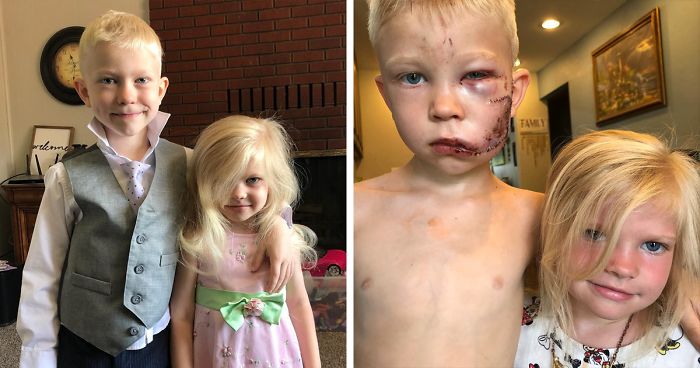
Every so often, a real-life story arrives with enough heart, courage, and “did that really happen?” energy to make a Hollywood scriptwriter quietly close their laptop. The story of Bridger Walker, a 6-year-old boy from Wyoming who saved his little sister from a dog attack, is one of those rare moments. It has danger, sacrifice, family love, a painful recovery, andbecause the universe occasionally has excellent timingmessages of praise from actual Avengers.
In July 2020, Bridger stepped between his younger sister and a charging dog. He was bitten badly on the face and head, underwent surgery, and needed about 90 stitches. When his family asked why he put himself in harm’s way, his answer was almost unbearably brave: if someone had to get hurt, he thought it should be him. Most adults spend years trying to define courage. Bridger summed it up before losing his first set of baby teeth.
The story quickly spread online after his aunt shared it on Instagram, and soon celebrities, athletes, and everyday people were cheering for the little boy whose actions sounded less like a viral headline and more like a superhero origin story. Chris Evans, Mark Ruffalo, Brie Larson, Tom Holland, Anne Hathaway, Hugh Jackman, Zachary Levi, the Russo brothers, Robbie Amell, and others sent love, encouragement, and praise. Captain America even promised Bridger an authentic shield. Honestly, the shield had probably been waiting for him all along.
The Day Bridger Walker Became A Real-Life Superhero
The attack happened on July 9, 2020. Bridger, then 6 years old, was outside with his 4-year-old sister when a dog charged toward her. Instead of freezing or running away, Bridger moved in front of her. He later explained that he stepped to the side and kept moving so the dog could not get past him. That instinctto protect someone smaller, younger, and more vulnerableturned a normal summer day into a moment his family and millions of strangers would never forget.
The dog bit Bridger several times, including severe injuries to his face. But even after being hurt, he reportedly grabbed his sister’s hand and helped get her to safety. That detail matters because it shows Bridger’s bravery did not end with the first act of protection. He did not simply block the attack; he kept thinking about his sister after he was injured. That is not movie courage. That is real courage, which is messier, scarier, and much less interested in dramatic background music.
His family later said Bridger underwent a two-hour surgery and needed about 90 stitches. For a child that young, the physical pain alone would have been overwhelming. The emotional shock would have been just as serious. Yet the sentence that traveled around the world was not about fear. It was about love: “If someone had to die, I thought it should be me.”
Why The Story Went Viral
Many viral stories disappear in a day, swallowed by the internet’s endless buffet of memes, celebrity gossip, and videos of cats knocking cups off tables like tiny criminals. Bridger’s story was different because it felt pure. There was no marketing campaign, no polished press tour, no attempt to turn pain into performance. It was a family sharing a little boy’s bravery and hoping his heroes might send encouragement during recovery.
His aunt, Nicole Walker, posted about the incident on Instagram and tagged members of the superhero world because Bridger loved the Avengers. The post spread quickly. People were moved not only by what Bridger did, but by the fact that he did it at six years old. Most 6-year-olds are negotiating snack rules, arguing about bedtime, or trying to wear a cape to the grocery store. Bridger made a split-second choice that many adults hope they would make but never want to test.
The story also arrived during 2020, a year when the world was collectively running on stress, uncertainty, and banana bread. People were hungry for reminders that goodness still existed. Bridger became one of those reminders. His courage was not loud or polished. It was simple, direct, and deeply human.
Captain America, Hulk, Spider-Man And More Send Praise
Once the story reached the Marvel universe, the responses came fast. Chris Evans, known worldwide as Captain America, sent Bridger a personal video message. Evans called him a hero, praised his bravery and selflessness, and told him his sister was lucky to have him as a big brother. Then came the line that made the internet collectively reach for tissues: Evans said he would send Bridger an authentic Captain America shield because he deserved it.
It was a perfect moment. Bridger watched the message while dressed in a Captain America costume, standing beside the sister he had protected. The symbolism was almost too good. A child who loved superheroes had just acted like one, and Captain America himself showed up to salute him. Somewhere, comic-book logic quietly nodded in approval.
Mark Ruffalo, who plays the Hulk, also praised Bridger, emphasizing that real courage is not about acting tough or dominating others. It is about knowing what is right and doing it even when it might hurt. Brie Larson, Captain Marvel herself, reached out as well. Tom Holland, Spider-Man, later invited Bridger to a Spider-Man film set, and that promise eventually turned into a dream visit. Bridger even got to participate in web-slinging practice, which is the kind of recovery milestone no hospital discharge form can properly prepare for.
Anne Hathaway, although not an Avenger, shared the story too and wrote that she knew a superhero when she saw one. Hugh Jackman, Zachary Levi, the Russo brothers, Robbie Amell, and Grant Gustin were also among the famous names connected to the wave of support. For Bridger, these messages were more than celebrity shout-outs. They were emotional fuel during a frightening recovery.
The Meaning Behind Bridger’s Scar
A year after the attack, Bridger’s father shared that his son viewed his scar with pride. Bridger did not want it to disappear completely because, to him, it was a reminder that his sister was safe. That perspective is remarkable. Many people see scars only as evidence of injury. Bridger saw his as evidence of love.
His recovery included medical treatment for the scarring, including laser procedures. Doctors helped reduce the visible damage, but the family also made clear that Bridger’s emotional recovery mattered just as much as the physical one. Support from strangers, celebrities, doctors, and family members helped him regain confidence and joy. In other words, healing did not happen only in a clinic. It happened through kindness, community, and the repeated message that what he did mattered.
That is one reason the story continues to resonate. Bridger’s scar is not just a mark from a traumatic event. It is part of a larger story about how people respond after trauma. The world can be rough, but sometimes it also shows up with letters, gifts, messages, medical care, and a Captain America shield. Not a bad care package, all things considered.
What Parents Can Learn From Bridger’s Story
Bridger’s bravery deserves every bit of praise it received, but his story also opens an important conversation about dog bite prevention, child safety, and adult supervision around animals. Dogs are beloved family members in millions of homes, but even friendly dogs can bite when scared, startled, hurt, hungry, protective, or overwhelmed. Children are especially vulnerable because they are small, move quickly, make unpredictable sounds, and often do not recognize warning signs.
Parents should teach children to ask permission before approaching any dog, even one that looks calm. Kids should let the dog see and sniff them first, avoid touching the face or tail, and pet gently on the side or back. They should never bother a dog that is eating, sleeping, chewing a toy, caring for puppies, or trying to move away. A dog that retreats is not playing hard to get; it is asking for space.
Children should also know what to do if an unfamiliar dog approaches. The safest response is usually to stay calm, avoid direct eye contact, and slowly back away. Running can trigger a chase instinct. Screaming can increase excitement. If knocked down, children should curl into a ball and cover their face and neck. These lessons are simple, but they need repetition. One “don’t run at dogs” lecture shouted from the kitchen while making spaghetti is not enough.
Adults have responsibilities too. Young children should never be left alone with dogs, including family pets. Owners should keep dogs vaccinated, trained, properly socialized, and supervised. If a dog has shown signs of aggression, fear, or resource guarding, professional guidance is important. Responsible pet ownership is not about assuming “my dog would never.” It is about creating conditions where a bite is less likely to happen.
Why Bridger’s Courage Hit So Many People In The Heart
At its core, Bridger Walker’s story is not famous because celebrities reacted to it. It is famous because it reveals something people desperately want to believe: that love can be instinctive, brave, and immediate. Bridger did not hold a committee meeting. He did not wait for applause. He saw danger and moved.
That is why calling him a superhero feels natural. Superheroes are not defined by capes, metal suits, magic hammers, or suspiciously perfect hair after explosions. They are defined by the choice to protect others. Bridger made that choice in the real world, where injuries hurt, scars remain, and courage is not followed by a convenient cut to the next scene.
His story also challenges the way people think about heroism. Heroism is often imagined as something grand and public. But sometimes it happens in a backyard. Sometimes it looks like a child standing between his sister and danger. Sometimes it comes with tears, surgery, and a long recovery. And sometimes, yes, it comes with Captain America calling to say, “You’re a hero.”
Experience Section: Lessons From A Little Boy With A Giant Heart
Stories like Bridger’s often make families pause because they feel both inspiring and frightening. Parents imagine their own children in that situation and feel a knot in their stomach. Siblings imagine what they would do for each other. Dog owners think about training, supervision, and the importance of understanding animal behavior. The emotional power of the story comes from how ordinary the setting was. It was not a battlefield or a burning building. It was a normal day that suddenly demanded extraordinary courage.
One experience many parents can relate to is the constant balancing act between encouraging children to be kind to animals and teaching them to be cautious. Children often love dogs with their whole bodies. They run toward them, squeal, hug them, lean into their faces, and assume every wagging tail means friendship. Adults know the world is more complicated. A dog may wag because it is excited, nervous, overstimulated, or unsure. Teaching kids this does not make them afraid of dogs; it helps them respect dogs.
A useful family habit is practicing “dog manners” the same way parents practice crossing the street. Before a child pets a dog, they should stop, ask, wait, and approach slowly. Parents can turn it into a simple routine: “Ask the owner. Let the dog sniff. Gentle hands. No face.” It may sound basic, but basic rules are exactly what children remember in tense moments. The goal is not to make every child a dog behavior expert. The goal is to give them a small set of safe responses they can actually use.
Another lesson is that children learn courage from what adults celebrate. When the world praised Bridger, it was not praising violence or recklessness. It was praising protection, love, and sacrifice. That distinction matters. Kids should not be encouraged to throw themselves into danger, but they should understand that caring for others is noble. In safer everyday ways, that can mean standing up for a bullied classmate, helping a younger sibling, telling an adult when something is wrong, or choosing kindness when meanness would be easier.
Bridger’s recovery also reminds families that healing is not just about fixing injuries. Children who go through scary events need reassurance, patience, and room to talk about what happened. They may feel proud, scared, confused, or all three before breakfast. Adults can help by avoiding pressure to “be brave” all the time. Real bravery includes crying, asking questions, and needing comfort. Even superheroes need snacks, sleep, and someone to sit beside them when the world feels too big.
For dog owners, the experience-based takeaway is equally important: prevention is love. Training, leashes, secure yards, regular veterinary care, and supervision protect both children and dogs. A bite can change a child’s life, but it can also lead to consequences for the dog and owner. Responsible choices before an incident are far better than regret afterward. Dogs are wonderful companions, but they are still animals with boundaries, fears, and signals humans must respect.
Finally, Bridger’s story is a reminder that small people can show enormous character. Children are often underestimated because they are young, noisy, sticky, and occasionally convinced socks are optional in winter. But inside them can live fierce loyalty and moral clarity. Bridger did not need a lecture on sacrifice. He simply loved his sister and acted. That is why his story continues to matternot because it is cute, not because celebrities noticed, but because it shows the best of what humans can be.
Conclusion
Bridger Walker’s story is unforgettable because it combines the innocence of childhood with the kind of courage adults spend a lifetime admiring. At 6 years old, he protected his younger sister from a dog attack, endured serious injuries, and became a symbol of selfless love. The 90 stitches tell one part of the story. The scar tells another. But the most important part is what Bridger’s actions revealed: heroism is not fiction, and superheroes do not always arrive from the sky. Sometimes they are already in the backyard, wearing sneakers, loving their sister, and doing the right thing before anyone has time to ask.
Note: This article is based on verified public reporting and general child safety guidance. It is written for informational and editorial purposes and is not a substitute for professional medical, veterinary, or legal advice.