We have all been there: trapped beside someone who talks like they are being paid by the syllable. Maybe it is a coworker who turns a two-minute update into a podcast series. Maybe it is a neighbor who catches you while you are holding melting ice cream. Or maybe it is that one relative who believes every family gathering needs a live documentary about their digestive system.
Learning how to get someone annoying to stop talking is not about being cruel, icy, or dramatic. It is about protecting your time, energy, attention, and sanity while still treating the other person like a human being. The goal is not to “win” the conversation. The goal is to end it respectfully, redirect it smoothly, or set a boundary before your brain starts packing a suitcase.
Good communication experts often emphasize assertiveness: being clear about your needs while respecting the other person. That is the sweet spot. Too passive, and you become a hostage with a polite smile. Too aggressive, and you create unnecessary conflict. But assertive? Assertive gets you out of the verbal traffic jam without honking at everyone.
Below are 12 practical, polite, and occasionally lifesaving ways to stop someone from talking too much, whether you are dealing with a chatty coworker, an oversharing friend, a nonstop stranger, or a conversational black hole at a party.
Why Some People Talk Too Much
Before you reach for your emergency fake phone call, it helps to understand why someone may be talking nonstop. Some people are nervous. Some are lonely. Some process their thoughts out loud. Some do not notice social cues. And yes, some simply love the sound of their own voice like it is a limited-edition vinyl record.
Understanding the reason does not mean you must stay stuck in the conversation. It simply helps you choose the best exit strategy. A lonely neighbor may need warmth and a time limit. A workplace interrupter may need a direct boundary. A hostile person may require a firmer ending. The more accurately you read the situation, the less awkward your escape will be.
12 Ways to Get Someone Annoying to Stop Talking
1. Use a Friendly Time Limit Up Front
One of the easiest ways to stop a conversation from becoming a marathon is to set a time limit before it begins. This works especially well with coworkers, neighbors, relatives, and anyone who tends to “just have one quick thing” that somehow becomes the oral history of everything.
Try saying, “I have about five minutes before I need to get back to work, but what’s up?” This sentence is magical because it is polite, clear, and preventive. You are not rejecting the person. You are giving them a small conversational parking space instead of handing over the whole garage.
For social situations, you can say, “I can chat for a minute, then I need to go say hello to someone.” At home, try, “I want to hear the short version because I need to finish something.” The phrase “short version” is your friend. It gently reminds the talker that the audiobook edition is not required.
2. Acknowledge, Then Redirect
Many nonstop talkers keep going because they do not feel heard. A simple acknowledgment can give their brain the “message received” signal. Then you can redirect the conversation or move toward ending it.
For example: “That sounds really frustrating. I hope it works out. I need to jump back into this project now.” Or: “I can see why that bothered you. Let’s circle back another time.”
This method works because it combines empathy with direction. You are not cutting them off like a dropped call. You are showing that you understood the main point, then guiding the moment to a close. Think of it as conversational aikido: absorb the energy, then move it somewhere safer.
3. Use Clear Body Language
Words matter, but body language often starts the exit before your mouth files the paperwork. If someone keeps talking and you want to leave, stop giving signals that say, “Please continue this TED Talk.”
Turn your body slightly away. Pick up your bag. Stand up if you are sitting. Step toward the door. Glance briefly at your watch or phone without making a theatrical production of it. Reduce enthusiastic nodding. If your face is doing “fascinated golden retriever,” the talker may assume you are delighted.
The key is to be natural, not rude. You are not rolling your eyes or pretending to faint. You are simply shifting your posture so the other person can see the conversation is closing. Often, subtle physical cues make your verbal exit much easier.
4. Interrupt Politely When Necessary
Many people avoid interrupting because they think it is always impolite. In reality, a gentle interruption can be more respectful than silently resenting someone for 25 minutes. If the other person has not taken a breath since the Bronze Age, you may need to step in.
Use phrases like:
- “Sorry to interrupt, but I need to stop you there.”
- “Let me jump in quickly before I lose the thought.”
- “I’m going to pause you for a second.”
- “I want to respect both of our time, so let me bring this back to the main point.”
Polite interruption is especially useful in meetings. If someone hijacks the agenda, say, “That is a useful point, but we need to return to today’s decision.” This keeps the focus on the shared goal rather than making the person feel attacked.
5. Give Them a Specific Next Step
Some conversations drag on because nobody knows what should happen next. If the talker is venting, explaining, complaining, or looping through the same point, give the conversation a landing strip.
Try: “That sounds like something to email the manager about.” Or: “You may want to write those points down before the meeting.” Or: “The best next step is probably to call customer service.”
This approach is useful because it transforms endless talking into action. Instead of staying in the complaint swamp, you help the person move toward a solution. You are not being dismissive. You are gently saying, “The conversation has served its purpose. Please proceed to the exit.”
6. Use the “Broken Record” Technique
The broken record technique is simple: repeat your boundary calmly without adding new material for the other person to debate. This is perfect for people who treat every polite excuse as a negotiation.
Example:
They say, “Just one more thing.”
You say, “I really need to go now.”
They say, “But this will only take a second.”
You say, “I understand, but I need to go now.”
They say, “You’re always busy.”
You say, “I hear you. I still need to go now.”
The power is in not over-explaining. Long explanations create handles for people to grab. Short boundaries are harder to wrestle with. You do not need to submit a 14-page legal brief proving that your time belongs to you.
7. Blame the Schedule, Not the Person
If you want to exit without hurting someone’s feelings, make the schedule the villain. Nobody can argue with a calendar quite as easily as they can argue with your mood.
Say, “I have to get to a call.” Or: “I need to finish something before noon.” Or: “I’m on a tight timeline today.” These statements are clear, neutral, and socially acceptable.
Be careful not to invent elaborate lies. “I have to go feed my cousin’s emotional support iguana” may raise questions. Keep it simple. A truthful schedule-based exit is both kind and effective.
8. Ask a Closing Question
A closing question helps wrap up the conversation by inviting the person to summarize. It is especially helpful when someone is rambling because they have lost the thread and are now wandering verbally through the forest.
Try:
- “So what do you think you’ll do next?”
- “What’s the main takeaway?”
- “What do you need from me on this?”
- “What’s the short version of the decision?”
This technique works beautifully at work because it turns a long monologue into a practical conclusion. It also helps you avoid becoming the unpaid customer service desk for every emotion in the building.
9. Redirect the Conversation to Someone Else
At parties, networking events, family gatherings, or group settings, you can often redirect a talkative person toward another conversation. This is not the same as throwing a conversational grenade and running away. Do it gracefully.
You might say, “You should tell Mark about that; he just dealt with something similar.” Or: “I’m going to grab a drink, but I think Sarah would love to hear about your trip.”
This works best when the new person has a genuine connection to the topic. Do not randomly sacrifice an innocent bystander. That is how social revenge cycles begin.
10. Be Direct When Hints Do Not Work
Some people do not notice hints. You can angle your body toward the door, hold your keys, stare at the horizon, and slowly age in real time, and they will still keep talking. That is when direct communication becomes necessary.
Direct does not mean mean. It means clear.
Say, “I need to end this conversation now.” Or: “I can’t keep talking about this.” Or: “I’m not available for this discussion right now.”
If the person is a coworker who repeatedly interrupts your focus, try: “I like catching up, but unplanned chats make it hard for me to finish my work. Can we keep conversations to lunch or scheduled breaks?”
The more recurring the problem is, the more direct you need to be. A one-time talker may only need a gentle exit. A chronic boundary-crasher needs a clear pattern reset.
11. Use Humor Carefully
Humor can soften a boundary, but it must be used with care. The goal is to lighten the moment, not mock the person. A good humorous exit is self-focused, warm, and brief.
Try: “I have to run before my inbox grows teeth.” Or: “I need to go be responsible, which is disappointing for everyone.” Or: “I’m going to escape now before my coffee gets cold and files a complaint.”
Humor works best with friends, friendly coworkers, and casual acquaintances. Avoid sarcasm with sensitive people, angry people, or anyone likely to misunderstand your tone. The wrong joke can turn a simple goodbye into a courtroom drama with snacks.
12. Leave Physically or Digitally
Sometimes the only way to end a conversation is to end it. This is especially true when the person ignores repeated cues, becomes hostile, overshares inappropriately, or drains your energy every time you interact.
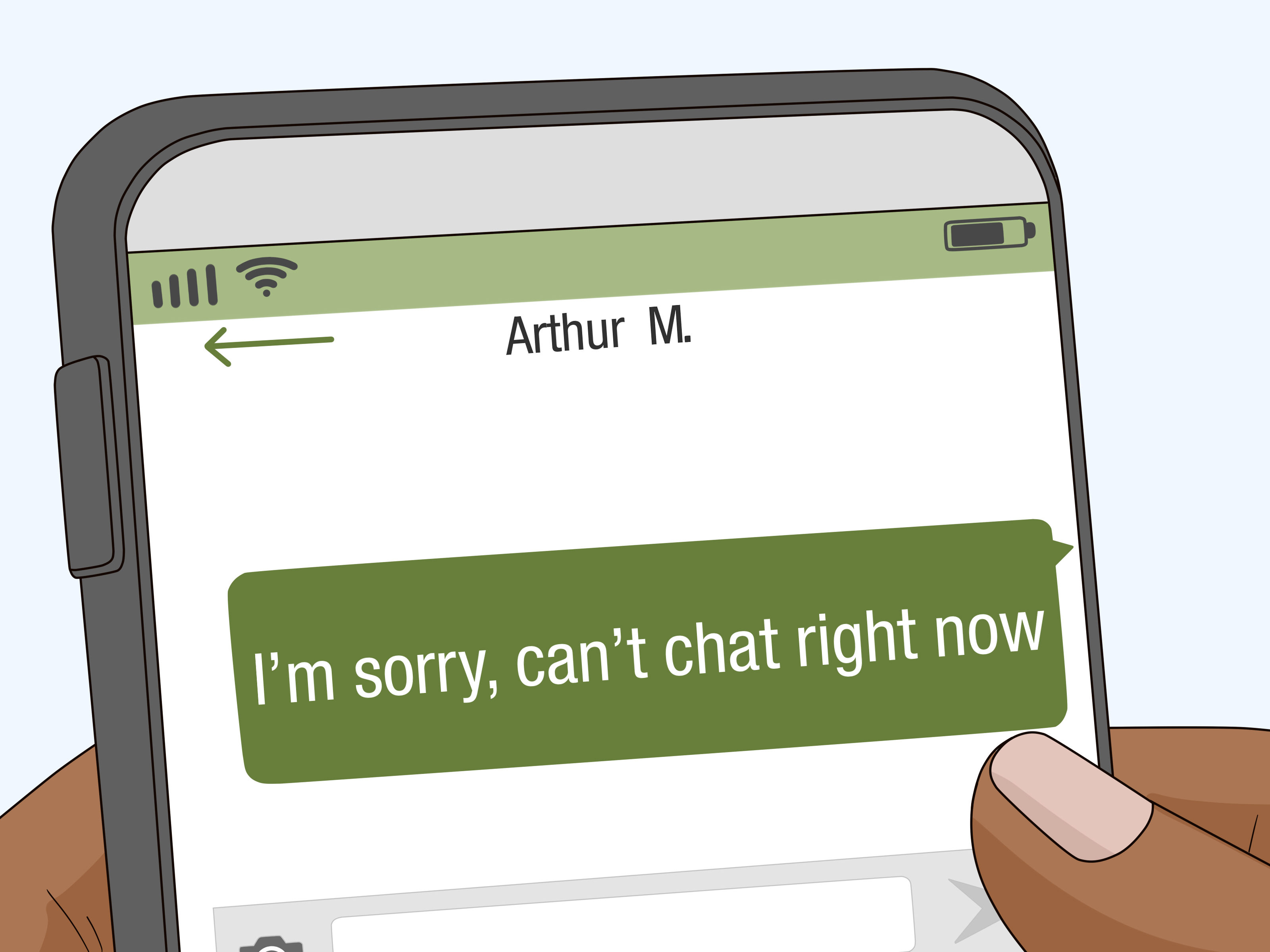
In person, say, “I’m going to go now. Take care.” Then move. Do not keep standing there like a polite statue. On the phone, say, “I need to hang up now. Talk later.” Then hang up. In text, use a closing line such as, “I’m signing off for the night. Hope it works out.”
Digital conversations need boundaries too. You do not have to respond instantly to every message, paragraph, voice note, or 3:00 a.m. emotional weather report. A delayed response, a brief answer, or no response after a clear closing can be appropriate depending on the relationship.
What Not to Do When Someone Will Not Stop Talking
There are many effective ways to end a conversation, but there are also a few tempting moves that usually make things worse. Avoid rolling your eyes, insulting the person, gossiping about them immediately afterward, or using fake emergencies so often that people start wondering how one person can have 11 urgent dental appointments in a month.
Also avoid passive-aggressive responses like “Wow, you sure had a lot to say” or “Are you done yet?” They may feel satisfying for three seconds, but they often create unnecessary tension. If the person is annoying but not harmful, choose respectful firmness over verbal fireworks.
That said, safety matters. If someone is harassing you, cornering you, or refusing to respect your boundaries, you do not owe them perfect politeness. Leave, get help, involve a manager, contact security, or use whatever support is appropriate. Manners are important; your safety is more important.
How to Handle Chatty People in Different Situations
At Work
Workplace talkers can be tricky because you may need to preserve the relationship. Use time boundaries, agenda reminders, and private conversations when the pattern repeats. For example: “I need focus time in the mornings, so I’m keeping casual chats for lunch.” This is professional, clear, and much better than hiding under your desk when footsteps approach.
With Friends
If a friend talks too much, kindness matters. They may be excited, stressed, or unaware. Try, “I want to support you, but I’m low on energy tonight. Can we talk about this tomorrow?” A good friendship can survive honest limits. In fact, it usually becomes healthier because nobody is secretly simmering like soup.
With Family
Family conversations can come with emotional history, guilt, and the classic “but I’m your mother” clause. Stay calm and repeat your boundary. “I love you, but I’m not discussing this tonight.” You can be loving and unavailable at the same time.
With Strangers
With strangers, keep it simple and firm. You do not owe a detailed explanation. “Nice talking with you. I’m going to get back to my book.” Or: “I need some quiet time now.” Then disengage. Public transportation, waiting rooms, and checkout lines are not legally binding social contracts.
Useful Phrases to Stop Someone From Talking Politely
Here are several ready-to-use lines for when your brain freezes and all you can think is, “Please stop making sounds.”
- “I’m going to pause you there because I need to get going.”
- “I wish I had more time, but I need to wrap this up.”
- “Let’s come back to this later.”
- “I hear you. I’m not able to talk more right now.”
- “I need to focus, so I’m going to step away.”
- “Thanks for telling me. I’m going to get back to what I was doing.”
- “I can talk for two more minutes, then I have to leave.”
- “I’m not the best person for this conversation, but I hope it works out.”
The best phrase is the one you can actually say. Do not choose something that sounds like it was written by a diplomatic robot if you normally talk like a regular person. Keep it natural, short, and steady.
Personal Experiences and Real-Life Lessons About Ending Annoying Conversations
Most people learn conversation boundaries the hard way: by getting trapped. One common experience is the “hallway capture.” You are walking somewhere with a purpose, perhaps carrying lunch, a laptop, or the fragile hope of finishing your work on time. Then someone appears with the words, “Quick question.” The question is not quick. The answer is not quick. Somehow you are now discussing their printer, their cousin’s wedding, and the state of modern society.
In situations like this, the most useful lesson is to set the boundary at the beginning. Saying “I have two minutes” feels slightly awkward the first few times, but it works. Without that time limit, the conversation expands to fill the available space, much like spilled pancake batter or an unsupervised group chat.
Another familiar experience is the friend who vents in loops. They tell the same story, reach the same conclusion, then restart from chapter one with bonus commentary. At first, you listen because you care. After a while, you realize listening is no longer helping either of you. The conversation has become a treadmill: lots of movement, no destination. In that case, asking “What do you want to do next?” can shift the energy. It gently moves the person from replaying the problem to considering action.
Then there is the workplace overtalker. This person may interrupt meetings, explain things everyone already knows, or turn simple updates into historical reenactments. The lesson here is that group settings need structure. Phrases like “Let’s bring this back to the agenda” or “We need to make a decision in the next five minutes” protect everyone’s time. It is not personal; it is practical. Meetings are expensive. Every rambling tangent is basically a tiny invoice paid in human patience.
Many people also struggle with family conversations because the emotional stakes are higher. A relative may repeat advice, ask intrusive questions, or talk over your attempts to change the subject. In these moments, humor may help, but directness is usually better. “I’m not discussing my dating life today” is clearer than laughing nervously and hoping the ceiling opens. Boundaries with family can feel rude when you first practice them, but they often prevent bigger resentment later.
A useful personal rule is to match the strength of your response to the strength of the problem. If someone is simply enthusiastic, use warmth. If they are unaware, use a hint plus a time limit. If they keep ignoring you, be direct. If they become disrespectful, end the conversation. You do not need to go from zero to dramatic exit in three seconds, but you also do not need to remain trapped until your soul starts buffering.
The biggest lesson is this: ending a conversation is a skill, not a character flaw. Many kind people confuse politeness with unlimited availability. But healthy communication includes beginnings, middles, and endings. When you end a conversation clearly and respectfully, you are not being mean. You are making room for your responsibilities, your attention, and your peace.
Conclusion: Be Kind, Be Clear, and Protect Your Peace
Learning how to get someone annoying to stop talking is really learning how to communicate boundaries. You do not have to insult people, disappear mysteriously, or fake a call from “the government.” Most of the time, a calm time limit, a polite interruption, a direct closing line, or a firm boundary will do the job.
The best approach depends on the situation. Use empathy when someone needs to feel heard. Use structure when the conversation needs focus. Use directness when hints fail. Use distance when someone refuses to respect your limits. Above all, remember that your time and attention are valuable. You can be respectful without becoming conversational furniture.
So the next time someone launches into minute 37 of a story with no visible runway, take a breath. Smile if appropriate. Use your words. End the conversation like a calm, confident adult with places to be and snacks to protect.