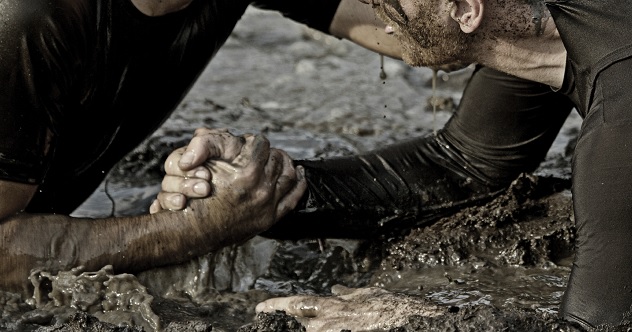
War is humanity at its absolute worst. It wrecks cities, ruins families, breaks promises, and leaves history smelling vaguely like smoke and regret. But every so often, even inside the ugliest conflicts, someone decides to act with uncommon courage, stubborn kindness, or downright inconvenient decency. That is where the inspiring stories live.
This is not a list about pretending war is noble. It is not. These are stories about people who refused to let brutality have the last word. Some carried bandages. Some carried secret messages. Some carried children to safety. Some carried nothing more dramatic than moral backbone, which, as it turns out, is often the rarest equipment on any battlefield.
If you are looking for inspiring war stories that feel real rather than polished into movie-trailer nonsense, these ten belong near the top of the list. They remind us that even in history’s darkest chapters, courage did not vanish. It simply showed up wearing muddy boots, wrinkled uniforms, and sometimes a very tired face.
1. Clara Barton Turned Compassion Into Logistics During the Civil War
Clara Barton is often remembered as the founder of the American Red Cross, but that title can make her sound tidier than she really was. During the Civil War, Barton brought supplies directly to wounded soldiers, worked near the front, and became known as the “Angel of the Battlefield.” It is a famous nickname, yes, but it sticks because she earned it the hard way.
What makes her story inspiring is not just her bravery. It is her usefulness. Barton understood that compassion without organization can become chaos in a hurry. She helped identify missing soldiers, improved relief work, and later transformed that wartime experience into a long-term humanitarian mission. In other words, she did not merely help people survive a war. She changed how people would be helped afterward.
Her legacy is a reminder that courage is not always loud. Sometimes it looks like showing up with the right supplies, the right records, and the refusal to leave suffering for somebody else to deal with.
2. Harriet Tubman Led a Wartime Mission That Freed Hundreds
Harriet Tubman had already secured her place in American history before the Civil War ended, but the Combahee River raid made her story even more extraordinary. Working with Union forces in South Carolina, Tubman helped plan and guide a military operation that freed more than 750 enslaved people.
This is the kind of story that almost sounds fictional until you remember history often undersells its boldest women. Tubman was not standing politely on the sidelines while men handled the “serious” business. She gathered intelligence, worked with Black soldiers, and played a direct role in an operation that hit slavery where it hurt. That is not symbolic courage. That is operational courage.
Her story matters because it blends liberation, military strategy, and moral clarity. Tubman did not just dream about freedom. She helped deliver it on a river under wartime pressure. That is inspiring on a level that makes ordinary productivity advice look a little flimsy.
3. The Christmas Truce Proved Humanity Could Interrupt Hatred
In December 1914, during World War I, soldiers on parts of the Western Front paused the fighting for what became known as the Christmas Truce. Men who had been trying to kill one another hours earlier climbed out of trenches, exchanged small gifts, sang songs, and in some places even kicked around a soccer ball.
The event did not end the war, and it was not universal. That matters. Romanticizing it too much would miss the point. The miracle of the Christmas Truce is not that it solved anything. It is that it happened at all. In one of the most senseless and industrialized wars in modern history, ordinary soldiers briefly chose fellowship over orders.
That moment remains powerful because it reveals a stubborn truth: propaganda can tell people who the enemy is, but it cannot always erase the human face right in front of them. Even in the mud, cold, and fear of World War I, shared songs and shared grief cracked open a little space for mercy.
4. Desmond Doss Saved Lives Without Carrying a Weapon
Desmond Doss, a U.S. Army medic in World War II, became the first conscientious objector to receive the Medal of Honor. He refused to carry a weapon because of his religious beliefs, yet he repeatedly entered danger to treat and evacuate wounded soldiers.
That alone would make for an inspiring wartime story. But what makes Doss unforgettable is the moral tension he carried. He served in one of the deadliest conflicts in history while refusing to become what war expected him to become. He did not run from service. He redefined it.
In a culture that often confuses courage with aggression, Doss offers a needed correction. Courage can also mean running toward suffering with a medical bag instead of a rifle. It can mean holding onto your principles even when everyone around you thinks those principles make no practical sense. History loves paradoxes, and Desmond Doss might be one of its best.
5. Irena Sendler Risked Everything to Rescue Children From the Warsaw Ghetto
Irena Sendler, a Polish social worker, helped rescue around 2,500 Jewish children during the Holocaust. She and her network smuggled children out of the Warsaw ghetto, found safe places for them, and recorded their identities in hopes that families might someday be reunited.
There is something especially heartbreaking and inspiring about rescue stories involving children because they force history to stop speaking in abstractions. A child is not a statistic. A child is a voice, a name, a pair of shoes by a bed, a favorite food, a future that might vanish if nobody acts.
Sendler acted. Repeatedly. Quietly. Intelligently. Her courage was not theatrical. It was disciplined, methodical, and incredibly dangerous. She reminds us that resistance is not always sabotage or sabotage-adjacent movie stuff. Sometimes resistance is paperwork, planning, disguises, trusted networks, and the decision to protect life when a regime demands indifference.
6. Jan and Antonina Żabiński Turned a Zoo Into a Refuge
During World War II, Jan and Antonina Żabiński used the Warsaw Zoo and their villa to hide Jewish men, women, and children from Nazi persecution. The setting almost sounds surreal: a zoo becoming a sanctuary for people when the world outside had become predatory beyond words.
That strange contrast is part of what makes their story so memorable. The Żabińskis did not possess official power on the scale of governments or armies. They had space, nerve, and a willingness to use both. They adapted. They concealed. They protected. In an age of organized cruelty, they practiced organized kindness.
Their story also reminds us that rescue is often domestic. It happens in kitchens, basements, back rooms, and ordinary homes that become extraordinary because of what their owners decide to risk. History tends to spotlight speeches and battles. But many lives were saved because someone opened a door and whispered, “Stay here.”
7. Raoul Wallenberg Used Bureaucracy Like a Shield
Raoul Wallenberg, a Swedish diplomat in Budapest during World War II, led one of the most significant rescue efforts of the Holocaust. He distributed protective papers, established safe houses, and intervened directly to help Hungarian Jews avoid deportation and death.
There is something wonderfully defiant about using paperwork to fight evil. It sounds boring until you realize a stamped document, in the right moment, can become the difference between life and death. Wallenberg understood that systems can be manipulated by cruel people, but they can also be jammed, stretched, and repurposed by brave ones.
He did not rescue people with military force. He rescued them with urgency, diplomacy, nerve, and relentless presence. His story is inspiring because it demolishes the myth that only armed power matters in wartime. Sometimes a pen, a pass, and the courage to confront authority in person can save thousands.
8. The Tuskegee Airmen Flew Through War and Racism at the Same Time
The Tuskegee Airmen were the first Black military aviators and ground crews in the U.S. Army Air Forces. They served during World War II while battling not only enemy forces abroad but also segregation and racism at home. Imagine being asked to prove your excellence while your own country is still arguing about your basic dignity. That was the assignment.
And they delivered. The Tuskegee Airmen built an extraordinary record of service, skill, and discipline. Their story matters not just because they flew missions, but because they broke open a lie. The lie said Black Americans could not perform at the highest levels of military aviation. Reality answered with engines, training, discipline, and results.
Their legacy extends beyond wartime heroism. They changed what younger generations could imagine for themselves. They helped push the nation toward a broader understanding of who belongs in the cockpit, the officer corps, and the story of American courage. That is more than military history. That is social history with altitude.
9. Native Code Talkers Turned Suppressed Languages Into Lifelines
Native American Code Talkers, especially the Navajo Code Talkers of World War II, used Indigenous languages to transmit secure military communications. Men from multiple tribes served in code-talking roles across both World Wars, turning languages that had often been dismissed or suppressed into strategic tools the enemy could not crack.
The irony here is almost too sharp to ignore. For generations, Native children were punished in boarding schools for speaking their own languages. Then, in wartime, those same languages became invaluable to the U.S. military. History can be deeply unfair before it becomes accidentally honest.
What makes the Code Talkers’ story inspiring is not just military cleverness. It is resilience. These men carried cultures that had been pressured, mocked, and pushed aside, and they used those cultures to protect others. Their service shows that identity is not a weakness to be erased. It can be a strength powerful enough to shape history.
10. The 442nd Regimental Combat Team Fought for a Country That Distrusted Their Families
The 442nd Regimental Combat Team, a segregated Japanese American unit in World War II, became one of the most decorated units for its size and length of service in U.S. military history. Many of its soldiers served while their families faced incarceration and suspicion back home. That detail should stop anyone cold.
These men volunteered, trained, fought, and bled for a nation that had failed them. That does not make the injustice smaller. It makes their service larger. Their motto, “Go for Broke,” carried a special weight because many of them already had everything on the line.
The 442nd is inspiring because its story combines bravery with dignity under insult. Their service did not excuse the prejudice they endured, but it exposed that prejudice as morally bankrupt. They proved patriotism and citizenship are not gifts handed down by prejudice. They are realities lived out by people whose courage often exceeds what their country deserves.
What These Inspiring War Stories Have in Common
These stories come from different wars, different countries, and very different kinds of people. A nurse, a rescuer, a diplomat, a pilot, a medic, a spy, a code talker, a soldier. Yet the pattern is surprisingly clear.
They chose people over ideology
The best wartime heroes are rarely the ones most obsessed with slogans. They focus on lives. Clara Barton saw wounded men who needed care. Irena Sendler saw children who needed escape routes. Wallenberg saw families who needed papers immediately, not philosophical essays later.
They were practical, not just brave
Real courage is not a dramatic pose. It is competence under pressure. The Christmas Truce happened because soldiers recognized one another’s humanity. The Code Talkers mattered because communication had to work. The Tuskegee Airmen mattered because excellence had to be demonstrated where prejudice said it could not exist.
They proved decency is contagious
One person taking a risk often creates space for others to do the same. Rescue networks grow. Medical care expands. Trust forms. A small act of kindness in wartime is never small to the person who survives because of it.
Why These Stories Still Matter Now
People read inspiring stories from war for all kinds of reasons. Some are studying history. Some are searching for hope. Some are just exhausted by the internet and would like evidence that human beings are capable of something better than bad takes and louder bad takes.
These stories matter because they refuse cynicism. They do not deny that war is hideous. They simply insist that hideous circumstances do not erase moral choice. In fact, they make moral choice easier to see.
That is the strange gift of these wartime stories. They do not comfort us by pretending the world is gentle. They challenge us by showing that people can still be generous, disciplined, and brave when the world is anything but. And if they could do that there, in those conditions, then the rest of us have far fewer excuses.
Extended Reflection: The Experience of Reading Stories Like These
There is a particular experience that comes with reading inspiring stories from terrible wars, and it is different from reading ordinary historical summaries. Facts tell you what happened. Stories like these tell you what human beings are capable of inside impossible conditions. That lands differently. It gets past the brain’s usual habit of filing history into neat drawers labeled “past,” “tragic,” and “not my problem.”
Spend enough time with wartime letters, museum exhibits, oral histories, and survivor accounts, and something shifts. The distance starts to collapse. The people stop looking like textbook names and start sounding like neighbors with impossible jobs. Clara Barton becomes less like a monument and more like the kind of person who would annoy everyone in the best possible way by asking why the supplies are late. Desmond Doss stops being a legend and starts feeling like a man who held onto his conscience with a grip so tight that fear could not pry it loose.
That is part of the emotional power here. These stories are inspiring not because they are polished, but because they are stubbornly human. Harriet Tubman’s courage feels even bigger when you remember she was operating in a world determined to deny her freedom and authority. The Tuskegee Airmen become even more moving when you realize they had to master the sky while proving their worth to doubters on the ground. The 442nd Regimental Combat Team hits hard because their bravery existed alongside deep injustice, not after it had been cleaned up for public comfort.
There is also a strange humility that comes from reading these wartime stories carefully. They make modern inconveniences look exactly as dramatic as they usually are, which is to say, not very. A delayed email feels less apocalyptic. A stressful meeting loses a bit of its theater. That does not mean our lives do not matter. It means perspective is a powerful thing, and history is very good at handing it out whether we asked for it or not.
But the deepest experience may be this: these stories restore faith without becoming sentimental. They do not tell us that people are always good. History clearly vetoes that theory. They tell us something more believable and, in a way, more useful. Even in catastrophic times, some people still choose courage. Some still choose mercy. Some still decide that another person’s life is worth risk, effort, planning, inconvenience, sacrifice, and endurance.
That is why these stories last. They are not escapist. They do not let war off the hook. Instead, they show that the human spirit can answer horror without copying it. A rescuer does not become less brave because the world is cruel. A medic does not become less admirable because the battlefield is chaotic. If anything, the darkness makes the light easier to see.
And maybe that is the experience readers carry away most strongly. Not blind optimism. Not patriotic glitter. Not the false idea that suffering automatically produces wisdom. What remains is something sturdier: the conviction that moral courage is real, that it has names and faces, and that history’s ugliest chapters still contain people worth admiring. In times like ours, that is not a small gift. It is fuel.
Conclusion
The most inspiring stories from hideous wars are not inspiring because war improves people. War does not improve anything. These stories endure because certain people refused to let cruelty become normal. They rescued, healed, sheltered, translated, flew, organized, and persisted. They proved that conscience can survive contact with chaos.
If there is one lesson running through all ten stories, it is this: heroism is often less glamorous than we expect and more demanding than we prefer. It asks for action, not aesthetics. It asks for discipline, not just emotion. And sometimes it asks ordinary people to become extraordinary because no one else is stepping forward.
That is why we still tell these stories. Not to glorify war, but to honor the people who made humanity visible in the middle of it.