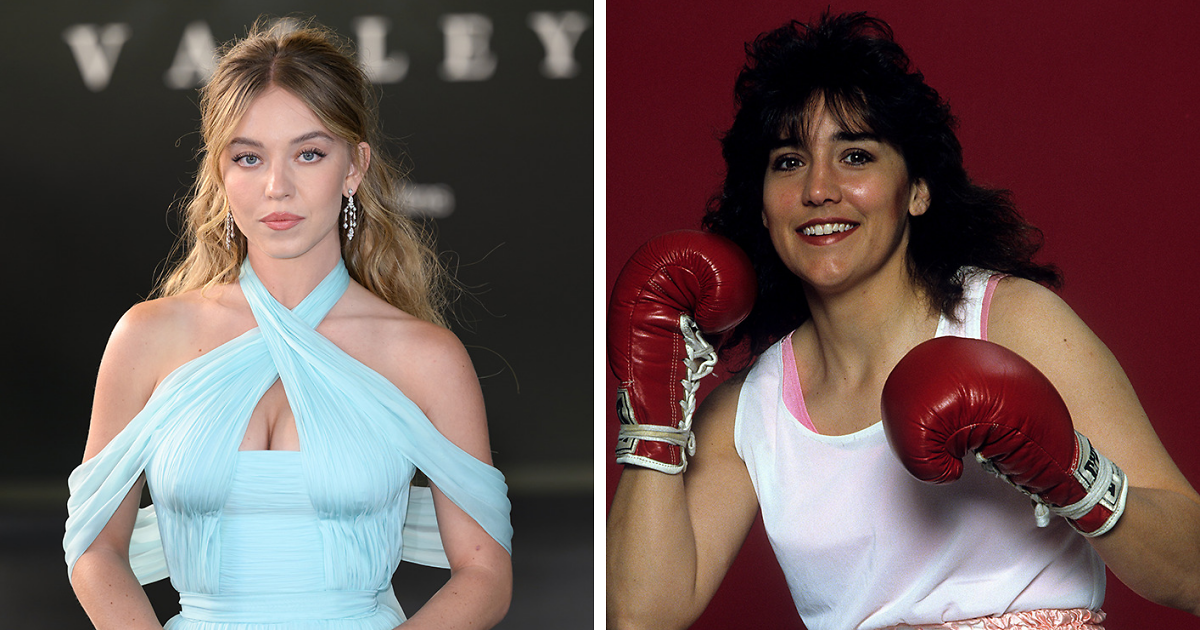
Editor’s note: This article discusses a film based on Christy Martin’s life, including boxing, body transformation, and domestic violence. It is written for entertainment and cultural analysis, not as fitness or medical advice.
Introduction: Sydney Sweeney Steps Into the Ringand Fans Do a Double Take
Sydney Sweeney has never exactly been a stranger to attention. Between Euphoria, The White Lotus, Anyone But You, and her rapidly expanding producer résumé, she has become one of Hollywood’s most-watched young stars. But her transformation for Christy, the biographical sports drama about legendary boxer Christy Martin, hit fans like a clean right hook.
The reason? Sweeney did not simply put on a wig, memorize a few boxing poses, and call it a day. To portray Martin, she reportedly gained more than 30 pounds, trained for months, lifted weights, kickboxed, changed her posture, changed her movement, and stepped into a role that required both physical grit and emotional weight. In short, she did not just “play boxer.” She built the body language of someone who could believably survive inside a ring.
That shift shocked many fans because it pushed against the polished image Hollywood often assigns to Sweeney. Instead of red-carpet gloss, the first looks at Christy showed her with darker hair, a stronger frame, fighter’s shoulders, and a grounded, bruised intensity. It was the kind of transformation that makes the internet pause mid-scroll and say, “Waitis that really her?”
Who Is Christy Martin, the Boxer Sydney Sweeney Plays?
Before diving into the transformation, it is important to understand why this role matters. Christy Martin is not just “a boxer.” She is one of the most important figures in women’s boxing history. Nicknamed “The Coal Miner’s Daughter,” Martin came from West Virginia and rose to prominence in the 1990s, when women’s boxing was still fighting for mainstream respect.
Martin became a breakout star after high-profile bouts on major boxing cards, including the famous 1996 fight against Deirdre Gogarty. That fight helped change how audiences viewed women in the sport. Martin was tough, entertaining, technically sharp, and marketable at a time when many promoters still treated women’s boxing like a sideshow instead of a serious athletic competition.
Her professional record, 49 wins, 7 losses, and 3 draws, included 31 knockouts. She later won a WBC super welterweight title and was inducted into the International Boxing Hall of Fame. She was also the first female boxer to appear on the cover of Sports Illustrated, a milestone that made her a visible symbol of women’s boxing breaking through the ropes of old expectations.
But Martin’s story is not only about trophies and television appearances. Her life also included years of abuse, control, and a near-fatal attack by her then-husband and trainer, Jim Martin, in 2010. She survived, rebuilt her life, and became an advocate for domestic violence survivors. That is the deeper reason Christy is not a standard sports biopic. It is not just about winning rounds. It is about surviving the fight nobody sees.
How Sydney Sweeney Transformed Her Body for Christy
Sweeney’s preparation for the role was intense, and the most headline-grabbing detail is the weight gain. According to multiple entertainment reports and interviews, the actress gained more than 30 pounds for the film. She also said the change affected her clothing size and made her feel “crazy strong,” which is exactly the kind of quote that sounds casual until you imagine the schedule behind it.
Her training reportedly lasted about three and a half months. The routine included morning weight training, midday kickboxing, and another weight-training session later in the day. That is not a cute celebrity workout with a smoothie and a ring light. That is a demanding athletic schedule built around strength, stamina, coordination, and repetition.
Boxing is not only about looking strong. It is about moving like a fighter. An actor can fake a dramatic speech, but it is much harder to fake the way a trained boxer shifts weight, guards the chin, rotates the hips, and reacts to incoming punches. Fans noticed that Sweeney’s transformation was not limited to size. Her entire screen presence changed.
Weight Gain Was Only Part of the Story
The internet naturally focused on the number30-plus poundsbecause numbers are easy to headline. But the more interesting story is what the weight represented. Sweeney was building muscle, power, and durability. She was also changing how audiences read her physically. In Christy, she needed to look like someone who could belong in a ring, not someone visiting one for a promotional photoshoot.
That distinction matters. A boxer’s body is functional. It does not exist to satisfy a red-carpet silhouette. It exists to absorb impact, deliver force, and keep going when the lungs are staging a tiny protest. Sweeney’s transformation gave the role a layer of realism that fans could see immediately.
Her Combat Sports Background Helped
Sweeney has spoken before about having a sports-heavy childhood and training in grappling and kickboxing when she was younger. That background likely helped her adapt to the physical demands of Christy. Even so, childhood martial arts experience and professional fight choreography are not the same thing. One is “I know how to move.” The other is “I can make a camera believe this punch changed history.”
For a biopic like Christy, the goal is not simply to show a few punches. It is to communicate confidence, fear, fatigue, hunger, rage, and survival through movement. A jab can be character development if the actor knows what she is doing. That is why Sweeney’s training became such a big part of the conversation.
Why Fans Were So Shocked by Sydney Sweeney’s New Look
Fans were surprised because Sweeney’s public image has often been tied to glamour, fashion, and the hyper-visible world of young Hollywood. She is used to being photographed in designer gowns, beauty campaigns, and glossy magazine spreads. Christy pushed her into a completely different visual language: sweat, bruises, brown hair, boxing gear, muscle, and emotional roughness.
That contrast is powerful. Hollywood loves a transformation, but fans love one even more when it feels genuinely risky. Sweeney was not hiding behind elegance here. She was leaning into a rawer, tougher, less filtered version of herself for the sake of the role.
There is also a cultural reason the reaction was so loud. Audiences are increasingly skeptical of “transformation” headlines that turn out to mean little more than a haircut. In Sweeney’s case, the physical work was visible. She changed her body, learned fight movement, and took on a real-life figure whose story carries serious emotional responsibility.
The Movie Is About More Than Muscles
It would be easy to reduce Christy to a body-transformation story, but that would miss the point. The film is about a woman who helped legitimize women’s boxing while privately enduring manipulation and abuse. It is a sports story, a survival story, and a portrait of identity under pressure.
That is why Sweeney’s transformation had to be more than cosmetic. Christy Martin’s public persona was built on toughness. She entered an aggressively male-dominated sport and forced people to take her seriously. But her private life was complicated by fear, control, secrecy, and violence. To play that honestly, an actor has to show both armor and vulnerability.
The best sports biopics understand that the body is part of the storytelling. In Raging Bull, Ali, Million Dollar Baby, and I, Tonya, physical transformation is not just a visual trick. It becomes a way to show obsession, discipline, pain, ambition, and cost. Sweeney’s work in Christy appears to follow that tradition.
Christy Martin’s Real Legacy Gives the Role Extra Weight
Christy Martin’s achievements changed the landscape for women in boxing. In the 1990s, she became one of the rare female fighters who could draw national attention. Her fights were not treated as polite exhibitions. They were fast, bloody, competitive, and memorable. She helped prove that women’s boxing could sell tickets and command respect.
That legacy makes Sweeney’s casting interesting. On paper, some fans may have wondered whether the actress best known for modern prestige TV and rom-com success could convincingly portray a hard-hitting boxing icon. That skepticism is exactly why the transformation landed so strongly. It turned doubt into curiosity.
Christy Martin herself has expressed admiration for Sweeney’s dedication, especially because the role required emotional sensitivity as well as physical toughness. When a real-life subject supports a portrayal, it does not automatically guarantee a perfect film, but it does suggest that the actor understood the assignmentand maybe even brought extra notebooks.
Why Hollywood Loves a Dramatic Body Transformation
There is a long tradition of actors changing their bodies for serious roles. Christian Bale, Charlize Theron, Matthew McConaughey, Hilary Swank, Natalie Portman, and many others have done it. Audiences tend to associate dramatic transformation with dedication, because it looks like sacrifice.
But there is a fine line. Body transformation can be powerful when it serves the story. It can also become gimmicky when the marketing focuses more on pounds gained or lost than on performance. Sweeney’s case is compelling because the physical change appears tied to the truth of Christy Martin’s life. She needed to look stronger, move differently, and occupy space like a fighter.
That is why the fan reaction makes sense. People were not just reacting to “Sydney Sweeney looks different.” They were reacting to the possibility that she might deliver one of her most serious performances yet.
What Sweeney’s Transformation Says About Her Career
Sweeney has been building a career that refuses to stay in one lane. She has done teen drama, satire, horror, romance, thrillers, and producing work. Christy adds another major category: physical biographical drama.
This kind of role can shift how an actor is perceived. It tells casting directors and audiences that the performer is willing to get uncomfortable. It also challenges the public image that can trap young stars. When someone becomes famous partly through beauty and style coverage, taking on a gritty sports role can feel like a statement: there is more here than the internet’s favorite screenshots.
That does not mean Sweeney needed to “prove” she is serious. Her earlier work already showed range. But Christy gives her a different kind of showcase, one built around physical commitment, emotional intensity, and a true story with real stakes.
Fan Reactions: Shock, Curiosity, and Oscar-Buzz Whispering
Whenever an actor transforms for a biopic, awards chatter tends to follow like a very well-dressed shadow. Fans and entertainment watchers quickly began discussing whether Sweeney’s performance could become a major career moment. The dramatic visual change, the real-life subject, the sports-biopic structure, and the emotional survival narrative all fit the kind of role that awards conversations often notice.
Of course, transformation alone does not win awards. A performance still needs depth, control, timing, and emotional truth. A wig and a training montage cannot do all the heavy liftingthough in this case, Sweeney also did plenty of actual lifting.
The bigger point is that people are paying attention. The body transformation became the hook, but the conversation has expanded into questions about performance, authenticity, women’s boxing, and how Hollywood tells stories about survivors.
Experience Notes: What This Transformation Feels Like From the Outside Looking In
One reason Sydney Sweeney’s transformation connects with people is that almost everyone understands, on some level, how hard it is to change a body with intention. You do not need to be an actor, boxer, or celebrity trainer to know that gaining strength takes time, food, discipline, and more laundry than anyone wants to discuss. Anyone who has ever started a serious fitness plan knows the first surprise is not the soreness. It is the logistics.
There is the meal planning. There is the training schedule. There is the strange moment when your old clothes stop fitting and you have to decide whether this is annoying, exciting, or both. There is the mental adjustment of seeing yourself differently in the mirror. For Sweeney, those changes happened under professional supervision and for a specific role, but the human experience underneath is relatable: changing your body can change your confidence, your mood, your routine, and the way others respond to you.
For fans, watching that process from afar can be inspiring, but it can also be misleading if stripped of context. Celebrity transformations happen with access to coaches, nutrition support, scheduling control, stunt teams, and production resources. Most people do not have the luxury of training several hours a day between call times. Most people also should not try to gain or lose large amounts of weight quickly without guidance. The useful takeaway is not “copy Sydney Sweeney’s routine.” The useful takeaway is that physical roles require respect for craft, preparation, and recovery.
There is also an emotional experience tied to playing a real person. Transforming for Christy Martin was not like preparing to play a fictional superhero. Martin is alive. Her story includes public victories and private trauma. That means the actor’s job carries extra responsibility. The body has to be accurate enough to honor the athlete, but the performance also has to respect the survivor. That balance is difficult. Too much focus on the body, and the story becomes a before-and-after slideshow. Too little focus on the body, and the boxing loses credibility.
That is why Sweeney’s transformation feels bigger than a viral headline. It represents a collision of physical training, emotional research, public scrutiny, and career risk. Fans were shocked because the result was visible, but the more interesting part is invisible: the months of repetition, the diet changes, the bruises, the fear of getting it wrong, and the pressure of portraying someone who actually lived the story.
In everyday terms, it is a reminder that transformation is rarely neat. It can be empowering and uncomfortable at the same time. It can make you stronger while forcing you to let go of an older version of yourself. For an actor, that is the job. For the rest of us, it is still a pretty good metaphorwith fewer mouthguards, hopefully.
Conclusion: A Transformation That Packs More Than a Punch
Sydney Sweeney’s dramatic body transformation for Christy shocked fans because it was real, visible, and tied to a role with substance. She gained more than 30 pounds, trained intensely, and stepped into the story of Christy Martin, a boxer whose legacy deserves far more than a passing mention.
But the most important part of the transformation is not the number on the scale. It is what the work represents. Sweeney’s physical change helped her portray a woman who fought for legitimacy in the ring and survival outside it. That combination gives Christy emotional force beyond the usual sports-biopic formula.
Fans may have arrived for the shock factor, but the real story is bigger: a young actress challenging her image, a boxing pioneer getting renewed attention, and a film that reminds audiences that strength is not always loud. Sometimes it is a punch. Sometimes it is getting back up. Sometimes it is telling the truth after years of being forced to hide it.