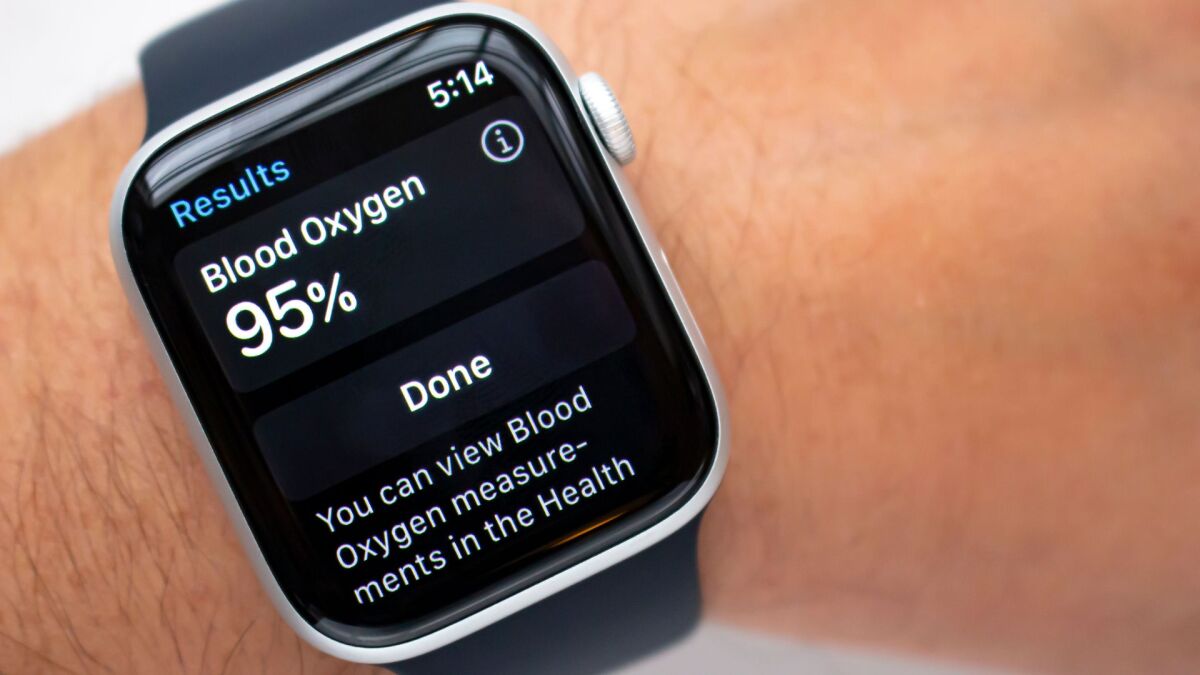
Apple Watch blood oxygen monitoring sounds like the kind of futuristic feature that should come with a tiny white lab coat. Your wrist glows red, a percentage appears, and suddenly you feel one step away from running a hospital from the coffee line.
But for most people, the Apple Watch Blood Oxygen feature is more interesting than essential. It can offer a snapshot of estimated blood oxygen saturation, often called SpO2, yet it cannot diagnose disease, explain symptoms, replace a doctor, or tell you whether that suspicious chest feeling is caused by anxiety, asthma, a hard workout, or the fact that you just sprinted for a departing train.
That does not make the feature useless. It makes it specialized. And for the average Apple Watch owner, it is probably not the reason to buy, upgrade, panic, or hold a candlelight vigil for an older watch model.
First, the Apple Watch Blood Oxygen Feature Is Not Gone Forever
The Apple Watch blood oxygen story has been confusing enough to deserve its own limited series. In the United States, some Apple Watch models temporarily lost access to the feature because of a patent dispute. Apple later introduced a redesigned experience for certain eligible U.S. watches, with sensor information analyzed on the paired iPhone and results shown in the Health app.
That means the feature may be available on supported devices, depending on the model, region, software version, and purchase history. Still, availability is not the same thing as necessity.
Apple itself describes Blood Oxygen measurements as a general fitness and wellness feature. They are not intended for medical use, self-diagnosis, or medical decision-making. That little disclaimer is not just legal wallpaper. It is the most important sentence in the entire feature description.
In other words, your Apple Watch can be a helpful wellness companion. It is not a pulmonologist living under your sleeve.
What Blood Oxygen Monitoring Actually Measures
Your red blood cells carry oxygen from your lungs to the rest of your body. Blood oxygen saturation is an estimate of how much of that oxygen-carrying capacity is being used. A pulse oximeter measures this percentage indirectly by shining light through or against tissue and analyzing how that light changes.
For many healthy adults at sea level, oxygen saturation commonly falls in the mid-to-high 90s. But that does not mean every value under 95% is a crisis, and it definitely does not mean every value at 99% deserves a victory parade.
Values can differ because of altitude, sleep, circulation, exercise, body position, chronic lung conditions, temporary illness, and the limitations of the device itself. Someone who lives at high altitude or has chronic obstructive pulmonary disease may have a normal baseline that differs from someone who lives at sea level and jogs once a year when chased by a bee.
The Apple Watch takes a wrist-based estimate. It can struggle when you move, when the watch is loose, when blood flow to the skin is reduced by cold temperatures, when your heart rate is high, or when tattoos interfere with the optical sensor. A finger-based clinical pulse oximeter is also imperfect, but it is designed for a different use case and is more common in medical settings.
Why Most People Do Not Need Apple Watch SpO2 Readings
1. A single percentage rarely tells a complete health story
A blood oxygen number is not a diagnosis. It does not tell you why you are short of breath, why you feel tired, whether you have sleep apnea, whether your lungs are inflamed, or whether carbon dioxide is rising in your bloodstream.
That last point matters. A person can have a reasonable oxygen saturation reading and still need medical attention. Conversely, a mildly unusual wrist reading may be caused by cold skin, movement, a loose band, or a sensor that has decided today is not its day.
Health care professionals use oxygen saturation alongside symptoms, medical history, lung exams, heart rhythm, blood pressure, imaging, lab work, and sometimes arterial blood gas testing. Your Apple Watch gets one piece of the puzzle. Doctors get the whole jigsaw box, including the weird sky pieces everyone hates.
2. The feature can create more anxiety than insight
Wearable health data can be useful, but it can also become a tiny digital gremlin that whispers, “Check again.” A person feels fine, sees an unexpected reading, retests six times, searches the internet, compares screenshots with strangers, and somehow ends the evening convinced that their wrist has uncovered a rare lung disorder.
The problem is not curiosity. Curiosity is great. The problem is treating an isolated wellness reading as a medical verdict.
A better approach is to ask practical questions: Do I have symptoms? Is the number consistently unusual under similar conditions? Do I have a known lung or heart condition? Has my clinician asked me to monitor oxygen levels? If the answer is no, a random reading probably deserves less emotional energy than your unread email count.
3. Wrist readings are not the same as clinical monitoring
Medical pulse oximeters are used in hospitals and clinics because oxygen saturation can matter greatly in specific situations. But even medical-grade devices have limitations. Accuracy can be affected by poor circulation, skin temperature, motion, skin pigmentation, tobacco use, nail products, and other factors.
Consumer wellness devices add another layer of caution. They may be useful for noticing patterns, but they are not designed to replace clinical equipment or professional interpretation. A watch is convenient because it lives on your wrist. That convenience does not magically turn it into an intensive-care monitor.
4. You cannot “hack” better health by staring at a stable number
If your readings are normal, that is reassuring. It is also not a personal achievement. You do not get bonus wellness points for maintaining 98% while sitting on the couch eating pretzels.
Most people will gain more meaningful health insight from the Apple Watch features they actually use consistently: daily movement, workout trends, heart-rate patterns, sleep duration, fall detection, medication reminders, noise exposure, and emergency features. A device that helps you walk more, sleep more regularly, and notice concerning symptoms sooner is generally more valuable than a feature you open twice a month like an abandoned mobile game.
5. Sleep questions require better answers than a single oxygen chart
Many people want blood oxygen tracking because they worry about snoring or sleep apnea. That concern is understandable. But an overnight oxygen graph alone cannot diagnose sleep apnea.
Sleep apnea involves repeated breathing disturbances and can require a home sleep study or laboratory sleep evaluation. Apple Watch has separate sleep-related features on compatible models, including sleep apnea notifications for signs consistent with possible moderate to severe sleep apnea. Even those notifications are prompts to discuss the issue with a clinician, not a final diagnosis printed on your wrist.
If you snore loudly, wake up gasping, feel excessively sleepy during the day, or have been told you stop breathing in your sleep, the productive move is to discuss those symptoms with a health professional. Your watch can support that conversation. It should not be forced to conduct it alone.
When Apple Watch Blood Oxygen Monitoring May Actually Be Helpful
The feature has value in the right context. It may be useful for people who enjoy tracking fitness and recovery trends, spend time at high elevations, or want another wellness data point during travel, illness recovery, or sleep tracking.
It may also be more relevant for someone with a diagnosed respiratory or cardiac condition, but only when a clinician agrees that the information is useful. In those cases, the doctor may recommend a particular monitoring routine, a reliable fingertip pulse oximeter, or formal testing instead of relying on a smartwatch.
Think of Apple Watch blood oxygen monitoring as a weather app for your body. It can suggest a pattern, but it cannot explain the entire climate system, predict every storm, or repair the roof.
For athletes, a reading can be mildly interesting when training or traveling at elevation. But it should not become a substitute for basic performance signals such as fatigue, breathing comfort, heart-rate response, hydration, sleep quality, recovery, and common sense. A runner with chest pain should not keep jogging because their watch says 97%.
Symptoms Matter More Than a Smartwatch Reading
If you feel suddenly short of breath, have chest pain or tightness, faint, become confused, notice bluish lips or skin, or have breathing symptoms that are severe or worsening, seek urgent medical care. Do not wait for a watch to collect a better graph.
For home fingertip pulse oximeters, clinical guidance often treats readings around 92% or lower as a reason to contact a health professional and readings around 88% or lower as a reason to seek immediate care. But these numbers should be interpreted in context, especially for people with chronic lung disease, high-altitude exposure, or clinician-directed oxygen plans.
Most importantly, do not use an Apple Watch reading to adjust prescribed oxygen, change medication, delay care, or reassure yourself away from serious symptoms. When your body is sending loud signals, do not let a tiny screen win the argument.
What You Should Care About Instead
If you are deciding whether the Apple Watch is worth buying or upgrading, blood oxygen should be a secondary consideration for most shoppers. Look instead at features that fit your real habits and safety needs.
- Fitness tracking: Do you walk, run, cycle, swim, lift, or use workout reminders?
- Heart features: Would high or low heart-rate notifications, rhythm features, or ECG capabilities be useful to discuss with your clinician?
- Sleep support: Would consistent sleep tracking help you improve your bedtime routine?
- Safety tools: Do fall detection, crash detection, emergency SOS, or location sharing matter to you or a family member?
- Daily usefulness: Will you actually benefit from messages, maps, timers, payment access, music controls, and quick reminders?
Those are the features that tend to improve everyday life. Blood oxygen monitoring is more like the fancy garnish on the plate: pleasant, sometimes impressive, and absolutely not the main meal.
Everyday Experiences That Put the Feature in Perspective
The following are illustrative, real-world-style scenarios rather than medical case histories.
The Nervous Rechecker
Imagine someone named Jordan who buys a new Apple Watch and immediately discovers blood oxygen tracking. On the first night, Jordan checks it before bed: 98%. Great. The next morning: 96%. Also fine. After a brisk walk in cool weather, though, the watch refuses to complete a reading. Suddenly, the feature that was supposed to be reassuring has become a personal emotional support spreadsheet.
Jordan tries again while standing, while walking, while holding a coffee, and while dramatically raising one wrist toward the ceiling. The watch eventually gives a number, but the actual lesson is not about oxygen. It is about measurement conditions. The watch works best when worn correctly, when the wearer is still, and when the sensor can get a clean signal. A failed reading often means “try again later,” not “begin composing your farewell letter.”
The Weekend Hiker
Then there is Maya, who spends a weekend hiking at higher elevation. She notices that her Apple Watch blood oxygen readings are a little lower than they usually are at home. That is not automatically surprising. Altitude can affect oxygen saturation because there is less oxygen available in the air.
The helpful part is not obsessing over every number. It is noticing how she feels. Is she developing severe headache, confusion, worsening weakness, chest discomfort, unusual shortness of breath, or trouble doing ordinary tasks? Those symptoms matter. A watch can contribute a data point, but it cannot determine whether altitude sickness is developing or whether someone should descend and seek medical evaluation.
The Fitness Fanatic
Chris checks every metric after workouts: heart rate, pace, zones, calories, recovery, sleep, and probably the emotional tone of the weather. Blood oxygen seems like another attractive number to collect. But after a few weeks, Chris realizes it barely changes and does not improve training decisions.
What does help? Looking at repeatable patterns. Did the same run feel harder than usual? Is resting heart rate elevated for several mornings? Is sleep duration dropping? Is recovery poor after intense sessions? Those trends can guide better training decisions far more often than a random SpO2 reading taken while sitting at a desk.
For a healthy athlete, blood oxygen is rarely the secret sauce. Consistent sleep, reasonable training volume, fuel, hydration, and recovery are still the boring superheroes of performance.
The Bad-Sleep Detective
Sam wakes up tired, snores loudly, and sees occasional lower overnight blood oxygen readings in the Health app. This is one of the few situations where the data may be useful: not as proof of a diagnosis, but as a reason to ask better questions.
Instead of declaring, “My watch says I have sleep apnea,” Sam can say, “I snore, wake tired, sometimes gasp at night, and I noticed unusual sleep-related trends. Should I be evaluated?” That conversation can lead to appropriate testing. A home sleep study or sleep lab assessment collects more relevant information than a single smartwatch measurement can provide.
The Person With a Chronic Condition
Finally, consider Alex, who has a diagnosed lung condition and has been prescribed oxygen monitoring by a clinician. In this situation, the Apple Watch might be interesting, but it should not become the primary monitoring tool by default. Alex’s medical team may recommend a particular fingertip oximeter, specific measurement times, or personalized target ranges.
This is where “you do not need the Apple Watch Blood Oxygen feature” becomes especially important. People with real medical monitoring needs deserve tools chosen for their care plan, not a generic wellness feature selected because it happens to be attached to a very nice watch band.
The Bottom Line: Useful, Curious, but Not Essential
The Apple Watch Blood Oxygen feature is a neat example of how far consumer technology has come. It can encourage people to pay more attention to wellness, notice trends, and ask better questions. Those are legitimate benefits.
But for most users, it is not a must-have feature. It does not replace symptoms, clinical testing, a medical pulse oximeter, a sleep study, or the advice of a health professional. It is best treated as optional wellness information, not a miniature emergency department strapped to your wrist.
Buy an Apple Watch because it helps you move, stay connected, respond to emergencies, build healthier routines, and maybe stop losing your phone between couch cushions. Let blood oxygen monitoring be a bonus, not the whole reason you care.