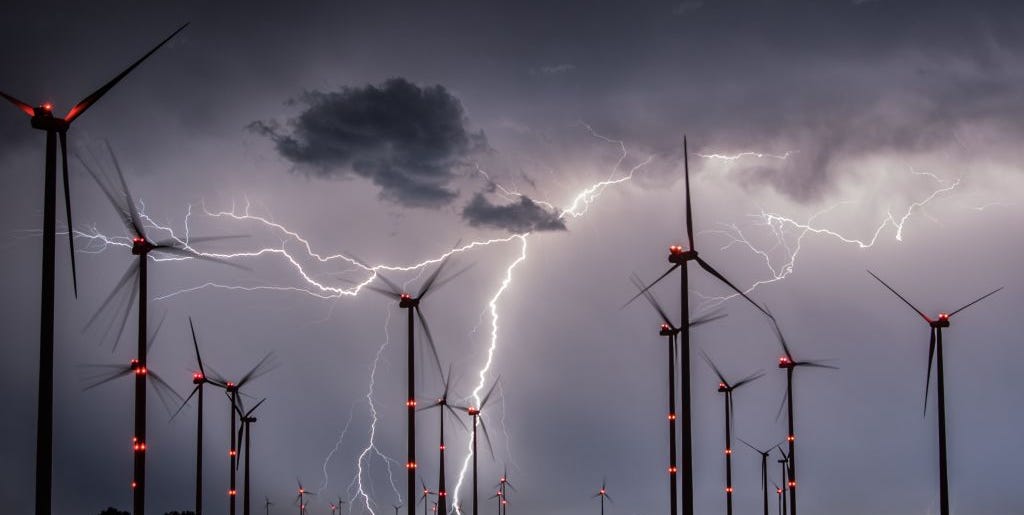
Wind turbines are the tall, elegant machines that turn moving air into electricity. They look calm from a distance, almost like giant white flowers doing yoga on a hill. Up close, they are serious engineering: blades longer than airplane wings, towers taller than many office buildings, sensors checking conditions every second, and generators quietly feeding clean energy into the grid.
At their simplest, wind turbines capture the kinetic energy of wind and convert it into electrical power. At their most impressive, they help farms earn extra income, support rural tax bases, reduce fossil-fuel emissions, and give energy planners another tool for keeping the lights on. They are not magic, although after watching a field of turbines spin at sunset, you may briefly suspect wizardry.
This guide explains how wind turbines work, the main types, the benefits, the challenges, and what real-world experience around wind farms can teach homeowners, communities, students, and energy-curious readers.
What Are Wind Turbines?
A wind turbine is a machine that uses blades to collect energy from moving air. When wind flows across the blades, it creates lift, much like air moving over an airplane wing. That lift causes the rotor to spin. The spinning rotor turns a shaft connected to a generator, and the generator produces electricity. In other words, a wind turbine is basically a very polite way of asking the weather to pay the electric bill.
Most modern wind turbines have three blades, a tall tower, a nacelle that houses the major mechanical and electrical parts, and a control system that constantly adjusts the machine to wind conditions. Utility-scale turbines are used in wind farms and connected to the electric grid. Smaller turbines may power homes, farms, schools, water treatment facilities, telecom sites, or remote buildings where grid access is difficult or expensive.
How Wind Turbines Work
The Blade: Where the Action Starts
The blades are shaped like airfoils. When wind passes over them, air pressure changes on each side of the blade. The resulting lift is stronger than drag, so the blade moves. Once the rotor begins spinning, mechanical energy flows into the drivetrain.
Blade design matters enormously. Longer blades sweep a larger area and can capture more wind energy. This is why newer turbines often have larger rotor diameters than older models. Bigger blades are not just “because engineers got carried away,” although that is always a possibility in engineering. Larger rotors can produce more electricity, especially in areas with moderate wind speeds.
The Nacelle: The Brain and Muscle Room
The nacelle is the box-like structure behind the rotor. Inside are components such as the generator, gearbox or direct-drive system, brakes, cooling equipment, sensors, and control electronics. The nacelle can rotate, or yaw, so the turbine faces into the wind.
Modern turbines are packed with sensors. They measure wind speed, direction, vibration, temperature, electrical output, and equipment condition. This data helps operators improve performance and prevent failures before a repair turns into a very expensive crane party.
The Tower: Height Matters
Wind generally blows faster and more steadily at higher elevations. That is why utility-scale wind turbines stand on tall towers. A taller tower allows the rotor to reach smoother wind above trees, buildings, and terrain turbulence. Less turbulence means less stress on components and more reliable power production.
For small wind systems, tower height is also important. A turbine mounted too low may look charming but perform poorly. Good siting is the difference between a useful energy system and an expensive lawn ornament with ambition.
Main Types of Wind Turbines
Horizontal-Axis Wind Turbines
Horizontal-axis wind turbines are the familiar three-bladed machines seen in most wind farms. Their rotor shaft runs horizontally, and the turbine faces into the wind. These turbines dominate utility-scale wind power because they are efficient, mature, and well suited for large electricity production.
Vertical-Axis Wind Turbines
Vertical-axis turbines have blades arranged around a vertical shaft. Some look like eggbeaters, sculptures, or something a futuristic coffee shop would install outside. They can accept wind from different directions without yawing, but they are less common for large-scale commercial power generation.
Land-Based Wind Turbines
Land-based turbines are installed on farms, plains, ridgelines, and open areas with strong wind resources. In the United States, land-based wind is especially important in states such as Texas, Iowa, Oklahoma, Kansas, and Illinois. These turbines can share land with crops and livestock, meaning cattle can graze under clean energy infrastructure while looking deeply unimpressed by human innovation.
Offshore Wind Turbines
Offshore wind turbines are installed in bodies of water, usually on fixed foundations in shallow areas or floating platforms in deeper waters. Offshore wind has strong potential because ocean winds tend to be powerful and steady, and many large electricity demand centers are near coastlines. However, offshore projects face higher construction costs, complex permitting, specialized vessels, marine ecology concerns, and grid connection challenges.
Distributed and Small Wind Turbines
Distributed wind refers to turbines installed near where the electricity is used. These systems can serve homes, farms, businesses, schools, or remote facilities. Small wind can be useful in windy rural locations, but it requires careful site analysis. A small turbine in a bad wind location is like putting a sailboat in a bathtub: technically related to the idea, but not very productive.
Why Wind Turbines Matter
Clean Electricity Without Fuel Combustion
Wind turbines generate electricity without burning fuel. During operation, they do not produce carbon dioxide, sulfur dioxide, nitrogen oxides, or particulate pollution from combustion. Manufacturing, transport, installation, maintenance, and decommissioning do have environmental footprints, but operational wind power avoids the continuous fuel-burning emissions associated with fossil-fuel plants.
Energy Diversity
A reliable energy system benefits from diversity. Wind power can complement solar, hydropower, nuclear, storage, demand management, and conventional generation. Wind output varies by season, region, and weather pattern, so grid operators use forecasting, transmission planning, storage, and flexible resources to balance supply and demand.
Economic Benefits for Rural Communities
Wind projects can create construction jobs, maintenance jobs, tax revenue, and lease payments for landowners. Farmers and ranchers may continue using most of their land while receiving income from turbine leases. Local governments may use wind-related tax revenue for schools, roads, emergency services, and infrastructure improvements.
Of course, not every community welcomes wind development automatically. Good projects require local engagement, transparent benefits, fair agreements, and respect for residents who will live with the turbines long after the ribbon-cutting photo has disappeared from the news.
Wind Turbines and the U.S. Energy Grid
Wind power has become a major part of U.S. electricity generation. According to recent U.S. energy data, wind generated hundreds of billions of kilowatt-hours in 2025, remaining one of the country’s largest renewable electricity sources. Wind and solar together now provide a significant share of U.S. utility-scale power generation, and wind remains especially strong in regions with excellent wind resources.
Wind farms are often located far from major cities, which makes transmission important. The best wind resource may be on open plains, but the electricity demand may be hundreds of miles away. Building transmission lines is not glamorous, but neither is trying to power a city with good intentions and an extension cord. Modern grid planning must connect renewable resources to demand centers while maintaining reliability.
Benefits of Wind Turbines
Lower Emissions
Wind turbines help reduce greenhouse gas emissions by generating electricity without burning fossil fuels during operation. This is one of the main reasons wind energy is included in clean energy and climate strategies.
Low Operating Costs
Once a wind farm is built, it does not need fuel. That makes operating costs more predictable than fuel-based generation, which can be affected by commodity price swings. Wind projects still require maintenance, land agreements, insurance, grid interconnection, and operations teams, but nobody has to order “more wind” by the truckload.
Small Physical Footprint
Although wind farms spread across large areas, each turbine uses a relatively small physical footprint. Roads, foundations, substations, and transmission equipment require land, but farming and grazing can often continue around turbines.
Scalable Technology
Wind energy can be scaled from small distributed systems to massive utility-scale projects. A single small turbine may serve a rural property, while a large wind farm can supply electricity to thousands of homes.
Challenges of Wind Turbines
Intermittency and Grid Integration
Wind does not blow on command. It is renewable, not obedient. This variability means wind energy works best as part of a broader grid system that includes forecasting, transmission, storage, flexible power plants, and demand-response programs.
Noise and Visual Concerns
Wind turbines produce sound from blade movement and mechanical equipment. Modern turbines are much quieter than older designs, but nearby residents may still have concerns about noise, shadow flicker, and changes to landscape views. These concerns should be addressed through setbacks, environmental review, and public engagement.
Wildlife Impacts
Wind turbines can affect birds and bats through collisions and habitat changes. The impacts vary by location, species, turbine layout, migration routes, and operating practices. Researchers study wildlife behavior near wind facilities and develop mitigation strategies such as improved siting, curtailment during high-risk periods, acoustic deterrents, and monitoring technologies.
Materials and Recycling
Many turbine components, such as steel towers and copper wiring, are recyclable. Blades are more difficult because they are often made from composite materials designed to be strong, light, and durable. That durability is excellent during storms but inconvenient at end of life. The industry is working on blade recycling, reuse, and new materials that can support a more circular wind economy.
Wind Turbine Maintenance and Lifespan
Wind turbines are designed to operate for decades, often around 20 to 30 years depending on technology, location, maintenance, and operating conditions. Maintenance includes inspections, lubrication, bolt checks, blade repair, gearbox or generator service, electrical testing, software updates, and condition monitoring.
Blade damage can come from lightning, hail, leading-edge erosion, dirt, insects, salt spray, or general wear. Offshore turbines face additional challenges from waves, corrosion, and difficult access. This is why drones, robotics, sensors, and predictive analytics are becoming increasingly important. A technician dangling hundreds of feet in the air should not have to discover a problem only after it has become dramatic.
Are Wind Turbines Good for Homes?
Small residential wind turbines can work, but only in the right conditions. The site needs strong, consistent wind, enough open space, appropriate zoning, and a tower tall enough to reach clean airflow. A home in a dense neighborhood surrounded by trees is usually not a good candidate. In many residential settings, solar panels are simpler and more predictable.
For farms, ranches, remote cabins, telecom towers, and windy rural properties, small wind may be more practical. The key is measuring the wind resource before buying equipment. Marketing brochures may be breezy, but physics is famously stubborn.
Common Myths About Wind Turbines
Myth 1: Wind Turbines Never Produce Enough Power
Wind turbines do not run at full output all the time, but that does not mean they are ineffective. Power plants are evaluated by annual generation, capacity factor, cost, reliability, and grid value. Modern wind farms can produce substantial electricity, especially in high-resource regions.
Myth 2: Wind Turbines Use More Energy Than They Produce
This claim is not supported by mainstream energy research. Wind turbines require energy to manufacture, transport, install, maintain, and decommission, but they typically generate far more energy over their operating life than was used to create them.
Myth 3: Wind Farms Make Land Useless
Wind farms use land, but they do not necessarily eliminate other land uses. Farming and grazing often continue around turbines. Access roads and foundations take space, but the majority of the project area may remain available for agricultural activity.
The Future of Wind Turbines
The future of wind turbines will likely include larger and more efficient rotors, better forecasting, smarter grid integration, improved recycling, advanced materials, and more careful wildlife mitigation. Offshore wind may play a larger role near coastal demand centers, while distributed wind could help rural and remote customers improve energy resilience.
Artificial intelligence and robotics are also entering the wind industry. Drones can inspect blades. Machine learning can detect equipment issues. Digital twins can model turbine performance. Sensors can help operators schedule repairs before a small vibration becomes a large invoice with a hard hat.
Field Experiences and Real-World Lessons About Wind Turbines
Spending time near wind turbines changes how you understand them. From a highway, a wind farm may look silent and simple: three blades turning lazily against the sky. But standing near one, you notice the scale first. The tower rises like a modern monument, and the blades sweep through the air with a steady rhythm. It is not usually loud in the dramatic movie-trailer sense. It is more like a deep mechanical whisper, mixed with wind moving through grass, gravel crunching under maintenance trucks, and birds continuing their daily business because nature rarely pauses for human infrastructure.
One practical lesson is that siting matters more than casual observers realize. A turbine is not placed wherever there is “a bit of wind.” Developers study wind speed, wind direction, turbulence, land ownership, roads, transmission access, wildlife patterns, community concerns, aviation rules, radar issues, soil conditions, and construction logistics. A good wind site is not just windy. It is windy in a useful, buildable, connectable, legally workable way. That is a much smaller club.
Another experience is seeing how wind turbines fit into rural life. In many farming areas, turbines stand among cornfields, cattle pastures, and service roads. The land does not become a sci-fi zone. People still drive tractors, repair fences, move livestock, and complain about weather with the same energy humans have been using since the invention of weather. The turbines add a new layer of income and infrastructure, but they do not erase the older rhythms of rural work.
Community response can vary widely. Some residents appreciate lease payments, tax revenue, and clean energy. Others worry about views, noise, property values, wildlife, or whether benefits are distributed fairly. The best projects are not the ones that simply arrive with glossy slides and a confident handshake. They are the ones that listen early, explain clearly, adjust when needed, and treat local people as partners rather than scenery.
Maintenance is another eye-opener. Wind turbines look graceful, but they live hard lives. They face heat, ice, lightning, dust, hail, high winds, and millions of blade rotations. A successful wind farm depends on technicians, data analysts, spare parts, access roads, safety training, and weather windows. Climbing, inspecting, repairing, and coordinating turbine work takes discipline. The romance of clean energy still wears steel-toe boots.
For students or homeowners curious about wind power, the biggest takeaway is to respect measurement. Do not judge a site by how windy it feels during one dramatic afternoon. Wind resources change by season, height, terrain, and obstacles. A small turbine should be evaluated with real data, not enthusiasm alone. Enthusiasm is useful, but it has never generated a kilowatt-hour by itself.
Finally, wind turbines teach a broader lesson about energy: every power source has trade-offs. Wind is clean during operation, renewable, and increasingly cost-competitive, but it requires land, transmission, materials, planning, and responsible wildlife management. The mature conversation is not “perfect or useless.” It is “where does this technology make sense, how do we reduce its impacts, and how do we build it well?” That question is less flashy than a debate, but far more useful.
Conclusion: Wind Turbines Are More Than Big Spinning Blades
Wind turbines are one of the most visible symbols of the clean energy transition, but they are more than skyline decorations. They are aerodynamic machines, economic tools, grid resources, and community decisions all at once. They can generate large amounts of electricity without fuel combustion, support rural economies, and reduce emissions. They also bring real challenges, including variability, transmission needs, wildlife impacts, recycling questions, and local acceptance.
The smartest way to think about wind turbines is not as a miracle cure or a mechanical villain. They are practical technology. When placed well, maintained properly, and integrated thoughtfully, wind turbines can play a powerful role in a cleaner, more resilient energy system. And yes, they still look a little like giant fans for the planet. The planet, frankly, could use a breeze.
Note: This article synthesizes current public information from reputable U.S. energy, environmental, scientific, and industry sources including the U.S. Department of Energy, U.S. Energy Information Administration, U.S. Environmental Protection Agency, National Renewable Energy Laboratory, U.S. Geological Survey, Lawrence Berkeley National Laboratory, and American Clean Power.