A falling stock creates a special kind of financial drama. The numbers turn red, your investing app suddenly feels judgmental, and every price alert sounds like a tiny electronic accusation. One voice says, “Sell before it gets worse.” Another whispers, “Buy the dip.” A third voiceusually the most expensive oneinsists the stock will recover the moment you give up.
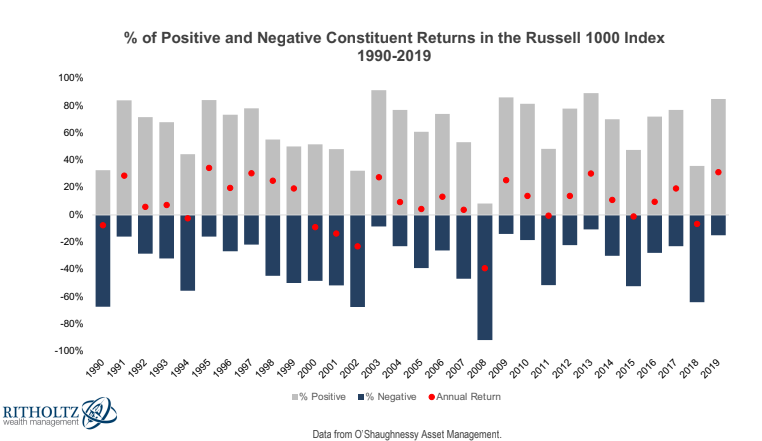
Unfortunately, there is no universal percentage at which every investor should sell a losing stock. A 20% decline may be ordinary volatility for a speculative growth company, but it could signal a serious breakdown for a slow-growing utility. The right decision depends less on how far the stock has fallen and more on why it fell, whether the original investment thesis remains valid, and what else you could do with the money.
The best question is not, “How much am I down?” It is: “Knowing what I know today, would I still choose to own this company at its current price?”
The Stock Price Is Down, but Is the Business Broken?
A stock and its underlying business are related, but they are not identical twins. In the short term, stock prices can decline because of interest-rate changes, economic fears, political headlines, sector rotations, disappointing guidance, or investors collectively deciding that optimism has gone out of fashion.
A company can continue increasing revenue, generating cash, gaining customers, and strengthening its competitive position while its stock declines. Conversely, a stock may briefly remain stable even while the business underneath it is developing serious problems.
Before selling, separate price damage from business damage.
Signs the Decline May Be Temporary
- The entire market or industry has fallen for reasons not specific to the company.
- Revenue, margins, cash flow, and customer demand remain broadly consistent with your expectations.
- Management has explained a temporary setback with measurable and credible recovery steps.
- The company still has a healthy balance sheet and enough liquidity to operate through a difficult period.
- The long-term competitive advantage remains intact.
- Your original investment timeline was measured in years, not Tuesday afternoons.
Broad market declines are not automatically a reason to sell a financially sound company. Long-term investors who repeatedly jump out during periods of fear risk missing sharp recovery days, which often occur close to the market’s worst days.
Signs the Business May Be Deteriorating
- Revenue is shrinking for structural rather than temporary reasons.
- Customers are switching to better or cheaper competitors.
- Debt is rising while cash flow is weakening.
- The company repeatedly issues new shares and dilutes existing shareholders.
- Management consistently misses targets, changes its story, or avoids important questions.
- A key product, patent, regulation, supplier, or customer relationship has been permanently impaired.
- The company’s competitive advantage has disappeared.
Buy-and-hold investing does not mean buy-and-ignore. When a company’s fundamentals no longer support the original investment thesis, reassessing or exiting the position can be more rational than waiting indefinitely for the stock to return to your purchase price.
Seven Good Reasons to Sell a Losing Stock
1. Your Original Investment Thesis Is Broken
An investment thesis is the specific explanation for why you expect a company to create value. Perhaps you expected rapid subscriber growth, international expansion, improving profit margins, recurring revenue, or a successful new product.
If the evidence now shows that your central assumption was wrong, selling can be appropriate even when the loss feels painful. The market does not refund investors for loyalty, emotional endurance, or the number of hours spent defending a stock in online forums.
Write down the original thesis and compare it with current facts. Do not quietly rewrite history. “I bought it for strong growth” should not become “I always considered it a long-term turnaround” after the growth disappears.
2. The Company’s Financial Position Has Become Dangerous
A weak quarter is not necessarily fatal. A weak balance sheet can be.
Pay attention to debt maturities, interest expense, free cash flow, cash reserves, operating margins, and the company’s ability to raise money. A heavily indebted company may survive when credit is cheap but struggle when borrowing costs rise or lenders become less forgiving.
Common warning signs include declining cash flow, repeated emergency financing, covenant problems, dividend cuts, auditor concerns, or stock issuance merely to keep the lights on. At that point, “buying more because it is cheaper” may resemble repeatedly purchasing discounted tickets for a ship that has developed an unusually large hole.
3. Management Has Lost Your Trust
Investors must rely on management to allocate capital, communicate risks, and report results honestly. Consider selling when executives repeatedly overpromise, hide important information, blame everyone except themselves, or pursue acquisitions that benefit their empire more than shareholders.
One missed forecast can happen. A continuing pattern of promotional language, shifting performance metrics, surprise dilution, accounting restatements, or unexplained executive departures deserves greater concern.
4. The Position Is Too Large for Your Portfolio
You can remain optimistic about a company and still sell part of the position. A single stock that represents an excessive share of your portfolio can expose your financial future to one management team, product failure, lawsuit, regulatory change, or accounting surprise.
Rebalancing is intended to return a portfolio to its planned allocation and prevent one category or holding from creating more risk than the investor intended. Diversification cannot eliminate losses, but it can reduce the damage caused by one company-specific disaster.
5. You Need the Money for a Near-Term Goal
A stock may eventually recover, but your mortgage lender, college tuition office, or emergency plumber may not be interested in waiting.
Money needed within the next few years generally should not depend heavily on the performance of an individual stock. If your time horizon has changed, reducing risk can be sensible even when the company itself remains promising. Investing money required for immediate expenses can force you to sell during unfavorable market conditions.
6. A Better Opportunity Exists
Holding a stock has an opportunity cost. Every dollar trapped in a weak investment is a dollar unavailable for a stronger company, a diversified index fund, a bond, or another asset aligned with your goals.
Ask this practical question: If the position were converted into cash today, would I use all of that cash to repurchase the same stock?
If the honest answer is no, identify why you are still holding it. Sometimes the answer is careful analysis. Other times it is merely the desire to “get back to even,” which is not an investment strategy. It is a negotiation with a historical number that has no opinion about you.
7. Selling Creates a Useful Tax Benefit
In a taxable U.S. brokerage account, selling an investment below its cost basis creates a realized capital loss. Capital losses generally offset capital gains. When total eligible losses exceed gains, current federal rules may allow an investor to use up to $3,000 of net capital losses against ordinary income, with unused losses potentially carried forward to future tax years.
However, investors must consider the wash-sale rule. A loss can be disallowed for current tax purposes when the same or a substantially identical security is purchased within 30 days before or after the loss-producing sale. Automatic dividend reinvestments, transactions in other accounts, and certain purchases by a spouse may complicate the calculation. Tax rules depend on individual circumstances, so professional tax advice may be appropriate.
When You Probably Should Not Sell
Do Not Sell Only Because the Price Is Red
Your purchase price is important for tax accounting, but it does not determine a company’s future value. The stock does not know where you bought it. It is not waiting respectfully at $42.17 so you can escape without embarrassment.
Evaluate the company’s expected future cash generation, financial strength, competitive position, and valuation. Cost basis should not be confused with economic performance or intrinsic value.
Do Not Panic Over One Quarterly Report
Quarterly results matter, but a single 13-week period rarely tells the entire story. Revenue may shift between quarters, expenses may temporarily increase, or management may invest in a project that depresses current earnings while supporting future growth.
Look for a pattern rather than reacting to one data point. Several quarters of weakening demand, deteriorating margins, or missed execution are more meaningful than one imperfect report.
Do Not Use a Universal Percentage Rule Blindly
Rules such as “always sell when a stock falls 10%” may help short-term traders control risk, but they can be inappropriate for long-term investors. Different companies have different levels of volatility. A small biotechnology stock can move 10% on an ordinary day, while the same decline in a mature consumer-staples company may be significant.
Instead of using price alone, establish fundamental sell conditions before buying. Examples include a maximum position size, an unacceptable debt level, the loss of a major customer, or failure to achieve a specific operational milestone.
Beware the Disposition Effect
Behavioral-finance research has documented the disposition effect: investors often sell successful positions too early while holding losing positions too long. Realizing a loss feels like admitting a mistake, so investors postpone the decision and hope the stock will rescue both the portfolio and the ego.
Research based on thousands of brokerage accounts found a strong preference for realizing gains rather than losses. The danger is that an investor may continue holding a deteriorating company not because its future is attractive, but because selling would make the loss feel official.
A useful defense is to temporarily ignore your purchase price. Imagine that you inherited the shares today. Would you keep them? Sell them? Reduce the position? This mental reset directs attention toward future returns instead of past decisions.
A Five-Step Decision Process
-
Reconstruct the thesis.
Write down why you bought the stock, the expected timeline, major assumptions, and the developments that would prove you wrong.
-
Identify the cause of the decline.
Determine whether the stock fell because of broad market conditions, industry weakness, valuation compression, company-specific news, or deteriorating fundamentals.
-
Update the financial evidence.
Review revenue growth, margins, free cash flow, debt, share dilution, customer concentration, competitive threats, and management guidance.
-
Compare available alternatives.
Estimate what you reasonably expect from the stock from today’s pricenot from your purchase priceand compare that outlook with other investments of similar risk.
-
Choose among holding, trimming, or selling.
The decision does not have to be all or nothing. Trimming can reduce risk while preserving some upside if uncertainty remains high.
A Specific Example
Suppose an investor buys 100 shares of a software company at $80, investing $8,000. The stock later falls to $48, leaving the position down 40%.
A 40% loss sounds alarming, but the percentage alone cannot settle the decision.
In Scenario A, revenue is still increasing 25% annually, customer retention remains strong, the company has no debt, and the decline resulted mainly from lower valuation multiples across the technology sector. The stock may deserve continued ownership if the valuation is now reasonable and the long-term thesis remains intact.
In Scenario B, revenue growth has fallen from 25% to 3%, major customers are leaving, sales expenses are climbing, executives have reduced guidance three times, and the company is issuing shares to cover continuing losses. The same 40% decline now reflects a potentially broken business thesis. Waiting solely to recover the original $80 purchase price would be anchoring, not analysis.
The loss is identical. The facts are not.
Practical Experiences and Lessons From Managing Losing Stocks
One of the most useful investing lessons is that good decisions can produce temporary losses, while bad decisions can occasionally produce profits. A stock rising immediately after purchase does not prove the analysis was brilliant. Sometimes the market simply provides applause before reading the script.
Experienced investors learn to judge the quality of the process separately from the short-term result. Before buying, they document what must happen for the investment to succeed. They may track revenue targets, unit economics, market share, debt reduction, new-product adoption, or management execution. When the stock falls, those notes provide something more reliable than memory, which has a remarkable talent for editing embarrassing details.
Another practical lesson is that uncertainty should affect position size. Investors often create their worst losses by treating a speculative idea as though it were a proven business. A small position can survive an incorrect thesis without damaging the entire financial plan. A concentrated position turns every earnings call into a medical stress test.
Many disciplined investors also review losing positions on a schedule instead of staring at them throughout the day. A monthly or quarterly review encourages attention to business developments rather than random price movements. Constant checking can create pressure to act simply because the number changed, even when no meaningful information has appeared.
It is also helpful to write a brief “sell memo.” Before placing the order, explain why the stock no longer deserves the capital, what evidence changed, and where the proceeds will go. This reduces impulsive selling and creates a record that can be reviewed later. The purpose is not to prove that every sale was perfect. It is to improve the decision process over time.
Partial selling can be particularly useful when evidence is mixed. Suppose the company still has attractive products but now faces higher debt, weaker demand, and uncertain management execution. Selling one-third or one-half of the position may reduce portfolio risk while allowing the investor to continue observing the business. This approach is not indecision when it is based on explicit risk limits.
Investors should also resist the temptation to average down automatically. Buying additional shares can be logical when the business thesis has strengthened while the valuation has fallen. It is dangerous when the only argument is, “The stock is cheaper than when I first made the mistake.” Lower prices improve prospective returns only when the underlying value has not fallen even faster.
Finally, experienced investors accept that they will never sell every losing stock at the perfect moment. A stock may rebound after being sold. That does not automatically make the sale wrong. Decisions must be judged using the information available at the time, the position’s risk, and the quality of the alternative opportunity.
The objective is not to avoid regret. That is impossible in markets, where every decision immediately creates an alternative universe designed to annoy you. The objective is to protect capital, follow a repeatable process, and place money where the future reward appears strongest relative to the risk.
Conclusion
You should consider selling a stock that is down when the investment thesis has failed, the company’s financial strength is deteriorating, management can no longer be trusted, the position creates excessive portfolio risk, or a clearly superior use for the capital exists.
You should be slower to sell when the decline is caused mainly by temporary market volatility and the company’s long-term fundamentals remain healthy. The size of the loss matters for risk management and taxes, but it should not become the main reason to hold or sell.
Forget the dream of getting back to even. Evaluate the stock from today forward. The market does not care what you paid, but your future portfolio certainly cares what you do next.