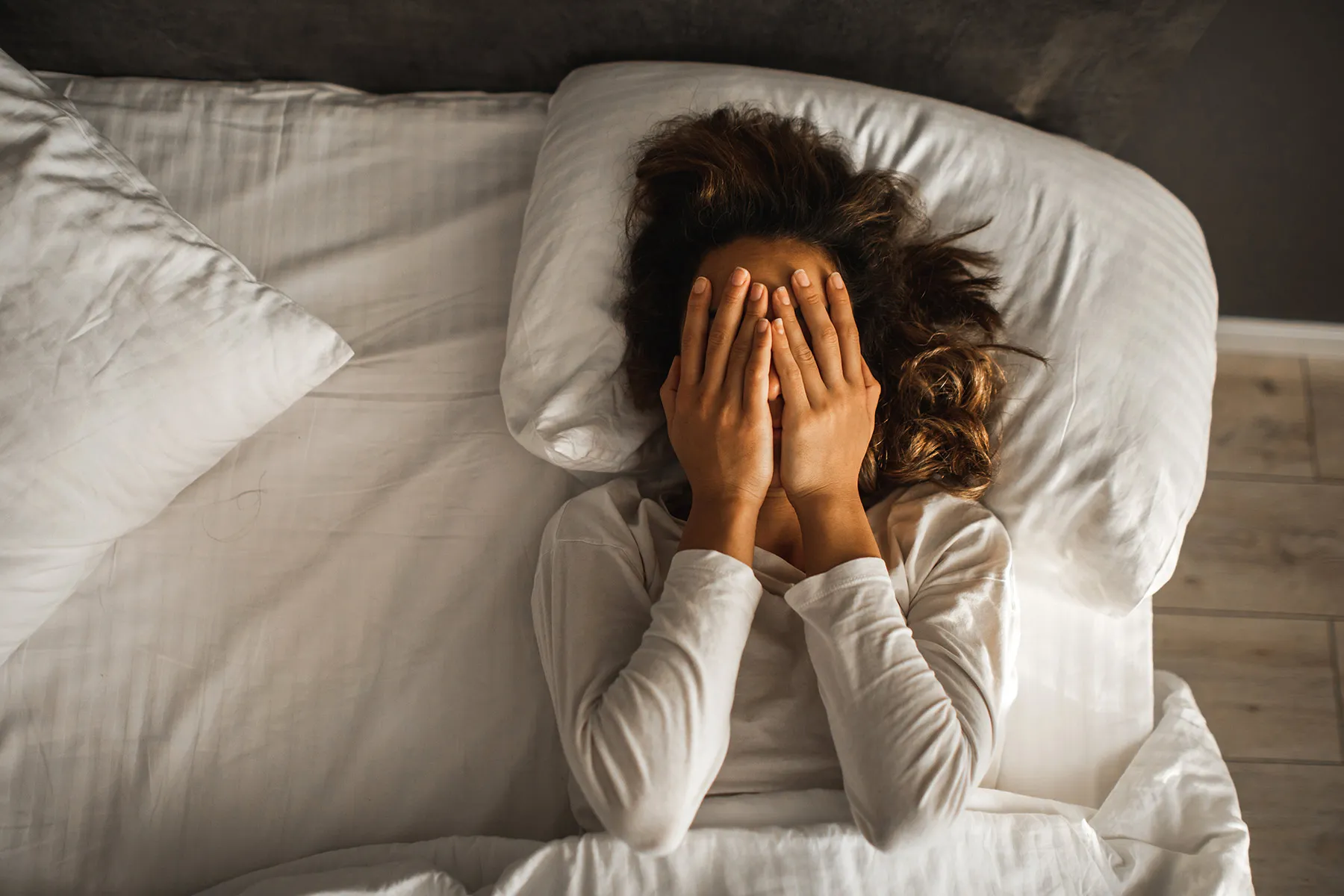
Sleep problems in the United States are not usually caused by one dramatic villain. They are more often the result of a messy pile-up: late-night scrolling, stress, long work hours, caffeine that overstays its welcome, medical conditions that quietly sabotage rest, and schedules that treat the human body like a 24-hour convenience store. That matters because sleep is not a luxury item. The CDC says adults need at least 7 hours a night, and in 2020, about 35% of U.S. adults reported sleeping less than that. In other words, this is not a niche issue; it is a national habit with consequences.
Americans’ sleep troubles often show up as insomnia, short sleep, broken sleep, or the famous “I was in bed for eight hours, so why do I feel like a haunted shopping cart?” pattern. Insomnia can mean trouble falling asleep, trouble staying asleep, waking too early, or waking up and immediately regretting the concept of morning. Common symptoms also include daytime fatigue, irritability, trouble focusing, and more mistakes than usual.
The biggest reasons Americans struggle to sleep
1. Stress, anxiety, and the brain that refuses to clock out
Stress is one of the most common sleep thieves. When the body stays on alert, it is harder to fall asleep and harder to stay asleep. The APA has reported a strong link between stress and sleep loss, and sleep deprivation itself can worsen mood and anxiety, creating a loop that feeds on itself. Many people do not lie awake because they are “bad sleepers”; they lie awake because their brains are still writing tomorrow’s worry list at 1:17 a.m.
2. Bad timing: shift work, irregular schedules, and jet lag
Americans work a lot of odd hours. Night shifts, rotating shifts, early commutes, long overtime stretches, and time-zone hopping all disrupt the body’s circadian rhythm, which is the internal clock that tells you when to sleep and when to be alert. MedlinePlus and Mayo Clinic both note that irregular schedules and shift work can trigger sleep disorders, while jet lag can leave the body trying to live in yesterday. For many workers, the problem is not lack of discipline; it is a schedule that keeps arguing with biology.
3. Caffeine, alcohol, nicotine, and the “one more” trap
A cup of coffee in the morning is not the problem. The problem is the third iced coffee, the afternoon energy drink, or the “just one” soda at dinner that still contains enough caffeine to keep your brain tap-dancing at midnight. MedlinePlus and Mayo Clinic both list caffeine and alcohol as common sleep disruptors, and nicotine can be just as bad. Alcohol may make someone sleepy at first, but it often fragments sleep later in the night. The result is a lousy bargain: drowsiness now, wrecked sleep later.
4. Screens, bright light, and the bedtime glow machine
Phones, tablets, TVs, and laptops are not evil, but they are very good at overstaying their welcome. Bright evening light can make it harder to wind down, and many people use screens right up to the moment they try to sleep. The CDC recommends limiting bright light exposure in the evening, and the NHLBI also points to reducing light at night as a simple way to support better sleep. Sleep is a biological process, not a startup meeting; it needs darkness, quiet, and a little respect.
5. Sleep apnea and other hidden sleep disorders
Not all sleep problems are caused by habits. Some are medical. Sleep apnea, for example, can repeatedly interrupt breathing during sleep and lead to snoring, gasping, morning headaches, and daytime sleepiness. Restless legs syndrome, periodic limb movement disorder, narcolepsy, and other sleep disorders can also keep people from getting restorative sleep. Mayo Clinic and MedlinePlus both emphasize that symptoms such as loud snoring, breathing pauses, frequent awakenings, and overwhelming daytime sleepiness deserve attention.
6. Chronic pain, illness, and medications
When the body hurts, sleep often becomes shallow and fragile. Chronic pain, heart disease, lung disease, diabetes, fibromyalgia, thyroid problems, and other conditions can all interfere with sleep. Some medicines and supplements can also make sleep worse, and even something as ordinary as a decongestant or a late dose of a stimulant can keep a person awake. In practice, this means many sleep problems are not “just insomnia” but a symptom sitting on top of another health issue.
7. Aging, hormones, and changing sleep architecture
Sleep changes with age. Older adults often wake more easily, wake more often, and spend less time in deep sleep. MedlinePlus notes that aging can make it harder to fall asleep and stay asleep. That does not mean older people are doomed to bad sleep, only that their sleep may become lighter and more fragmented. Life also brings hormonal changes, childcare chaos, menopause, and retirement routines that can all reshape sleep in ways people do not expect.
8. Teen schedules, family chaos, and “I’ll sleep when the house is quiet”
Adults are not the only ones suffering. Teens and children often lose sleep because of early school times, homework, sports, social media, and the general mystery of how a teenager can be tired and wired at the same time. CDC reporting shows that insufficient sleep is widespread in younger age groups too, and when family schedules are chaotic, everybody’s sleep gets worse. Sleep problems travel through households like a very rude family tradition.
Why Americans’ sleep problems are so persistent
One reason sleep issues stick around is that the cause is often self-reinforcing. Stress makes sleep worse, poor sleep makes stress worse, and then the next day starts with less patience, more caffeine, and a stronger desire to scroll through the night. Another reason is that modern life rewards constant availability. People answer emails late, work odd hours, watch one more episode, and keep their brains in “on” mode long after bedtime. In that sense, insomnia is sometimes less a mysterious illness than a predictable reaction to a lifestyle that never fully shuts off.
There is also a social side. People who work multiple jobs, live with financial stress, manage caregiving responsibilities, or commute long distances often have fewer opportunities for regular sleep. Health disparities can deepen the problem, because uneven access to healthcare, safe housing, quiet bedrooms, and predictable schedules affects sleep quality in very practical ways. The sleep conversation is often framed as personal responsibility, but the real picture includes work, money, health, neighborhood noise, and family demands.
What healthy sleep usually looks like
Healthy sleep is not about becoming a monk. It is about creating conditions that let the brain downshift. CDC guidance and Mayo Clinic advice both support the basics: keep a consistent sleep schedule, make the bedroom comfortable and dark, avoid heavy meals and stimulants too close to bedtime, and cut back on alcohol and nicotine at night. That sounds boring until you realize boring is exactly what good sleep wants.
If sleep problems are frequent, loud snoring is involved, breathing seems to stop during sleep, or daytime sleepiness is extreme, medical evaluation matters. A sleep study may be needed when the cause is unclear or another sleep disorder is suspected. In other words, if your body keeps sending you midnight error messages, it is worth reading them instead of pretending the laptop battery will fix itself.
Everyday experiences that show up again and again
When people talk about sleep problems, the stories sound different on the surface but often share the same bones. A hospital nurse may say she can sleep perfectly on her days off, but after three night shifts in a row, her brain refuses to believe that daytime is for sleeping. A software worker may say he is exhausted all day and then suddenly becomes a philosopher at 11:30 p.m., powered by coffee and blue light. A parent of young children may say they have not had a truly uninterrupted night in years, because somebody always needs water, a bandage, a stuffed animal, or the reassurance that monsters are not in the hallway. A retiree may say they fall asleep early, wake up at 3:00 a.m., and then spend two hours wondering whether to start the day or negotiate with it.
These patterns matter because they show sleep problems are rarely just about “trying harder.” Many Americans do everything right for one night and then undo it the next: early coffee, late meetings, a stressful commute, an after-dinner drink, a phone in bed, and an alarm clock set for too little sleep. It is easy to call that lack of discipline, but it is more accurate to call it modern life. People are trying to sleep inside a culture that celebrates being busy, reachable, productive, and mildly caffeinated at all times.
There is also the emotional experience of poor sleep, and it is not small. Bad sleep can make a person less patient with family, slower at work, more forgetful, and much more likely to feel like they are failing at ordinary life. That emotional toll often becomes part of the problem itself. Once someone starts worrying about whether they will sleep, the bed can turn into a stage for performance anxiety. The room is quiet, the lights are off, but the mind is running a full product launch.
In real households, sleep problems also cluster. One person has insomnia, then another person becomes a light sleeper because of the snoring, then the third person drinks more caffeine to survive the next morning, and suddenly the entire house is moving through the day like it has been issued a group penalty. That is why sleep is often a family issue, not just an individual issue. Shared routines, noise, pets, kids, and work schedules all feed into the same nightly equation.
People also describe a strange split between the body and the calendar. They may feel completely worn out, yet when bedtime arrives they are “not sleepy.” That mismatch is common in shift workers, people with jet lag, teens with delayed schedules, and adults who have trained their brains to stay active late at night. The body is tired, but the timing is off. That is where sleep gets frustrating, because the problem is not always the amount of exhaustion; it is the alignment between exhaustion and opportunity.
And then there is the experience that almost everybody knows: the tiny decision that becomes a sleep disaster. One more episode. One more email. One more snack. One more scroll. One more cup of coffee because tomorrow is going to be hectic. Individually, each choice feels harmless. Collectively, they create the perfect recipe for short sleep and groggy mornings. That is the real story behind many Americans’ sleep problems: not a single bad habit, but a chain of small ones that quietly adds up.
The good news is that sleep can improve when the pattern is identified honestly. Sometimes the fix is a bedtime routine. Sometimes it is screening for sleep apnea. Sometimes it is treating anxiety, pain, or reflux. Sometimes it is changing a schedule that was never human-friendly in the first place. Sleep is personal, but the path back to better sleep is often practical. Once people stop treating exhaustion as normal, they can start treating it like what it really is: a signal worth listening to.
Conclusion
What causes Americans’ sleep problems? Usually a combination of stress, irregular schedules, too much caffeine or alcohol, screen-heavy evenings, medical conditions, sleep disorders, aging, and a culture that rarely lets the brain fully stand down. The answer is rarely just “bad sleep habits.” More often, it is a mix of biology, behavior, and modern life conspiring to keep people awake when they most need rest. The first step toward better sleep is figuring out which part of that mix is doing the most damage.
SEO Tags
Note: This article is written in English and formatted as HTML body content for easy publishing.