Korean drinking culture is one of those topics that looks simple from across the table. You see a green bottle of soju, a few tiny glasses, a sizzling platter of food, and a chorus of laughter that suggests everyone is having the time of their lives. Easy, right? Then someone tells you not to pour your own drink, to use two hands, to turn slightly away from an elder, and to never let your glass sit the wrong way unless you want to send a message you didn’t mean to send. Suddenly, what looked like a casual night out starts to feel like a social exam with side dishes.
That is exactly why this guide matters. Korean drinking culture is not just about alcohol. It is about hierarchy, hospitality, bonding, respect, food pairing, and social rhythm. It can be warm, funny, generous, and deeply communal. It can also feel intense if you do not understand the etiquette. The good news is that once you learn the logic behind it, the rules stop feeling mysterious and start making sense.
In this complete guide, you will learn what Korean drinking culture really means, why soju sits at the center of the conversation, what anju has to do with everything, how company dinners changed the culture, and how younger Koreans are reshaping old traditions. Think of this as your cheat sheet for not embarrassing yourself, while also actually appreciating what makes Korean drinking culture so interesting.
What Is Korean Drinking Culture, Really?
At its core, Korean drinking culture is social before it is individual. In many Western settings, drinking can be a personal preference: a glass of wine after work, a beer while watching a game, or a cocktail because the menu used the word “artisanal” and now you are emotionally committed. In Korea, drinking has historically been more tied to relationships, gatherings, rituals, and group identity.
That does not mean every Korean drinks, or that every social event revolves around alcohol. It does mean alcohol has long played a visible role in how people celebrate, unwind, build trust, and show respect. Drinking is often woven into dinners with friends, reunions, family gatherings, business meetings, and the famous after-work group meal known as hoesik. In that setting, the drink is only half the story. The other half is who is pouring, who is receiving, who speaks first, who pays, who relaxes, and who is trying not to accidentally break ten unwritten rules before the grilled pork arrives.
Why Soju Is the Star of the Table
No guide to Korean drinking culture is complete without soju. If Korean nightlife had a mascot, it would almost certainly be a cold green bottle sitting in the middle of the table like it owns the place. In many ways, it does.
Soju is Korea’s most iconic alcoholic drink. Traditionally, it was made from rice, water, and nuruk, a fermentation starter. Today, many commercial versions are made from neutral spirits and starches, and they tend to be smooth, lightly sweet, and easy to drink. That last part is important, because soju has a dangerous little talent: it often tastes gentler than its consequences.
Modern soju usually lands in the low-to-mid alcohol range compared with hard liquor, which helps explain why it works so well in long social meals. It is typically served chilled in small glasses and drunk with food rather than in isolation. If you treat it like a random shot at a loud party, you will understand the first half of Korean drinking culture and miss the more important half.
Soju Is Built for Sharing
One reason soju matters so much is that it encourages table interaction. The bottle is passed around. People pour for one another. Refills become tiny gestures of attention. In other words, soju is not just consumed; it is exchanged. That exchange is what turns a drink into a social ritual.
The Etiquette Rules Everyone Talks About
If you only remember one thing, remember this: Korean drinking etiquette is strongly shaped by age and status. Respect matters. A lot. Not in a stiff, robotic way, but in a way that quietly organizes how people behave at the table.
Do Not Pour Your Own Drink
This is the rule foreigners hear first, and for good reason. In a traditional setting, pouring your own drink can seem impolite or overly individualistic. Instead, you pour for the people around you, and they pour for you. It keeps the social loop going and signals that you are participating in the group, not just managing your own glass like a tiny private kingdom.
Use Two Hands
When pouring a drink for someone older or higher in status, use both hands, or use your right hand while supporting your arm or wrist with your left hand. When receiving a drink, also use two hands. This is one of the clearest signs of respect in Korean dining culture, and it appears in many social situations beyond drinking as well.
Respect the Elders at the Table
If an older person pours for you, accept the drink politely. In more traditional settings, younger drinkers may slightly turn their head away when taking the first sip or shot in front of an elder. This is not theater. It is a physical expression of modesty and respect. It says, “I am participating, but I am not being overly casual with hierarchy.”
Watch the State of the Glass
Here is where Korean drinking culture gets delightfully strategic. An empty glass may invite an immediate refill. If you are happy to continue, great. If you need a pause, leaving a little in the glass can signal that you are not ready for more. That tiny amount of liquid can function like a polite “not now, thanks” without the awkward drama of making a speech about your boundaries while everyone else is trying to enjoy the kimchi stew.
Anju: The Food Is Not Optional
If soju is the star, anju is the co-star that deserves top billing. Anju refers to food served specifically with alcohol, and it is a huge part of understanding Korean drinking culture. In Korea, drinking without food is often seen as incomplete, and sometimes mildly chaotic.
Anju can be simple or elaborate. It might be dried squid, nuts, fruit, or packaged snacks. It might also be bubbling stew, fried chicken, seafood pancakes, spicy stir-fried dishes, or gooey corn cheese. The point is not just to “have something to munch on.” The food balances the drink, stretches out the gathering, softens the alcohol, and gives everyone something to share besides gossip and bad karaoke decisions.
Popular Pairings
Some pairings have become almost legendary. Soju with Korean barbecue is classic. Fried chicken and beer, known as chimaek, is practically its own lifestyle category. Makgeolli, the milky and lightly tangy Korean rice drink, is famously paired with savory pancakes such as pajeon, especially on rainy days. Somaek, a mix of soju and beer, turns up when the group wants something lighter than straight soju but stronger than ordinary beer.
In short, if someone invites you out for drinks in Korea, assume food is part of the plan. If there is no food, either the plan is incomplete or the night is about to become a terrible life lesson.
Hoesik: The Famous Korean Company Dinner
No discussion of Korean drinking culture is complete without hoesik, the after-work meal and drinks gathering that has become one of the most talked-about parts of modern Korean social life. Traditionally, hoesik has been more than dinner. It has functioned as team bonding, hierarchy management, relationship building, and sometimes a test of how well employees fit into workplace culture.
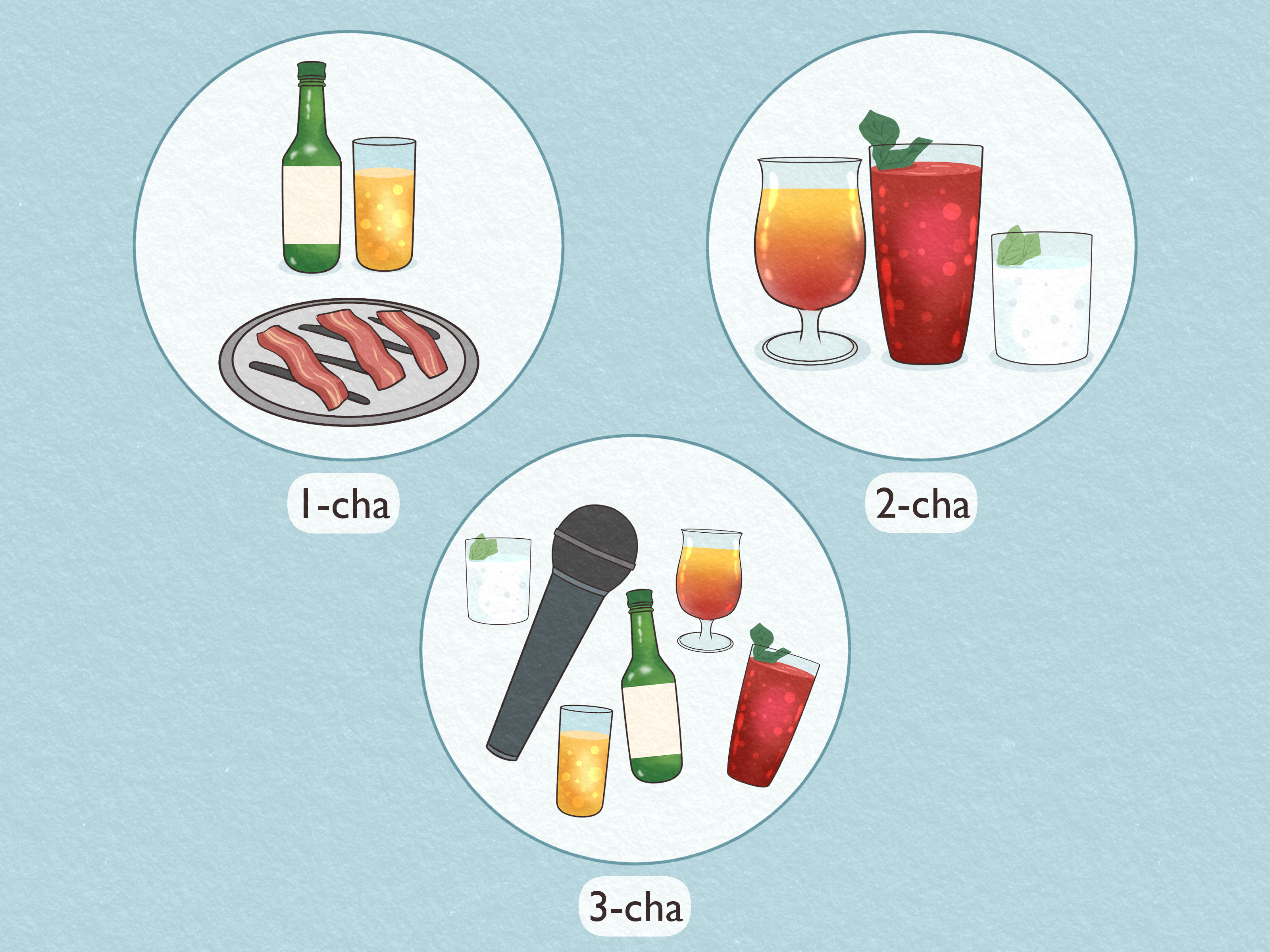
A classic hoesik might begin with grilled meat at a restaurant, continue to a second round at a pub, and then move to karaoke. That multi-stop format is often described with numbered rounds such as first round, second round, and beyond. It is social, theatrical, exhausting, and occasionally the reason someone spends the next morning staring into hangover soup as if it contains moral guidance.
The Pressure Side of the Culture
For all its bonding benefits, hoesik has also been criticized. Some employees, especially younger workers, see it as an intrusion on personal time. Others have pushed back against pressure to drink, rigid seniority, and the blurry line between team-building and compulsory social labor. Women, in particular, have often described these gatherings as uncomfortable when they extend too late or create awkward power dynamics.
How Korean Drinking Culture Is Changing
This is the part many outdated guides miss: Korean drinking culture is not frozen in time. It is changing. Younger Koreans are often more health-conscious, more protective of personal time, and less willing to accept aggressive drinking expectations as normal. Workplace culture has shifted too, with legal and social pressure discouraging forced drinking and excessive after-hours obligations.
That means the old image of Korea as a place where every worker is dragged into endless rounds of soju every night is increasingly inaccurate. Those traditions still exist in some circles, but they are no longer the universal script. Many gatherings are shorter, more optional, and less alcohol-heavy than before. Some people choose nonalcoholic drinks without much fuss. Others still enjoy traditional rituals, but in a more relaxed way.
In other words, modern Korean drinking culture contains both tradition and revision. The etiquette still matters. The communal spirit still matters. But the pressure is being challenged, and the culture is becoming more flexible than the stereotypes suggest.
How to Drink Politely in Korea Without Panicking
If you are invited to drink in Korea, you do not need to become a flawless etiquette robot. You just need to show awareness and goodwill. Here are the principles that matter most.
Pay Attention to the Group
Watch what others do before jumping in. Korean drinking culture is highly contextual. A dinner with college friends may be very casual. A meal with older relatives or senior coworkers may be much more formal. Reading the table is part of the skill.
Accept Graciously, Decline Politely
If you do not drink, it is better to say so clearly and respectfully from the beginning. That is usually easier than accepting one drink and then trying to dodge every refill like you are in a social obstacle course. Most people will appreciate polite honesty.
Offer to Pour for Others
One of the easiest ways to seem thoughtful is to notice when someone’s glass is empty and offer a refill. It is a small gesture, but in Korean drinking culture, small gestures do a lot of heavy lifting.
Eat While You Drink
This is not just practical. It is cultural. Drinking alongside anju shows you understand the rhythm of the meal. It also dramatically lowers the odds of making a bold speech about friendship that no one asked for.
Common Misunderstandings About Korean Drinking Culture
Myth 1: Koreans are always drinking.
No. Drinking is visible and culturally significant, but many Koreans drink lightly, selectively, or not at all.
Myth 2: You must follow every rule perfectly.
Also no. Effort and respect matter more than flawless performance, especially if you are clearly not Korean and are trying your best.
Myth 3: It is all about getting drunk.
Not really. Yes, heavy drinking has been part of some social settings, but the deeper point is bonding, ritual, and shared time.
Myth 4: Old customs never change.
Definitely false. Korean drinking culture is evolving, especially among younger generations and in modern workplaces.
What Korean Drinking Culture Feels Like in Real Life
The easiest way to understand Korean drinking culture is not through rules, but through moments. Imagine arriving at a Korean barbecue restaurant with a group of coworkers. Before the meat even hits the grill, the oldest person chooses where everyone sits. Bottles appear. Glasses appear. Someone younger quietly starts pouring for everyone else before touching their own drink. No one announces the rule, but everyone seems to know it. If you are new, this can feel intimidating for about three minutes. Then the food starts sizzling, people begin laughing, and the whole system suddenly feels less like pressure and more like choreography.
Visitors often remember their first soju pour because it feels strangely ceremonial. You hold the bottle with care, use two hands, and realize that a simple refill can carry more social meaning than a whole speech. People notice that you noticed. That is the real magic of the culture. Respect is shown in tiny actions, not grand declarations.
Another common experience is discovering that the night moves in stages. Dinner is not always the whole night. One round can turn into a second stop for beer, then another for karaoke, then a late bowl of spicy soup that somehow tastes like rescue itself. To outsiders, it may look excessive. To many participants, it feels like a long social arc: formality softens, conversation opens up, and people become more direct, funny, and human as the evening progresses.
Food also changes the emotional tone of the night. A table full of anju makes drinking feel communal rather than reckless. Someone tears apart fried chicken. Someone flips a pancake. Someone insists you try the corn cheese because apparently your life has not begun until cheese bubbles in a hot skillet beside a cold bottle of soju. These dishes are not side characters. They make the drinking slower, warmer, and more interactive.
At the same time, modern experiences can look very different from the old stereotype. Many younger Koreans describe shorter nights, fewer obligatory work dinners, and more freedom to say no. Some groups order nonalcoholic drinks without drama. Some stop after one round. Some keep the etiquette but lose the pressure. That contrast is important. Korean drinking culture is still deeply recognizable, but it is no longer a single script performed the same way by everyone.
Perhaps the most memorable experience for foreigners is realizing that what seems like strict etiquette is often just a language of care. Pouring for someone else means you are paying attention. Receiving a drink with both hands means you respect the relationship. Sharing food means the table belongs to everyone. Once you understand that, the culture stops feeling like a minefield and starts feeling generous. Sure, there are rules. But under those rules is a simple idea: people eat together, drink together, and build connection one small gesture at a time.
Final Thoughts
Understanding Korean drinking culture means looking beyond the bottle. Yes, soju matters. Yes, etiquette matters. Yes, you should probably let someone else pour your drink. But the deeper lesson is that Korean drinking culture is built on connection. It reflects age hierarchy, hospitality, workplace tradition, food culture, and the social art of being part of a group.
It is also a culture in motion. Traditional rules still shape many gatherings, but younger Koreans are redefining what drinking together should look like. The result is not the disappearance of Korean drinking culture. It is a more flexible version of it: still communal, still expressive, still delicious, but increasingly more personal and less compulsory.
So if you find yourself at a Korean table with soju, anju, and a room full of people who seem to know the rhythm better than you do, do not panic. Use two hands. Pay attention. Eat generously. Laugh when appropriate. And remember that the point is not perfection. The point is participation.