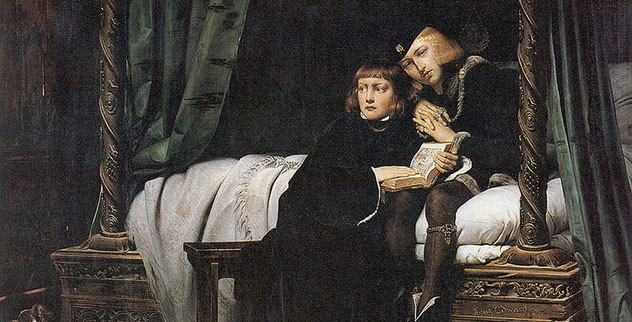
The Middle Ages were not exactly known for OSHA compliance, medical accuracy, or calm decision-making under pressure. Between hunting accidents, collapsing floors, questionable meals, and weapons being kept a little too close to the body, medieval history offers some truly strange final chapters. Some stories are well documented, while others survive through chronicles, sagas, and legends that grew more dramatic with every retelling. Either way, they reveal a world where power, pride, superstition, and bad luck often traveled in the same carriage.
This list of the top 10 bizarre deaths of the Middle Ages focuses on real historical figures and events from roughly the early medieval period through the late 14th century. A few details remain debated by historians, so the article points out where a story is likely, uncertain, or heavily shaped by medieval storytelling. Think of it as a guided tour through strange medieval historyminus the plague cart and, thankfully, minus the latrine pit.
Why Medieval Death Stories Still Fascinate Us
Medieval death was often public, symbolic, and interpreted through religion or morality. Chroniclers rarely described a strange death as “just an accident.” A king who ate too much, a warrior killed by a severed head, or a cruel ruler burned in his own treatment could become a lesson about pride, sin, fate, or divine justice. That is one reason these stories remain so memorable. They are not only unusual deaths; they are miniature moral dramas wrapped in armor, fur, wine, arrows, and unfortunate architecture.
Top 10 Bizarre Deaths of the Middle Ages
1. The Erfurt Latrine Disaster: When Politics Literally Went Down the Toilet
In 1184, nobles of the Holy Roman Empire gathered in Erfurt, in present-day Germany, to settle a political dispute. It should have been a tense but ordinary medieval meeting: nobles arguing, clerics frowning, and everyone pretending the room smelled fine. Then the wooden floor collapsed under the weight of the assembled guests.
The disaster became infamous because many attendees fell into the latrine cesspit below. Contemporary and later accounts suggest that dozens of people died, some from the fall and others from drowning or suffocating in the filth. Henry VI, the future Holy Roman Emperor, reportedly survived because he was seated in a stone alcove that did not collapse.
It is hard to imagine a more medieval combination of elite politics and poor infrastructure. The Erfurt Latrine Disaster remains one of the strangest deaths in medieval history because it turned a high-level diplomatic meeting into a horrifying architectural failure. If there was ever a warning not to hold important meetings over medieval plumbing, this was it.
2. Sigurd the Mighty: Killed by a Severed Head
Sigurd Eysteinsson, also known as Sigurd the Mighty, was a Viking leader and Earl of Orkney in the late 9th century. According to the Orkneyinga Saga, Sigurd defeated an enemy named Máel Brigte, who was known for a prominent tooth. After the battle, Sigurd strapped Máel Brigte’s severed head to his saddle as a trophy.
That decision aged about as well as milk in a warm mead hall. As Sigurd rode away, the dead man’s tooth allegedly scratched his leg. The wound became infected, and Sigurd eventually died. In other words, a warrior survived battle only to be taken down by the dental revenge of a severed head.
Because the account comes from saga tradition, historians treat the details with caution. Still, the story has survived for centuries because it delivers a perfectly grim lesson: never underestimate your enemy, even after decapitation. Among bizarre medieval deaths, this one has the elegance of poetic justice and the dental hygiene of a nightmare.
3. King Henry I of England: The Famous “Surfeit of Lampreys”
King Henry I of England died in 1135 after falling ill in Normandy. The famous medieval explanation is that he ate “a surfeit of lampreys,” meaning he overindulged in a dish made from eel-like jawless fish. Lampreys were considered a delicacy, though to modern eyes they look like something a dungeon designer would keep in a moat for atmosphere.
Chroniclers reported that Henry ate them against medical advice. Soon afterward, he developed a severe illness and died. Modern medical analysis suggests that the lampreys themselves may not have been the direct cause. Food poisoning, infection, or another gastrointestinal illness could have been involved. However, the lamprey story stuck because it was memorable, moral, and frankly too weird to ignore.
Henry’s death also had serious consequences. It helped trigger a succession crisis in England known as the Anarchy, a brutal civil war between supporters of Stephen of Blois and Empress Matilda. So, whether or not lampreys were truly guilty, history remembers them as the fish that helped throw a kingdom into chaos. Not bad for an animal with no jaw.
4. John II Komnenos: The Emperor and the Poisoned Arrow Scratch
Byzantine Emperor John II Komnenos was a capable ruler and military commander, but his death in 1143 was strange enough to sound like a warning label. While hunting wild boar in Cilicia, he reportedly injured himself with a poisoned arrow from his own equipment. The wound may have seemed minor at first, but it became infected, leading to severe illness and death.
Some modern scholars have questioned whether poison was truly involved or whether sepsis from the wound was the real killer. Either way, the basic scenario is deeply unfortunate: a powerful emperor preparing for military action was undone not by an enemy army, but by a hunting accident involving his own gear.
Medieval hunting was not a casual weekend hobby. For rulers, it was training, theater, status display, and danger bundled together. John’s death shows how easily elite recreation could become fatal. Today, people forget sunscreen on vacation; medieval emperors apparently carried poisoned arrows while chasing boars. Different eras, different risk profiles.
5. Frederick Barbarossa: The Crusading Emperor Who Drowned
Frederick I Barbarossa, Holy Roman Emperor, was one of the most powerful rulers of the 12th century. In 1190, during the Third Crusade, he drowned while crossing or bathing in the Saleph River in Anatolia. Accounts vary on the exact circumstances, but the core fact remains: a legendary emperor died in a river before reaching the Holy Land.
The death stunned his army. Barbarossa was not merely a commander; he was a symbol of imperial authority and crusading momentum. Without him, morale suffered, and many of his forces turned back or splintered. A military campaign that had survived politics, logistics, and the dangers of travel was deeply shaken by a water crossing.
What makes this death bizarre is the contrast between the man and the moment. Barbarossa had spent decades fighting popes, cities, princes, and rival powers. Yet in the end, the great red-bearded emperor was defeated by a river. Medieval history has a way of reminding readers that no crown comes with waterproofing.
6. William II Rufus: The King Shot While Hunting
King William II of England, known as William Rufus, died in 1100 while hunting in the New Forest. He was struck by an arrow, traditionally associated with a nobleman named Walter Tirel. The official story has often been treated as a hunting accident, but suspicion has hovered over the event for centuries.
Why the suspicion? For one thing, William’s younger brother Henry moved very quickly after the death. He secured the royal treasury and was crowned King Henry I within days. Medieval politics rewarded speed, but that kind of speed tends to make historians raise one eyebrow.
No definitive proof of assassination exists, and the event may indeed have been a tragic accident. Still, the combination of a royal hunting party, a fatal arrow, a fleeing nobleman, and a brother who immediately gained the throne makes William Rufus’s death one of the great medieval mysteries. It was less “country weekend” and more “murder board with antlers.”
7. Basil I: The Emperor Dragged by a Stag
Basil I, founder of the Macedonian dynasty in Byzantium, rose from humble origins to become emperor. His death in 886 was as dramatic as his life. According to traditional accounts, Basil was hunting when a stag caught its antlers in his belt, pulled him from his horse, and dragged him through the woods. He survived the immediate accident but later died from fever or complications.
The story gets even darker. An attendant reportedly cut Basil free, but the suspicious emperor allegedly believed the man had tried to attack him and ordered him executed. If true, Basil’s final days were a grim mix of pain, paranoia, and spectacularly bad gratitude.
Some historians question the full dramatic version, especially the distance he was supposedly dragged. Medieval sources could be theatrical, and Byzantine court politics were rarely short on intrigue. Still, Basil’s death belongs on any list of bizarre medieval deaths because even the cautious version involves a ruler, a hunting accident, a stag, and a belt that chose violence.
8. Gruffudd ap Llywelyn: The Tower Escape Gone Wrong
Gruffudd ap Llywelyn, son of Llywelyn the Great of Wales, died in 1244 while imprisoned in the Tower of London. According to the traditional account, he attempted to escape by making a rope from sheets and clothing. Unfortunately, the makeshift rope broke, and Gruffudd fell to his death.
The story is tragic rather than comic. Gruffudd was a political prisoner whose existence mattered in the tense relationship between Welsh rulers and the English crown. His failed escape was not a silly stunt; it was a desperate attempt to regain freedom and possibly influence the future of Wales.
Still, the manner of death is striking. Medieval prisons did not come with safety inspections, and improvised bedsheet ropes rarely perform well under pressure. Gruffudd’s death became part of the larger story of Welsh resistance and dynastic struggle. It also serves as a bleak reminder that in the Middle Ages, even escape plans had to pass a materials-engineering test.
9. Humphrey de Bohun: The Earl Killed from Beneath a Bridge
Humphrey de Bohun, 4th Earl of Hereford, died at the Battle of Boroughbridge in 1322 during the rebellion against King Edward II and the Despensers. The most famous account says that while Humphrey was fighting on a bridge, an enemy soldier hidden beneath it thrust a spear upward through the wooden planks and struck him fatally.
The details are gruesome, and some historians caution that medieval battle accounts could become embellished. However, sources connected to the battle do preserve the image of a nobleman killed in a shocking and humiliating way. For a high-ranking warrior, death from below carried symbolic sting as well as physical horror.
Humphrey’s death helped break the rebel assault and contributed to the collapse of the opposition. In practical terms, it was a battlefield killing. In storytelling terms, it was the kind of moment medieval chroniclers never forgot. Few deaths better demonstrate the Middle Ages’ talent for turning military engineering into personal catastrophe.
10. Charles II of Navarre: The Brandy-Soaked Fire Death
Charles II of Navarre, often called Charles the Bad, had a reputation for ruthless political scheming. When someone earns the nickname “the Bad,” expectations are already low. His death in 1387 became famous because later accounts describe a truly horrifying accident involving medical treatment.
According to the traditional story, Charles was ill and was wrapped in cloths soaked in brandy or strong spirits as a treatment meant to warm or stimulate his body. The cloths were sewn around him. When a servant tried to cut or burn off the loose thread, the alcohol-soaked fabric caught fire, and Charles was badly burned. He died soon afterward.
Historians debate the exact details, and the story may have been shaped by moral judgment against a disliked ruler. Even so, it became one of the most famous bizarre deaths of the Middle Ages because it reads like a medieval cautionary tale: live by dangerous schemes, die by flammable healthcare. Modern medicine has its flaws, but at least doctors no longer prescribe “wrap the patient in brandy and hope nobody brings a candle.”
What These Strange Medieval Deaths Reveal
These stories are entertaining, but they also reveal serious truths about medieval life. First, hunting was dangerous. Several rulers on this list died or suffered fatal injuries while hunting, because medieval elites used hunting as a display of courage and control over nature. Unfortunately, nature did not always respect royal branding.
Second, medieval medicine could be risky. Treatments involving alcohol-soaked cloths, dietary restrictions, and limited understanding of infection show how uncertain medical care could be. A small wound could become fatal. A strange prescription could make things worse. The line between cure and catastrophe was often painfully thin.
Third, chroniclers shaped death into meaning. They often framed bizarre deaths as moral lessons. A greedy king dies after overeating. A violent warrior dies from the tooth of his enemy. A scheming ruler burns in his own treatment. These patterns may not always be perfectly factual, but they tell us how medieval people interpreted fate, justice, and reputation.
Experiences and Reflections: Reading the Middle Ages Through Its Weirdest Endings
Exploring the top 10 bizarre deaths of the Middle Ages feels a bit like walking through a museum where every exhibit whispers, “This could have been avoided.” The deeper experience is not simply shock or dark humor. It is the realization that medieval people lived in a world where danger sat close to ordinary life. A royal meal, a hunt, a political meeting, a prison escape, or even a medical treatment could become fatal with very little warning.
One of the most interesting experiences for modern readers is noticing how familiar some of the patterns still feel. People still ignore medical advice, overestimate their equipment, trust weak floors, and make bold decisions when patience would be smarter. The technology has changed, but human confidence remains impressively stubborn. Henry I’s lamprey story, for example, is basically the medieval version of eating something your doctor told you to avoid and then insisting, “I know my body.” History, holding a lamprey, politely disagreed.
Another powerful experience is seeing how reputation follows a person into death. Charles II of Navarre was remembered as “the Bad,” so his fiery end became easy to interpret as divine punishment. Sigurd the Mighty was a violent warrior, so the saga gave him an ending loaded with irony. William Rufus was politically controversial, so his hunting death became suspicious. Medieval people did not separate biography from morality. The way a person died was often treated as the final sentence in the story of who they had been.
These accounts also encourage readers to treat history with both curiosity and caution. Not every dramatic detail should be swallowed whole. Medieval writers had agendas, audiences, and excellent dramatic instincts. Some stories were copied, improved, moralized, or exaggerated. That does not make them useless. Instead, it makes them layered. A bizarre death can tell us what happened, what people believed happened, and what later generations wanted the death to mean.
For writers, students, and history lovers, these strange medieval deaths are useful because they make the past memorable. Dates and dynasties can blur, but nobody forgets the Erfurt Latrine Disaster. A story like that opens the door to larger discussions about medieval sanitation, architecture, politics, and social hierarchy. Basil’s stag accident leads to Byzantine court politics. Gruffudd’s failed escape leads to Welsh resistance and English royal power. The weird detail becomes a doorway into serious history.
In the end, the experience of reading these stories is humbling. Medieval rulers could command armies, inherit kingdoms, and terrify rivals, yet still lose to a river, a loose floor, a scratch, a deer, or a very questionable dinner. The Middle Ages remind us that history is not only made by grand battles and royal decrees. Sometimes it turns on rotten beams, infected wounds, bad timing, and the unforgettable power of one extremely inconvenient tooth.
Conclusion
The bizarre deaths of the Middle Ages are more than a collection of morbid trivia. They show how medieval society understood power, danger, medicine, reputation, and fate. Some stories are firmly rooted in historical evidence; others come wrapped in legend and moral storytelling. Together, they create a vivid picture of a world where kings, emperors, nobles, and warriors could meet ends that were shocking, symbolic, and sometimes darkly absurd.
From the nobles of Erfurt falling into a latrine pit to Sigurd the Mighty being “bitten” by a severed head, these tales prove that medieval history is never boring. It can be brutal, strange, tragic, and occasionally so ridiculous that it sounds invented. Yet behind every bizarre ending is a real historical worldone full of ambition, risk, poor sanitation, dangerous sports, and medical advice that modern readers should absolutely not try at home.
Note: This article is based on documented medieval chronicles, historical biographies, academic summaries, and modern historical analysis. Where accounts are legendary, debated, or shaped by later storytelling, the article identifies them cautiously rather than presenting every dramatic detail as certain fact.