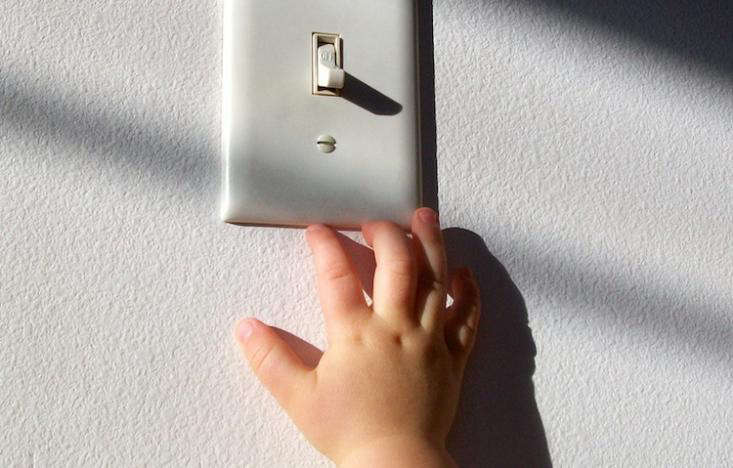
There are two kinds of people in this world: the kind who always turn off the lights, and the kind who somehow leave the laundry room glowing like a Broadway stage for six straight hours. If you live with the second kind, or secretly are the second kind, sensor light switches can be a beautifully low-drama fix.
These switches are one of those home upgrades that feel small until you install one and suddenly wonder why you spent years fumbling for a switch with an armful of towels, groceries, paint cans, or a sleeping toddler who finally agreed to be carried. A good sensor switch adds convenience, trims wasted lighting time, and makes certain rooms work smarter without turning your house into a sci-fi movie.
But not all sensor light switches are the same. Some turn lights on automatically. Some only turn them off. Some are great for bathrooms and closets but annoying in bedrooms. Some play nicely with LEDs. Others get grumpy if you pair them with the wrong bulbs or wiring setup. In other words, this is not just a matter of buying the first switch with the word “motion” on the box and hoping for the best.
This guide breaks down how sensor light switches work, where they make the most sense, what features actually matter, and how to avoid the classic mistakes that make people say, “This thing has a mind of its own.” Spoiler: it usually doesn’t. It usually just has poor placement.
What Is a Sensor Light Switch?
A sensor light switch is a wall switch that uses built-in detection technology to control lights based on movement, presence, or room occupancy. Instead of relying entirely on you to flip the switch on and off, it handles part of the job automatically.
In most homes, sensor switches fall into two main categories: occupancy sensors and vacancy sensors. The difference sounds tiny, but in daily life it matters a lot.
Occupancy Sensors
An occupancy sensor turns the light on automatically when it detects motion and turns it off automatically after the room has been empty for a set amount of time. This is the hands-free version, and it is excellent in places where convenience matters more than ceremony. Think laundry rooms, garages, pantries, mudrooms, powder rooms, and closets.
If you routinely enter a space with full hands, an occupancy sensor feels like a personal assistant who works for free and never asks for coffee.
Vacancy Sensors
A vacancy sensor is the more polite cousin. You turn the light on manually, but the switch turns it off automatically when no one is there. This setup is often better in spaces where automatic-on can be annoying, unnecessary, or downright rude.
Bedrooms are a prime example. Nobody wants the lights to snap on because they shifted under the blankets at 2:13 a.m. A TV room is another. If you are halfway through a suspense movie and the sensor decides your dramatic stillness means the room is empty, that is a plot twist no one asked for. Vacancy mode solves that by keeping the auto-off convenience without the surprise spotlight.
How the Sensor Actually Knows You’re There
This is where the technology starts sounding fancy, but the basic idea is simple: the switch is trying to detect human presence in a room. It just has different ways of doing it.
Passive Infrared (PIR)
PIR sensors detect changes in heat and movement. They are common in residential switches because they are practical, widely available, and effective in enclosed spaces. A PIR sensor works best when it has a reasonably clear view of the area and can “see” someone moving across its detection field.
That is why PIR switches tend to do well in hallways, bathrooms, laundry rooms, and other straightforward spaces. They can be less impressive when someone is sitting very still for a long period, such as reading at a desk or quietly soaking in a tub while contemplating every decision they made in 2017.
Ultrasonic Sensors
Ultrasonic sensors use sound waves to detect occupancy. They are generally more sensitive to subtle motion, which can help in spaces where people are present but not moving much. In some setups, that extra sensitivity is helpful. In others, it can be a little too enthusiastic.
If PIR is the sensor that notices you walked into the room, ultrasonic is the sensor that says, “I also noticed you moved one shoulder blade.”
Dual-Technology Sensors
Some higher-end switches combine PIR and ultrasonic technology. These dual-tech models aim to reduce false offs and improve detection in rooms with mixed activity. They are often a smart choice in offices, workshops, or rooms where people alternate between moving around and sitting still.
For many homeowners, a basic PIR switch is enough. But if you have ever had a sensor shut off while you were very much still in the room, dual-tech may be the peace treaty your lighting system needs.
Why Sensor Light Switches Are Worth Considering
The big selling points are convenience, energy savings, and a little everyday sanity.
- They reduce wasted lighting time. Lights are less likely to stay on in empty rooms.
- They make awkward spaces easier to use. Closets, garages, utility rooms, and laundry rooms benefit immediately.
- They can support safety and comfort. Walking into a dark hallway, pantry, or garage is less fun than the movies suggest.
- They help households with kids, guests, and forgetful adults. No names mentioned. You know who you are.
- They bring a “smart home” feel without requiring an app. That last part is important for people who would rather not download software to turn on a hallway light.
They also pair well with modern lighting controls. Some models include dimming, adjustable timeout settings, ambient light sensing, and manual override, which means you can fine-tune the switch instead of letting it behave like a tiny electrical dictator.
Best Places to Install a Sensor Light Switch
Not every room deserves a sensor switch. The best candidates are spaces where lights are often left on, where you pass through quickly, or where hands-free use makes daily life easier.
1. Laundry Rooms
This is sensor-switch paradise. You are often carrying a basket, detergent, hangers, or all of the above. Automatic lighting is practical here, and auto-off helps when everyone forgets to return for the last sock.
2. Closets
Closets are classic sensor territory. You open the door, step in, grab what you need, and leave. A switch that handles that short visit automatically feels wonderfully efficient.
3. Bathrooms and Powder Rooms
These rooms are used often, sometimes briefly, and usually benefit from reliable auto-off. For a main bathroom, choose a model with good sensitivity and adjustable timeout so the light does not quit while someone is enjoying a suspiciously long skincare routine.
4. Garages and Mudrooms
These are transition spaces, which means people enter with bags, tools, sports gear, or muddy shoes. Occupancy sensors are especially helpful here.
5. Pantries and Utility Rooms
Short visits, frequent forgetting, and no real downside to automatic lighting. A near-perfect match.
6. Hallways
Hallways can benefit, especially at night, but choose the settings carefully. Too much sensitivity and the lights may respond to every passing shadow like they are auditioning for a ghost-hunting show.
Rooms Where You Should Think Twice
Bedrooms
Auto-on can be annoying in bedrooms, especially if people move around at different times. A vacancy sensor is usually the better option here.
Living Rooms and Media Rooms
If people sit still for long stretches, a basic occupancy sensor may decide the room is empty. That is not ideal during a movie, a nap, or a heated debate about whether the giant sectional was worth it.
Home Offices
These can go either way. If you pace during calls, an occupancy sensor may be fine. If you sit still for focused desk work, a vacancy sensor or dual-tech model is usually smarter.
What to Check Before You Buy
Here is where smart shoppers avoid unnecessary returns and muttered hallway monologues.
Wiring: Neutral or No Neutral?
Some sensor switches require a neutral wire. Others can work without one, or can use a ground connection depending on the design and load type. Older homes are where this becomes important fast. If your switch box does not have the wiring the device expects, installation gets more complicated.
Before buying, check the product specs carefully. Do not assume all sensor switches install like a standard toggle. They do not. Some are flexible. Some are not. Your wall box will have opinions.
LED Compatibility
This is one of the biggest practical issues. Modern homes use LED bulbs and fixtures everywhere, but not every control works equally well with every LED setup. If you are choosing a sensor dimmer or a model with advanced control features, compatibility matters even more.
If the manufacturer offers an LED compatibility tool or approved bulb list, use it. That five-minute check can save you from flicker, ghosting, buzzing, short lamp life, or lights that act like they are being haunted by a minor electrical spirit.
Single-Pole vs. Multi-Location
Some rooms are controlled from one switch. Others have two or more switch locations. If your current light is controlled from both ends of a hallway or stairway, you need a model designed for that arrangement. A sensor switch is not magic; it still has to match the circuit.
Timeout Settings
The timeout determines how long the light stays on after the last detected motion. Too short, and the room goes dark while you are still there. Too long, and the energy-saving benefit shrinks. Look for adjustable settings so the switch can fit the room instead of forcing the room to fit the switch.
Daylight or Ambient Light Features
Some sensor switches can avoid turning on when the room already has enough natural light. This is a fantastic feature in bright laundry rooms, kitchens, sunlit hallways, or entry areas with windows. Without it, the switch may flip on lights at noon just because you walked through a room lit like a summer postcard.
Manual Override
Good switches usually allow manual on and off control. That matters more than people think. Automation is lovely right up until the moment you do not want automation.
Common Problems and How to Avoid Them
Poor Placement
A sensor switch can only detect what it can sense. If furniture, doors, room layout, or odd angles block the detection area, performance suffers. The best switch in the world will still struggle if it is installed in a bad spot.
Wrong Sensor Type for the Room
A basic occupancy sensor in a TV room is often a recipe for annoyance. A vacancy sensor in a busy utility room may give up some of the convenience you wanted. Match the switch to the room’s behavior, not just the room’s name.
Heat Sources Nearby
Install the device too close to a dryer, heating vent, or stove, and you may get odd behavior. The switch may turn on unnecessarily or stay on longer than expected.
Ignoring the Lighting Load
Always check what the switch is rated to control. Lighting type, wattage, and in some cases fans or mixed loads all matter. A sensor switch should be used the way it is listed and rated to be used. This is not the place for creative improvisation.
Assuming “Smart” Means Better
Some people genuinely want app control, schedules, scenes, and voice assistant integration. Others just want the pantry light to turn on when they open the door and turn off when they leave. Be honest about your goals. There is no trophy for overcomplicating a utility closet.
Sensor Light Switches vs. Smart Lighting
Sensor switches and smart switches overlap, but they are not the same thing. A plain sensor switch focuses on automatic control based on presence. A smart switch focuses on remote control, scheduling, automation routines, and connectivity.
Some devices combine both. That can be useful, especially in larger homes or for people who want custom automation. But for many homeowners, a standard wall sensor switch hits the sweet spot: practical, low-maintenance, and useful every single day without depending on Wi-Fi.
Are Sensor Light Switches Worth It?
In the right rooms, absolutely. They are not glamorous in the way a designer pendant or smart thermostat is glamorous, but they quietly improve daily life. You notice them in all the right ways: fewer forgotten lights, less fumbling in the dark, smoother routines, and a home that feels just a bit more thoughtful.
The key is choosing the correct type, confirming the wiring and load requirements, and setting realistic expectations. A sensor switch is not there to impress your dinner guests. It is there to make the boring parts of life easier. Frankly, that is a noble calling.
Real-World Experiences With Sensor Light Switches
Living with sensor light switches is one of those things you appreciate more over time. On day one, the reaction is usually, “Oh, neat.” By week three, the reaction becomes, “Why is every other room still making me do all the work?” The convenience sneaks up on you.
One of the most common experiences people report is how quickly a sensor switch becomes essential in the laundry room. It is not dramatic. It just removes a daily annoyance. You walk in with a basket pressed against your chin, the lights come on, and suddenly your house feels like it respects your effort. The same thing happens in mudrooms and garages. When your hands are full, or dirty, or cold, not having to fumble for a switch feels disproportionately satisfying.
Closets are another place where the experience is almost comically good. A sensor switch makes a closet feel more organized even if it absolutely is not. The light pops on, you find the jacket or shoes or gift bag you forgot you owned, and the light turns itself off when you leave. It is a tiny interaction, but it makes the space feel crisp and functional. It also prevents the old classic of discovering the closet light has been on since Tuesday.
Bathrooms create a more mixed set of experiences, which is exactly why setup matters. In a powder room, sensor switches are usually a hit. Quick visits, easy auto-off, no downside. In a larger bathroom, people tend to love them once the timeout is adjusted properly. If the timer is too short, however, the experience turns from “luxury convenience” to “interrogation room energy” very quickly. No one wants to wave at the wall while brushing their teeth just to prove they are still there.
Bedrooms and media rooms are where people learn the lesson of choosing vacancy mode instead of occupancy mode. Many homeowners install an auto-on sensor in a bedroom and then realize the first overnight movement turns the room into high noon. That usually leads to one of two outcomes: either the switch gets reprogrammed to manual-on, or the homeowner develops a strong personal philosophy about not automating everything. Living rooms can have a similar issue during movie nights. If a room is designed for relaxing quietly, a more restrained control strategy is often better.
Home offices are fascinating because experiences vary based on work style. Someone who stands, moves around, and takes calls may love an occupancy sensor. Someone who sits quietly at a screen for hours may not. Those users often become the biggest fans of dual-technology sensors or vacancy-only models, because the switch supports the room without constantly second-guessing human stillness.
There is also a subtle emotional effect that people do not always expect: sensor switches make a home feel more intentional. Not smarter in a flashy way. Just better considered. A garage that lights up when you enter at night feels safer. A pantry that never gets left on feels tidier. A hallway that does not require a reach in the dark feels calmer. These are not life-changing moments, but they are quality-of-life moments, and homes are built out of those.
Of course, the bad experiences are memorable too. A poorly placed sensor can miss you entirely. A mismatched LED setup can flicker. A switch installed near a heat source can behave strangely. But those problems are rarely proof that sensor switches are a bad idea. They are usually proof that details matter. When the switch matches the room, the wiring, and the lighting load, the experience tends to shift from “gadget” to “why didn’t I do this sooner?”
Final Thoughts
Sensor light switches are not a miracle product, and that is precisely why they are so useful. They do one modest job well: they make lighting respond more naturally to the way people actually move through a home. In closets, laundry rooms, garages, hallways, bathrooms, and other hardworking spaces, that simple upgrade can make a home feel more efficient, more comfortable, and a little less dependent on human memory.
Choose the right sensor type, confirm your wiring and LED compatibility, use adjustable settings when possible, and think honestly about how each room is used. Do that, and your reward is beautifully simple: lights when you need them, darkness when you do not, and one fewer household task begging for attention.