Ancient construction sites have a mischievous habit of making modern visitors feel technologically inadequate. We arrive with smartphones, laser levels, hydraulic cranes, and several opinions about proper project management. Then we stand before a 100-ton stone fitted so precisely that a knife blade cannot squeeze between the joints. Suddenly, our flat-pack bookshelf seems less impressive.
The world’s most mysterious ancient constructions are not evidence that early civilizations lacked explanations. They reveal how much knowledge can disappear when languages, traditions, and political systems collapse. Archaeologists can identify quarry marks, settlement patterns, tools, astronomical alignments, food remains, and transportation routes, yet many details about purpose, organization, and symbolism remain uncertain.
The mystery, therefore, is rarely “Could humans have built this?” Humans unquestionably did. The better questions are how they organized the labor, what the structures meant to them, and why entire communities invested extraordinary effort in stone monuments that would outlive their names.
1. Göbekli Tepe: Monumental Architecture Before Cities
On a ridge in southeastern Turkey stands Göbekli Tepe, a complex of circular and oval enclosures dating to roughly the tenth millennium B.C. Its most recognizable features are towering T-shaped limestone pillars, many decorated with carvings of foxes, snakes, vultures, wild boars, and other animals.
The startling revelation is its age. Göbekli Tepe was created thousands of years before Stonehenge and the Egyptian pyramids, during a period when communities in the region were transitioning from mobile hunting and gathering toward permanent settlement and agriculture. Its builders had no metal tools, pottery industry, or wheeled construction equipment.
The Enduring Mystery
Researchers continue debating whether the enclosures functioned primarily as ritual gathering places, communal buildings, memorial spaces, or structures combining several purposes. The site also appears to have been intentionally filled in during antiquity. Whether that burial marked ceremonial closure, rebuilding, or a practical change in community life remains uncertain.
Göbekli Tepe’s greatest revelation is that organized religion and monumental construction may not have followed cities. In some cases, communal rituals may have helped create the social cooperation from which settled life eventually grew.
2. The Great Pyramid of Giza: Precision on a Colossal Scale
Built for Pharaoh Khufu during Egypt’s Fourth Dynasty, the Great Pyramid was completed around the middle of the third millennium B.C. It originally rose approximately 481 feet and remained the tallest human-made structure on Earth for thousands of years.
Its limestone and granite blocks were quarried, transported, shaped, and positioned with extraordinary precision. Interior passages, chambers, relieving spaces, and carefully aligned sides demonstrate that the project required far more than a large crowd dragging rocks while someone shouted encouraging remarks.
The Enduring Mystery
Archaeologists have identified workers’ settlements, transportation records, quarry systems, ramps, sledges, waterways, and specialized labor teams. These discoveries firmly place construction within the abilities of ancient Egyptian society. However, researchers still debate the exact arrangement of ramps and lifting methods used during different stages.
The pyramid’s revelation is social as much as technical. It represents a government capable of feeding, housing, training, and coordinating thousands of workers. The monument was not an isolated miracle; it was the visible peak of an administrative system almost as impressive as the building itself.
3. Stonehenge: A Monument Rewritten Across Generations
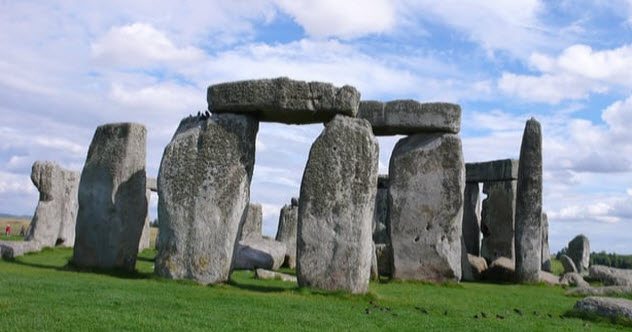
Stonehenge was not completed in one heroic construction season. The landscape evolved through multiple phases beginning around 3000 B.C. Earthworks, timber features, cremation burials, bluestones, and enormous sarsen uprights were added or rearranged over many centuries.
Some bluestones came from western Wales, while the larger sarsens were obtained closer to the site in southern England. Transporting them required careful planning, strong ropes, prepared routes, and coordinated human labor. No wizardry was necessary, although a wizard would certainly have improved morale.
The Enduring Mystery
Stonehenge was associated with burials and aligned with important solar events, including the winter and summer solstices. Its original stone arrangement may also have shaped sound within the inner circle. Yet no single interpretation fully explains every phase of the monument.
It may have served at different times as a cemetery, ceremonial gathering place, ancestral memorial, political symbol, or destination within a larger sacred landscape. Its long history is the revelation: Stonehenge was not one building with one meaning, but a monument repeatedly reinterpreted by generations.
4. Malta’s Megalithic Temples: Architecture for an Unknown Faith
The Mediterranean islands of Malta and Gozo contain some of the oldest freestanding stone monuments known. Complexes such as Ħaġar Qim, Mnajdra, Tarxien, and Ġgantija were built during the fourth and third millennia B.C., long before the classical temples of Greece and Rome.
Their builders arranged massive limestone blocks into curved chambers, apses, corridors, doorways, and decorated ritual spaces. Carved spirals, altars, animal imagery, and corpulent human figures suggest a rich symbolic tradition, but the society left no readable written explanation.
The Enduring Mystery
The temples may have hosted ceremonies involving fertility, ancestors, seasonal cycles, healing, feasting, or community identity. Certain chambers appear to have unusual acoustic properties, while some structures interact with the rising sun at significant times of year.
The revelation is that relatively small island communities could sustain highly organized architectural traditions for centuries. Their temples were not crude experiments. They were carefully planned environments designed by people who understood stone, light, movement, and dramatic presentation.
5. The Moai and Ahu of Rapa Nui: Ancestors Who Watched the Living
Rapa Nui, also known as Easter Island, is famous for its moai: monumental human figures carved largely from volcanic tuff at Rano Raraku. Many were transported to stone ceremonial platforms called ahu, where they generally faced inland toward communities rather than outward toward the ocean.
The statues are widely understood as representations of powerful ancestors. Their creation expressed genealogy, status, protection, and competition among communities. Some originally wore red stone topknots, while restored examples reveal eyes that would have transformed blank stone faces into commanding presences.
The Enduring Mystery
How were statues weighing several tons moved across rugged terrain? Experiments have demonstrated that teams using ropes could rock certain moai from side to side in an upright position, making them appear to “walk.” Oral traditions describing walking statues may preserve a memory of this technique.
Not every transport question is settled, but the revelation is clear: Polynesian engineers understood balance, leverage, rope control, and collective timing. The moai are achievements of Rapanui culture, not props in a tale about mysterious outsiders arriving with secret technology.
6. Nan Madol: A City Built Upon the Sea
Off the coast of Pohnpei in Micronesia lies Nan Madol, a ceremonial and political center constructed across more than 90 artificial islets. Channels separate the compounds, giving the ruined complex its popular nickname, the “Venice of the Pacific.”
Builders created foundations with coral fill and stacked long basalt columns in alternating layers, producing walls that resemble gigantic log cabins made from stone. Nan Madol served as the center of the Saudeleur dynasty and included residences, ceremonial areas, tombs, and administrative spaces.
The Enduring Mystery
Some basalt pieces were transported from sources elsewhere on Pohnpei, but the complete logistics remain debated. Builders had no metal cranes, pack animals, or wheeled vehicles. Water transport almost certainly played a role, although precisely how the heaviest stones were maneuvered into place is unknown.
Nan Madol’s revelation is that monumental urban planning did not require a continental empire. An island society, drawing on maritime knowledge and political authority, could transform a reef into a carefully organized sacred capital.
7. Sacsayhuamán: The Art of the Impossible Joint
Overlooking Cusco, Peru, Sacsayhuamán is defined by immense zigzagging walls assembled from irregular limestone blocks. Some stones weigh more than 100 tons, yet their many-sided edges fit neighboring blocks with remarkable tightness. The builders used no mortar.
The Inca expanded the complex during the 15th century, although occupation of the hill predates the empire. Sacsayhuamán probably carried ceremonial, political, and defensive meanings. Its position above the imperial capital made it both a practical stronghold and a statement of authority.
The Enduring Mystery
Researchers understand the broad techniques involved: quarrying, percussion tools, abrasives, ramps, ropes, levers, repeated fitting, and an enormous labor force. What remains difficult to reconstruct is the detailed sequence used to move and finish the largest stones on steep terrain.
The revelation is found in the walls themselves. Their irregular joints helped distribute stress, contributing to resilience in an earthquake-prone region. The unusual shapes were not careless decoration; they formed a sophisticated structural system.
8. Derinkuyu: A City Designed to Disappear
Derinkuyu is a vast underground complex carved into the soft volcanic rock of Cappadocia, Turkey. It contains multiple levels of rooms, tunnels, storage areas, wells, ventilation shafts, animal spaces, and communal chambers. At maximum use, it may have sheltered thousands of people.
Heavy circular stone doors could seal passages from the inside, while narrow corridors limited the movement of intruders. Ventilation shafts carried air deep underground, demonstrating careful planning rather than frantic excavation during a last-minute emergency.
The Enduring Mystery
The oldest stages of Derinkuyu are difficult to date precisely. Different populations probably enlarged and modified the complex over long periods. It is therefore misleading to imagine that one ruler ordered the entire underground city to be completed according to a single blueprint.
Its revelation is architectural adaptability. Communities transformed the geology beneath their feet into a defensible refuge capable of supporting extended occupation during conflict or persecution. It was part bunker, part warehouse, part neighborhood, and entirely unfriendly to anyone who dislikes tight spaces.
9. Great Zimbabwe: The Monument That Defeated a Colonial Myth
Great Zimbabwe flourished between approximately the 11th and 15th centuries in southern Africa. Its most famous structures include the Hill Complex and Great Enclosure, where high curving walls were built from carefully shaped granite blocks laid without mortar.
The settlement was connected to regional cattle wealth, gold production, and long-distance trade extending toward the Indian Ocean. Imported ceramics, glass beads, and other finds demonstrate that it participated in commercial networks linking Africa with distant markets.
The Enduring Mystery
The exact functions of the conical tower and certain enclosed spaces remain debated. Yet the identity of the builders is not a legitimate mystery. Archaeological evidence connects Great Zimbabwe to the ancestors of Shona-speaking peoples.
European colonizers once promoted claims that Africans could not have built such an impressive center. Archaeology dismantled that racist fiction. Great Zimbabwe’s most important revelation is not that an unknown civilization appeared from nowhere, but that a powerful African society was denied credit for its own achievements.
10. Chichén Itzá: Stone, Shadow, Water, and Power
Chichén Itzá was one of the greatest urban and ceremonial centers of the northern Yucatán Peninsula. Its architecture reflects Maya traditions alongside influences associated with central Mexico. Temples, colonnades, ball courts, platforms, roads, and astronomical structures formed a landscape of political theater.
El Castillo, the stepped pyramid dedicated to Kukulkan, is famous for the pattern of light and shadow that appears along its staircase near the equinoxes, creating the impression of a serpent descending toward a carved head. The city’s monuments reveal close observation of seasonal cycles and celestial movement.
The Enduring Mystery
Researchers continue studying how political authority operated within the city, how leadership changed over time, and why its regional dominance eventually declined. Acoustic effects at El Castillo and the Great Ball Court also attract study, although dramatic claims should be separated from measurable evidence.
The revelation is that architecture functioned as communication. Buildings transformed sunlight, sound, procession, sport, sacrifice, and public ceremony into displays of cosmic order and earthly power.
What These Ancient Constructions Actually Reveal
Despite their differences, these mysterious ancient constructions share several themes. Each required specialized knowledge, long-term planning, organized labor, and a compelling reason for people to cooperate. Their builders understood local stone, seasonal weather, transportation routes, structural balance, and human psychology.
They also remind us that mystery should not be confused with impossibility. Missing information does not create a vacancy that must be filled with vanished super-civilizations or helpful visitors from another planet. “We do not yet know every step” is a perfectly respectable archaeological conclusion.
The real revelation is more interesting: ordinary human beings, organized around extraordinary beliefs and institutions, repeatedly accomplished things that seemed larger than individual life.
Experiencing the World’s Most Mysterious Ancient Constructions
Reading about ancient architecture provides dates, measurements, and theories. Visiting an archaeological site adds scale, weather, sound, fatigue, and the sudden realization that the “small stone” in a photograph is taller than you are.
Arrive Early and Let the Site Wake Up
The best experiences often begin near opening time, before large tour groups arrive and before midday heat turns serious historical reflection into a search for shade. At places such as Chichén Itzá, Giza, or Sacsayhuamán, low morning light emphasizes carvings, wall joints, and changes in elevation that can disappear beneath the flatter glare of noon.
Stonehenge offers a different experience. Distance controls and visitor paths mean travelers cannot usually wander among the stones, but the surrounding openness is part of the monument’s character. Wind, shifting clouds, and the broad horizon make its solar alignment easier to understand than a close-up photograph ever could.
Use a Knowledgeable Local Guide
A strong guide does more than recite dates. The guide can explain which sections are original, which have been reconstructed, what local communities believe about the site, and where popular legends depart from archaeological evidence. At Nan Madol and Rapa Nui, local knowledge is especially important because the monuments remain part of living cultural landscapes rather than abandoned stone puzzles.
Listening to community perspectives also prevents a common mistake: treating ancient builders as faceless laborers who existed only to create tourist attractions. Their descendants, languages, stories, and cultural responsibilities often continue in the region.
Study the Landscape, Not Just the Landmark
The structure itself is only half the story. At Giza, look beyond the pyramid toward quarry areas, workers’ settlements, causeways, and the former waterways that supported transportation. At Göbekli Tepe, notice the commanding ridge and its relationship to the surrounding plains. At Chichén Itzá, consider how cenotes supplied water and shaped religious geography.
Sacsayhuamán becomes more meaningful when viewed in relation to Cusco below. Nan Madol makes little sense without its reef, tidal channels, and access to the sea. Great Zimbabwe should be understood as a political and trading center within a much larger inhabited landscape, not as a lonely stone enclosure that mysteriously landed in the grass.
Expect Physical and Emotional Discomfort
Derinkuyu can be challenging for visitors with claustrophobia, limited mobility, or respiratory concerns. Narrow tunnels, low ceilings, steep passages, and crowded chambers are part of the experience. Other sites present altitude, uneven terrain, intense sun, humidity, or long walking distances. Checking accessibility conditions is considerably wiser than discovering them halfway down an underground staircase.
The emotional response may be equally unexpected. Ancient monuments can inspire awe, but they also represent hierarchy, taxation, religious obligation, dangerous labor, warfare, and sacrifice. Great architecture has never guaranteed a gentle society.
Leave the Mystery Where You Found It
Responsible visitors do not climb restricted walls, touch fragile carvings, move stones, carve initials, or remove “small souvenirs.” A fragment that appears meaningless outside its context may contain valuable archaeological information where it lies.
The most rewarding experience is to leave with better questions. Ask what the builders knew, how communities maintained the project, whose authority the monument expressed, and how modern interpretations have changed. Ancient sites do not need invented magic to become fascinating. Their real histories are already astonishing enough.
Conclusion: The Mystery Is Human
The top ancient constructions steeped in mystery and revelation survive because their builders understood more than stone. They understood cooperation, ceremony, authority, memory, and spectacle. They knew that a monument could organize a community during construction and continue shaping society long after the final worker departed.
Archaeological discoveries have answered many old questions. Egyptian records illuminate pyramid transport. Experiments show how moai could have “walked.” Excavations reveal the African creators of Great Zimbabwe and the sophisticated hunter-gatherers associated with Göbekli Tepe. Every revelation makes the builders more human, not less remarkable.
Some details may remain unknown forever. That uncertainty is not a failure. It is an invitation to keep excavating, testing, listening, and occasionally admitting that people without power tools were extremely good at their jobs.