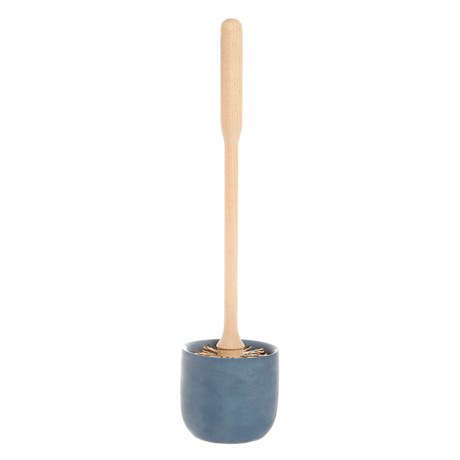
A toilet brush is rarely invited to the decorating conversation. It usually gets parked behind the bowl like a relative who arrived early ang>, however, earned attention because it treated a deeply practical bathroom tool as a designed object: a slim birch handle, a sturdy blue cup, and a restrained Scandinavian silhouette that does not look embarrassed to exist.
The name is associated with an Iris Hantverk model that appeared in design roundups and retail archives. Earlier listings identified the blue-cup version as a compact, design-forward cleaning tool, while related versions use an oiled birch handle, polypropylene bristles, and a polymer-reinforced concrete cup. That combination explains the appeal. It feels warmer than an all-plastic brush, steadier than a lightweight canister, and far more intentional than the anonymous white set from aisle twelve. >
What Is the Toilet Brush Blue Cup?
The Toilet Brush Blue Cup is best understood as a minimalist toilet brush and holder set rather than a complicated cleaning gadget. Its visual identity comes from three simple elements: a long wooden handle, a rounded brush head, and a muted blue storage cup. The cup does the unglamorous work of containing the brush while also acting as a small color accent beside the toilet.
Archived design listings placed the product within Iris Hantverk’s collection of thoughtfully designed household brushes. Comparable versions measure roughly 41.5 centimeters, or about 16.3 inches, in total height, with a cup diameter near 9.7 centimeters, or 3.8 inches. The related replacement brush is approximately 40.5 centimeters long with an 8-centimeter brush diameter. These proportions are narrow enough for a small powder room but long enough to keep the user’s hand at a civilized distance from the bowl. Useful Clarification About Craftsmanship
Iris Hantverk is widely known for its history of employing visually impaired craftspeople and for producing many brushes by hand. However, the manufacturer’s product pages label the toilet brush and its refill as machine made. That distinction matters. The set still belongs to a brand with a strong craft tradition, but shoppers should not automatically assume that every component of this particular model is hand-bound. Scandinavian design may be poetic, but good product writing should still read the fine print. n>
Why the Blue Cup Works So Well in a Bathroom
Blue Adds Color Without Demanding a Renovation
Blue is unusually flexible in bathroom design. Pale blue can feel crisp and airy, while navy, cobalt, and blue-gray add depth without losing their visual association with water and cleanliness. Design publications regularly use blue across bathroom tile, vanities, paint, ceramics, and small accessories. A blue toilet brush holder follows the same logic on a much smaller budget: it introduces color without requiring a contractor, demolition dust, or a discussion about grout samples that somehow lasts three weekends. ood Softens Hard Bathroom Surfaces
Bathrooms are full of hard, reflective materials: porcelain, tile, glass, chrome, stone, and mirrors eager to show every water spot. A birch handle adds a warmer texture and a natural note. Architectural designers often recommend using wood and other softer-looking materials to balance a bathroom’s hard finishes. Here, the handle performs that job without adding clutter. he Cup Behaves Like an Accessory, Not an Apology
Good bathroom accessories can make a plain rental or builder-grade space feel considered. The blue cup can coordinate with towels, a bath mat, artwork, a soap dispenser, or a stripe in the shower curtain. In a narrow bathroom, a small colored accessory is especially useful because it adds personality without creating another bulky visual block. n>
Materials, Construction, and Everyday Performance
The related Iris Hantverk toilet brush design combines oiled birch, polypropylene bristles, and a concrete-based cup modified with polymer. The manufacturer describes this “soft concrete” as a stone-like material with a warmer, smoother feel and slight variations in color and surface finish. Those variations are part of the look rather than defects. The cup is also relatively weighty, helping it stay planted when the brush is removed or returned. he Handle
A long handle provides leverage and reach. It also reduces the need to bend closely over the bowl. The oiled birch feels less clinical than molded plastic, although it asks for more thoughtful care. Wood should not remain soaked, and harsh chemicals should not be allowed to sit on it indefinitely.
The Bristles
Polypropylene bristles are water-resistant and robust enough for routine bowl cleaning. A rounded head works well across curved porcelain surfaces, although specialized angled brushes may reach beneath the rim more efficiently. In recent testing, Good Housekeeping found that angled bristles and ergonomic handles can improve access, while complicated holders may be harder to deep-clean. The broader lesson is simple: beauty matters, but the brush still needs to reach the places nobody wants to discuss over brunch. he Cup
The concrete-style holder gives the set stability and visual weight. It is not, however, meant to be filled and used as a reservoir of water or cleaning solution. Iris Hantverk specifically advises users not to leave the brush standing in a cup filled with liquid. Excess moisture can create odors, encourage microbial growth, and shorten the useful life of both the brush and holder. n>
How to Use a Toilet Brush Correctly
- Apply toilet bowl cleaner as directed. Coat the bowl, including the area beneath the rim, and allow the product to remain for the label’s recommended contact time.
- Scrub from the rim downward. Work under the rim first, then clean the sides, waterline, lower bowl, and trap opening.
- Rinse the brush in the bowl. Flush while holding the brush in the clean moving water, taking care to avoid splashing.
- Remove excess water. Gently tap or shake the brush over the bowl rather than across the bathroom floor.
- Let it dry before storage. Rest the handle securely under the toilet seat so the brush head hangs over the bowl, or use another stable drying method that keeps it away from surrounding surfaces.
- Return it to the clean, dry cup. The holder should contain the brush, not host a tiny indoor swamp.
Cleaning experts consistently emphasize two steps people rush: allowing the cleaner enough contact time and drying the brush before placing it in the holder. The first gives the cleaning product time to work; the second reduces trapped moisture and unpleasant odors. n>
How to Clean and Maintain the Brush and Blue Cup
After Every Use
Rinse the brush thoroughly, remove excess water, and allow it to air-dry. Do not immediately seal a wet brush inside a dark holder. Real Simple and The Spruce both highlight moisture as a major reason toilet brushes become smelly and unpleasant between uses. uring Routine Bathroom Cleaning
Clean visible residue from the cup with a product compatible with its material. For a polymer-reinforced concrete holder, avoid prolonged soaking unless the manufacturer specifically approves it. Wipe the outside, clean the interior, rinse if appropriate, and dry completely. Better Homes & Gardens also recommends remembering the holder itself rather than focusing only on the brush. hen Disinfecting
Start by cleaning away visible soil. Then use a disinfectant suitable for the surface and follow the label, including the required wet contact time. The CDC distinguishes ordinary cleaning from sanitizing or disinfecting and advises choosing products that fit the surface. Ventilation and protective gloves may also be appropriate, especially with stronger products. trong>Never mix bleach with ammonia, acids, vinegar, toilet bowl cleaners, or other cleaning products. Dangerous gases can form. Follow the label rather than inventing a bubbling “cleaning hack” that looks exciting on video and ends with everyone leaving the house. EPA guidance repeatedly warns against mixing products and recommends adequate ventilation. aring for the Wooden Handle
Iris Hantverk recommends cleaning its brushes with warm water and dishwashing liquid, allowing them to dry thoroughly, and occasionally oiling wood with an appropriate oil. For a toilet brush, use extra caution: avoid spreading contamination to a kitchen or utility sink, and keep any maintenance cloths and tools separate from food-preparation items. n>
When Should You Replace the Brush Head?
Replace the brush when the bristles are flattened, splayed, discolored, cracked, permanently odorous, or no longer scrub effectively. Many household-care guides suggest evaluating a traditional brush at around six months, with earlier replacement in a heavily used bathroom. A replaceable head is a valuable feature because it lets the holder and handle remain in service while the hardworking end retires with dignity. related Iris Hantverk line offers a replacement brush designed to fit its concrete and plastic cups. That is more practical than discarding the entire set whenever the bristles wear out, and it supports the product’s long-life design philosophy. n>
Buying Guide: What to Look for in a Blue Toilet Brush Holder
| Feature | Why It Matters | What to Check |
|---|---|---|
| Stable holder | Prevents tipping and awkward one-handed wrestling | A weighted base and non-wobbly footprint |
| Drying and ventilation | Reduces trapped moisture and odor | An open top, internal suspension, or enough room for airflow |
| Replaceable head | Extends the life of the handle and holder | Available refills with a clear model match |
| Comfortable handle | Improves control and reach | A secure grip and enough length for the bowl |
| Easy-clean cup | The holder becomes dirty too | A smooth interior and material-safe care instructions |
| Useful brush shape | Determines access under the rim and around curves | Dense bristles, an angled edge, or a flexible profile |
| Color compatibility | Keeps the accessory from looking randomly dropped in | A blue that repeats or complements another room element |
How to Style the Toilet Brush Blue Cup
With White and Chrome
A dusty or medium blue cup looks crisp beside a white toilet and chrome fixtures. Add one matching hand towel or a small piece of blue artwork. Repeating the color once is intentional; repeating it on every object is how a bathroom accidentally becomes a themed restaurant.
With Warm Wood and Brass
The birch handle already introduces warmth. Echo it with an oak vanity, wood-framed mirror, woven basket, or brass hardware. Blue and warm metallic finishes create a balanced contrast that feels less sterile than an all-cool palette.
With Coastal Colors
Pair the blue holder with white, sand, pale gray, and natural fibers. Keep shells and anchor motifs under control. The goal is “quiet coastal bathroom,” not “gift shop after a hurricane.”
In a Rental or Powder Room
Use the cup as one of only a few portable accents. Coordinate it with a soap dispenser and hand towel, then stop. Small bathrooms benefit from disciplined repetition and clear floor space more than from a parade of decorative objects.
Who Will Like Itand Who May Prefer Something Else?
The Toilet Brush Blue Cup suits design-conscious homeowners, renters who want portable upgrades, Scandinavian-style interiors, and anyone tired of flimsy plastic holders. It is especially appealing when the brush must remain visible because there is no cabinet or recessed storage beside the toilet.
It may be less suitable for users who want a fully enclosed holder, a dishwasher-safe plastic canister, a wall-mounted system, or a silicone head that sheds water quickly. Households with young children or pets should also consider placement carefully. A heavy cup is stable, but any cleaning tool should remain out of reach and away from play areas.
Experience Notes: What Living With This Style of Toilet Brush Is Like
The following section synthesizes common real-world observations about long-handled brushes, weighted holders, wooden handles, and design-forward bathroom accessories. It does not pretend to be a single personal ownership story.
The first noticeable benefit is visual. A blue cup next to a white toilet reads as a deliberate accessory rather than leftover cleaning equipment. In a small bathroom where nearly everything is visible at once, that difference matters. Owners often spend money hiding unattractive necessities in cabinets, but a good-looking holder reduces the need for concealment. It is not glamorous, exactly, but it stops apologizing for itself.
The weighted cup also changes the daily interaction. Lightweight plastic holders can lift, slide, or tip when the brush is pulled out at an angle. A concrete-style cup generally stays put, so removal feels calmer and more controlled. That sounds like a tiny advantage until you have tried to catch a falling toilet brush holder with your foot. Some life lessons should remain theoretical.
The wooden handle usually feels pleasant in the hand and warmer than metal or glossy plastic. It can also make the object feel more like a household brush than a disposable sanitation tool. The tradeoff is maintenance. A user who routinely drops the brush back into pooled water will eventually notice discoloration, odor, or wear. The design rewards a careful routine: rinse, drain, dry, and then store.
Drying is the habit that most affects satisfaction. When the brush is allowed to hang over the bowl until it is no longer dripping, the cup remains cleaner and the bathroom smells fresher. When it is stored immediately, the holder becomes a collection point for murky water. No shade of blue is charming enough to rescue that situation. The practical experience therefore depends less on the object’s price than on the user’s willingness to wait before putting it away.
Cleaning the holder itself is straightforward when residue is handled early. A quick wipe during the regular bathroom routine prevents the interior from developing a stubborn ring. The cup’s weight can make it slightly less convenient to carry to another cleaning area, but it also discourages careless tipping. Users should follow material-specific instructions because concrete composites, glazed ceramic, plastic, and metal do not react to cleaners in the same way.
The rounded traditional brush head performs well for ordinary bowl surfaces, waterline marks, and the lower curve. Under-rim cleaning may require changing the handle angle and taking an extra pass. People who prioritize maximum reach may prefer an angled or asymmetric head; people who prioritize a classic appearance may accept the minor compromise. In practice, cleaning-solution contact time often matters as much as aggressive scrubbing. Letting the product work can save both the wrist and the brush.
Over several months, bristle condition becomes the main indicator of whether the set still feels premium. Once the head splays or develops a permanent odor, the elegant cup cannot compensate. A readily available refill is therefore essential. Replacing only the brush preserves the visual investment and avoids throwing away a perfectly usable holder.
The most satisfying experience comes when the blue cup connects with one or two other details in the room. A matching towel stripe, blue soap dish, or small print creates cohesion. The least satisfying version is a crowded floor corner containing the brush, a plunger, three bottles, a wastebasket, and a decorative ladder that nobody asked for. The set looks best when given a little breathing rooman appropriate request from an object that also needs to dry.
Final Verdict
The Toilet Brush Blue Cup succeeds because it solves two problems at once. It provides a stable, long-handled tool for routine toilet cleaning, and it gives an unavoidable bathroom object enough design character to remain visible. The blue holder adds controlled color, the birch handle softens the room’s hard surfaces, and the replaceable-brush concept can extend the useful life of the set.
Its success still depends on basic hygiene. Rinse the brush, let it dry, clean the holder, replace worn bristles, and follow product labels when disinfecting. Do that, and the set can be both attractive and sensible. Skip those steps, and even the finest Scandinavian cup becomes an expensive puddle with ambitions.
Note: The blue-cup version appears in archived design listings, while current colors, dimensions, materials, prices, and availability may vary by retailer. Confirm the latest product specifications before purchasing.