Buying gifts for artists sounds easy until you enter an art-supply store and discover 47 kinds of white paint, brushes shaped like household cleaning tools, and paper sold according to weight, texture, fiber, sizing, and what appears to be its astrological sign.
The good news is that you do not need an art degree to choose a thoughtful present. You simply need to understand what the artist makes, how they work, and which small obstacles regularly interrupt their creative process. The best gifts for artists are not always the biggest or most expensive. They are the ones that make creating easier, more enjoyable, or more inspiring.
This guide explains how to choose practical, personal, and genuinely useful gifts for painters, illustrators, digital creators, sculptors, photographers, and artists who happily refuse to fit into a single category.
Start With the Artist, Not the Art Store
Before buying a deluxe wooden case containing 168 mysterious drawing instruments, learn a little about the recipient’s creative habits. Artists often develop strong preferences for particular materials, brands, surfaces, and tools. A watercolor painter may not use acrylics, while a digital illustrator may view a traditional easel as attractive furniture rather than useful equipment.
Find Out Which Medium They Actually Use
Artists may work with watercolor, oils, acrylics, graphite, colored pencils, markers, pastels, clay, textiles, photography, printmaking, digital software, or several media at once. Each discipline requires different supplies.
Listen for clues in ordinary conversation. An artist complaining that a sketchbook cannot handle wet media has practically handed you a shopping list. Someone who keeps borrowing a tablet stand may appreciate one of their own. A painter who works outdoors might benefit from a portable easel, while a ceramic artist may prefer studio access over another decorative mug.
When the medium remains a mystery, ask a discreet question such as, “What materials have you been using lately?” This sounds interested rather than suspicious and is considerably safer than guessing.
Consider Their Experience Level
A beginner often benefits from a well-organized starter set, an instructional book, or a short class. An experienced artist is more likely to appreciate professional-grade replacements, specialty tools, archival storage, or the freedom of a gift card.
Avoid assuming that a large set is automatically better. Twenty carefully selected artist-grade colored pencils may be more useful than 120 low-quality pencils that break whenever they encounter emotional pressureor a pencil sharpener.
Choose Consumable Art Supplies Carefully
Artists continually use up paint, paper, ink, canvas, clay, blades, tape, fixative, and other materials. Consumables can therefore make excellent gifts, but only when you understand the recipient’s preferences.
Paints, Inks, and Drawing Materials
If you know the artist’s preferred brand and medium, replacing frequently used colors is wonderfully practical. Black, white, earth tones, primary colors, and favorite signature shades often disappear first. You can also choose a small set of unusual colors that expands their palette without forcing them to abandon familiar materials.
For drawing artists, useful options include artist-grade graphite pencils, fineliners, charcoal, brush pens, colored pencils, blending tools, and quality erasers. Marker users may prefer refillable markers or replacement nibs. Calligraphers might enjoy specialty inks, nib holders, or carefully selected paper.
Safety deserves attention, particularly when purchasing materials for children, pregnant artists, shared households, or poorly ventilated workspaces. The Art and Creative Materials Institute explains that products carrying its AP Seal have undergone toxicological evaluation and are certified as containing no materials in sufficient quantities to cause harm when used as directed. Products requiring precautions may carry a CL label instead.
Give Better Paper, Not Merely More Paper
Paper is one of the safest gifts for artists because even people with strong material preferences usually enjoy experimenting with a new surface. However, match the paper to the medium.
Watercolor artists need paper designed to tolerate moisture. Marker artists may want smooth, bleed-resistant sheets. Charcoal and pastel artists often favor textured surfaces, while ink illustrators typically appreciate smooth paper that does not catch delicate nibs.
For artwork intended to last, look beyond vague marketing terms. The Library of Congress recommends acid-free and lignin-free storage materials for works on paper and notes that the word “archival” does not have a single standardized definition.
A compact paper sampler can be especially enjoyable. Include several surfaces, weights, or colors so the artist can test them before investing in full pads.
Build a Personalized Supply Box
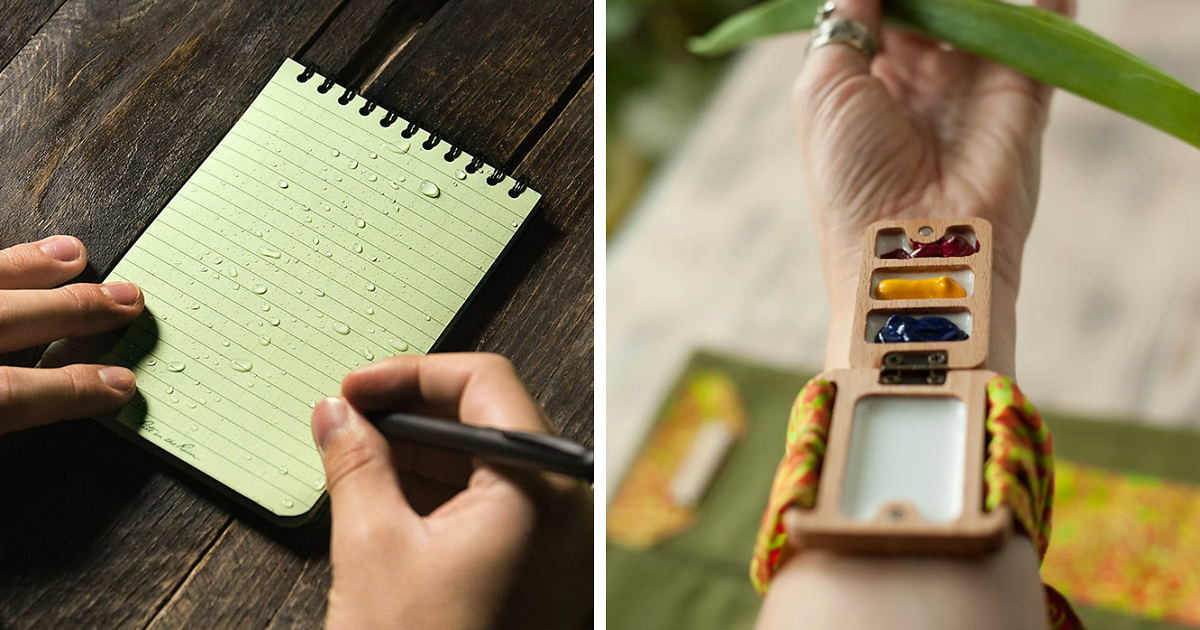
Instead of buying a generic art kit, assemble a small collection tailored to the recipient. A sketching box might contain a compact sketchbook, two dependable pencils, a waterproof pen, a kneaded eraser, clips, and a portable sharpener.
A watercolor box could include a travel palette, a water brush, a small cold-press pad, masking tape, and an absorbent cloth. Add a handwritten note encouraging the artist to use the kit on a walk, vacation, or gloriously unproductive afternoon.
Give Tools That Improve the Creative Process
Some of the most valuable gifts for artists are not glamorous. They solve small problems that occur every time the recipient sits down to work.
Studio Lighting
Good lighting helps artists evaluate color, detail, contrast, and texture more comfortably. Consider an adjustable task lamp, a clamp light, or a portable rechargeable lamp. Choose a model that can be positioned without occupying half the worktable.
For artists who photograph their work, a simple lighting kit or adjustable phone mount can make documentation easier. Accurate photographs are useful for portfolios, online stores, applications, and social media.
Organization and Storage
Creative people do not necessarily enjoy hunting for one specific pencil beneath six unfinished projects. Useful storage gifts include brush rolls, marker cases, drawer organizers, flat files, portfolio folders, tool carts, paint racks, and divided containers.
Think about the artist’s space before choosing something large. A rolling cart may be perfect in a studio but impossible in a tiny apartment. Portable organizers work well for artists who create at a dining table and must restore the area to its civilian identity before dinner.
Comfortable Studio Accessories
Artists can spend hours leaning over a canvas, tablet, sewing machine, or sketchbook. A supportive seat cushion, adjustable footrest, tabletop easel, drawing-board stand, anti-fatigue mat, or wrist support may be more appreciated than novelty merchandise.
These gifts are especially helpful when the artist has mentioned neck, back, shoulder, or hand fatigue. Avoid choosing medical-looking equipment without context; a sleek, practical studio accessory feels supportive rather than alarmingly diagnostic.
Portable Creative Gear
Artists who travel or sketch outdoors may appreciate a compact easel, portable brush washer, pencil wrap, lightweight stool, travel palette, protective tablet sleeve, or durable portfolio.
Blick and other major U.S. art retailers organize gift selections by medium, interest, and price, reflecting how useful it is to narrow choices according to the artist’s actual working style rather than shopping from one enormous generic list.
Consider Gifts for Digital Artists
Digital artists still need tools, storage, inspiration, and comfortable workspaces. Their supplies simply involve fewer paint-stained sleeves and more charging cables.
Drawing Tablets and Pen Displays
A drawing tablet can be an excellent gift for a beginner who wants to explore digital illustration. Pen tablets connect to a computer and translate stylus movement to the screen, while pen displays allow the artist to draw directly on the display surface.
Pressure sensitivity, active drawing area, operating-system compatibility, portability, and desk space all matter. Wacom describes pressure-sensitive pen tablets as tools that can simulate a range of traditional marks and techniques, but the appropriate model depends heavily on the user’s workflow and experience.
For an established digital professional, do not surprise them with expensive hardware unless you know the exact model they want. Compatibility is not the ideal place for romantic improvisation.
Software and Digital Resources
Creative software, brush packs, texture libraries, fonts, online courses, and cloud storage can all be useful. Adobe’s current creative plans, for example, bundle applications used for illustration, photo editing, layout, video, and other creative work.
Check whether the artist already owns the software and whether a subscription can be given conveniently. A general app-store gift card may be easier than purchasing a subscription that is tied to a specific account, region, or billing arrangement.
Helpful Accessories
Good digital-artist gifts include replacement stylus nibs, an artist glove, shortcut controller, adjustable tablet stand, external storage drive, color-calibration device, cable organizer, or protective carrying case.
A high-quality keyboard, ergonomic mouse, or monitor arm may also improve the workspace, although these are best chosen with input from the artist.
Give Inspiration Instead of Equipment
Sometimes the artist already owns enough supplies to open a small but emotionally complicated store. In that case, give an experience or source of inspiration.
Museum Memberships and Exhibition Tickets
A museum membership provides repeated opportunities to study composition, technique, materials, and art history. Depending on the institution, membership benefits may include admission, previews, films, talks, guest tickets, and store discounts. MoMA, for example, currently offers gift memberships with benefits such as repeat admission and member programming.
Choose a museum the recipient can realistically visit. A membership to an institution 1,400 miles away is less of a present and more of a transportation challenge.
Classes, Workshops, and Studio Sessions
A workshop can introduce a new technique without requiring the artist to buy all the equipment first. Consider figure drawing, ceramics, printmaking, bookbinding, photography, textile dyeing, plein-air painting, animation, or business skills for creative professionals.
For experienced artists, avoid beginner classes unless they have expressed interest in that medium. A skilled oil painter might love a beginner pottery class because pottery is new to them, but a basic color-theory lesson may feel like receiving multiplication flash cards from an enthusiastic relative.
Art Books and Visual References
Monographs, exhibition catalogs, anatomy references, photography collections, design histories, and technique books can provide years of inspiration. Select books related to an artist, movement, culture, subject, or medium the recipient already enjoys.
A beautiful book does not need to be instructional. Many artists value visual collections they can browse when ideas are running low or when staring dramatically out the window has stopped producing results.
Creative Outings
Plan a day at a museum, botanical garden, historic neighborhood, sculpture park, or scenic outdoor location. Include lunch, transportation, and time to sketch or take photographs. Shared experiences often become reference material for future work, making the gift useful long after the outing ends.
Support the Artist’s Career
Artists need more than materials. They may also need help presenting, selling, transporting, or documenting their work.
Professional Presentation Supplies
Portfolio cases, archival sleeves, display stands, print boxes, neutral backdrops, framing credits, and shipping supplies can help an artist prepare work for clients, exhibitions, markets, or applications.
Ask before framing original artwork. Framing choices are personal, and preservation requirements vary according to the medium. The Library of Congress recommends preservation-minded materials and methods for framing works on paper.
Photography and Documentation Help
Offer to pay for professional artwork photography or provide equipment that improves home documentation. A tripod, backdrop, lighting kit, gray card, or remote shutter can reduce glare and produce more consistent images.
You might also give a session with a photographer, designer, or portfolio consultant. This is especially valuable for artists preparing an exhibition, online shop, grant application, or school portfolio.
Buy Their Work
One of the most meaningful ways to support an artist is to purchase something they created. Do not request a secret discount because you are friends. Pay the listed price, praise the work sincerely, and display it proudly.
When commissioning a custom piece, discuss the subject, dimensions, deadline, revisions, usage rights, and budget clearly. A commission is not a surprise gift for the artist; it is paid work. Treat it with the same respect you would give any professional service.
Use Gift Cards Without Feeling Guilty
A gift card is not an uncreative choice when the recipient has specialized preferences. It communicates, “I respect your expertise and decline to select a size-four filbert brush through intuition alone.”
Choose a retailer the artist already uses. Blick, Jerry’s Artarama, and Michaels all maintain broad selections covering multiple media, experience levels, and price ranges, and gift cards allow artists to replace exact materials or save toward expensive equipment.
Make the gift card more personal by pairing it with a small physical item, such as a sketchbook, art-themed pin, brush soap, pencil case, or handwritten invitation to shop together.
Gift Ideas for Different Budgets
Gifts Under $25
- A pocket sketchbook and waterproof drawing pen
- Brush cleaner or conditioning soap
- A kneaded eraser, precision eraser, and pencil sharpener set
- Artist tape, clips, or reusable mixing tools
- A small paper sampler
- A protective brush roll or pencil pouch
- A compact color wheel or reference guide
Gifts From $25 to $100
- An artist-grade paint, pencil, pastel, or marker set
- A portable tabletop easel
- An adjustable studio lamp
- A museum ticket or short workshop
- A professional portfolio case
- A rolling supply cart or desktop organizer
- A digital tablet stand or shortcut controller
Gifts Over $100
- A museum membership
- A quality easel selected with the artist
- A drawing tablet or pen display
- A multi-session art course
- Professional artwork photography
- Custom archival framing credit
- Studio rental, kiln time, or printmaking access
Gifts Artists May Not Want
Avoid low-quality mega-sets when the recipient already uses professional supplies. Huge collections can look impressive while containing weak pigments, scratchy brushes, brittle pencils, or paper that reacts to water as though deeply offended.
Skip novelty signs declaring that the recipient is “probably thinking about art.” Artists generally know they are thinking about art. They may prefer something that helps them make it.
Be cautious with random paints, chemical products, solvents, fixatives, or pigments. These may require specific ventilation, storage, handling, or compatibility with other materials. Read labels carefully and let the artist choose when you are uncertain.
Finally, do not give an artist unpaid work disguised as an opportunity. Asking someone to design a logo, paint a portrait, or decorate an event “for exposure” is not a present unless the exposure comes with fair compensation and possibly snacks.
A Simple Checklist for Choosing the Right Gift
- Identify the artist’s primary medium.
- Estimate their experience level.
- Notice what they regularly use, replace, borrow, or complain about.
- Check compatibility, dimensions, safety labels, and return policies.
- Choose quality over an unnecessarily large quantity.
- Ask for input before buying expensive specialized equipment.
- Include a personal note explaining why you chose the gift.
This process turns gift shopping from a guessing game into an act of genuine attention. That attention is often what the artist remembers most.
Experiences That Reveal What Artists Truly Appreciate
One of the easiest mistakes gift buyers make is focusing on what looks impressive when wrapped. Artists, however, often judge a present by what happens after the wrapping paper is gone.
Consider a watercolor painter who receives an enormous general-purpose art set. The box is beautiful, the compartments unfold dramatically, and everyone in the room says, “Wow.” Unfortunately, most of the supplies are unrelated to watercolor. The painter politely admires the set, stores it in a closet, and returns to the three brushes and six colors used every week.
Now imagine that the same painter receives a small pad of high-quality watercolor paper and two replacement tubes in frequently used colors. The package is less theatrical, but the materials may be used the next morning. Practical knowledge beats decorative volume.
A similar lesson applies to digital artists. A well-meaning relative may buy an inexpensive tablet without checking compatibility. The artist then discovers that the device does not work properly with their computer or preferred software. Returning it becomes an administrative side quest no one requested. Asking for the exact model beforehand would not ruin the gift; it would protect it.
Experiential presents can succeed where equipment fails. An illustrator experiencing creative burnout may gain more from an exhibition visit than from another package of pens. Walking through galleries, discussing favorite pieces, and ending the day with coffee can restore curiosity without creating pressure to produce anything immediately.
Classes can also create memorable turning points. A painter who spends most days working carefully in a home studio may enjoy the physical unpredictability of pottery. A graphic designer may rediscover playful mark-making in a weekend printmaking workshop. These gifts offer permission to be a beginner again, which can be surprisingly refreshing for someone accustomed to being competent.
Small organizational gifts often earn unexpected loyalty. A brush holder that prevents wet brushes from rolling onto the floor may become more useful than a luxury paint set. A tabletop stand can transform a painful drawing position. A portfolio with functional handles can save an artist from carrying work across town like a wind-sensitive pizza.
Personal presentation matters as well. Pairing a modest gift card with a handwritten note can feel more thoughtful than choosing an expensive item at random. Mention what you admire about the recipient’s work or explain that the card is intended for the supplies they have been saving toward.
The most meaningful experience may be direct support. Attending an exhibition, sharing an artist’s shop, purchasing a print, or recommending their work to a potential client demonstrates that you take their creative life seriously. Artists frequently receive compliments, but practical support is rarer.
Ultimately, successful gifts for artists communicate three things: “I notice what you make, I respect how you make it, and I want to help you continue.” The object itself may be a sketchbook, museum pass, storage box, software credit, or single excellent brush. What gives it value is the understanding behind it.
Conclusion
Choosing gifts for artists becomes much easier when you stop searching for the most artistic-looking product and start paying attention to the person. Learn their medium, observe their routine, and look for opportunities to replace, organize, improve, or inspire.
Consumable materials work well when you know the artist’s preferences. Studio accessories solve recurring problems. Museum memberships, classes, and creative outings provide inspiration without adding clutter. Gift cards remain an intelligent choice for specialists, while buying an artist’s work offers direct and meaningful support.
The perfect gift does not need 200 colors, an elaborate wooden case, or a product name containing the word “master.” It needs to fit the artist’s real life. Choose with curiosity, respect their expertise, and keep the receipt whenever compatibility is involved.