If you ask ten people this question, you will get at least twelve answers. Some will say 9/11. Some will say the rise of the internet. Others will point to smartphones, social media, climate change, or artificial intelligence. All fair picks. We have not exactly been living through a boring era. But if we are forced to choose just one defining event, the strongest answer is the COVID-19 pandemic.
Not because it was the only major event of our lifetime, and not because other forces have been small. It was neither. The pandemic matters most because it was global, personal, immediate, and lasting all at once. It changed how we work, learn, travel, shop, socialize, trust institutions, and think about risk. It accelerated science at record speed and exposed weakness at record speed too. In one strange, exhausting sweep, it became a public health crisis, an economic shock, a social experiment, and a mirror held up to modern life.
That is why, if someone asks, “What is the most important thing that’s happened in our lifetime?” the COVID-19 pandemic deserves a very serious seat at the head of the table. Yes, even ahead of the avocado toast era.
The Short Answer: It Was the Pandemic
The most important event in our lifetime was not just a headline. It moved into our homes. It sat at our dinner tables. It interrupted weddings, funerals, graduations, paychecks, doctor visits, school years, and family routines. It was not a thing “out there.” It was a thing everywhere.
That alone makes it different from many other historic events. Wars, elections, financial crises, and technological revolutions can be enormously important, but they do not always touch daily life in the same universal, immediate way. The pandemic did. One week, people were planning vacations and complaining about normal office nonsense. The next, they were learning how to mute themselves on video calls while pretending their internet was “totally fine.”
More importantly, the pandemic did not simply disrupt life for a season. It reordered expectations. It taught employers that remote work could function. It taught patients and providers that telehealth could become ordinary. It taught families how fragile routines really are. It taught governments and public health systems where they were strong, where they were unprepared, and where trust could break apart faster than a cheap folding chair.
Why the Pandemic Rises Above Other Defining Events
1. It Was Global and Personal at the Same Time
Most major events lean one way or the other. They are either huge and abstract, or intimate and local. The pandemic was both. It was worldwide enough to shut borders, rattle supply chains, and dominate every news cycle on Earth. At the same time, it was personal enough to change whether you hugged your parents, sent your kids to school, or visited a loved one in the hospital.
That combination is what made the COVID-19 impact so powerful. You could not completely outsource it to experts, governments, or historians. You had to live it yourself. Every person became, in some way, a decision-maker. Should I go? Should I mask? Should I cancel? Should I vaccinate? Should I visit Grandma? Should I trust this chart? This was history with grocery lists attached.
2. It Changed Work, School, and Home in One Sudden Move
The pandemic did not politely ask one sector of life to adapt. It marched into all of them at once. Work moved home. School moved online. Home became office, classroom, gym, café, daycare center, and occasionally a low-budget mental breakdown studio. Kitchen tables became command centers. Parents became part-time teachers. Children learned the phrase “You’re frozen” before they mastered long division.
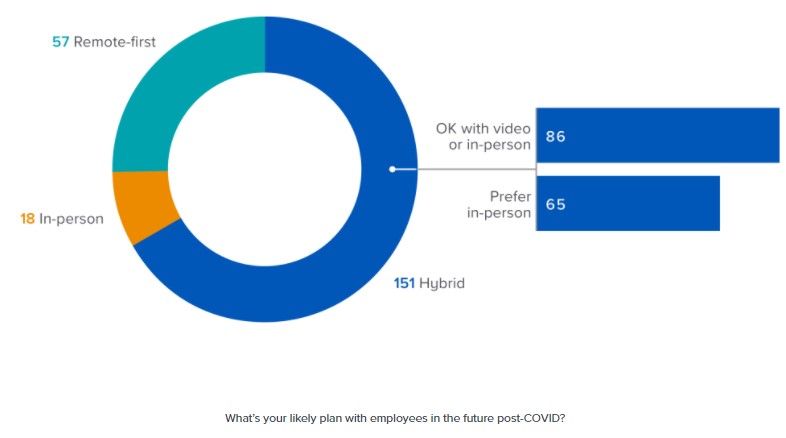
Even now, years later, the pandemic’s effect on work remains obvious. Hybrid schedules, remote-first teams, digital meetings, flexible hours, and new expectations about work-life balance are not quirky leftovers. They are structural changes. People who once assumed serious work required a cubicle now attend strategy meetings from spare bedrooms, coffee shops, and cars parked outside soccer practice.
Education changed too. Learning loss, attendance struggles, social development challenges, and uneven access to technology revealed that schools are not just places where information gets delivered. They are social anchors. When they close, the disruption is academic, emotional, and economic all at once.
3. It Accelerated Science Faster Than Almost Anyone Thought Possible
One reason the pandemic may become the most important event of our lifetime is that it compressed scientific progress into a dramatic public spectacle. Suddenly, ordinary people were discussing vaccine platforms, variants, clinical trials, and wastewater surveillance over lunch. That sentence would have sounded completely absurd in 2018.
The rapid development of mRNA vaccines was one of the clearest examples of modern science moving at extraordinary speed. But the bigger story was not just speed. It was the visible collision of research, regulation, communication, logistics, politics, and public trust. The pandemic showed that science can be breathtakingly effective and still struggle if people do not trust the institutions delivering it.
It also pushed telehealth, digital health tools, and real-time public data into the mainstream. In many ways, the pandemic dragged healthcare and scientific communication forward by several years. Not neatly. Not perfectly. But undeniably.
4. It Exposed Inequality With Brutal Clarity
One of the hardest truths the pandemic revealed is that crises are rarely equal-opportunity experiences. Some people worked from home in sweatpants and argued about ring lights. Others stocked shelves, drove buses, cleaned rooms, delivered packages, cared for patients, or stood behind counters while the rest of society tried to stay six feet away from everything. Some children had laptops, quiet study spaces, and stable internet. Others had none of the above.
The pandemic did not invent inequality. It spotlighted it with stadium lighting. It showed who had flexibility and who had exposure. Who had savings and who had panic. Who had healthcare access and who had paperwork. Who could isolate and who still had to show up because rent does not care about public health guidance.
That matters historically because important events are not just measured by scale. They are measured by what they reveal. The COVID-19 pandemic revealed the hidden architecture of modern society: who carries the risk, who gets protected, and who gets told to “be resilient” when what they really need is support.
5. It Changed the Way We Trust Institutions, Experts, and One Another
The pandemic was not only a medical crisis. It was a trust crisis. Public health agencies, governments, media outlets, schools, employers, and tech platforms all became part of a giant credibility test. Some institutions earned confidence. Some lost it. Many did both at different moments.
And then there was misinformation, which spread like it had an unlimited data plan. The internet, already a force in modern life, became even more central during the pandemic. That meant people had access to more information than ever before, but not always more clarity. The result was a strange mix of high-speed science and high-speed confusion.
This is one reason the pandemic still matters. It left behind more than policy changes. It left behind arguments about expertise, freedom, responsibility, and truth. That kind of cultural residue lingers long after the emergency phase ends.
But What About the Internet, 9/11, Climate Change, and AI?
These are serious contenders, and any honest analysis should admit it. The rise of the internet transformed communication, commerce, entertainment, and politics. In sheer long-term influence, it may be the biggest force of the modern age. But the internet was a gradual takeover. It crept in, then sprinted. The pandemic, by contrast, hit like a trapdoor opening under daily life.
9/11 changed security, foreign policy, and American identity in enormous ways. It shaped two decades of politics and war. But for much of the world, it was not as universally life-altering in the daily sense as the pandemic became.
Climate change may ultimately prove to be the biggest story of our era, and there is a strong argument for that. But climate change is a long emergency unfolding in chapters. The pandemic felt like an entire season finale dropped on humanity with no warning and no commercial breaks.
Artificial intelligence may still overtake everything. It could reshape labor, creativity, education, healthcare, and the economy in ways we do not fully grasp yet. But that is exactly the point: much of AI’s biggest impact is still ahead of us. The pandemic is already a completed historical rupture with consequences still radiating outward.
So if the question is which event has most clearly defined our lifetime so far, the pandemic remains the strongest answer. It was not simply historic. It was intimate, visible, and unforgettable.
What the Most Important Event in Our Lifetime Taught Us
First, speed matters. Viruses move fast. Bureaucracies often do not. Countries, companies, and communities that could act quickly usually handled disruption better than those that argued with reality for too long.
Second, resilience is not magic. People love using the word “resilient,” usually right before asking someone to endure something unreasonable. The pandemic reminded us that resilience needs systems behind it: paid leave, reliable healthcare, clear communication, good schools, stable infrastructure, and social trust.
Third, science is powerful, but communication is part of the job. A brilliant breakthrough that arrives wrapped in confusion, partisan shouting, or broken trust will not land the way it should.
Fourth, community still matters more than we like to admit. For all the talk of independence and self-sufficiency, people discovered that modern life depends on nurses, teachers, delivery drivers, cashiers, lab workers, custodians, neighbors, and family members who show up when things get hard.
Finally, normal is more fragile than it looks. The routines we assume are permanent are often just habits protected by stability. Once that stability cracks, the entire machine looks different.
Our Experience of Living Through It
Living through the pandemic did not feel historical at first. It felt inconvenient. Then confusing. Then frightening. Then exhausting. Then strangely ordinary in a way that may have been the weirdest part of all.
At the beginning, many of us thought in short increments. Maybe a couple of weeks. Maybe a month. Maybe just enough time to clean the house, buy too much pasta, and discover that every other human on Earth had suddenly developed a passionate relationship with homemade bread. But the weeks stretched. The routines changed. The strange became familiar.
We learned to read rooms differently. Was anyone coughing? Was there hand sanitizer? Did this place feel crowded? We learned to recognize faces by their eyes. We learned that “Can you hear me?” could open an entire workday. We watched children celebrate birthdays on screens, grandparents wave through windows, and newly married couples improvise weddings that looked nothing like the ones they imagined. We also learned the specific emotional pain of hearing “You’re on mute” for the four hundredth time.
There were quieter changes too. Time became slippery. Mondays and Thursdays started dressing alike. Commutes disappeared for some people and became more stressful for others. The boundary between public and private life got blurry. Bedrooms became offices. Living rooms became classrooms. Some families felt closer because they had no choice but to face each other every day. Others discovered that unlimited togetherness is not always the warm Hallmark fantasy it sounds like.
Then there was the emotional math. Every plan came with invisible subtraction. If I go here, what risk comes home with me? If I cancel this, what do I lose instead? If I am careful, am I being wise or fearful? If I am less careful, am I being brave or selfish? Even simple choices suddenly carried moral weight. That wears on people.
And yet, amid the fear and frustration, there were flashes of grace. People checked on neighbors. Teachers reinvented lessons overnight. Doctors and nurses kept showing up. Families got creative. Friends found ways to celebrate milestones from a distance. People who had not spoken in years called one another just to say, “Are you okay?” The crisis exposed weakness, but it also exposed decency.
What makes the pandemic experience so central to our lifetime is that it did not just happen around us. It changed us. Some people became more flexible. Some became more anxious. Some became more grateful. Some became less trusting. Many became all of those things before lunch.
Even now, the experience lingers in small ways: the instinct to pause at a cough, the memory of empty streets, the realization that health is not a side issue, the awareness that society can change fast when it has to. We may not talk about it every day anymore, but it lives in our habits, our workplaces, our schools, our politics, and our nervous systems. That is what truly important events do. They do not just pass through history. They move into people.
Conclusion
So, what is the most important thing that’s happened in our lifetime? There are several worthy answers, but the COVID-19 pandemic stands out because it touched nearly every dimension of human life at once. It was a health emergency, a workplace revolution, an education crisis, a scientific breakthrough story, an economic shock, and a trust test rolled into one overwhelming era.
The biggest events do more than dominate headlines. They redraw assumptions. The pandemic redrew ours. It changed how we define normal, how we understand vulnerability, how we think about community, and how quickly we believe the world can turn. That is why it may be the most important event of our lifetime so far. Not because it was dramatic, though it certainly was. Because it permanently changed the way life feels, functions, and is remembered.