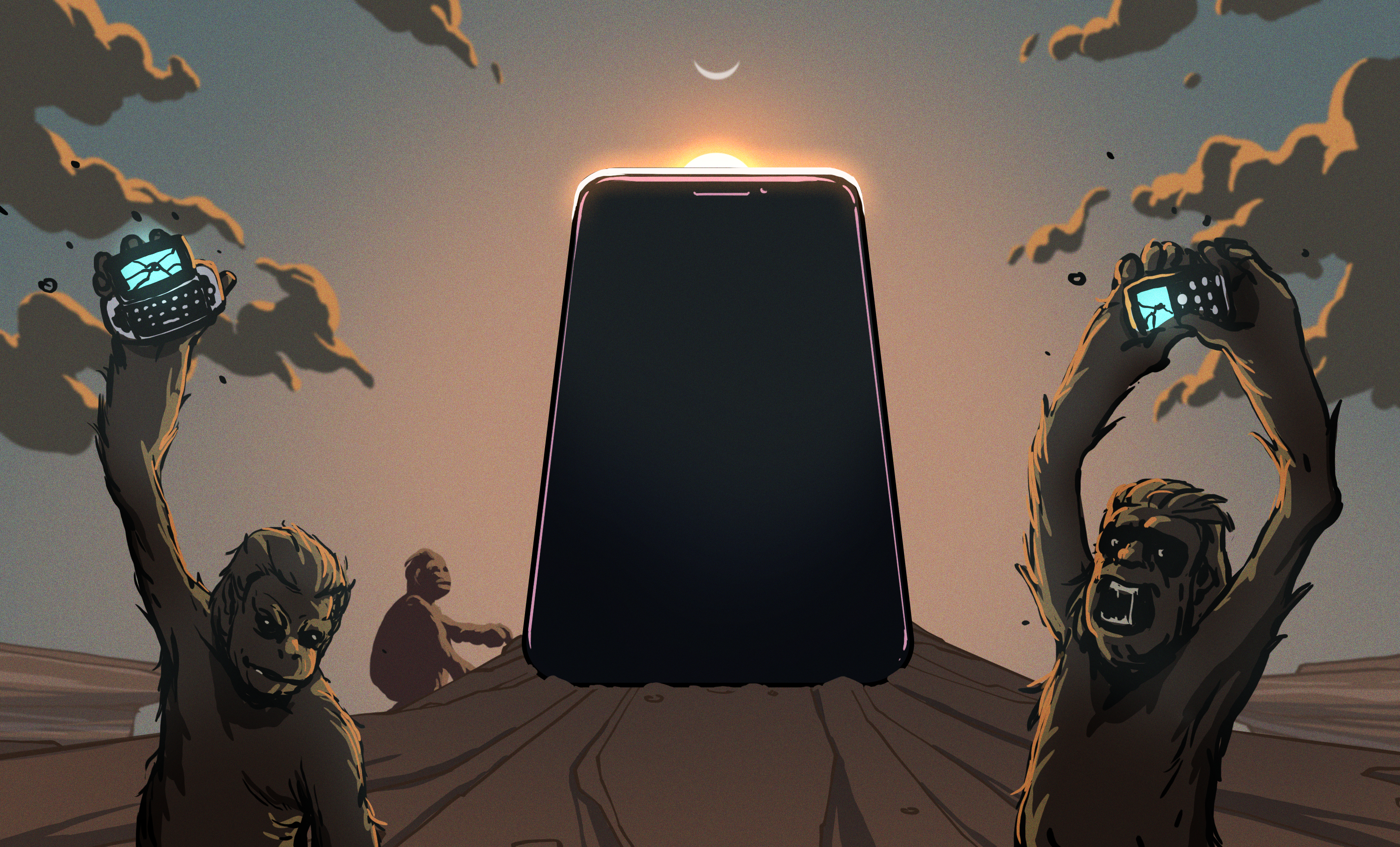
Once upon a time, buying consumer electronics was beautifully simple. You walked into a store, bought a gadget, took it home, plugged it in, and the thing worked until it died, got lost, or was replaced by something shinier with “Pro Max Ultra” in the name. Today, the relationship is more complicated. Your printer wants a monthly ink plan. Your car wants a connectivity package. Your security camera needs cloud storage. Your exercise bike is emotionally unavailable unless you keep paying for classes. Even your smart home may wake up one morning and discover its servers have retired to a farm upstate.
Welcome to the age of subscription services in consumer electronics, where the physical object is only the opening act. The real business model begins after checkout, when the company politely asks for your credit card againand againand again. This shift is often sold as convenience: updates, cloud backup, premium features, security monitoring, artificial intelligence, remote access, personalized dashboards, and other pleasant-sounding things that make a device feel alive. But there is a darker side. When the hardware you own depends on a service you rent, ownership starts to look less like possession and more like a hostage negotiation with Bluetooth.
The terminal demise of consumer electronics through subscription services is not about one annoying app or one greedy company. It is a structural change in how devices are designed, sold, maintained, and monetized. Consumer electronics are no longer merely products. They are platforms, data collectors, recurring revenue machines, and sometimes very expensive paperweights waiting for a shutdown email.
What “Subscription Electronics” Really Means
Subscription electronics are devices whose best, core, or continued functions depend on recurring payments, cloud accounts, proprietary apps, or ongoing manufacturer permission. Some subscriptions are understandable. A home security system that includes 24/7 professional monitoring has real labor and infrastructure costs. A streaming device needs access to licensed media. A cloud camera storing weeks of footage on remote servers is using storage and bandwidth.
The problem begins when companies blur the line between a service and a feature already built into the hardware. If a product has the sensor, chip, heater, battery, motor, camera, or screen inside it, customers naturally assume they bought the right to use it. But software locks can turn built-in capabilities into toll booths. Suddenly, ownership becomes conditional. The thing in your house is yours in the same way a hotel room is yours: enjoy it, but do not get too comfortable.
This model has spread because it is financially irresistible. Hardware is expensive to manufacture, ship, support, and warranty. Margins can be thin, especially in competitive categories like printers, TVs, smart speakers, fitness equipment, appliances, and home security devices. Subscription revenue, by contrast, is predictable. Investors love predictable. Executives love predictable. Consumers, oddly enough, do not always love discovering that their $800 gadget has a personality disorder unless they pay $9.99 a month.
How Consumer Electronics Became Rent-Seeking Machines
The old electronics economy was built around replacement cycles. You bought a TV, phone, printer, or stereo. Eventually, a newer model arrived, and companies hoped you upgraded. The new model tries to earn money after the sale. That can be beneficial when it funds software updates, security patches, and real improvements. But it becomes toxic when companies intentionally weaken the base product to push users into paid plans.
Three forces pushed the industry toward subscription services: connectivity, software control, and data monetization. First, almost everything now connects to the internet. Second, software can enable or disable functions remotely. Third, connected devices produce valuable information about habits, behavior, preferences, locations, and usage patterns. Put these together and a toaster is no longer just a toaster. It is a bread analytics endpoint with firmware ambitions.
That may sound ridiculous, but the pattern is real. Smart TVs increasingly depend on advertising and data collection. Printers nudge users into ink plans. Cars offer paid connectivity and feature unlocks. Fitness machines bundle hardware with content memberships. Security cameras reserve important recording features for cloud subscriptions. Robot devices can lose usefulness when the company changes direction. The electronics industry has discovered that the most profitable device is not necessarily the one people love. It is the one they cannot easily leave.
Examples That Show the Problem
Printers: The Original Subscription Villain
No conversation about subscription-based consumer electronics is complete without printers, the tiny office goblins that can detect fear. Printer companies have long relied on low-cost hardware and high-margin ink. Subscription ink plans promised to make life easier by shipping cartridges before users ran out. For some households, that can be convenient and cost-effective. For others, it feels like paying rent to print a boarding pass.
The frustration grows when printers reject third-party cartridges, require proprietary chips, push app-based setup, or limit functionality in ways consumers did not expect. Multifunction printers have also faced criticism and legal scrutiny over situations where scanning or faxing features allegedly stop working when ink is low, even though scanning a document does not require printing ink. That is the kind of design choice that makes people look at a machine and whisper, “You had one job.”
The printer category shows the broader issue: when a company controls both the hardware and the consumable ecosystem, it can make the device feel less like a tool and more like a vending machine with Wi-Fi.
Cars: Heated Seats, Acceleration, and the Paywall on Wheels
Vehicles are now rolling computers, which means automakers can update them, diagnose them, and improve them remotely. That is useful. But it also means car companies can charge recurring fees for functions that may already be physically present. BMW drew heavy criticism for subscription-based heated seats in some markets before stepping back from that specific approach. Mercedes-Benz also attracted attention for performance upgrades tied to paid software unlocks. Tesla charges for Premium Connectivity features such as satellite-view maps, live traffic visualization, and media streaming over cellular.
Some of these services have legitimate ongoing costs. Cellular data is not magic; it rides on networks that cost money. But consumers make a clear emotional distinction between paying for a live service and paying to unlock hardware that is already installed. Paying monthly for emergency connectivity feels different from paying monthly for warmth from a seat you already purchased. One is a service. The other feels like the car is wearing a tiny corporate monocle.
The automotive subscription trend matters because it normalizes a dangerous idea: the buyer owns the shell, while the manufacturer keeps a remote-control key to the experience.
Smart Home Devices: When the Cloud Goes Dark
Smart home devices are especially vulnerable to subscription dependence because many rely on cloud servers for basic control, automation, storage, notifications, and app access. When those servers are maintained, everything feels futuristic. When they disappear, the future becomes a drawer full of dead hubs.
Several high-profile shutdowns have shown the risk. Amazon ended support for Cloud Cam devices, pushing owners toward replacements. Google discontinued support for Nest Secure and Dropcam products, leaving users to migrate or accept reduced usefulness. Insteon’s sudden service disruption in 2022 left smart home customers scrambling, especially those whose setups relied on the company’s cloud infrastructure. Spotify’s Car Thing became a famous case of a physical product being discontinued and deactivated, angering owners who believed they had bought a useful dashboard accessory rather than a limited-time experiment.
The lesson is simple: if a device cannot perform its core function without a company’s server, then the product’s lifespan is not determined by the hardware. It is determined by a business decision.
Fitness Equipment: When Your Treadmill Needs a Membership
Connected fitness gear is another subscription-heavy category. Peloton, NordicTrack, Tonal, and similar companies combine equipment with content libraries, coaching, leaderboards, and performance tracking. The subscription makes sense if you want classes and community. The trouble begins when expensive machines feel deliberately incomplete without ongoing payments.
A stationary bike that streams live workouts is a service-enabled product. Fair enough. But when basic usability, data access, safety features, or expected modes are tied too tightly to membership status, consumers begin to wonder whether they bought exercise equipment or adopted a very judgmental tablet with pedals.
Privacy also becomes part of the concern. Connected fitness devices can collect sensitive information about routines, body metrics, schedules, and habits. When consumer electronics become subscription platforms, they often become data platforms too. The monthly fee may not be the only price users pay.
The Real Cost Is Not Just Money
Subscription fatigue is real because every monthly charge competes for mental space. One subscription is manageable. Five are annoying. Fifteen become a second job performed inside banking apps. The modern household may already pay for streaming, cloud storage, antivirus software, productivity tools, food delivery memberships, mobile apps, news sites, fitness plans, and gaming services. Adding electronics subscriptions turns everyday objects into recurring bills with plastic casings.
But money is only part of the cost. Consumers also lose control. A product can change after purchase through software updates. Features can move behind paywalls. Apps can be redesigned. Terms can change. Prices can rise. Services can be discontinued. A company can decide that last year’s device no longer fits this year’s strategy, and suddenly the user is invited to recycle something that still physically works.
This is especially frustrating because consumer electronics used to have a clear failure mode. A device failed because a component broke, a battery degraded, or a screen cracked. Now devices can fail because the login server retired, the app was removed, the company pivoted, the subscription lapsed, or the firmware decided it no longer recognizes your perfectly good accessory.
Subscription Services Accelerate E-Waste
Electronic waste is already a global problem, and subscription-tethered devices can make it worse. When a product becomes useless due to discontinued cloud support rather than physical failure, society loses the environmental value of the materials, energy, labor, and shipping that went into making it. A camera with working optics, sensors, and circuits should not become trash because an app vanished.
Repair advocates have long argued that software locks, limited parts access, proprietary tools, and restricted documentation shorten product lifespans. Right-to-repair efforts in the United States have gained momentum because consumers want the ability to fix, maintain, and continue using products they already own. The subscription economy complicates repair because the broken part may not be a battery or screen. It may be permission.
That is why the phrase “software tethering” has become important. It describes products that are functionally tied to external software or cloud services. Once the tether is cut, the hardware falls. For the planet, that is a bad deal. For consumers, it is a bad joke with a recycling label attached.
Why Companies Love the Model
To be fair, companies are not adopting subscriptions because they woke up one morning and chose chaos as a brand value. Recurring revenue has strong business logic. It smooths out sales cycles, supports ongoing development, funds cloud infrastructure, and creates a continuing customer relationship. A device that receives years of updates is better than one abandoned at launch. A security camera with reliable cloud storage may be more useful than a cheaper one that loses footage. A car with over-the-air improvements can age better than one frozen in time.
The issue is not the existence of subscriptions. The issue is bad subscription design. Consumers object when companies charge for artificial scarcity, hide real costs, make cancellation difficult, remove features, or fail to provide a graceful end-of-life path. People will pay for clear value. They revolt when asked to pay ransom to access what they reasonably believed they had already bought.
Good subscriptions add something. Bad subscriptions subtract first, then sell the missing piece back with cheerful onboarding emails.
What Regulators and Advocates Are Trying to Fix
Regulators have noticed the subscription mess. The Federal Trade Commission finalized a “click-to-cancel” rule in 2024 aimed at making cancellation easier and reducing deceptive recurring billing practices, although legal challenges complicated its path afterward. Regardless of the rule’s status, the public reaction showed how tired consumers are of subscription traps. Nobody wants to need a spreadsheet, a phone call, and a minor in corporate archaeology to cancel a service.
Right-to-repair laws are another part of the pushback. California, New York, Colorado, Minnesota, Oregon, and other jurisdictions have moved toward stronger repair access in different product categories. These laws generally focus on parts, tools, manuals, and diagnostics, but the next frontier is software durability. A device that can be repaired physically but disabled digitally is still not truly repairable.
Consumer advocates have also called for minimum support periods, clearer disclosures, offline functionality, third-party repair access, and end-of-life plans that do not convert working hardware into waste. These ideas are not anti-technology. They are pro-common sense, which is apparently now a premium feature.
How Consumers Can Protect Themselves
Consumers cannot single-handedly redesign the electronics industry, but they can shop more defensively. Before buying a connected device, ask what happens if the subscription ends. Does the product still perform its basic function? Can it work locally without cloud access? Is there a documented support period? Are replacement parts available? Can data be exported? Can the device be reset and reused by another person? Does the company have a history of abandoning products?
For smart home gear, look for products that support local control, open standards, or widely adopted ecosystems. Matter, Thread, Zigbee, Z-Wave, and Home Assistant-friendly devices may offer more resilience than products locked entirely inside one app. For printers, compare total cost of ownership, not just the purchase price. For cars, distinguish between subscriptions that pay for live services and subscriptions that unlock preinstalled hardware. For fitness equipment, check what functions remain available without a membership.
The best question is brutally simple: “If this company shut down tomorrow, what would still work?” If the answer is “the box it came in,” consider running.
The Future: Ownership, Access, or Something Worse?
The future of consumer electronics does not have to be bleak. Subscriptions can support better products when they are transparent, optional, fairly priced, and tied to real ongoing value. A cloud backup service, a professional monitoring plan, a premium content library, or an advanced AI feature can be worth paying for. Consumers are not allergic to subscriptions. They are allergic to feeling tricked.
The healthier model is hybrid ownership. The core product should work without recurring payments. Paid plans should enhance the experience rather than hold it together. If a company ends support, it should offer local fallback modes, open-source tools, refunds, trade-ins, or migration paths. Hardware should not become trash just because a quarterly earnings strategy changed.
Companies that respect ownership may win long-term loyalty. Companies that nickel-and-dime their customers into resentment may enjoy short-term revenue but damage trust. And trust, unlike a smart camera cloud plan, is hard to reactivate once canceled.
Experience Section: Living With Subscription Electronics in Real Life
The most annoying thing about subscription-based consumer electronics is how normal it feels at first. You buy a device, download the app, create an account, agree to terms you did not read because life is short, and everything works. The setup screen smiles at you. The free trial begins. The device chirps happily. You think, “Wonderful, technology has finally become civilized.” Then three months later, your bank statement looks like it has been lightly nibbled by raccoons.
Imagine a typical modern home. The printer wants ink enrollment. The doorbell camera wants cloud recording. The thermostat wants an account. The TV wants to show ads on its home screen. The robot vacuum wants mapping permissions. The fitness bike wants a membership. The car wants connected services. The speaker wants premium music. The baby monitor wants storage. Even the light bulbs are acting like tiny venture-backed landlords.
At first, each subscription seems harmless. Five dollars here. Ten dollars there. Maybe fifteen for the premium tier, because apparently “basic” now means “functionally depressed.” But the deeper irritation is not just the monthly cost. It is the feeling that every object in the house has become a negotiation. Instead of owning tools, you manage relationships with corporate ecosystems. Your electronics are no longer silent helpers. They are needy roommates with push notifications.
The worst moment arrives when you cancel. A good product accepts the decision gracefully. A bad product becomes petty. Features disappear. Storage vanishes. Remote access stops. A device that yesterday felt powerful now sulks in basic mode. Sometimes that is fair; cloud services cost money. But sometimes the cutoff feels absurd. A camera should still be able to record locally. A printer should still scan. A car seat should still heat if the heating element is already installed. A gadget should not become useless because an executive presentation needed a “recurring revenue opportunity” slide.
There is also a quiet emotional cost. People buy electronics expecting reliability. A good device fades into the background. It works when needed and stays out of the way. Subscription-dependent devices do the opposite. They demand attention: update me, renew me, log in again, verify your account, accept new terms, upgrade your plan, reconnect to Wi-Fi, check your payment method. The modern smart home sometimes feels less like a home and more like an airport kiosk with lamps.
After living with enough connected devices, many consumers start developing a survival instinct. They become suspicious of cheap hardware. They read product forums before buying. They search for phrases like “works without subscription,” “local control,” “offline mode,” and “no cloud required.” They avoid devices that depend entirely on one company’s app. They learn that the boring product is sometimes the best product. A dumb appliance that works for ten years can be more advanced, in the human sense, than a smart appliance that needs three subscriptions and a firmware apology.
The most valuable lesson is that convenience should not replace ownership. A subscription can be useful, but it should be a choice, not a trapdoor. The device should remain a device after the service ends. Consumers should not have to wonder whether their camera, speaker, printer, or car feature will survive the next corporate pivot. Technology should make life easier, not turn every household object into a tiny invoice with LEDs.
Conclusion
The terminal demise of consumer electronics through subscription services is not inevitable, but the warning signs are everywhere. When hardware becomes dependent on recurring fees, cloud servers, and software locks, consumers lose control over products they paid for. The result is subscription fatigue, privacy concern, repair frustration, and unnecessary e-waste.
The solution is not to reject every subscription. Some services genuinely add value. The solution is to demand honest design: core functions that work without monthly payments, clear pricing, easy cancellation, durable support, repair access, and responsible end-of-life options. Consumer electronics should serve people, not quietly enroll them in a lifetime payment plan with a screen attached.
In the end, the best gadget is not the one with the most cloud features. It is the one that still works when the cloud, the app, the subscription, and the marketing department all go home for the night.