Note: This publication-ready article synthesizes real information from maker projects, MIDI documentation, and compact synthesizer references, with no source-link clutter embedded in the body copy.
When a Synth Becomes Smaller Than Your Patience
There are small synthesizers, and then there are synthesizers so tiny they look less like musical instruments and more like evidence from a very nerdy crime scene. The phrase “the smallest MIDI synthesizer” sounds like a gimmick at first, the kind of thing someone might build just to win an argument on the internet. But the deeper you look, the more interesting it gets. Shrinking a MIDI synth is not only about making a cute gadget. It is about power, signal handling, microcontrollers, audio output, clever firmware, and the eternal question: how much music can you squeeze into a connector before the laws of physics start coughing politely?
MIDI itself is wonderfully modest. It does not send sound. It sends instructions: note on, note off, velocity, channel, control changes, program changes, and other musical commands. That makes it perfect for tiny devices. A MIDI synthesizer only needs to receive those instructions and turn them into audio. Easy, right? Well, easy in the same way that folding a grand piano into a fortune cookie is “just packaging.”
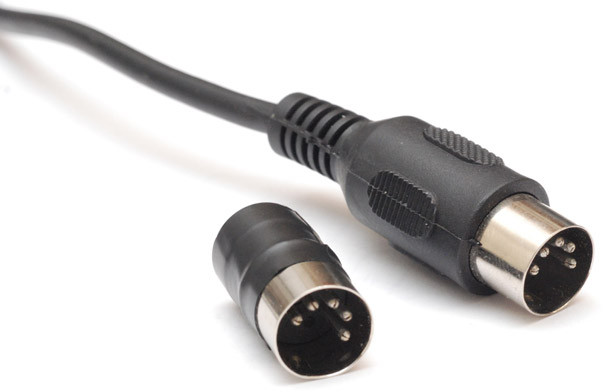
The most famous answer to the tiny MIDI synth challenge comes from maker and engineer mitxela, whose miniature builds pushed the idea to comic extremes. One early version was physically smaller than a standard MIDI plug and lived inside the connector itself. It used an ATtiny85 microcontroller, drew power from the MIDI signal, and produced sound through a piezo buzzer. That is not a lush studio workstation. That is a mosquito with a music degree. Still, it worked, and that is the magic.
What Counts as a MIDI Synthesizer?
Before crowning the tiniest champion, we need to define the contest. A MIDI synthesizer is a device that receives MIDI data and generates sound. That definition can include everything from a full-size keyboard workstation to a fingernail-sized circuit producing square waves. The arguments begin when people ask whether a simple square-wave tone generator deserves the word “synthesizer.” Purists may demand filters, envelopes, oscillators, modulation, patch memory, and maybe a small shrine to Bob Moog. Makers tend to reply, “It receives MIDI and makes controllable sound. Please admire the soldering.”
Both sides have a point. A one-chip square-wave device is not going to replace a Moog, Korg, Sequential, Roland, or Yamaha instrument in a studio mix. But it demonstrates the essential chain: MIDI input, pitch interpretation, timing, sound generation, and output. In miniature engineering, that chain is the trophy.
The MIDI Advantage
MIDI is friendly to minimal hardware because its original serial implementation runs at 31,250 baud and uses compact messages. A basic note-on command needs only a few bytes: status, note number, and velocity. That means even modest microcontrollers can understand and react to MIDI messages. For tiny synthesizer projects, that low-bandwidth elegance is a gift. The protocol is old enough to have gray hair, but it remains astonishingly useful.
Modern MIDI can travel over USB, 3.5mm TRS adapters, Bluetooth, web browsers, and traditional 5-pin DIN cables. But the principle remains the same: MIDI tells the instrument what to do; the instrument creates the sound. That separation is why tiny MIDI synths can exist at all. They do not need keys, sliders, drum pads, or a screen. They can be pure sound modules, waiting for commands from a keyboard, sequencer, DAW, or hardware controller.
The Maker Legend: A Synth Inside a Plug
The classic “smallest MIDI synthesizer” story begins with extreme constraint. The build was not merely small; it was built inside a MIDI plug. That meant there was almost no space for a circuit board, no room for comfortable connectors, and no patience left for bulky components. The parts list was brutally minimal: a surface-mount microcontroller, capacitors, a few wires, and a piezo buzzer. The enclosure was not an enclosure so much as a connector shell pressed into musical service.
The result was intentionally absurd and technically impressive. It took MIDI note data and produced tones. It was powered parasitically rather than with a separate power supply. It made sound from a buzzer. It was also, by normal musician standards, deeply inconvenient. Pulling a synthesizer out of a socket should not require tweezers, prayer, and the emotional resilience of a watchmaker.
But that impracticality is part of the charm. The smallest MIDI synth is not trying to be a stage instrument. It is a proof of possibility. It says, “Yes, a synthesizer can live here,” where “here” means the place most people would only expect copper pins and regret.
Then Came USB: Smaller, Sillier, and Somehow Still Working
After the MIDI-plug build, the idea evolved into even more compact USB MIDI experiments. A later version used an ATtiny85 and V-USB software to behave like a USB MIDI device. Again, the sound engine was simple, often based around square waves, but the real achievement was getting the device to fit into a USB plug housing. The build required trimming, grinding, and placing components with the kind of care normally reserved for antique jewelry or explosive devices in action movies.
USB changed the challenge. Traditional MIDI DIN connections involve opto-isolation and a specific serial data rate. USB MIDI requires device enumeration and a software stack. That is a bigger firmware puzzle, especially when the hardware is tiny and cheap. The point was no longer just “Can it make a beep?” The point became “Can this microscopic object convince a computer that it is a legitimate MIDI instrument?”
That is where miniature synths become more than novelty. They become small lessons in embedded systems, timing, device classes, power limits, and creative abuse of connectors. They are funny because they are small. They are impressive because they should not work as neatly as they do.
Flash-Synth: When the Tiny Synth Got Serious
The Flash-Synth took the joke and gave it a sharper suit. Instead of being merely the tiniest square-wave squeaker in the room, it aimed for better sound and more refined engineering. This design used an STM32 microcontroller, a flexible PCB that folded back on itself, and a compact housing connected to a 5-pin DIN plug. It also included a stereo audio output and drew power from the MIDI port.
That last part is important. Power is one of the big headaches in ultra-small synthesizer design. A desktop synth can hide a power supply, regulators, and protection circuits inside a case. A tiny MIDI module has no such luxury. If it can sip energy from the MIDI connection and still run a microcontroller plus audio output, the design earns respect.
Flash-Synth showed that “tiny” does not have to mean “barely musical.” It moved the conversation from novelty toward usability. It still belonged to the world of daring maker projects, but it sounded and behaved more like a real instrument than a musical prank.
Commercial Micro Synths: Tiny, but Actually Usable
DIY projects may win the absolute size contest, but commercial micro synths win the “I can actually use this in a song without needing tweezers” category. One famous example is the Ploytec PL2, a tiny synthesizer module controlled entirely via MIDI. The black version is MIDI-powered through its MIDI input, while the USB-oriented Leukos version connects to computers and iPads. The PL2 combines analog synthesis elements with a digital multimode filter and can be edited through software.
The Ploytec PL2 is not as small as a synth hidden inside a plug, but it is far more practical. It has a real audio output, usable control through MIDI CC messages, editor support, firmware updates, and enough sonic character to be interesting. It also demonstrates a key truth: the smallest useful MIDI synthesizer is not always the physically smallest object. Sometimes it is the smallest device that musicians can reliably connect, control, and record.
Another compact favorite is the Korg Nu:Tekt NTS-1 mkII. It is palm-sized rather than microscopic, but it offers a programmable digital oscillator, effects, a multitouch keyboard, sequencing, MIDI input and output, USB-C power, and compatibility with custom content through Korg’s logueSDK ecosystem. In other words, it is not trying to win the “lost inside your backpack lint” competition. It is trying to be a tiny creative workstation.
Recent micro analog synths, such as Behringer’s UB-1 Micro, also show how manufacturers are turning compact hardware into serious tools. These devices often include USB-C, MIDI input, presets, arpeggiators, filters, LFOs, and headphone outputs. They are small enough to sit beside a laptop but complete enough to serve as real studio voices.
How Tiny MIDI Synths Make Sound
At the simplest level, a tiny MIDI synth reads incoming note values and maps them to frequencies. A MIDI note number corresponds to a pitch. The firmware calculates or looks up the frequency, then toggles an output pin, drives a timer, or feeds a digital-to-analog process to create audio. In the most basic designs, the waveform is a square wave. Square waves are computationally cheap, bright, and rude enough to cut through a mix like a caffeinated doorbell.
More advanced miniature synths add pulse-width modulation, wavetable playback, digital filtering, envelopes, low-frequency oscillators, or sample-based synthesis. A chip such as the Dream SAM2695 can provide General MIDI-style sounds in a very compact module. That is why some modern maker boards and small MIDI synth units can offer many instruments, percussion sounds, reverb, and polyphony without requiring a full desktop sound module.
Square Wave vs. “Real” Synthesis
A square-wave micro synth can be musical, but it is limited. It sounds like chiptune, alarm clocks, tiny robots, and video game characters arguing in a hallway. That can be wonderful. It can also be exhausting. Real expressive synthesis often needs amplitude envelopes, filtering, modulation, velocity response, and sometimes polyphony. The smallest builds usually sacrifice those luxuries to survive inside a connector.
That tradeoff is the heart of the topic. The smallest possible MIDI synth proves engineering skill. The smallest enjoyable MIDI synth needs musical design. The smallest professional MIDI synth needs reliability, control, low noise, decent output level, and integration with other gear. Those are three different races.
Why Musicians Still Care About Tiny Hardware
Software synthesizers are everywhere. A laptop can host thousands of sounds, from vintage analog emulations to orchestral libraries. So why bother with a tiny hardware MIDI synth at all? Because hardware has personality. It boots quickly. It can be dedicated to one job. It creates happy accidents. It also gives musicians a physical object to connect, route, sample, abuse, and occasionally blame.
Small MIDI synths are especially useful for portable setups. Pair one with a compact MIDI controller, a hardware sequencer, or a phone-based music app, and you have a pocket studio. A micro synth can provide a bass line, lead tone, drone, percussion voice, or weird texture without occupying half the desk. For live performers, small modules can hide in pedalboards, Eurorack-adjacent setups, or travel rigs.
There is also a psychological advantage. A tiny synth with limitations can make decisions easier. Instead of browsing 9,000 presets named “Cinematic Glacier Pad 14,” you turn the thing on and make a sound. Constraints can be annoying, but they can also be creative fertilizer. Slightly smelly, yes, but effective.
Choosing the Smallest MIDI Synth for Your Setup
If you want the smallest MIDI synthesizer as a collector’s curiosity, hunt for extreme maker projects and DIY builds. If you want something playable, focus on connectivity and sound. Ask whether it supports traditional 5-pin MIDI, USB MIDI, or 3.5mm TRS MIDI. Check whether it needs external power. Look at the audio output type. Find out whether parameters can be edited from the front panel, through MIDI CC messages, or only through software.
Polyphony matters too. A monophonic synth can play one note at a time, which is fine for bass and leads. Duophonic or polyphonic devices can handle chords, layered lines, and more complex sequencing. If you want General MIDI sounds, look for synths based around dedicated sound chips or modules. If you want analog character, expect more size, more power draw, or fewer features.
Noise is another practical issue. Ultra-small audio circuits may be charming, but they can also be noisy. A piezo buzzer is hilarious in a demo and less hilarious in a polished track unless you are scoring a documentary about angry insects. For real recording, choose a device with a proper line output or headphone output.
The Smallest MIDI Synthesizer Is Really a Question
So, what is the smallest MIDI synthesizer? If we mean the smallest object that can receive MIDI and make sound, the legendary plug-sized maker builds deserve the spotlight. If we mean the smallest practical commercial MIDI synth, devices like the Ploytec PL2 stand out. If we mean the smallest modern synth that balances portability, controls, sound design, and everyday use, compact instruments such as the Korg NTS-1 mkII or newer micro analog boxes become stronger answers.
The honest answer is that “smallest” depends on what you are willing to give up. Give up knobs, and the synth gets smaller. Give up audio quality, and it gets smaller. Give up an enclosure, power jack, display, filter, and human dignity, and suddenly the synth can hide in a plug. But each sacrifice changes the instrument.
Personal Experience: Living With Tiny MIDI Synths
The first time you plug a tiny MIDI synthesizer into a setup, there is a moment of disbelief. You connect a keyboard or sequencer, press a key, and this little object answers back. It feels like hearing a paperclip clear its throat. The sound may be simple, but the experience is strangely satisfying. A full-size synth announces itself with panels, lights, and knobs. A micro synth just sits there like a secret and waits to surprise you.
In practice, tiny MIDI synths are best when you treat them as character instruments rather than all-purpose machines. A square-wave micro synth is perfect for chiptune melodies, glitchy arpeggios, notification-like hooks, lo-fi bass lines, and experimental textures. It is not perfect for lush cinematic pads, realistic piano, or anything requiring the emotional nuance of a cello section. Expecting it to do everything is like asking a toaster to host a dinner party. Admirable ambition, poor furniture.
One of the most enjoyable uses is pairing a tiny synth with a step sequencer. Program a short pattern, send it through delay or reverb, and suddenly the little beep box becomes part of a larger atmosphere. Effects are the great equalizer. A dry micro synth may sound thin, but add a tasteful delay and it becomes charming. Add distortion and it becomes rude in a useful way. Add reverb and it starts pretending it was recorded in a cathedral built for robots.
Another fun approach is layering. Record a simple MIDI-driven line from a tiny synth, then double it with a software instrument or analog module. The tiny synth adds edge and identity, while the larger sound fills out the body. This is where limitations become assets. A small synth may not produce a huge tone by itself, but it can give a track a recognizable fingerprint.
Portability is the other joy. A micro MIDI synth can fit into a travel pouch with a controller, USB power bank, small audio interface, and cables. For producers who sketch ideas away from the studio, this matters. You can build loops in a hotel room, on a train, or at a kitchen table while pretending the coffee mug is part of the acoustic treatment. The setup is quick, low-pressure, and playful.
There are frustrations, of course. Tiny devices often rely on adapters, and adapters have a talent for disappearing exactly when inspiration arrives. Some micro synths need editor software for deep control. Some have tiny ports that make cable management look like noodle wrestling. Others have limited output volume or noticeable noise. The smaller the device, the more important the supporting gear becomes.
The best mindset is to see the smallest MIDI synthesizer not as a replacement for bigger instruments, but as a creative spark. It invites experimentation. It makes you think about the essentials: pitch, rhythm, tone, timing, and texture. It strips synthesis down to its bones, then asks what kind of music you can make with the skeleton. Sometimes the answer is silly. Sometimes it is surprisingly good. Either way, it is fun.
Conclusion: Big Ideas in Ridiculously Small Boxes
The smallest MIDI synthesizer is more than a novelty headline. It is a reminder that music technology thrives on curiosity. From a synth built into a MIDI connector to commercial micro modules and palm-sized programmable instruments, tiny MIDI synths prove that expressive tools do not always need to be large. They need smart design, reliable control, and a reason to exist.
For makers, the challenge is irresistible: reduce the circuit, shrink the firmware, fold the board, borrow the power, and make it sing. For musicians, the appeal is different but just as real: a tiny sound source can add personality, portability, and surprise to a setup. The smallest MIDI synth may never be the most practical instrument in the room, but it might be the one that makes everyone smile first.