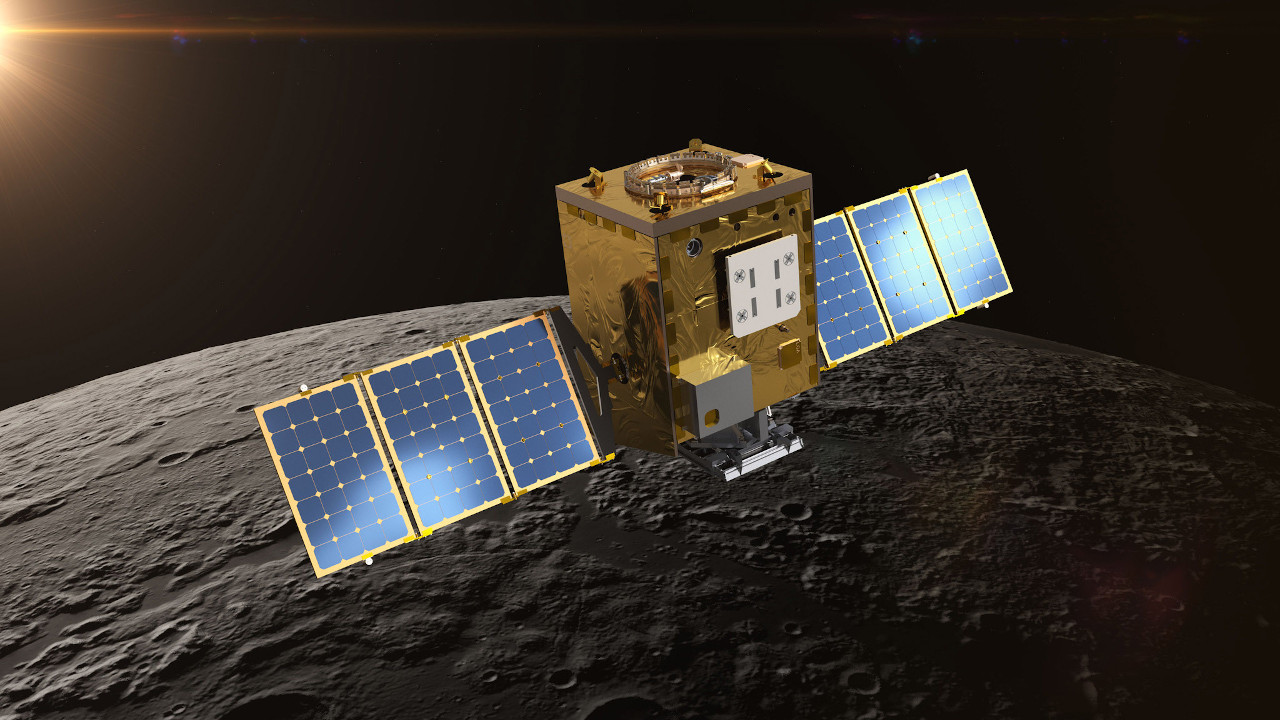
Lunar Trailblazer was supposed to be the little spacecraft with the big job: fly to the Moon, map lunar water in sharper detail than ever before, and help answer one of the most practical questions in modern space exploration: where exactly is the Moon hiding its water? Instead, the mission became a tense rescue story, a months-long engineering detective case, and a painful reminder that in spaceflight, even a small spacecraft can create a very large headache.
Launched in February 2025, NASA’s Lunar Trailblazer was not a giant flagship mission with a billion-dollar cape flapping behind it. It was a compact, cost-conscious, high-risk SmallSat built to do focused science. Think less “space battleship” and more “highly caffeinated lunar scout.” Its goal was to orbit about 60 miles above the Moon and create high-resolution maps showing the location, form, abundance, and behavior of water on the lunar surface.
That science mattered. Water on the Moon is not just a fun fact for trivia night. It could support future astronauts, provide clues about the history of the Earth-Moon system, and help NASA’s Artemis program understand where explorers might find usable resources. But before Lunar Trailblazer could begin its main science mission, mission controllers lost two-way communication. What followed was a fight against distance, sunlight, battery depletion, spacecraft spin, and time itself.
What Was Lunar Trailblazer Designed To Do?
Lunar Trailblazer was designed to investigate one of the Moon’s most surprising modern discoveries: it is not as dry as scientists once believed. For decades, the Moon was often described as a dusty, airless, bone-dry world. Then data from missions such as Chandrayaan-1, LCROSS, and NASA’s Lunar Reconnaissance Orbiter helped reshape that picture. Water and hydroxyl signatures appeared across parts of the lunar surface, including permanently shadowed regions near the poles.
The problem was not whether water existed. The problem was understanding it clearly. Is it ice? Is it hydroxyl locked into minerals? Does it move during the lunar day? Is it trapped in cold craters? Can astronauts realistically use it? Lunar Trailblazer was built to help separate those possibilities with better data.
The Two-Instrument Science Team
The mission carried two main science instruments. The first was the High-resolution Volatiles and Minerals Moon Mapper, known as HVM3, an infrared spectrometer provided by NASA’s Jet Propulsion Laboratory. Its job was to read reflected sunlight and identify spectral fingerprints of minerals, water, and hydroxyl on the lunar surface.
The second was the Lunar Thermal Mapper, or LTM, developed by the University of Oxford and funded by the UK Space Agency. LTM was designed to measure temperature and thermal properties of the same regions HVM3 observed. That pairing was important because temperature affects how water behaves and how infrared signals should be interpreted. Looking for lunar water without temperature context would be a little like trying to bake bread by smell alone: possible clues, but not enough control.
Together, the instruments were expected to show where water existed, what form it took, how much was present, and whether it changed over time. The results could have helped scientists choose better landing sites, understand lunar geology, and plan future surface missions.
A Small Mission With Big Expectations
Lunar Trailblazer was part of NASA’s SIMPLEx program, short for Small Innovative Missions for Planetary Exploration. SIMPLEx missions are designed to be lower-cost and more focused than traditional planetary missions. They accept higher risk in exchange for opening the door to science that might otherwise be too expensive to fly.
That risk posture is important to understand. Lunar Trailblazer was not built under the same cost, oversight, and redundancy model as a major flagship mission. It was a Class D mission, which means NASA expected a higher tolerance for risk. That does not mean “anything goes.” It means the program deliberately trades some layers of testing and oversight for speed, affordability, and innovation.
In theory, that is a powerful model. Small spacecraft can explore more targets, test new approaches, and make the planetary science portfolio more flexible. In practice, Lunar Trailblazer showed the sharp edge of that bargain: when a low-cost spacecraft has a critical problem after launch, the margin for recovery can be frighteningly thin.
The Launch: A Good Start, Then Trouble
Lunar Trailblazer launched on February 26, 2025, sharing a ride with Intuitive Machines’ IM-2 lunar lander mission aboard a SpaceX Falcon 9 rocket from Kennedy Space Center in Florida. The spacecraft separated from the rocket as planned about 48 minutes after liftoff. Mission operators at Caltech’s IPAC in Pasadena established early communications, and at first, it looked as if the small lunar mapper had begun its journey properly.
Then came the silence.
The day after launch, mission controllers lost contact with Lunar Trailblazer. Early information suggested that the spacecraft had entered a low-power state. Its solar arrays were not correctly oriented toward the Sun, which meant the batteries could not recharge properly. For a spacecraft, power is not merely convenient. Power is life support. Without it, radios go quiet, computers reset, heaters stop protecting hardware, and the spacecraft becomes less like a robot explorer and more like a very expensive tumbleweed.
The Recovery Effort Begins
NASA, JPL, Caltech, IPAC, and supporting organizations did not simply shrug and walk away. The recovery effort became a slow, careful attempt to understand where Lunar Trailblazer was, how it was spinning, whether sunlight might eventually hit its solar panels, and whether its radio could wake up long enough to receive commands.
Commands were sent through NASA’s Deep Space Network. Other radio facilities around the world helped listen for a signal. Ground-based optical and radio telescopes tracked the spacecraft’s position and spin rate. Engineers used spacecraft testbeds to simulate possible boot-up behavior and recovery paths from low power.
The team’s hope rested on a narrow possibility: as Lunar Trailblazer drifted farther away, changing geometry might allow more sunlight to reach its solar arrays. If the batteries recharged enough, the radio might boot up. If the radio came back, controllers might regain command. If they regained command, they could assess whether the propulsion system had survived, whether the instruments were still operable, and whether a revised flight path could still reach an elliptical lunar orbit.
That is a lot of “ifs.” Space recovery efforts often sound heroic because they are. But they are also brutally conditional. Every possible solution depends on another system being healthy enough to support it. It is like trying to fix a car rolling downhill in the dark, except the car is hundreds of thousands of miles away and refuses to answer the phone.
Why Recontact Was So Difficult
Two-way communication is the difference between observing a problem and solving it. NASA could estimate Lunar Trailblazer’s position and spin, but without reliable command capability, the team could not fully diagnose the spacecraft or perform the necessary maneuvers to preserve its planned path.
The challenge grew worse with time. As the spacecraft traveled farther from Earth, radio signals became weaker. Even if the radio woke up, it needed enough battery power and the right configuration to receive commands and transmit useful telemetry. Meanwhile, cold conditions could threaten propulsion lines, electronics, and instruments. The longer the spacecraft remained uncontrolled, the more difficult a full recovery became.
By late April 2025, NASA had established an independent Anomaly Review Board to investigate the post-launch problem and identify lessons for future missions. At the same time, the recovery window was not completely closed. NASA’s modeling suggested that lighting conditions from May through mid-June could be favorable enough to recharge the batteries. Later, the recovery effort was extended into early July because trajectory modeling continued to show a chance, however slim, that sunlight might help the spacecraft power up.
The Mission Ends
NASA officially ended Lunar Trailblazer’s mission on July 31, 2025. The public announcement followed in early August. Despite extensive recovery efforts, operators were unable to establish two-way communications after losing contact the day after launch.
For the science team, the loss was deeply disappointing. Lunar Trailblazer had been built to produce data that future lunar explorers could use. Its maps could have supported robotic missions, human landing site planning, and the broader study of water cycles on airless bodies. Instead, the spacecraft drifted away before its science campaign could begin.
Yet the mission was not meaningless. Spaceflight failures are painful, but they are also data-rich. Engineers and program managers learn from the specific chain of decisions, assumptions, test gaps, and system interactions that led to the outcome. The goal is not to pretend failure is secretly success. The goal is to make sure the next mission does not trip over the same lunar shoelace.
What Went Wrong?
In 2026, reporting on a NASA review panel revealed a clearer picture of the failure. According to that review, software intended to point Lunar Trailblazer’s solar panels toward the Sun instead pointed them 180 degrees away. The spacecraft also experienced erroneous onboard fault management actions that compounded the problem.
That detail is almost painful in its simplicity. A spacecraft built to study water on the Moon was undermined by a solar pointing problem. The Sun was the battery charger. The spacecraft looked the wrong way. Then multiple fault responses made recovery harder. In space engineering, simple-sounding errors can have complicated consequences, especially when they occur inside a system designed to protect itself automatically.
The review also highlighted insufficient testing of the solar array pointing software before launch. A full end-to-end test using final flight software and operational products might have exposed the problem before Lunar Trailblazer left Earth. That lesson is not glamorous, but it is essential: test like you fly, especially when a single sign, orientation, or configuration error can drain a spacecraft before controllers have time to react.
Why Lunar Water Still Matters
The loss of Lunar Trailblazer did not make lunar water less important. If anything, it showed why the question remains urgent. Water could be used for drinking, radiation shielding, breathable oxygen, or rocket propellant if future technology and economics make in-situ resource utilization practical. Even before that, water is scientifically valuable because it preserves clues about impacts, solar wind chemistry, volcanic history, and the movement of volatile materials across the Moon.
For Artemis-era exploration, water is a strategic resource. NASA and commercial partners are increasingly focused on the lunar south pole, where permanently shadowed regions may preserve ice in ultra-cold traps. But knowing that ice may exist is not the same as knowing where it is, how pure it is, how deep it is, or whether it can be accessed safely.
Lunar Trailblazer would have helped connect orbital remote sensing with future surface exploration. It was not a drill, rover, or lander. It was the scout with the map. Losing that mapmaker leaves a gap, but it also sharpens the case for future missions with similar or improved capabilities.
The Bigger Lesson: Low Cost Does Not Mean Low Complexity
One of the clearest lessons from Lunar Trailblazer is that small missions are still space missions. A 440-pound spacecraft can fail for the same broad reasons as a much larger one: software, power, attitude control, thermal management, communications, and operations must all work together. Miniaturization does not magically miniaturize risk.
Low-cost missions can be brilliant, but they require disciplined testing of the most mission-critical functions. Solar array pointing, fault protection, radio boot states, battery thresholds, and safe-mode behavior are not decorative features. They are survival systems. When they interact badly, the spacecraft can lose the ability to recover itself before humans have a chance to help.
The Lunar Trailblazer story also raises a broader management question: how should agencies balance acceptable risk with adequate oversight? If NASA wants more frequent, lower-cost planetary missions, some failures are expected. But the goal should be smart risk, not avoidable risk. The difference lies in knowing which tests cannot be skipped, even when the budget is tight and the launch date is tapping its foot.
Specific Examples From the Recovery Fight
The fight to save Lunar Trailblazer included several practical examples of modern space recovery strategy. First, the team used ground-based astronomy to track a spacecraft that could not talk back. Observations of position and spin helped engineers refine trajectory and lighting models.
Second, the team coordinated radio listening efforts beyond the standard mission operations structure. Global antennas and supporting organizations listened for signs of life, giving the recovery campaign more opportunities to detect a weak or intermittent signal.
Third, engineers continued testing possible recovery behavior on the ground. When a spacecraft is silent, testbeds become essential. They allow teams to ask: if the battery reaches this level, what boots first? If the radio starts in this state, can it receive? If the spacecraft resets, which sequence runs? Those questions may sound like nerdy paperwork, but they can decide whether a mission lives or dies.
Finally, NASA kept the mission open while modeling suggested a plausible recovery path. This was not blind optimism. It was a calculated attempt to exploit changing sunlight conditions. The team understood that the odds were narrowing, but they also knew that spacecraft sometimes surprise people. Space, annoyingly, does not always check the calendar before becoming dramatic.
Experience Notes: What The Fight To Save Lunar Trailblazer Teaches
The experience of following Lunar Trailblazer’s recovery effort feels familiar to anyone who has watched a mission team work through a crisis. At first, there is the hopeful language: initial signal acquired, spacecraft powered up, commands being sent, options being assessed. Then comes the uncomfortable middle stage, where updates become more technical and less cheerful. The spacecraft is spinning. The panels are not oriented correctly. The batteries may recharge if sunlight improves. The radio might boot. The team is listening. Everyone is waiting for a whisper from the void.
That waiting is one of the hardest parts of space exploration. On Earth, a repair crew can open a panel, swap a part, or plug in a diagnostic cable. In deep space, the repair crew is math, patience, radio waves, and a room full of people trying not to spill coffee on a keyboard that suddenly feels historic. The fight to save Lunar Trailblazer shows how much spacecraft recovery depends on preparation long before anything goes wrong.
One practical experience is the value of integrated testing. Subsystems can pass individual checks and still fail as a system. A solar array mechanism may work. Software may compile. A radio may boot. Fault protection may respond. But the real question is whether all of them behave correctly together under realistic flight conditions. The Lunar Trailblazer case is a strong reminder that final integrated tests are not boring formalities. They are rehearsals for survival.
Another experience is the importance of clear risk ownership. Low-cost missions are attractive because they create more chances to fly. But “higher risk” must be translated into specific decisions: which tests remain mandatory, which margins can be reduced, which assumptions need independent review, and which late changes require revalidation. Without that clarity, a project can accidentally turn “lean” into “fragile.” Nobody wants a spacecraft that saves money right up until it becomes an expensive lesson.
The recovery campaign also highlights the strength of the space community. Telescopes, radio antennas, operations teams, engineers, scientists, and analysts contributed to the effort. Even when the outcome was not successful, the collaboration mattered. It improved understanding of the spacecraft’s trajectory, spin, and possible power state. It also built operational knowledge that can help future missions recover faster when they face similar problems.
For readers, the emotional experience is also worth noting. Space exploration is often presented through the shiny language of launches and discoveries, but the real story includes uncertainty, troubleshooting, and failure analysis. Lunar Trailblazer did not return the lunar water maps scientists hoped for. Still, its story can improve the missions that follow. That may be the most honest kind of space legacy: not a triumphant image from orbit, but a hard-earned checklist item that saves the next spacecraft.
Conclusion
The fight to save Lunar Trailblazer was a race against power loss, distance, and uncertainty. The spacecraft launched successfully, separated as planned, and briefly communicated with Earth before a post-launch anomaly left it unable to maintain power and two-way contact. NASA and its partners spent months modeling its spin, tracking its position, listening for signals, and waiting for sunlight to possibly revive its batteries. In the end, the mission could not be recovered.
Still, Lunar Trailblazer’s story should not be dismissed as a simple failure. It is a case study in the promise and peril of small planetary missions. It shows why lunar water science remains essential, why integrated testing matters, and why “low-cost” can never mean casual when the destination is deep space. The Moon still holds its icy secrets. Lunar Trailblazer did not unlock them, but the lessons from its loss may help the next lunar scout arrive smarter, stronger, and better prepared.
Note: This article is based on publicly reported mission information from NASA, JPL, Caltech/IPAC, space science organizations, launch reporting, and later failure-analysis coverage. Source links are intentionally omitted from the article body for clean web publication.