The Decayed ARG in Minecraft is one of those internet rabbit holes that begins innocently enough with “weird Minecraft bugs” and then quietly shoves the viewer into a hallway labeled simulation horror, identity crisis, time loops, and suspiciously powerful administrators. In other words, it is very normal internet behavior.
At first glance, The Decayed looks like a Minecraft creepypasta: a player notices strange glitches, a friend behaves oddly, and the world begins to feel less like a sandbox and more like a cage made of blocks. But the deeper you go, the more the story reveals itself as a layered Minecraft narrative with ARG-style elements. It uses fake bug reports, cryptic episode titles, distorted reality, mysterious “executive” figures, and community interpretation to create a story that feels interactive even when much of it unfolds through videos.
So, is The Decayed truly an ARG? The best answer is: mostly, depending on how strict you are. It has the flavor of an alternate reality game, but it also functions as a Minecraft analog-horror series and cinematic web story. Fans often call it a Minecraft ARG because it invites analysis, hides lore in presentation, and makes the viewer feel like they are investigating something that should not exist. However, it is not simply a puzzle box. It is also a tragic story about awareness, control, repetition, and what happens when a game world becomes a prison.
What Is The Decayed ARG?
The Decayed is a Minecraft-based horror and mystery series centered on players who appear to be trapped inside a controlled reality. The story begins with familiar Minecraft footage: normal gameplay, chatting, mining, exploring, and noticing odd behavior. But instead of staying in the safe land of “Oops, Minecraft had a glitch,” the series gradually reveals a much darker structure underneath.
The main character most viewers focus on is sandYcarps8, commonly identified by fan documentation as Andrew. His friend kargosh1pZ appears early in the story, and the relationship between these characters becomes important because it shows the emotional cost of the loop. What begins as two players dealing with strange bugs soon becomes a story about memory, repetition, surveillance, and manipulation.
The central concept is that the characters are not simply playing Minecraft. They are inside something larger: a constructed reality sometimes referred to by fans as The Concept. This reality seems to be managed, observed, and manipulated by higher-level beings or administrators. These figures are not friendly server moderators handing out free diamonds. They are closer to experiment supervisors, and the players are the lab rats who unfortunately brought pickaxes.
Why Minecraft Works So Well for The Decayed
Minecraft is an open-world sandbox game, which makes it perfect for unsettling stories. In a normal Minecraft world, players expect freedom: mine, build, craft, explore, fight mobs, decorate a base, and maybe spend three hours arranging a storage room that still somehow looks terrible. The game’s flexibility makes it easy for creators to turn ordinary gameplay into something eerie.
The Decayed uses that expectation against the viewer. A Minecraft world is supposed to be random, creative, and player-driven. When blocks appear where they should not, chat messages feel scripted, or another player repeats actions like an NPC, the familiar comfort of Minecraft begins to crack. The horror does not need realistic monsters. It only needs the game to behave like it knows something you do not.
This is why Minecraft ARGs and analog-horror projects are so effective. The blocky graphics leave room for imagination. A shadowy figure in Minecraft is not visually detailed, but that can make it worse. The viewer fills in the blanks. A missing sign, a corrupted world, or a repeated phrase can feel more frightening than a high-budget jump scare because it suggests the rules are breaking.
The Story Setup: Strange Bugs and Broken Reality
The early videos in The Decayed are framed like strange Minecraft bug reports. Titles such as “weird minecraft bugs (bug report #1)” and “more weird stuff (bug(?) report #2)” set the tone. The wording feels casual, almost like a player uploading proof of a glitch to show friends. That casual style is important because it makes the horror feel discovered rather than announced.
At this stage, the viewer is invited to ask basic questions. Why is the world acting wrong? Why does one player seem more aware than another? Why do events repeat? Why does the footage feel less like a normal recording and more like evidence? The story does not immediately dump a lore encyclopedia into your lap. It lets discomfort build slowly, like a creeper quietly walking up behind you while you are proud of your new house.
The loop becomes one of the most important ideas. Sandy appears to recognize that events are repeating, while other characters may continue behaving as if everything is normal. This creates an immediate emotional imbalance. One person is waking up; others remain trapped in routine. That is classic simulation horror: the nightmare is not only being trapped, but being the only one who realizes it.
Key Characters in The Decayed
sandYcarps8 / Andrew
sandYcarps8, commonly referred to as Sandy and identified by fans as Andrew, is the main viewpoint character. He is the character most associated with awareness, confusion, and resistance. His role is not just “Minecraft player sees spooky thing.” He becomes the emotional center of the story because he experiences the terror of realizing that his world may not be real, or at least not free.
Sandy’s awareness is what makes the story work. If every character understood the loop immediately, the mystery would collapse. Instead, Sandy’s growing recognition gives viewers a reason to investigate with him. His fear, frustration, and attempts to understand the situation mirror the viewer’s experience.
kargosh1pZ
kargosh1pZ is Sandy’s friend and one of the important early figures in the story. The character’s behavior is especially unsettling because he often feels tied to the loop’s routine. In stories like this, a friend who does not realize anything is wrong can be scarier than an enemy. Why? Because they prove the prison is working.
When one character is aware and another is not, every normal conversation becomes suspicious. Is the friend real? Are they scripted? Are they trapped too? Are they being used to keep Sandy calm? The Decayed leans into that discomfort without needing to over-explain it immediately.
exec_05 / Thomas
exec_05, also known as Thomas in fan summaries, is another important figure connected to the deeper layers of the story. Characters with “exec” naming are especially interesting because they suggest administrative access, hierarchy, and systems beyond the normal player level. In a Minecraft context, “exec” sounds like command execution, server control, and hidden authority. That naming choice is not accidental; it screams, “Someone here has permissions you definitely do not.”
Thomas helps point the story beyond a simple loop and toward the larger structure behind it. His role supports one of The Decayed’s strongest themes: the players are not only trapped in a world, but trapped in someone else’s system.
The Architect
The Architect is widely treated by fans as the main antagonist of The Decayed. He is associated with administrative power, control, manipulation, and the larger prison-like system of The Concept. The name “Architect” is perfect for this kind of villain. It implies someone who designs structures, builds realities, and sees people as pieces inside a plan.
Unlike a Minecraft zombie, the Architect is frightening because he represents control. A zombie can be handled with a sword and decent timing. The Architect is closer to the person who decides whether the sword exists, whether the world reloads, and whether your memories survive the next loop. That is a slightly bigger problem than forgetting to bring torches.
The Concept: The Prison Behind the Blocks
The Concept is one of the most important ideas in The Decayed. It appears to function as a constructed reality, simulation, or experimental space where players can be observed and controlled. The exact interpretation depends on how viewers connect the clues, but the broad meaning is clear: the Minecraft world is not simply a game world. It is a controlled environment.
This idea turns Minecraft’s normal mechanics into horror mechanics. Respawning, world generation, multiplayer chat, and server authority all become part of the story’s language. In regular Minecraft, commands are tools. In The Decayed, command-like power becomes terrifying because it belongs to entities above the players.
The name “The Concept” also feels intentionally abstract. It is not just “the server” or “the map.” It sounds like an idea given structure, a prototype reality, or a philosophical experiment wearing Minecraft textures. That makes the story feel bigger than one player’s haunted world. The horror is not that a world is corrupted. The horror is that reality itself may be designed to decay.
The Meaning of Decay
The word decayed carries a lot of weight. Decay means breakdown, rot, corruption, and the slow collapse of something that once had order. In the series, decay can be read in several ways.
First, there is physical decay: worlds breaking, blocks appearing strangely, spaces becoming unstable, and the environment losing its normal Minecraft logic. Second, there is mental decay: characters becoming exhausted by repetition, confusion, and partial awareness. Third, there is moral decay: the beings controlling the experiment appear to treat people as objects, which suggests a system that has lost empathy.
This layered meaning is one reason the story sticks with viewers. The title is not just spooky branding. It describes the world, the people inside it, and the authority running it. Everything is decaying: the map, the loop, the trust between characters, and the illusion of safety.
Important Episodes and Story Progression
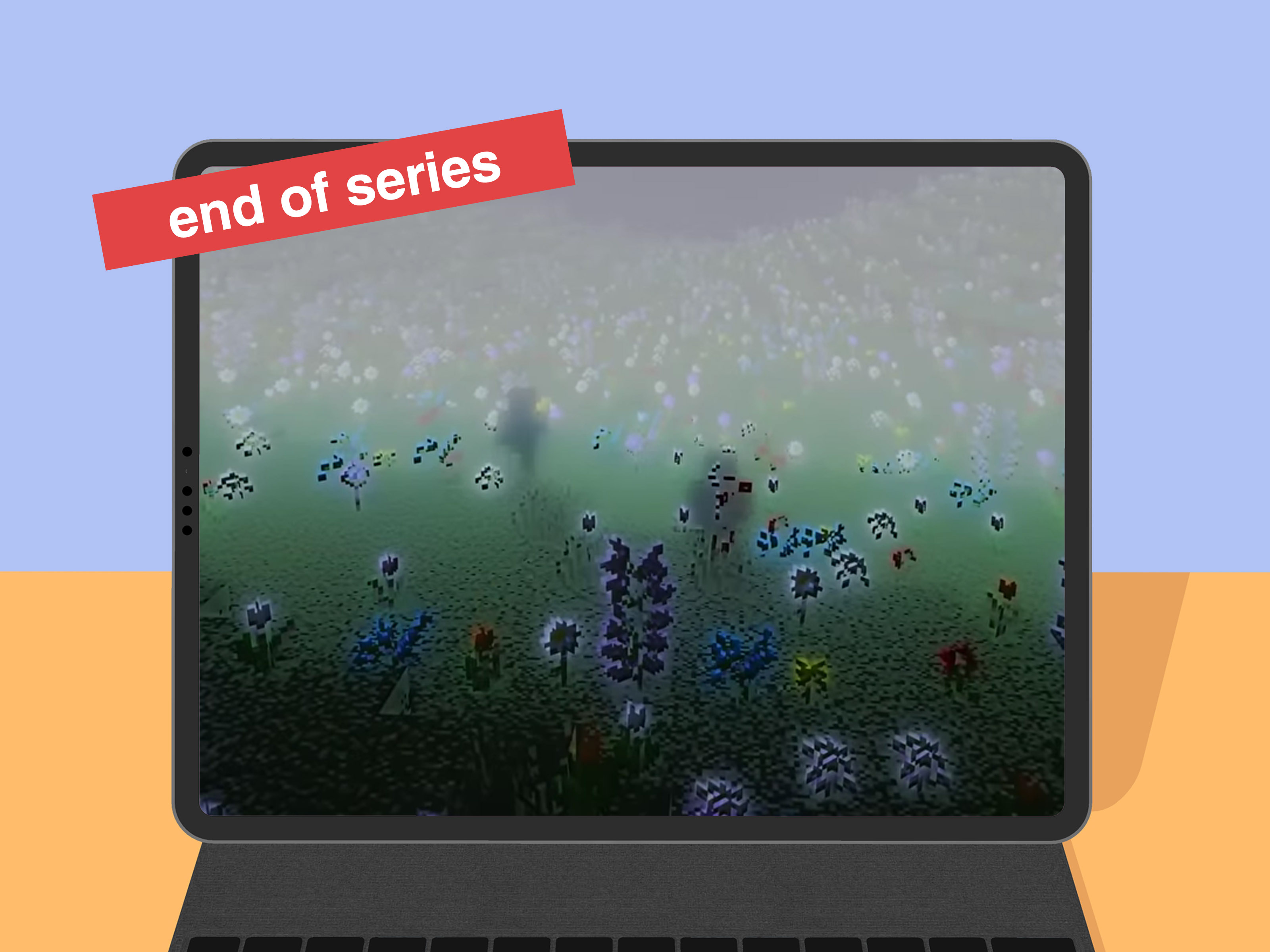
The episode titles alone tell a story. The early “bug report” videos make the mystery feel small and technical. Then titles like “limbo”, “meeting”, “envoyeur”, “Réalité”, “récepteur”, “Exec footage – defiant”, “disposal_”, “reunion”, and “les fleurs” suggest a move from ordinary gameplay into something stranger, more symbolic, and more organized.
Words such as “limbo” and “reunion” suggest states between life, memory, and separation. French terms like “Réalité” and “récepteur” add an extra layer of mystery. They make the series feel like it is operating with coded categories, almost like scientific labels or file names from a system viewers are not supposed to access.
The “Exec footage” titles are especially important because they suggest a shift in perspective. Instead of only seeing the player’s confusion, viewers glimpse footage connected to the administrative side. This broadens the story from personal horror to systemic horror. Sandy is not just unlucky. He is inside a machine.
Is The Decayed Really an ARG?
An alternate reality game usually mixes storytelling with audience investigation. ARGs often use videos, websites, social media, hidden codes, puzzles, and real-time community collaboration. The Decayed shares several of these qualities: mysterious presentation, fragmented lore, cryptic titles, community theories, and a story that feels like found evidence.
However, some viewers argue that The Decayed is not a traditional ARG because it is less dependent on active puzzle-solving and more focused on a self-contained Minecraft narrative. That criticism is fair. The Decayed may be better described as a Minecraft analog-horror story with ARG elements. It uses the language of ARGs without always requiring the same level of direct player participation.
Still, labels should not distract from why people care. Whether you call it an ARG, a Minecraft web series, a simulation-horror project, or “that thing that made me suspicious of my own survival world,” The Decayed succeeds because it makes viewers investigate. It creates the feeling that every frame, username, title, and odd behavior might matter.
The Core Themes of The Decayed
Awareness Is Painful
In many simulation stories, becoming aware is treated as freedom. In The Decayed, awareness is more complicated. Sandy’s awareness does not instantly save him. It isolates him. He sees the loop, but others may not. He understands enough to be afraid, but not enough to escape easily.
Control Can Look Like Normal Life
The Decayed is frightening because the prison does not always look like a prison. Sometimes it looks like a normal Minecraft session with a friend. That is the trick. The loop works because it hides inside routine. Mine, talk, explore, repeat. The cage is familiar, which makes it harder to recognize.
Systems Dehumanize People
The administrators and higher-level figures in The Decayed appear to treat players as pieces in an experiment. This makes the story more than a spooky Minecraft mystery. It becomes a critique of systems that value control over compassion. The players are not just trapped in code; they are trapped in someone else’s lack of empathy.
Why Fans Keep Discussing The Decayed
The Decayed has the kind of mystery that encourages rewatches. Viewers return to earlier videos after learning later details, looking for missed clues. A line of chat, a strange movement, a title choice, or a visual glitch can feel different once you understand more of the world.
Fan discussion also keeps the story alive. Some fans focus on timeline reconstruction. Others analyze character motives. Some debate whether the series should be called an ARG at all. That debate is actually healthy for the story’s reputation because it proves people are thinking seriously about its structure.
Another reason fans care is the emotional tone. The Decayed is not just “scary Minecraft thing appears.” It has sadness. The loop is tragic because it traps people in repeated experiences, relationships, and confusion. The horror lands because the viewer can imagine how exhausting it would be to know something is wrong while everyone else continues as if the day is ordinary.
Complete Explanation: What Is Really Happening?
In simple terms, The Decayed appears to tell the story of players trapped inside a controlled Minecraft-like reality. Sandy becomes aware that his world is repeating or behaving unnaturally. His friend’s behavior and the environment’s changes reveal that the world is not operating freely. As the series progresses, the story points toward a larger system known as The Concept, controlled or monitored by powerful figures such as the Architect and other administrative entities.
The “decay” begins when the illusion of normalcy breaks. Once Sandy notices the loop, the system can no longer feel perfectly stable. The world’s flaws become visible. From there, the story becomes a struggle between awareness and control. Sandy and other characters are not just trying to survive mobs or bugs. They are trying to understand the rules of a reality designed to keep them contained.
The Architect represents the controlling force behind that containment. Exec-related characters suggest that the system has layers, ranks, and internal conflict. The players are caught below those layers, experiencing the consequences without having full access to the truth.
The ending and later interpretation depend on how viewers read the symbolic pieces, but the emotional conclusion is clear: The Decayed is about the horror of being trapped inside a world that pretends to be normal. It asks what happens when a game becomes a prison, when a friend becomes part of a loop, and when reality starts showing its seams.
Experiences Related to The Decayed ARG in Minecraft
Watching The Decayed feels different from watching a standard Minecraft horror video. A normal scary Minecraft video often gives you a monster, a chase, a loud sound, and maybe a thumbnail where Steve looks like he just saw his tax bill. The Decayed is slower and more psychological. It asks the viewer to sit with discomfort. The scary part is not always what appears on screen; it is the suspicion that the screen is hiding a bigger system.
For many viewers, the first experience is confusion. The early “bug report” style makes the series feel casual, and that casualness is effective. You are not told, “Welcome to the lore.” You are shown something slightly wrong and invited to notice. That creates a stronger sense of discovery. It feels as if you found a strange upload rather than clicked on a polished horror episode.
The second experience is paranoia. After watching The Decayed, ordinary Minecraft can feel a little different. A chunk loading slowly, a player standing still, a repeated chat message, or a strange cave sound may suddenly seem suspicious. Of course, most of the time it is just Minecraft being Minecraft. The game has always had a talent for accidentally looking haunted. But The Decayed trains the brain to read glitches as clues, and that makes even normal gameplay feel charged with mystery.
The third experience is emotional investment. Sandy’s situation is not frightening only because he is trapped. It is frightening because he becomes aware while others remain tied to the loop. That creates loneliness. Anyone who has ever felt like they were the only person noticing a problem can connect with that feeling. The Minecraft setting makes it accessible, but the emotion underneath is very human.
The fourth experience is community investigation. The Decayed becomes more enjoyable when viewers compare notes. One person notices a title pattern. Another catches a strange username. Someone else connects the Architect to The Concept or explains how an “exec” character might fit into the hierarchy. This is where the ARG-style appeal becomes strongest. The story is not consumed passively; it is assembled piece by piece, like building a lore house where every block might be load-bearing.
The fifth experience is appreciation for Minecraft as a storytelling tool. The Decayed proves that Minecraft does not need realistic graphics to create serious tension. Its simple visuals can actually make horror more flexible. A flat landscape, an empty house, a dark figure, or a repeated mining trip can become unsettling because the viewer understands what should happen in Minecraft. When the expected pattern breaks, the mind fills the gap with dread.
Finally, The Decayed leaves viewers with a lingering question: what would you do if your favorite game world stopped being yours? Minecraft is usually about freedom. You choose where to go, what to build, what to fight, and when to log off. The Decayed removes that comfort. It turns a sandbox into a system and a system into a trap. That is why the series works. It does not simply haunt Minecraft; it haunts the idea of control itself.
Conclusion
The Decayed ARG in Minecraft is a smart, unsettling, and emotionally layered story that uses Minecraft’s familiar world to explore simulation horror, time loops, corrupted reality, and the fear of being controlled by unseen forces. Whether you define it as a true ARG or a Minecraft analog-horror series with ARG elements, its appeal comes from the same source: it makes viewers investigate.
The story begins with strange bugs and grows into a bigger mystery about Sandy, The Concept, the Architect, and the terrifying possibility that the world is not broken by accident. It is broken because someone built it that way. The Decayed stands out because it understands that horror is not always a monster in the fog. Sometimes horror is your friend repeating the same behavior, your world reloading wrong, and the awful realization that the person holding the commands is not you.
Note: This article is written for web publication in original American English, based on public information, community documentation, and available discussion of The Decayed Minecraft story. It intentionally avoids source-placeholder strings and unnecessary publishing artifacts.