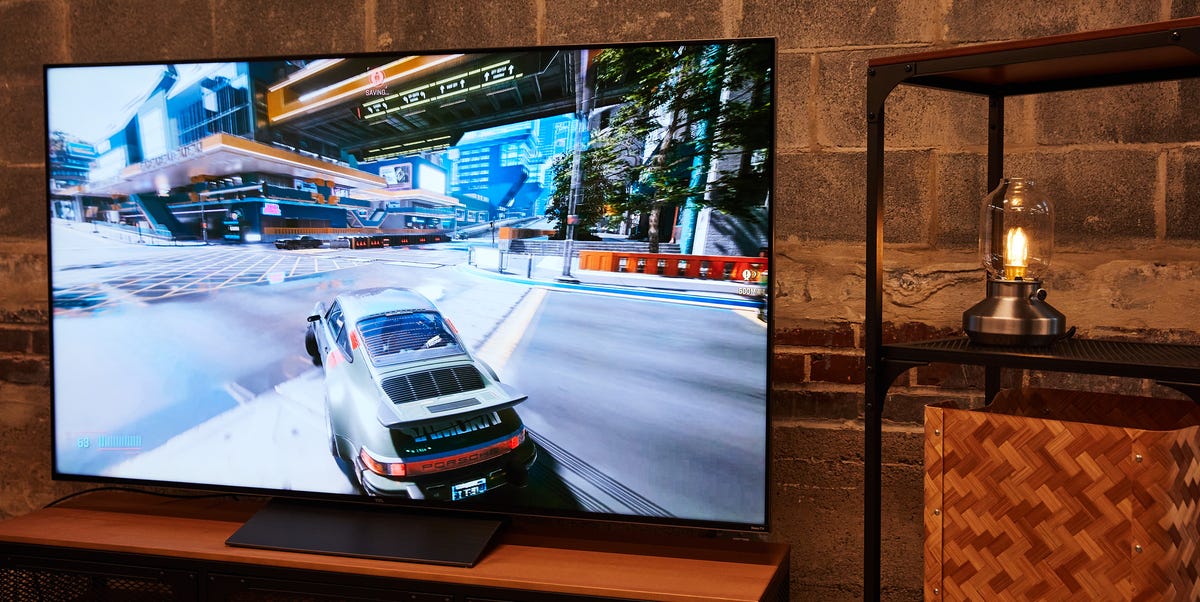
Buying a gaming TV in 2025 is less about finding a screen that can display a game and more about finding one that does not quietly sabotage it. A television may look spectacular during a nature documentary, then add enough input lag to make your character react like they are wearing concrete boots.
The best gaming TVs of 2025 combine excellent picture quality with HDMI 2.1 connectivity, variable refresh rate, Auto Low Latency Mode, fast pixel response, strong HDR performance, and support for at least 4K at 120Hz. Some premium models reach 144Hz or 165Hz for gaming PCs, although current PlayStation and Xbox consoles generally top out at 120Hz.
After comparing manufacturer specifications, professional measurements, and hands-on reviews, these seven televisions stand out. They are ranked by use case rather than raw bragging rights, because the perfect TV for a dark basement gaming den may be a shiny black mirror in a sun-filled living room.
Gaming-feature research:
The Best Gaming TVs of 2025 at a Glance
| Gaming TV | Best For | Panel Type | Maximum Gaming Refresh Rate | Key Advantage |
|---|---|---|---|---|
| LG G5 OLED | Best overall | OLED | Up to 4K/165Hz | Elite HDR, four HDMI 2.1 ports, Dolby Vision |
| Samsung S95F OLED | Bright-room OLED gaming | OLED | Up to 4K/165Hz | Glare-resistant screen and vivid color |
| LG C5 OLED | Best value OLED | OLED | Up to 4K/144Hz | Flagship-level gaming features for less |
| Sony Bravia 8 II | PS5 and cinematic gaming | QD-OLED | Up to 4K/120Hz | Outstanding processing and image accuracy |
| Samsung QN90F | Bright living rooms | Mini-LED | Up to 4K/165Hz | Powerful brightness without OLED concerns |
| Hisense U8QG | Best performance value | Mini-LED | Up to 4K/165Hz | Premium specifications at a competitive price |
| TCL QM8K | Large-screen value | QD-Mini LED | 4K/144Hz or 1080p/288Hz | Excellent contrast and high brightness |
Refresh-rate support, panel technology, ports, and other features can vary by screen size, region, firmware, and connected device.
What Makes a Television Good for Gaming?
HDMI 2.1 and 4K at 120Hz
Both the PlayStation 5 and Xbox Series X can output games at 4K and up to 120 frames per second when the software and display support it. That makes 4K/120Hz the practical target for console players. Refresh rates above 120Hz are mainly valuable to PC gamers equipped with a graphics card powerful enough to feed the television all those frames.
Variable Refresh Rate
Variable refresh rate, usually shortened to VRR, synchronizes the TV with the fluctuating frame rate generated by a console or computer. It reduces tearing and stuttering when a game cannot maintain a perfectly steady frame rate. FreeSync and G-SYNC compatibility provide similar benefits for supported AMD and Nvidia hardware.
Low Input Lag and Fast Response
Input lag is the delay between pressing a button and seeing the result. Pixel response describes how quickly the screen itself changes from one image to another. OLED panels are especially impressive here because their pixels transition almost instantly. Mini-LED TVs may show slightly more blur, but the best models still feel responsive enough for competitive shooters, racing games, and emotionally devastating platformers.
HDR Performance
Good HDR is about more than an HDR logo on the box. A great gaming TV should produce bright highlights, convincing shadows, strong color volume, and useful tone mapping without crushing details. Dolby Vision is particularly relevant to Xbox players, while HDR10 remains the common denominator across consoles and PCs.
The Right Number of HDMI Ports
One HDMI 2.1 port may be enough for a single console. A PlayStation, Xbox, gaming PC, and soundbar can turn port management into a puzzle worthy of an adventure game. Four full-bandwidth HDMI 2.1 inputs provide the cleanest setup, especially when one connection is also used for eARC audio.
Feature explanations:
1. LG G5 OLED: Best Gaming TV Overall
The LG G5 is the gaming TV to buy when picture quality, speed, connectivity, and format support all matter equally. It combines perfect OLED black levels with substantially improved brightness, helping explosions, sunlight, spells, and neon cityscapes look more dramatic than they do on a conventional OLED.
Four HDMI 2.1 ports support advanced gaming connections, including VRR and high-refresh-rate PC signals up to 4K/165Hz on applicable screen sizes. The G5 also works with Nvidia G-SYNC and AMD FreeSync Premium, while Dolby Vision gaming gives Xbox owners a capability missing from Samsung televisions.
Its nearly instantaneous OLED response keeps fast camera movement clear. Wide viewing angles also make it excellent for local multiplayer, where the unfortunate person sitting at the edge of the couch still deserves a good picture.
Why Gamers Will Love It
- Four HDMI 2.1 inputs for multiple consoles and a gaming PC
- Up to 165Hz VRR for high-end PC gaming
- Support for G-SYNC, FreeSync Premium, ALLM, and Dolby Vision gaming
- Excellent contrast, viewing angles, and motion clarity
What to Consider
The G5 is expensive, and its premium brightness advantage is less important in a completely dark room. Its flush-mounted Gallery design also makes the most sense when installed on a wall. Screen-size differences matter: some versions have lower maximum refresh rates, so verify the specifications of the exact size being purchased.
LG G5 research:
2. Samsung S95F OLED: Best OLED Gaming TV for Bright Rooms
The Samsung S95F is what happens when an OLED decides it is tired of hiding from windows. Samsung’s upgraded anti-glare treatment reduces visible reflections, while the television’s excellent brightness and rich color help games maintain their impact in rooms with lamps, sunlight, and other enemies of the perfect black level.
Its four full-bandwidth HDMI 2.1 connections support signals up to 4K/165Hz, VRR, ALLM, FreeSync Premium Pro, and G-SYNC compatibility. Samsung’s Game Bar provides convenient access to frame-rate information, aspect-ratio options, minimap zoom tools, and gaming settings without sending players into the menu wilderness.
The S95F is especially attractive for a high-performance PC or a multi-console setup. It also includes Samsung Gaming Hub for compatible cloud gaming services, allowing certain games to be streamed without connecting a console.
Why Gamers Will Love It
- Bright, colorful OLED picture with strong glare reduction
- Four HDMI 2.1 connections supporting up to 165Hz
- Fast response and low input lag
- Useful Game Bar and cloud gaming features
What to Consider
Samsung continues to omit Dolby Vision, relying instead on HDR10, HDR10+, and its own tone-mapping technology. That may not concern PlayStation users, but Xbox players with a Dolby Vision game library should keep it in mind. The matte screen also produces a slightly different look from the glossy finish favored by many home-theater enthusiasts.
Samsung S95F research:
3. LG C5 OLED: Best Value OLED Gaming TV
The LG C5 is the sensible sibling in the OLED family. It gives gamers most of the features that make the flagship G5 exciting without demanding the same flagship budget. Unless the television will sit in a very bright room or the extra HDR punch of the G5 is essential, the C5 may be the smarter purchase.
Every HDMI port supports HDMI 2.1 bandwidth, VRR, ALLM, and gaming at up to 4K/144Hz. G-SYNC compatibility, FreeSync Premium, Dolby Vision gaming, and LG’s Game Optimizer menu make it equally comfortable with an Xbox, PlayStation, or PC.
The C5 is also sold in a broad range of sizes, including compact models that can double as enormous desktop monitors. A 42-inch version on a desk is not subtle, but neither is fighting a dragon at nearly life size.
Why Gamers Will Love It
- Four HDMI 2.1 ports with up to 4K/144Hz support
- Perfect OLED blacks and fast pixel response
- Dolby Vision, G-SYNC, FreeSync, and VRR support
- More affordable than flagship OLED models
What to Consider
The C5 is not as bright as the G5, so HDR highlights have less impact in demanding scenes. A sunny room may also expose more reflections. Still, its balance of price, gaming flexibility, and picture quality makes it one of the easiest televisions to recommend.
LG C5 research:
4. Sony Bravia 8 II: Best for PS5 and Cinematic Games
The Sony Bravia 8 II is not the fastest television in this list, but it may produce the most refined picture. Sony’s image processing excels at upscaling, gradation, motion handling, and preserving subtle details. Story-driven games, cinematic adventures, and beautifully animated role-playing games can look remarkably natural.
Its QD-OLED panel combines perfect black levels with vibrant color and strong HDR highlights. The TV supports 4K at 120Hz, HDMI Forum VRR, ALLM, and Dolby Vision. Sony also includes PlayStation-oriented functions such as Auto HDR Tone Mapping and automatic genre picture settings when paired with a compatible PS5.
The screen itself acts as part of the audio system, helping dialogue and effects sound as though they originate from their location in the picture. It is an unusually convincing built-in audio experience, although a proper sound system remains the final boss.
Why Gamers Will Love It
- Exceptional image processing and color reproduction
- Beautiful QD-OLED contrast and HDR performance
- Useful integration with PlayStation 5
- Dolby Vision and DTS passthrough support
What to Consider
Only two of its four HDMI inputs provide full HDMI 2.1 bandwidth, and one of those is shared with eARC. It also tops out at 120Hz instead of 144Hz or 165Hz. That is plenty for a PS5 or Xbox Series X, but demanding PC players receive more flexibility from LG or Samsung.
Sony Bravia 8 II research:
5. Samsung QN90F: Best Mini-LED Gaming TV for Bright Rooms
The Samsung QN90F is an excellent alternative for gamers who need extreme brightness, strong reflection control, and no OLED panel-care anxiety. Its Mini-LED backlight produces intense HDR highlights while local dimming improves black levels during darker scenes.
The QN90F includes four HDMI 2.1 ports and supports 4K/120Hz console gaming as well as refresh rates up to 165Hz for compatible PCs. FreeSync Premium Pro, VRR, ALLM, Samsung’s Game Bar, and Gaming Hub create one of the most complete gaming packages available on an LCD television.
It is particularly well suited to sports games, racing titles, and colorful open worlds played during the day. The screen can compete with ambient light instead of politely surrendering to it.
Why Gamers Will Love It
- Excellent brightness for sunlit rooms
- Four HDMI 2.1 ports and up to 165Hz support
- Strong HDR impact without an OLED panel
- Wide selection of screen sizes
What to Consider
Mini-LED local dimming cannot reproduce the pixel-perfect blacks of OLED, so some blooming may appear around bright objects or subtitles in dark scenes. Samsung also excludes Dolby Vision. Even so, the QN90F is a powerful option for bright rooms and long gaming sessions.
Samsung QN90F research:
6. Hisense U8QG: Best Gaming TV for Performance per Dollar
The Hisense U8QG delivers the kind of specification sheet that normally arrives with a much less friendly price. It offers a native high-refresh-rate panel, powerful Mini-LED brightness, deep contrast, Dolby Vision, HDR10+, FreeSync Premium Pro, and Google TV.
Its gaming mode supports VRR from 48Hz to 165Hz, while compatible PC configurations can reach 1080p at 288Hz. Three HDMI ports provide HDMI 2.1 bandwidth, and a USB-C alternate-display input gives PC users an unusual additional connection option.
The television is exceptionally bright, helping HDR effects remain visible in daylight. It also maintains much of its brightness and contrast in Game Mode instead of turning every highlight into a dim memory of its former self.
Why Gamers Will Love It
- 4K/165Hz and 1080p/288Hz gaming support
- Excellent HDR brightness and Mini-LED contrast
- Dolby Vision, HDR10+, VRR, ALLM, and FreeSync Premium Pro
- Competitive value for the performance offered
What to Consider
Motion is not as clean as it is on an OLED because some pixel transitions are slower. The image also loses quality when viewed from aggressive angles, and direct reflections can be distracting. The USB-C connection does not provide every high-refresh-rate and VRR feature available through HDMI.
Hisense U8QG research:
7. TCL QM8K: Best Large-Screen Gaming TV Value
The TCL QM8K is built for players who believe the minimap should be visible from another ZIP code. Available in large screen sizes, it combines QD-Mini LED brightness with excellent contrast and surprisingly controlled local dimming.
Gamers receive 4K support at up to 144Hz, VRR, ALLM, and AMD FreeSync Premium Pro. PC users can also access refresh rates up to 288Hz at lower resolutions. Game Master mode preserves much of the television’s brightness and dark-scene performance, which is important because some TVs become noticeably less impressive after low-latency mode is activated.
Google TV provides broad streaming-app support, while Dolby Vision and HDR10+ compatibility make the QM8K flexible for both games and movies.
Why Gamers Will Love It
- Excellent contrast and brightness for a Mini-LED television
- 4K/144Hz and lower-resolution 288Hz gaming
- Dolby Vision, HDR10+, VRR, and FreeSync Premium Pro
- Large sizes that deliver strong performance for the money
What to Consider
Only two HDMI connections provide full HDMI 2.1 bandwidth, so owners of several current-generation devices may need an HDMI switch or receiver. Viewing angles are also limited, and the most accurate picture may require adjustments or professional calibration.
TCL QM8K research:
How to Choose the Best Gaming TV for Your Setup
Choose OLED for Dark-Room Contrast
An OLED is difficult to beat when gaming in a controlled room. Its self-lit pixels produce perfect blacks, excellent viewing angles, and exceptionally clear motion. The LG G5, Samsung S95F, LG C5, and Sony Bravia 8 II all deliver convincing dark scenes without the halos that can appear around bright objects on an LCD screen.
Choose Mini-LED for Daytime Brightness
A Samsung QN90F, Hisense U8QG, or TCL QM8K makes more sense when the television faces windows or powerful lights. These models can produce higher full-screen brightness and are also appealing to players who regularly display static HUD elements for many hours.
Match the Television to the Gaming Device
Console players should prioritize 4K/120Hz, VRR, ALLM, and at least two HDMI 2.1 ports. PC gamers can benefit from 144Hz or 165Hz support, G-SYNC or FreeSync, chroma 4:4:4 reproduction, and a television size suitable for their viewing distance.
Do Not Ignore Screen Size
A larger TV is not automatically better. At a desk, a 42- or 48-inch OLED may already feel enormous. Across a living room, 65 or 75 inches can create a much more immersive experience. The goal is to fill enough of your vision to feel involved without requiring tennis-match head movements to read the interface.
Real-World Experience: What Gaming on a Premium 2025 TV Feels Like
The following ownership observations synthesize recurring findings from professional reviews and common setup experiences rather than representing a single personal test.
The first noticeable improvement is usually not resolution. Most players already own a 4K television. The immediate difference is responsiveness. When Game Mode, ALLM, and VRR are working correctly, controls feel more directly connected to the action. Aiming becomes easier, steering feels more precise, and jumping between platforms requires fewer desperate conversations with the controller.
Moving from 60Hz to 120Hz can be dramatic in games that support high-frame-rate modes. Fast camera turns become clearer, animations look smoother, and competitive games feel more immediate. The improvement from 120Hz to 144Hz or 165Hz is subtler. It is most useful for PC players who already own a powerful graphics card and regularly play shooters, racing games, or esports titles at very high frame rates. A 165Hz label will not magically turn a console game locked to 30 frames per second into liquid silk.
OLED and Mini-LED models create different kinds of “wow.” On an OLED, the most impressive moments often happen in darkness: a flashlight cutting through a cave, stars appearing against space, or a glowing health potion sitting in a shadowy room. Because each pixel can switch off, dark scenes gain depth without a gray haze behind them.
A strong Mini-LED television makes its biggest statement with brightness. Sunlight reflecting from a car, sparks from a weapon, or a bright sky in an open-world game can look intensely vivid. In a room used throughout the day, that brightness may contribute more to the experience than perfect black levels. A beautiful OLED cannot display much beauty when the screen is reflecting a window, a lamp, and the increasingly concerned face of the player.
Setup matters more than many buyers expect. High-refresh-rate support may need to be enabled separately for each HDMI input. The console must be connected with a suitable Ultra High Speed HDMI cable, and enhanced HDMI mode may need to be selected in the television’s settings. PC owners may also need to choose the correct refresh rate in Windows or the graphics driver. When a new 165Hz television stubbornly runs at 60Hz, the TV is not necessarily broken; it may simply be waiting for one obscure menu option to receive its ceremonial blessing.
Soundbar connections deserve attention as well. The eARC port may share bandwidth with one of the television’s gaming-capable inputs. This is barely an inconvenience on an LG or Samsung model with four HDMI 2.1 ports, but it becomes more important on a Sony television with only two. Planning connections before mounting the TV can prevent the deeply spiritual experience of removing a 75-inch screen from a wall because one cable was forgotten.
Picture presets also change the experience. Game Mode should reduce latency, but color temperature, HDR tone mapping, black level, and sharpness may still require adjustment. Excessive sharpening can create halos around interface text, while motion interpolation can introduce artifacts and unwanted delay. A natural-looking Game Mode often produces a better long-term experience than a hyper-saturated preset that makes every landscape resemble a bowl of radioactive candy.
Finally, size changes how games are played. A large screen adds cinematic scale to racing games, RPGs, and action adventures, while a smaller display can make competitive information easier to scan. The best gaming television is therefore not merely the one with the highest specifications. It is the model that fits the room, viewing distance, lighting, hardware, and types of games that will actually be played.
Final Verdict
The LG G5 is the best gaming TV of 2025 for buyers seeking a premium all-around performer. It combines OLED contrast, impressive brightness, Dolby Vision gaming, four HDMI 2.1 ports, and support for refresh rates up to 165Hz.
The Samsung S95F is a compelling alternative for brighter rooms, while the LG C5 offers the strongest balance of OLED performance and value. PlayStation owners who prioritize processing and cinematic presentation should consider the Sony Bravia 8 II.
For Mini-LED shoppers, the Samsung QN90F provides a polished premium experience, the Hisense U8QG delivers exceptional specifications for the money, and the TCL QM8K is particularly appealing for large-screen gaming.
No television can improve your teammates, fix an unfinished game at launch, or make a boss stop using the same unfair attack. The right model can, however, make every victory, defeat, explosion, and accidental fall from a cliff look considerably better.