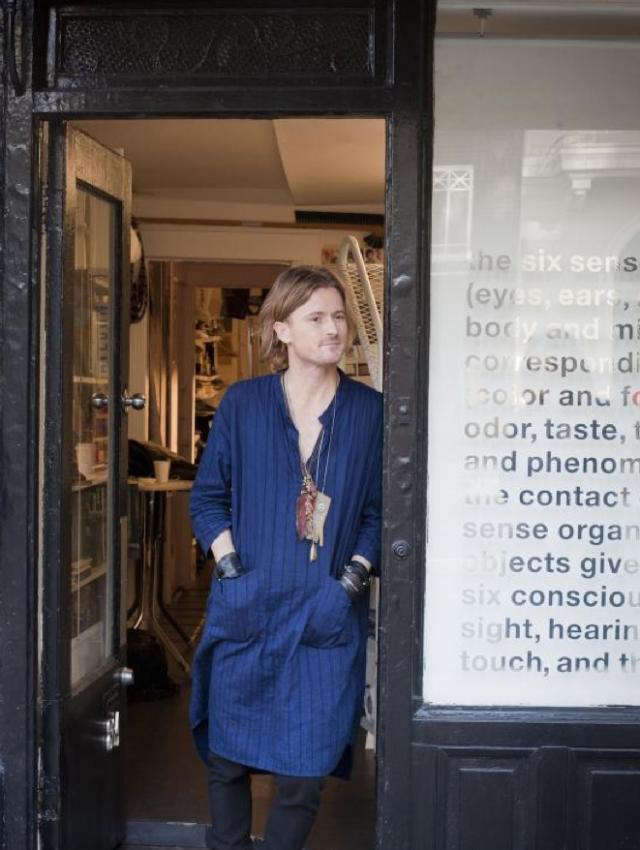
If a lot of modern style advice feels like it was written by a beige filing cabinet, Matt Dick’s East/West style is the happy rebellion. It does not scream. It does not beg for likes. It does not need a neon sneaker to prove it has a pulse. Instead, it builds quietly and cleverly: indigo over white, a tunic over jeans, a bracelet with some mileage, a shirt that looks better because it is a little rumpled and a little lived in.
That is what makes this look so compelling. The style associated with Matt Dick is not just about getting dressed. It is about collecting influences without looking like you mugged a costume department. In published profiles and interviews, his wardrobe reads like a conversation between Bay Area ease and Japanese craft, between American workwear and a more layered, artful understanding of how clothes move with the body. The effect is personal, worldly, and deeply unfussy. In other words: cool without auditioning for cool.
This is what East/West style means in the best sense. The East side of the equation brings reverence for texture, indigo, drape, imperfection, ritual, and clothes with history. The West side brings utility, denim, sunlight, practicality, and that California ability to make even thoughtful dressing look casual. Put them together and you get a wardrobe that feels less like trend-following and more like visual biography.
What Makes Matt Dick’s Style Stand Out?
The first thing that stands out is that nothing looks random, even when it feels relaxed. That is harder to pull off than people think. Plenty of wardrobes are casual. Very few are composed. Matt Dick’s East/West style is composed. The tunics, white shirts, indigo pieces, denim, boots, leather, and collected accessories all speak the same language. The accent is eclectic, but the grammar is disciplined.
That balance matters. Without discipline, globally influenced style can slip into visual chaos. Without personality, minimalism can become a waiting room. Dick’s style sits in the sweet spot between the two. It has restraint, but not sterility. It has feeling, but not clutter. It looks like someone who appreciates craft, but also needs to walk, work, bend, carry, travel, and exist in the real world.
And that is the secret sauce: utility with poetry. You see it in the preference for indigo-dyed pieces, practical denim, handmade details, leather tassels, and workwear-inspired silhouettes. You also see it in the way layered accessories soften the rigor of simple clothes. A plain white shirt becomes more than a plain white shirt when it is part of a uniform built over time.
The East Side of the Equation: Craft, Indigo, and Quiet Ritual
The East in this wardrobe is not a gimmick. It is a philosophy. One of the clearest threads is indigo, and not just as a color trend. Indigo carries age, process, and mood. It fades beautifully, wears honestly, and never quite feels flat. A bright synthetic blue shouts. Indigo murmurs. That difference is everything.
There is also a clear affection for garments that wrap, layer, drape, or hang away from the body rather than aggressively sculpt it. That is why tunics, kurtas, long shirts, and roomier workwear silhouettes matter here. They create movement. They also create space, literally and visually. This is not armor dressing. It is breathing-room dressing.
Then there is the deeper Japanese influence: the respect for materials, the acceptance of imperfection, the understanding that a garment can be both functional and soulful. In style terms, that means wrinkles are not always the enemy. Patina is not a flaw. Repairs can be character. A garment can be beautiful because it has been used, softened, and shaped by daily life. Fast fashion hates that idea, of course. It would prefer you buy a new personality every Thursday.
The East side also shows up in editing. The look is expressive, yes, but never noisy. There is room for bells, necklaces, cuffs, and texture, yet the overall impression remains calm. That is discipline. That is knowing when to stop. That is understanding that one indigo layer with the right white shirt can do more than five trendy pieces having a group panic attack.
The West Side of the Equation: Workwear, Denim, and California Ease
Now for the West. This is where the wardrobe plants its boots. American workwear has always had power because it is democratic, durable, and visually direct. Denim, chore coats, canvas, leather, work shirts, chain stitching, and sturdy boots all bring structure to the softness of the East-inspired pieces. The result is a wardrobe that stays grounded.
California adds a different note. San Francisco style, at its best, has a sharp eye but a low pulse. It knows quality. It respects creativity. It also tends to reject stiffness. That attitude helps explain why Dick’s style never feels overly polished, even when the references are sophisticated. The look is too human for that. There is always a little sun, a little dust, a little studio energy in the mix.
Denim is crucial here, but not in a mass-market, mall-mannequin way. In this style language, denim is heritage and canvas at once. It connects American labor history, Japanese denim obsession, and personal wear patterns. Great denim tells the truth over time. It records your habits. It becomes yours. That idea fits perfectly with a wardrobe built on use rather than novelty.
The Western side of the style also contributes toughness. Without that toughness, the tunics and artisanal details could drift into preciousness. Add worn boots, straight-leg jeans, leather cuffs, and a proper workwear backbone, and suddenly the whole look has traction. It can move through a workshop, a city street, a dinner, a market, a studio, or a flight without changing its accent.
The Signature Ingredients of Matt Dick’s East/West Style
1. Indigo as a Personality, Not Just a Color
Indigo is the emotional center of the wardrobe. It brings depth, history, and a soft kind of authority. It looks good faded, saturated, washed, mended, or freshly dyed. It plays beautifully with black, white, tobacco, olive, and weathered brown. It is one of the rare colors that can feel both humble and luxurious at the same time.
2. Tunics, Long Shirts, and Relaxed Proportions
This silhouette says a lot. It signals that the wearer is not trapped in one tradition. A tunic over jeans instantly changes the line of the body and makes even familiar pieces feel more considered. It is an easy way to move beyond standard menswear formulas without looking theatrical.
3. Denim and Workwear with Soul
Workwear is having one of its regular comebacks, but Dick’s version is smarter than trend-level workwear cosplay. It is less about looking like you might chop wood and more about dressing like you appreciate garments designed to do something. The best East/West workwear has humility. It is useful, but refined. Strong, but not bulky. Broken-in, but not sloppy.
4. Accessories That Feel Collected
One of the best lessons from this style is that accessories should feel accumulated, not deployed. A necklace with travel references, a leather bracelet that looks worn rather than shiny, a handmade key chain, a detail with a backstory: these things humanize the clothes. They keep a carefully edited wardrobe from becoming too clean and anonymous.
5. Simplicity with Texture
Texture does a lot of heavy lifting here. Crisp cotton, raw denim, washed linen, soft leather, stamped cuffs, braided elements, faded indigo, chain-stitched details, brushed canvas—the palette may stay tight, but the tactile range keeps the outfit alive. This is especially important when the colors are quiet. Texture becomes the conversation.
Why This Style Still Feels Modern
Because people are tired. Tired of disposable clothing. Tired of trend churn. Tired of outfits that look expensive for exactly six minutes and then spiritually expire. Matt Dick’s East/West style still resonates because it offers a different rhythm. Buy less. Wear longer. Choose pieces with hand, history, and flexibility. Build a uniform, then let it evolve.
It also feels modern because it refuses binaries. It is not strictly American. Not strictly Japanese. Not fully minimalist. Not fully bohemian. Not luxury in the flashy sense, but not anti-luxury either. It is modern precisely because it understands identity as layered. Plenty of us dress from mixed influences now. The difference is whether we do it lazily or artfully.
This style is artful. It honors source materials. It pays attention to craft. It allows clothing to age. It respects function. And most importantly, it leaves room for life. You can work in these clothes. Travel in them. Spill coffee near them. Fall in love in them. That last one might not be guaranteed by the manufacturer, but the odds are better than in a polyester club shirt.
How to Dress in Matt Dick’s East/West Style Today
Start with five anchors: a white band-collar or longline shirt, straight-leg dark denim, an indigo overshirt or lightweight jacket, one pair of substantial boots, and one accessory with story. That is your foundation. From there, add texture before you add color. Add shape before you add logos. Add meaning before you add more stuff.
Stick to a palette that behaves well together: indigo, chalk white, faded black, brown leather, olive, soft gray, and the occasional muted rust. Avoid colors that yell over the fabrics. This wardrobe works because the materials speak first.
Choose fabrics that improve with age. Linen gets better. Khadi gets better. Raw or rinsed denim gets better. Good leather gets better. Even a sturdy cotton poplin shirt gets better once it loses its showroom stiffness and starts acting like it has a social life. That aging process is not a side effect. It is part of the aesthetic.
Most of all, resist the urge to over-style it. East/West dressing works best when it feels instinctive. One pendant is enough. One cuff may be plenty. Two great layers beat six mediocre ones. And if a piece looks like it is trying to explain itself too loudly, it probably does not belong in this wardrobe.
The Real Lesson Behind the Look
Matt Dick’s East/West style is not memorable because it is exotic or rare. It is memorable because it is coherent. It proves that personal style gets stronger when it is built around principles instead of impulses. Those principles are simple: respect craft, choose function, layer with intention, let clothes age, and collect pieces that carry memory.
That is why the look still feels fresh. It offers something fashion often forgets: depth. Not the fake kind where a brand writes a dramatic paragraph about its inspiration and then sells you a distressed hoodie for the GDP of a small island. Real depth. The kind that comes from travel, making, repetition, wear, curiosity, and taste sharpened over time.
In the end, East/West style is not about dressing like Matt Dick. It is about learning from the logic of his wardrobe. Blend discipline with ease. Blend refinement with usefulness. Blend global influences with a strong personal filter. Then wear the result like it belongs to you. Because if it does not feel lived in, it is only styling. And styling, unlike real style, tends to wash off.
Experience Notes: What Living in East/West Style Actually Feels Like
There is a very specific pleasure in wearing clothes that do not feel like they were designed for a mirror selfie first and a human body second. That is the everyday magic of East/West style. Imagine starting the morning in a soft white shirt with enough room to move, dark denim that still has structure, and an indigo overshirt that carries just a little weight on the shoulders. You do not feel overdressed. You do not feel underdressed. You feel ready. That is a rare thing.
The experience changes the way you move through the day. When the clothes are built around texture, utility, and shape, you become more aware of small sensory details. The cuff softens as you push it back. The denim loosens by noon. The indigo catches different shades of light depending on whether you are indoors, on the street, or sitting near a window with a coffee you promised yourself would be decaf and obviously is not. The outfit becomes more interesting as the day goes on, not less.
That is one reason this style feels so satisfying in real life. It rewards wear. A lot of trend-driven clothing peaks the second you put it on. After that, it is all downhill and regret. East/West pieces tend to do the opposite. They warm up. They crease in the right places. They collect proof of your day. By the time you head into the evening, the clothes feel more like collaborators than props.
There is also a confidence that comes from not wearing anything too eager. People notice the outfit, but usually in stages. First they clock the silhouette. Then they notice the quality of the fabric. Then maybe the small details: the leather cuff, the boots, the washed depth of the indigo, the necklace that looks like it might have a story. It invites curiosity instead of demanding attention. That kind of attention feels better. It is less “Look at me right now” and more “Who are you, exactly?” Stylish people know the second question is the one that matters.
Another experience tied to this kind of dressing is that it travels well emotionally. It works in creative spaces, but it does not need a gallery opening to justify itself. You can wear it to a studio, a bookstore, a casual dinner, a market, a long walk, or a workday that slides into drinks. The outfit adapts. That flexibility creates ease, and ease is one of the most underrated luxuries in style.
Most of all, East/West style changes your relationship with clothing over time. You stop asking, “What is new?” and start asking, “What will get better?” That is a much smarter question. It leads to fewer purchases, better ones, and a wardrobe that begins to feel autobiographical. Every fade, crease, repair, and scuff becomes part of the story. And honestly, that is more exciting than buying another trendy jacket that looks exhausted before you are.