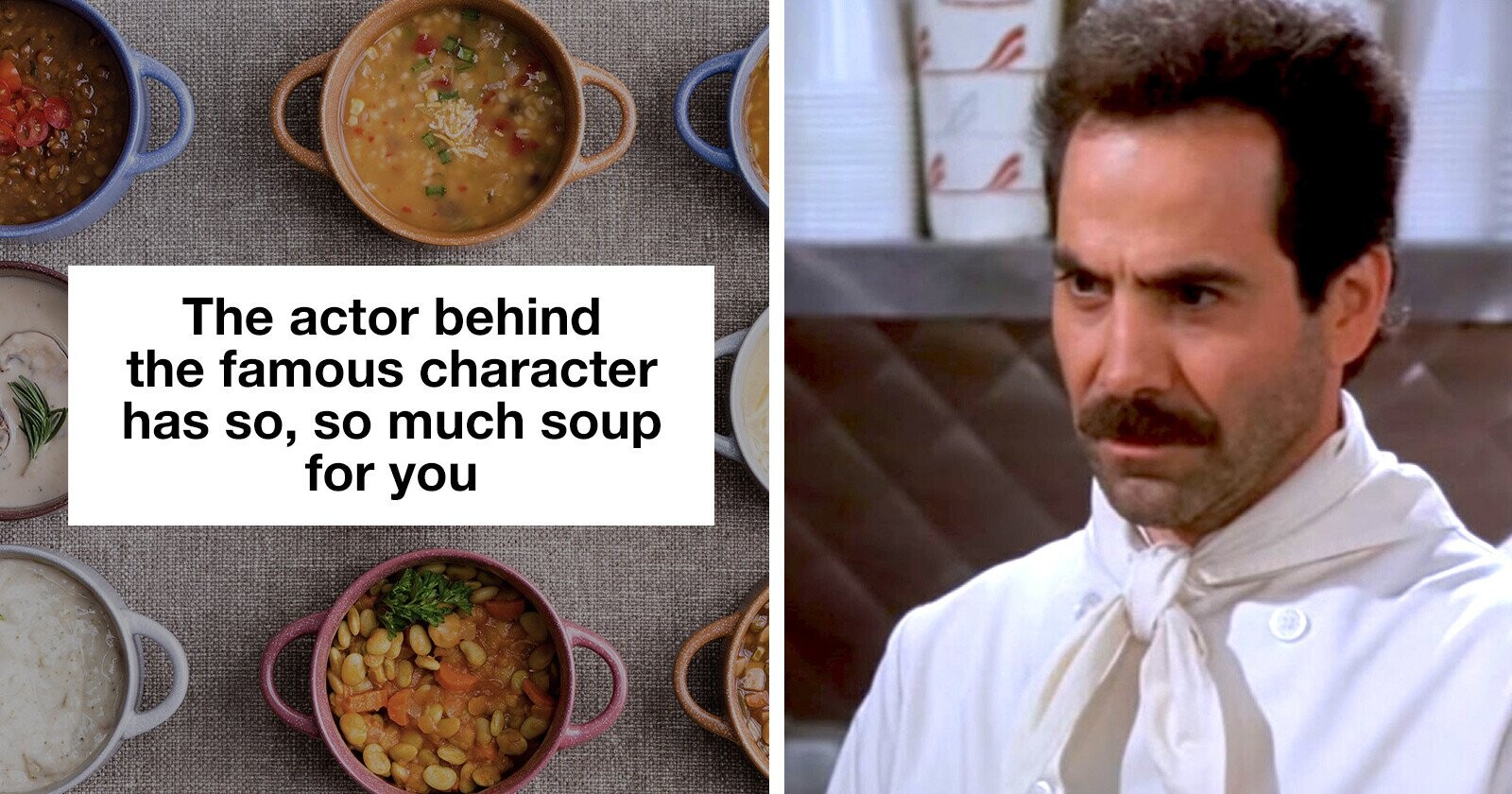
There are television catchphrases, and then there is “No soup for you!”four words so sharp, silly, and perfectly timed that they turned a one-episode Seinfeld character into a permanent member of pop-culture royalty. But here is the delicious twist: Larry Thomas, the actor who played the famously strict soup vendor Yev Kassem, is not anti-soup at all. In fact, he is very much pro-soup. Aggressively pro-soup. Possibly ladle-in-hand pro-soup.
That makes the subject of his favorite fall soups more fun than a bowl of chowder served in a sourdough bread bowl. The character may have terrorized Jerry, George, Elaine, and Kramer with ordering rules, but Thomas has long embraced the strange culinary fame that followed him. He has discussed cooking, shared soup memories, and even connected soup to his life as an actor, home cook, and accidental guardian of one of the most quoted sitcom moments in American television history.
So let’s step up to the counter, have our money ready, move to the left, and explore the fall soups that fit the Soup Nazi legend: clam chowder, chicken noodle with kreplach, French onion, mulligatawny, spicy tomato soup, lobster bisque, and a few cozy seasonal bowls that deserve applause without anyone getting banished from the line.
The Soup Nazi Legacy: From Sitcom Joke to Soup Season Icon
The Seinfeld episode “The Soup Nazi” aired in 1995 and quickly became one of the show’s defining moments. The setup was classic Seinfeld: a tiny New York food counter, absurd social rules, an eccentric genius, and four main characters who cannot stop making things worse. Larry Thomas played the intimidating soup master with military precision, and the result was so memorable that the role earned him an Emmy nomination.
But the legend did not come out of nowhere. The character was inspired by Al Yeganeh, the real soup perfectionist behind Soup Kitchen International on West 55th Street in Manhattan. Yeganeh was famous for his exacting standards, long lines, strict ordering rhythm, and fiercely serious attitude toward soup. Customers did not simply buy lunch; they entered a tiny theater of broth, rules, and survival.
That real-world seriousness is part of why the episode worked. Soup is usually treated as comfort food, something soft and forgiving. The joke of Seinfeld was that this comfort food came with consequences. Order wrong and your lunch disappeared. Talk too much and you risked humiliation. Ask for bread at the wrong moment and suddenly your afternoon became a cautionary tale.
Why Fall Soups Feel So Perfect
Fall is soup’s big entrance music. Summer has salads, smoothies, and outdoor grilling. Winter has roasts, casseroles, and holiday desserts. But fall belongs to soup because soup matches the season’s mood: warm, practical, nostalgic, and just dramatic enough to make you stare thoughtfully out a window while holding a mug.
Great fall soup has three jobs. First, it should warm you without weighing you down. Second, it should use flavors that feel seasonal: squash, apple, onion, herbs, chicken, lentils, potatoes, clams, cream, and spices. Third, it should be flexible enough to stretch across several meals. A good soup is dinner tonight, lunch tomorrow, and proof that your refrigerator is not merely a cold museum of forgotten condiments.
That is also why Larry Thomas’ favorite soups make sense for autumn. They are not delicate little appetizer sips. They are character soups. They have backstory. They have texture. They have opinions. In other words, they would fit beautifully in a Seinfeld episode.
Larry Thomas’ Favorite Soup: White Clam Chowder
If there is one soup that seems to sit at the top of Larry Thomas’ list, it is white clam chowder. That choice feels wonderfully East Coast: creamy, briny, rich, and comforting in the way only a bowl of potatoes, clams, onions, and dairy can be. It is not a quiet soup. It announces itself with ocean flavor and then settles in like a warm sweater.
New England-style clam chowder is especially perfect for fall because it bridges the gap between summer seafood and winter comfort food. The clams keep it bright and coastal, while potatoes and cream make it hearty enough for chilly weather. Add oyster crackers, black pepper, and maybe a little parsley, and you have a bowl that can turn a gray afternoon into a small personal victory.
Why Clam Chowder Works
The secret to great clam chowder is balance. Too much cream and it becomes heavy. Too little clam flavor and it tastes like potato soup wearing a sailor hat. The best versions bring forward the clams with clam juice or stock, use potatoes for body, and rely on onion or celery for gentle sweetness.
For a Soup Nazi-approved fall version, go generous on the clams. That does not mean dumping in seafood until the spoon stands up by itself, but it does mean treating clams as the star, not the garnish. Serve it with crackers if you like crunch, or go full Fisherman’s Wharf fantasy with a sourdough bread bowl. Either way, this is “soup for you” energy at its finest.
Chicken Noodle Soup With Kreplach: Comfort With a Family Story
Chicken noodle soup is already the official bowl of “Are you okay?” It appears when someone is sick, tired, cold, overwhelmed, or simply in need of edible reassurance. But chicken noodle soup with kreplach takes that comfort and gives it a deeper family-history flavor.
Kreplach are small filled dumplings often associated with Jewish cooking, commonly stuffed with meat, onion, and seasoning. Dropped into chicken soup, they make the bowl feel celebratory and old-fashioned in the best way. It is the kind of soup that suggests someone in the kitchen has patience, memory, and strong opinions about whether the dough is thin enough.
For fall, chicken soup with kreplach offers exactly what the season asks for: clear broth, tender chicken, carrots, onion, celery, noodles or dumplings, and enough aroma to make people drift toward the kitchen as if summoned by a dinner bell. Add dill or parsley at the end, and the soup becomes bright instead of sleepy.
Mulligatawny: The Seinfeld Soup Fans Remember
No discussion of the Soup Nazi can ignore mulligatawny. The name alone sounds like something Newman would sprint across Manhattan to buy. Mulligatawny is a curry-spiced soup with roots in Anglo-Indian cooking, and modern versions often include chicken, lentils, rice, coconut milk, apples, curry spices, and lemon.
What makes mulligatawny so ideal for fall is its sweet-savory personality. The curry brings warmth, the apple adds brightness, the lentils or rice provide body, and the chicken makes it a full meal. It is cozy without being bland, exotic without being fussy, and hearty without turning into stew.
How to Build a Fall Mulligatawny
Start with onion, garlic, and ginger. Add curry powder or a blend of garam masala, coriander, turmeric, and a little cayenne. Stir in red lentils, chicken broth, diced apple, cooked chicken, and coconut milk. Finish with lemon juice to wake everything up. If you want a playful nod to Larry Thomas’ style, add golden raisins or diced turnip for sweetness and earthiness.
The result is a soup with layers: sweet, spicy, creamy, savory, and bright. It is the kind of bowl that makes you understand why the Seinfeld characters were willing to endure public scolding for lunch.
French Onion Soup: The Drama Queen of Fall Bowls
French onion soup might be the most theatrical soup in the world. It begins humbly with onions, butter, and time. Then it turns into a rich broth topped with toasted bread and bubbling cheese. If soup could wear a velvet cape and make an entrance, this would be the one.
The key is caramelization. You cannot rush French onion soup unless you want a bowl that tastes like warm onion water, which is not a meal; it is a cry for help. Slowly cooked onions become sweet, deep, and almost jammy. Add good stock, a splash of wine if desired, thyme, and a crusty bread-and-Gruyère topping, and suddenly dinner feels like a bistro scene.
It is easy to imagine the Soup Nazi approving of French onion soup for its discipline. It rewards patience. It punishes shortcuts. It demands proper technique. Very on brand.
Spicy Tomato Soup: Not Boring When It Has a Backbone
Tomato soup often gets dismissed as the background singer for grilled cheese. That is unfair, but understandable. A plain tomato soup can be pleasant without being exciting. Add spice, sausage, roasted garlic, smoked paprika, chile, or herbs, however, and suddenly tomato soup has a backbone.
A fall-friendly spicy tomato soup works beautifully with Italian sausage, chicken sausage, or even a plant-based sausage for a vegetarian version. Fire-roasted tomatoes give the broth depth. A little cream or coconut milk softens the acidity. Fresh basil or cilantro can change the direction entirely. Serve it with grilled cheese cut into dunkable strips, because adulthood is difficult and tiny sandwich soldiers help.
This is also one of the easiest soups to make on a weeknight. It delivers big flavor without requiring a three-hour relationship with your stove. Even the Soup Nazi might respect that efficiency.
Lobster Bisque: The Luxury Bowl
Lobster bisque has long been associated with the Original Soup Kitchen legend, and for good reason. Bisque is rich, smooth, and unapologetically fancy. It takes the deep flavor of shellfish and turns it into a silky, spoonable event.
A proper lobster bisque usually builds flavor from shells, aromatics, wine or brandy, stock, herbs, cream, and lobster meat. The point is not simply to taste cream; the point is to capture the sweetness of lobster and support it with savory depth. Done right, it tastes like a restaurant meal hiding inside a bowl.
For fall, lobster bisque is ideal for special dinners, holidays, or those nights when you want comfort food with a little tuxedo energy. Serve it in smaller portions with crusty bread and a crisp salad. The soup is rich enough to lead the meal without needing a huge supporting cast.
Beef Barley and Other Hearty Fall Soups Worth Ordering
While Larry Thomas’ favorites get the spotlight, the broader Soup Nazi universe also reminds us of classic hearty bowls like beef barley, chili, Italian sausage soup, lentil soup, split pea with ham, potato bacon soup, and corn chowder. These are the practical soups of fall: filling, affordable, and excellent at making leftovers feel intentional.
Beef barley soup is especially satisfying because barley gives the broth a chewy, nutty texture. Lentil soup offers protein and earthiness without much fuss. Potato bacon soup is cozy and indulgent, especially with sharp cheddar and scallions. Split pea soup may not be glamorous, but it has the quiet confidence of a soup that knows it will taste even better tomorrow.
Fall soup does not have to be fancy. Sometimes the best bowl is the one that uses what you already have: carrots, onions, broth, leftover chicken, beans, herbs, or a lonely squash sitting on the counter like it is waiting to be cast in a Thanksgiving commercial.
How to Make Fall Soup Taste Better at Home
1. Brown Before You Simmer
Flavor begins before the liquid goes in. Sauté onions until they soften. Brown sausage or beef. Toast spices briefly in oil. Roast squash, carrots, or pumpkin before blending. These small steps create depth that plain boiling cannot deliver.
2. Use Acid at the End
A squeeze of lemon, a splash of vinegar, or a spoonful of pickle brine can make a flat soup taste alive. This is especially helpful for lentil soup, chicken soup, bean soup, and creamy soups that need brightness.
3. Respect Texture
Soup should not always be perfectly smooth. Chowder needs chunks. Chicken soup needs tender pieces. French onion needs silky onions and crisp-chewy bread. Mulligatawny can be partially blended but still benefit from rice, chicken, or lentils.
4. Garnish Like You Mean It
Fresh herbs, cracked pepper, toasted nuts, grated cheese, chili oil, sour cream, croutons, scallions, or fried shallots can turn a good soup into a memorable one. Garnish is not decoration; it is the final punchline.
Soup Storage: Because Leftovers Deserve Rules Too
If the Soup Nazi had a refrigerator policy, it would probably involve laminated instructions and consequences. Fortunately, home soup storage is simple. Most cooked leftovers, including soup, should be refrigerated within two hours and eaten within three to four days. For longer storage, freeze portions in airtight containers, leaving room for expansion.
Creamy seafood soups like clam chowder and lobster bisque are best enjoyed sooner rather than later because dairy and seafood are more delicate. Broth-based chicken soup, lentil soup, and beef barley usually reheat well. When reheating, bring soup to a safe, steaming temperature and stir so heat distributes evenly.
Also, do not put a giant boiling pot directly into the refrigerator. Divide soup into shallow containers first. Your fridge is not a superhero. It has limits.
Experience Section: What Cooking Soup Teaches Us About the Soup Nazi, Fall, and Real Comfort Food
The funny thing about the Soup Nazi legend is that it turns soup into a high-stakes performance. In real life, soup is usually the opposite. Soup is forgiving. You can start with an onion, a carrot, and a questionable plan, and somehow end up with dinner. That is why making fall soup at home feels so satisfying. It does not ask you to be perfect. It asks you to pay attention.
Picture a cool Saturday afternoon. The sky is gray, the windows are slightly fogged, and there is a pot on the stove making the whole kitchen smell like someone has their life together. Maybe it is clam chowder with extra clams. Maybe it is chicken soup with noodles and dumplings. Maybe it is mulligatawny, glowing yellow from turmeric and curry, with apples softening into the broth. Whatever the soup, the experience is bigger than the recipe.
Soup gives you checkpoints. First comes the chopping, which is either relaxing or a reminder that your knives need sharpening. Then comes the sauté, when onions lose their sharpness and become sweet. Then liquid hits the pot, steam rises, and the house changes mood. People wander in. Someone asks, “Is that ready?” even though they watched you start seven minutes ago. The answer is no. Good soup has boundaries.
That is where the Soup Nazi joke secretly understands cooking. Soup may be comfort food, but it still has rules. Do not rush the onions. Do not underseason the broth. Do not dump cream into violently boiling liquid and act surprised when it rebels. Do not forget acid. Do not serve chowder without texture. Do not call cereal soup unless you are ready to defend yourself in public.
Fall soups also create memories because they are easy to share. A pot of soup invites second bowls, leftovers, neighbors, sick friends, and lazy Sunday lunches. It is hard to make one private serving of soup without feeling faintly ridiculous. Soup wants company. Even a famously strict soup counter became famous because people lined up together, talked about it, argued about it, and remembered it.
So the best experience connected to “Soup for You” is not merely watching a classic sitcom scene or repeating the catchphrase. It is making a bowl that earns its own little reputation. Maybe your family starts requesting your French onion soup every October. Maybe your friends remember your spicy tomato soup because it saved a rainy game night. Maybe your clam chowder becomes the dish people casually mention three months later, which is the home-cook equivalent of winning an award.
In the end, fall soup is comfort with structure. It is warmth with technique. It is nostalgia with leftovers. And unlike the television counter, your kitchen can be generous. Around here, there is soup for you, soup for me, and probably one container in the freezer labeled so badly no one will identify it until February.
Conclusion: A Big Bowl of Pop Culture and Comfort
The Soup Nazi may have built his fame on denying soup, but the lasting appeal of the character is really about how much people love soup in the first place. A bowl good enough to risk embarrassment for is a powerful thing. Larry Thomas’ favorite fall soupsespecially clam chowder, chicken noodle with kreplach, French onion, mulligatawny, and bold tomato soupshow how varied and personal soup can be.
Some soups are tied to family. Some are tied to restaurants. Some are tied to television history. Some are simply tied to the first cold night when you realize salad is not emotionally equipped for the season anymore. Whether you are simmering lobster bisque, roasting squash, caramelizing onions, or adding extra clams because more clams is usually the correct answer, fall soup is one of the great pleasures of home cooking.
So step up confidently. Know your order. Keep the line moving. And this time, thankfully, there is soup for you.