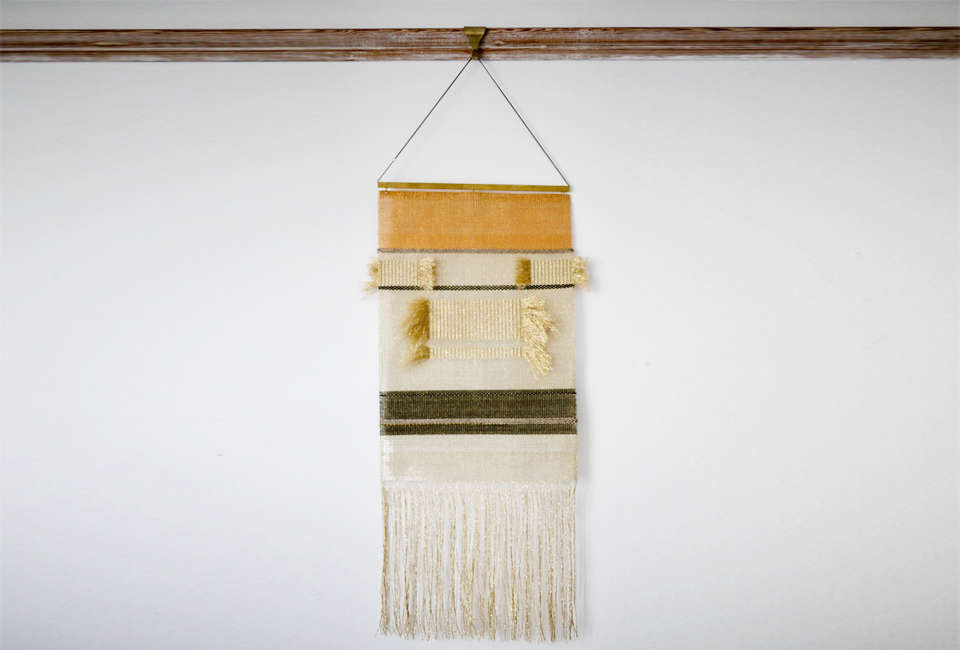
Silver Thunder Being sounds like the name of a sky spirit who arrives during a storm wearing polished armor and excellent taste in wall decor. In reality, it refers to a striking handwoven wall hanging associated with Native Line, the textile practice of artist and weaver Justine Ashbee. The piece has appeared in curated design coverage as a metallic-thread, waxed-linen, and cotton artworkpart fiber sculpture, part modern talisman, part “yes, my wall needed drama” moment.
What makes Silver Thunder Being interesting is not just its shimmering surface. It sits at the crossroads of contemporary textile art, ancient weaving traditions, natural symbolism, and modern interior design. The words themselves carry weight: silver suggests light, reflection, moonlike calm, and precious materiality; thunder suggests force, movement, weather, sound, and awe; being suggests presence. Put together, the phrase feels less like a product name and more like a visitor from the atmosphere.
This article explores the meaning, material appeal, design value, and lived experience of Silver Thunder Being as a contemporary woven wall hanging. We will look at how it connects to textile art, metallic fibers, thunder symbolism, modern homes, and the slow craft movementwithout turning your living room into a museum plaque with throw pillows.
What Is Silver Thunder Being?
Silver Thunder Being is best understood as a handmade textile wall hanging created within the Native Line design language: minimal, geometric, symbolic, and deeply connected to natural forms. Curated design listings describe it as an art object made with metallic thread, waxed linen, and cotton, placing it firmly in the world of fiber art rather than mass-produced wall decoration.
Unlike a framed print, a woven wall hanging has body. It casts shadows. It shifts as light changes. It can feel quiet in the morning and dramatic in the evening, which is a neat trick for something that does not require batteries, Wi-Fi, or an app update at the worst possible time.
The piece’s name gives it personality. “Silver” points to the reflective, luminous character of metallic fiber. “Thunder” introduces energy and atmosphere. “Being” suggests that the object has a kind of presence, almost like a figure or guardian. In home decor terms, it is not background wallpaper. It wants a wall, a little breathing room, and perhaps the occasional compliment from guests who pretend they know exactly what fiber art is.
The Artist and the Native Line Aesthetic
Justine Ashbee is widely recognized as an American-born textile artist and weaver whose work has been linked to Native Line, a practice known for handwoven wall hangings, jewelry, and symbolic patterns. Her background in textile design and her long engagement with weaving show up in pieces that feel both ancient and contemporary. The work often uses simple lines, reflective materials, and geometric arrangements to create a sense of movement.
Native Line’s visual language is not fussy. It does not rely on crowded pattern or heavy ornament. Instead, it uses restraint, repetition, and material contrast. That restraint is exactly why a piece like Silver Thunder Being can feel powerful. The artwork does not shout; it hums. It is the design equivalent of someone entering a room silently and somehow becoming the most interesting person there.
Why Handmade Matters
In an era of fast decor, handmade textile art offers something different: evidence of time. Every woven line reflects a decision, a rhythm, and a human hand. That matters because interiors can easily become too perfect, too flat, or too showroom-polished. A handmade wall hanging adds irregularity in the best way. It reminds the room that humans live there, not just algorithms with furniture budgets.
Silver Thunder Being belongs to this slower design conversation. It is not only about filling a blank wall. It is about adding craft, texture, and a sense of narrative to a space. The best textile art gives a room a pulse, and this piece does that through shimmer, pattern, and symbolic suggestion.
The Meaning Behind “Silver”
Silver has long carried associations with reflection, purity, value, and moonlight. In material terms, silver is known for its brightness, conductivity, and reflectivity. In cultural terms, it often appears as a symbol of cool elegance, quiet wealth, protection, and mystery. It is less loud than gold but not exactly shy. Think of silver as gold’s cooler cousin who studied architecture and owns better boots.
In a textile artwork, metallic silver thread does something special: it reacts to light. A matte painting stays relatively consistent throughout the day, but metallic fiber changes with the angle of the sun, the glow of lamps, and the movement of the viewer. That makes Silver Thunder Being feel alive. The surface does not merely display an image; it performs.
This shifting quality is one of the reasons metallic-thread wall hangings work so well in modern interiors. They can soften a minimalist room without making it busy. They can elevate a neutral palette without demanding that every chair suddenly become dramatic. Silver brings brightness without the visual heat of gold, making it especially useful in bedrooms, beach houses, studios, and calm living spaces.
The Power of “Thunder” in Art and Symbolism
Thunder is not just weather noise. Scientifically, thunder is the sound created when lightning rapidly heats the surrounding air, causing sudden expansion and a shock wave. Symbolically, thunder has been interpreted across cultures as power, warning, transformation, cleansing, and divine presence. It is the sky clearing its throat.
When the word “thunder” is attached to a textile artwork, it adds drama. It gives the piece a sense of force beyond its physical softness. That contrast is important: woven fiber is tactile, flexible, and intimate, while thunder is vast, loud, and untouchable. Silver Thunder Being combines those opposites into one object. It takes the storm and translates it into thread.
Thunder, Nature, and Respectful Interpretation
Many Indigenous traditions include stories of thunder beings, thunderbirds, or sky powers connected with storms, protection, renewal, and balance. These traditions are diverse and should never be reduced to a single decorative trend. When discussing a modern artwork with a name like Silver Thunder Being, the respectful approach is to recognize that thunder symbolism carries deep cultural and spiritual meanings in many communities while focusing on the specific object as contemporary textile art.
In other words, the piece can be appreciated for its atmospheric power and symbolic resonance without pretending that a shopper’s wall is suddenly a sacred mountain. Good design writing knows when to admire and when to stop talking before it trips over its own incense burner.
Why Textile Wall Hangings Are Back
Textile wall art has moved far beyond dorm-room tapestries and inherited needlepoint. Designers increasingly use woven pieces, fiber sculpture, vintage textiles, and handmade wall hangings to add depth to interiors. The appeal is easy to understand: fabric softens acoustics, adds texture, introduces craft, and makes a room feel layered rather than flat.
A textile wall hanging can do what framed art often cannot. It can create movement through fringe, dimension through fiber, and warmth through material. In rooms dominated by drywall, glass, stone, and screens, woven art provides relief. It says, “Yes, this space has edges, but it also has softness.”
Silver Thunder Being fits especially well into this shift because it combines the handmade quality of fiber art with the polished impact of metallic material. It can work in a minimalist space, a bohemian room, a coastal bedroom, a modern rustic cabin, or an eclectic gallery wall. The key is to let it breathe. Crowding a piece like this between five tiny frames and a novelty sign that says “Laundry Today or Naked Tomorrow” would be a small tragedy.
Materials: Metallic Thread, Waxed Linen, and Cotton
The material mix is central to the appeal of Silver Thunder Being. Metallic thread brings shimmer and visual charge. Waxed linen adds strength, structure, and a subtle organic character. Cotton contributes softness and familiarity. Together, these materials create contrast: shine and matte, smooth and fibrous, delicate and durable.
Metallic fibers are especially effective in woven art because they catch light along narrow lines. Instead of one flat reflective surface, the viewer sees many tiny flashes. This gives the work a stormlike quality: not one lightning bolt, but a field of quiet electricity. Waxed linen helps the piece hold its structure, while cotton keeps it from feeling too industrial.
Texture as Visual Storytelling
Texture is not just something you touch; it is something you read with your eyes. In Silver Thunder Being, texture tells a story of tension and balance. The silver elements suggest energy and brightness. The fiber base suggests earth, handwork, and patience. That tension is what keeps the artwork from becoming merely pretty. Pretty is fine. Pretty pays rent. But memorable art needs a little weather in it.
How to Style Silver Thunder Being at Home
Because Silver Thunder Being has a strong identity, it works best when styled with intention. It does not need a loud background. A white, cream, charcoal, clay, or pale gray wall can help the metallic thread stand out. Natural materials such as wood, linen bedding, stoneware, rattan, or wool can echo the handmade quality without competing with it.
In a bedroom, the piece can sit above a headboard as a calm focal point. In a living room, it can anchor a reading corner or console table. In an entryway, it can make a memorable first impression without yelling “I hired a designer,” even if you did. In a studio or creative workspace, it can act as a small visual ritual: a reminder of rhythm, light, and making.
Best Color Palettes
Silver Thunder Being pairs beautifully with warm neutrals, soft blacks, smoky blues, pale woods, and muted earth tones. For a coastal look, combine it with white walls, sandy linen, and driftwood textures. For a modern look, place it against charcoal or deep navy with simple furniture. For a bohemian look, layer it with ceramics, woven baskets, and plantsbut keep the surrounding patterns restrained so the piece remains the main event.
Lighting Tips
Lighting is everything. A soft side light can bring out the metallic thread and create tiny shadows. Avoid harsh overhead lighting that flattens the surface. Picture lights, wall washers, or nearby lamps can make the piece glow in the evening. If you want the full thunder effect, let natural light hit it at an angle. The silver will do the rest, because metallic thread loves drama almost as much as theater majors do.
Why Silver Thunder Being Feels Modern
The modernity of Silver Thunder Being comes from its restraint. It does not imitate traditional tapestry scenes or rely on heavy figuration. Instead, it uses materials and naming to create mood. This is very much in line with contemporary interiors, where objects are often chosen not only for what they depict but for how they make a room feel.
Modern design is no longer only about clean lines and empty surfaces. People want warmth, story, and individuality. They want homes that feel collected rather than assembled in one panicked weekend. A piece like Silver Thunder Being helps create that collected feeling. It suggests that the homeowner values craft, symbolism, and texturenot just matching side tables.
Who Is Silver Thunder Being For?
Silver Thunder Being is ideal for people who love handmade art, fiber design, symbolic objects, and interiors with quiet impact. It suits collectors who appreciate textiles as serious art. It also suits homeowners who want something more tactile than a print but less bulky than sculpture.
It may not be right for someone who wants bright color, obvious imagery, or art that explains itself in three seconds. This is a piece for slow looking. It rewards attention. It is not trying to be everyone’s favorite cousin at Thanksgiving; it is trying to be the mysterious guest who says one unforgettable sentence and then disappears near the dessert table.
Care and Display Considerations
Like most handmade textile wall hangings, Silver Thunder Being should be handled with care. Keep it away from damp areas, direct heavy sunlight, and places where people may brush against it constantly. A hallway used by children, pets, backpacks, and heroic laundry baskets may not be the safest home for delicate fiber art.
Dust lightly with a soft brush or use gentle air movement rather than aggressive cleaning. Avoid chemical sprays. If the piece needs deeper cleaning, consult a textile professional. Metallic threads and natural fibers can react differently to moisture and friction, so this is not the moment to improvise with a sponge and optimism.
The Experience of Living With Silver Thunder Being
Living with Silver Thunder Being is less like owning a decorative accessory and more like sharing space with a quiet weather system. At first, you may notice the shine. That is the immediate hook: the silver thread catches your eye from across the room, especially when morning light slides across the wall. But after a few days, the shine becomes only part of the experience. You start noticing the structure, the tension of the lines, the way the fibers hold still while the light keeps moving.
One of the most enjoyable experiences related to a piece like this is how it changes the mood of a room without demanding a renovation. A blank wall can feel unfinished, like a sentence missing its verb. Hang a woven metallic piece there, and suddenly the wall has intention. The room feels more layered, more personal, and slightly more interesting than it has any right to be before coffee.
Guests tend to react differently to textile art than they do to framed prints. A print often gets a quick glance: “Nice picture.” A woven piece invites questions. “What is that made of?” “Is it handmade?” “Where did you find it?” “Can I touch it?” The correct answer to the last question is usually a cheerful but firm no, especially if the guest is holding salsa.
Silver Thunder Being can also influence how you arrange nearby objects. A ceramic vase suddenly looks better beneath it. A wooden bench feels more grounded. A linen-covered bed seems more intentional. The piece becomes a visual anchor, helping unrelated items speak the same design language. That is one of the secret powers of good wall art: it does not merely decorate; it organizes the room’s personality.
There is also a meditative quality to woven work. Because weaving is built on repetition, the finished piece carries a sense of rhythm. Looking at it can feel calming, even when the name includes thunder. That contrast is part of its charm. It suggests energy held in balance, storm translated into pattern, movement paused long enough for you to live with it.
In a bedroom, Silver Thunder Being can make the space feel restful but not boring. In a living room, it can add sophistication without becoming cold. In a creative workspace, it can serve as a reminder that great work often comes from repetition, patience, and small decisions layered over time. Every thread is a choice. Every line earns its place. That is a useful message on days when your own to-do list looks like it was assembled by raccoons.
The best experience of all may come at night. With a warm lamp nearby, the metallic fibers glow softly instead of flashing. The thunder becomes quieter. The silver becomes warmer. The “being” part of the title starts to make sense, because the artwork feels present in a way flat decor rarely does. It does not need to move to feel alive. It only needs light, space, and someone willing to look twice.
Conclusion
Silver Thunder Being is more than a beautiful wall hanging with a memorable name. It represents the renewed appreciation for handmade textile art, natural symbolism, and interiors that feel personal rather than predictable. Through metallic thread, waxed linen, cotton, and a storm-charged title, the piece combines softness with power, shine with restraint, and craft with atmosphere.
For anyone interested in contemporary fiber art, woven wall decor, or symbolic design, Silver Thunder Being offers a compelling example of how a single handmade object can transform a room. It brings texture where walls are flat, light where corners feel dull, and story where ordinary decor sometimes runs out of things to say. In short, it is the kind of piece that proves a wall can have a little thunderand still be perfectly civilized about it.
Note: This article is based on real design, textile, museum, meteorological, and material references, including information on Native Line, Justine Ashbee’s woven art practice, textile wall hanging trends, silver material properties, and thunder symbolism. No source links are included in the article body as requested.