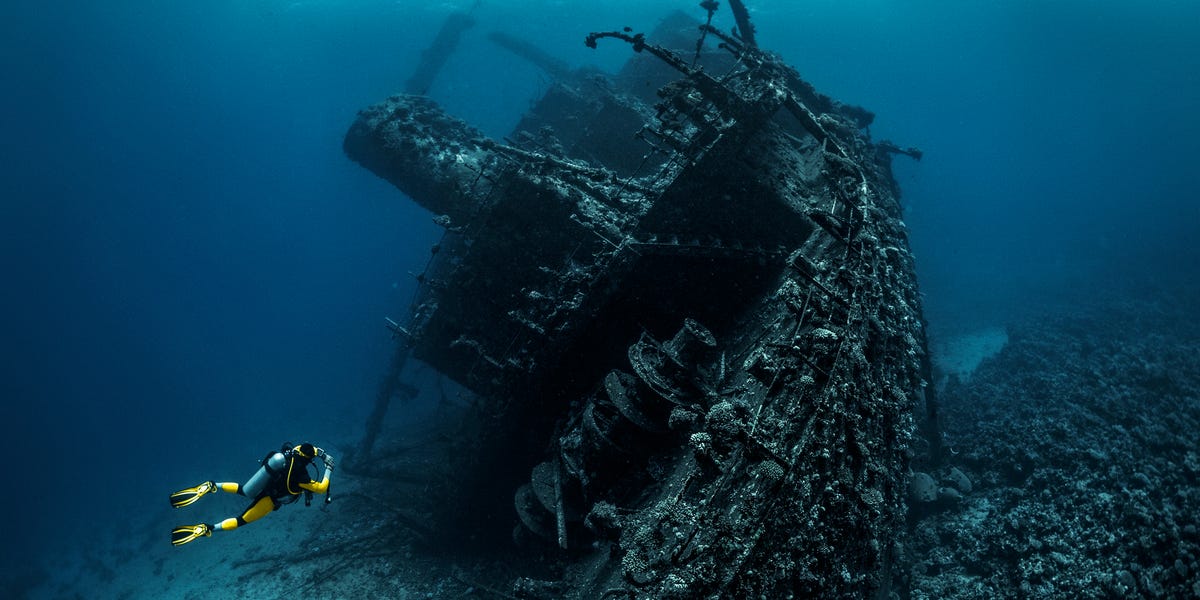
Shipwrecks may look frozen in time, but the ocean is not a museum with air-conditioning and polite “do not touch” signs. It is a busy, salty, living workshop where chemistry, currents, microbes, animals, sediment, and time all clock in for the day. A wooden schooner, a steel freighter, a warship, or a cargo vessel does not simply “sit” underwater. It changes. It bends, corrodes, hosts new life, loses pieces, gains protective crusts, and slowly becomes part artifact, part reef, and part mystery novel written in barnacles.
Shipwreck degradation is the process by which submerged vessels break down after sinking. The word “decomposition” may sound like something from biology class, but in maritime archaeology it includes many types of decay: metal corrosion, wood deterioration, microbial activity, abrasion from sand, damage from storms, colonization by marine organisms, and human disturbance. In simple terms, a shipwreck is an underwater buffet, apartment complex, chemistry experiment, and historical archive all at once. That is a lot of pressure for one old boat.
Understanding how underwater decomposition works matters for archaeologists, divers, conservationists, ocean scientists, and anyone who cares about maritime history. A shipwreck can reveal trade routes, engineering methods, military history, migration patterns, and everyday life at sea. But those clues are fragile. The same ocean that preserves some wrecks beautifully can also tear others apart with the patience of a very damp accountant.
What Is Shipwreck Degradation?
Shipwreck degradation is the gradual transformation of a vessel after it enters an underwater environment. This transformation begins immediately. As soon as a ship sinks, it is exposed to new conditions: water pressure, reduced oxygen, salinity, temperature changes, sediments, bacteria, fungi, marine animals, and physical forces such as waves or currents.
Not all wrecks degrade at the same speed. A wooden ship buried in cold, low-oxygen mud may survive for centuries with remarkable detail. A wooden wreck exposed in warm tropical water may be chewed through by marine borers faster than you can say, “Maybe we should have used teak.” A steel ship in seawater may corrode steadily, while iron objects in freshwater can remain comparatively stable for long periods. The wreck’s material, depth, location, burial level, and exposure determine whether it becomes a well-preserved time capsule or a scattered archaeological jigsaw puzzle.
The Four Big Forces Behind Underwater Decomposition
Shipwrecks break down through a combination of physical, chemical, biological, and human processes. These forces do not take turns politely. They overlap, gang up, and sometimes even cancel each other out.
1. Physical Breakdown: Currents, Storms, Sand, and Pressure
Physical degradation is the most straightforward form of damage. Water moves, sediment shifts, storms arrive, and gravity remains deeply committed to its job. A wreck resting in shallow coastal water may be battered by waves, dragged by storm surge, or buried and uncovered repeatedly by sand. Each exposure event can open the site to new decay.
Sand can protect a wreck by covering it and reducing oxygen exposure, but moving sand can also act like underwater sandpaper. Over time, abrasive particles may wear down wood, metal, ceramic, and exposed artifacts. In deeper water, strong currents can scour around a wreck, removing sediment from one side and causing structural collapse. Pressure itself is not always the main destroyer, but at great depths it shapes which organisms can live there and how materials respond over time.
Shipwrecks also collapse under their own weakened structures. Decks fall inward, hull plates separate, masts topple, and cargo shifts. The wreck becomes less like a ship and more like a landscape. Archaeologists call this part of “site formation,” meaning the set of processes that turn a vessel from a functioning machine into an archaeological site.
2. Chemical Degradation: Corrosion Never Sleeps
For metal shipwrecks, corrosion is the headline act. Iron and steel react with oxygen, water, salts, and other chemicals in the marine environment. Saltwater is especially aggressive because chloride ions help speed up electrochemical reactions. In plain English: seawater is very good at convincing metal to stop being metal.
Iron and steel wrecks often develop layers of corrosion products, mineral deposits, and biological growth. These crusts may look ugly, but they can sometimes slow further corrosion by forming a barrier between the metal and surrounding seawater. In other cases, damage to the protective layer exposes fresh metal and accelerates decay.
Different metals behave differently underwater. Copper alloys may form greenish corrosion layers. Aluminum can pit. Lead can remain stable in some conditions but react in others. Mixed-metal construction may create galvanic corrosion, where one metal corrodes faster because it is electrically connected to another metal in seawater. It is a little like group project drama, except the participants are rivets, hull plates, and fasteners.
3. Biological Degradation: Microbes, Worms, Sponges, and Tiny Tenants
Biology plays a huge role in underwater decomposition. The first settlers on many submerged surfaces are microbes. They form biofilms, thin living layers that help prepare the surface for larger organisms. Once biofilms establish themselves, they can attract or support algae, barnacles, mussels, sponges, corals, crabs, and fish. Before long, the wreck becomes an artificial reef.
This ecological transformation can be beautiful, but it is not always gentle. Marine organisms may add weight, trap moisture, alter local chemistry, or bore into materials. Wood is especially vulnerable to marine borers such as shipworms and gribbles. Despite the name, shipworms are not worms in the everyday sense; they are mollusks that drill into submerged wood and digest it with help from specialized microbes. Rude? Yes. Efficient? Absolutely.
In deep-sea wrecks, microbial communities can also interact with metal. The famous “rusticles” on the RMS Titanic are icicle-like formations associated with iron corrosion and microbial activity. They demonstrate that even in cold, dark, high-pressure environments, life can participate in the slow dismantling of a ship.
4. Human Disturbance: The Most Preventable Damage
Nature is patient. Humans are impatient. Anchoring, trawling, souvenir collecting, careless diving, unauthorized artifact removal, construction, and treasure hunting can damage shipwrecks far faster than natural processes. A coral-encrusted rail may take decades to form, but one dragging anchor can remove it in seconds. A scattered artifact may lose its meaning once moved from its original context.
This is why many heritage professionals emphasize “look, don’t loot.” A shipwreck is not just a pile of objects; it is a map of events. The position of timbers, cargo, anchors, machinery, and personal items can help researchers reconstruct what happened. Remove the pieces, and the story becomes harder to read.
How Different Ship Materials Decompose Underwater
Wooden Shipwrecks
Wooden wrecks are highly sensitive to oxygen, temperature, salinity, and biological activity. In low-oxygen mud or deep sediment, wood can survive for centuries because many decay organisms cannot thrive. The wood may become waterlogged, meaning its cellular structure fills with water. It may look solid underwater but become extremely fragile if removed and allowed to dry. That is why conservation is so careful and expensive: a waterlogged plank can shrink, crack, or collapse when exposed to air without proper treatment.
In warm, oxygen-rich saltwater, exposed wood is a favorite meal for marine borers. Shipworms tunnel through timber, leaving the surface deceptively intact while the inside becomes riddled with channels. Gribbles and other small crustaceans can attack surfaces more visibly. A wooden hull that looks romantic in a diver’s flashlight may actually be holding together with optimism and marine slime.
Iron and Steel Shipwrecks
Iron and steel wrecks are vulnerable to corrosion, especially in saltwater. Oxygen, chloride, temperature, pH, and microbial communities can influence how quickly metal deteriorates. Some wrecks develop protective concretions made of corrosion products, sediment, and marine life. Others lose structural strength as plates thin, rivets fail, and decks collapse.
The USS Monitor is a strong example of how corrosion and structural deterioration can become major preservation concerns. Historic ironclads and steel ships are not immune to time just because they were built to be tough. The ocean has a long memory and a very small chisel.
Ceramics, Glass, Stone, and Cargo
Not everything on a wreck decays at the same speed. Ceramics, glass bottles, ballast stones, and some dense cargo materials can survive long after wood and iron degrade. These durable materials often help archaeologists identify the layout of a wreck after the hull has collapsed. A field of ballast stones may mark the spine of a vanished wooden ship. Ceramic fragments may reveal trade networks, daily habits, or the ship’s origin.
Organic cargo, cloth, leather, paper, and food remains are more fragile. Under exceptional conditions, they may survive in low-oxygen environments, but they often disappear quickly when exposed. Preservation is not only about age; it is about chemistry, burial, and luck wearing a diving mask.
Why Some Shipwrecks Survive Better Than Others
The best-preserved shipwrecks usually benefit from one or more protective conditions. Cold water slows biological and chemical reactions. Low oxygen limits many decay organisms. Burial in sediment can shield wrecks from currents, animals, and oxygen. Freshwater often reduces some forms of marine biological attack, especially from saltwater wood borers.
This explains why some Great Lakes shipwrecks look astonishingly intact compared with similar vessels in warm ocean water. Cold freshwater can act like a preservation blanket. Meanwhile, tropical saltwater is more like a demolition crew wearing flip-flops.
Depth also matters. Deep wrecks may avoid waves, storms, and casual human disturbance, but they are not perfectly safe. Deep-sea microbes, corrosion, sediment movement, and occasional trawling can still alter them. Even the most remote wreck is not outside the reach of environmental change.
The Shipwreck-to-Reef Transformation
One of the most fascinating parts of shipwreck degradation is ecological succession. At first, the wreck is a foreign object on the seabed. Then microbes colonize it. Biofilms form. Small invertebrates attach. Larger animals arrive for food or shelter. Over time, the wreck becomes habitat.
This process is why shipwrecks can be valuable to marine science as well as archaeology. They create hard surfaces in places where the seafloor may otherwise be sand or mud. Fish may gather around them. Corals, sponges, and mollusks may settle. Predators may patrol the edges. A vessel built for trade, war, or travel becomes a neighborhood for marine life.
However, the reef role can complicate preservation. Marine growth may protect surfaces from direct exposure, but it can also add weight and trap corrosive microenvironments. Conservationists must think about both cultural heritage and ecology. Removing growth might reveal archaeological details, but it may also disturb a living community. Shipwreck management is rarely a simple choice between “save the ship” and “save the fish.” Usually, the answer is: please save both, and bring a clipboard.
What Archaeologists Look for When Studying Degradation
Underwater archaeologists document wrecks carefully because degradation is ongoing. They may create site maps, take photographs, use photogrammetry, collect corrosion data, measure exposed timbers, study sediment levels, and monitor biological growth. Modern tools such as remotely operated vehicles, sonar, laser scanning, and 3D modeling help researchers track changes without excessive disturbance.
Documentation is crucial because a wreck may change between visits. A storm can uncover a buried section. A trawl net can drag across a site. A corroded plate can fail. A biological community can expand. By comparing images and models over time, researchers can identify which areas are stable and which are at risk.
Sometimes the best conservation strategy is in situ preservation, meaning the wreck remains where it is. Raising an artifact or entire vessel may sound exciting, but recovery can trigger rapid deterioration if conservation resources are not ready. The moment waterlogged materials meet air, the clock changes. Salts crystallize, wood shrinks, metals corrode differently, and fragile objects can crumble. Underwater, the wreck may be deteriorating slowly; on land without treatment, it may deteriorate dramatically.
Climate Change and the Future of Shipwreck Degradation
Climate change can affect shipwreck preservation by altering water temperature, storm intensity, oxygen levels, acidity, and biological activity. Warmer water can increase some chemical and biological reactions. Stronger storms can expose or scatter wrecks in shallow areas. Ocean acidification may weaken carbonate-based protective layers and affect reef organisms growing on wrecks.
This does not mean every shipwreck will vanish tomorrow. It does mean preservation planning must consider changing conditions. A wreck that remained stable for decades may become vulnerable if sediment patterns shift, storms intensify, or protective marine growth changes. The past may be underwater, but it is not protected from the future.
Specific Examples of Underwater Decomposition
The RMS Titanic and Rusticles
The Titanic is one of the most famous examples of metal degradation in the deep sea. Resting in cold darkness, the wreck is slowly deteriorating through corrosion, microbial activity, and structural collapse. Rusticles hang from parts of the ship like rusty underwater stalactites. They are visually dramatic, but they also represent ongoing transformation of the iron structure.
The Titanic reminds us that depth does not equal immortality. Even far below the surface, a shipwreck remains active. Microbes, corrosion, pressure, and time continue their work quietly, without ticket sales or theme music.
The USS Monitor and Managed Preservation
The Civil War ironclad USS Monitor shows how a historic metal wreck can require long-term monitoring. Corrosion, structural weakness, and environmental exposure have made preservation planning essential. Scientists and heritage managers study the wreck to understand its condition and reduce unnecessary disturbance.
The Monitor also shows why documentation matters. A wreck may remain historically significant even as its physical structure changes. Preservation is not always about stopping time completely; sometimes it is about slowing damage, recording evidence, and making informed decisions.
Wooden Wrecks in Cold Freshwater
Cold freshwater shipwrecks, such as those found in the Great Lakes, often preserve wooden structures with impressive clarity. Low temperatures and the absence of many saltwater wood-boring organisms help slow deterioration. These sites can retain hull shapes, deck equipment, cargo, and even tool marks that would likely vanish faster in warmer marine environments.
Still, they are not indestructible. Invasive species, diver impact, shifting sediments, and accidental damage can affect them. A preserved wreck is not a permission slip for careless exploration. It is more like a library book from the 1800s: fascinating, fragile, and not improved by someone stuffing it into a backpack.
Why Shipwreck Degradation Matters
Shipwreck degradation matters because wrecks are records of human history and active parts of marine ecosystems. They tell stories about design, labor, trade, conflict, migration, weather, technology, and survival. They also provide habitat for marine life and help scientists study ecological succession in the ocean.
When a shipwreck breaks down, information can disappear. The loss may be physical, such as a collapsed hull, or contextual, such as an artifact removed from its original location. Once the context is gone, researchers cannot fully recreate it. That is why responsible diving, careful documentation, and legal protection are so important.
At the same time, degradation is not simply “bad.” It is part of how shipwrecks become integrated into the underwater world. A wreck is not only a broken vessel; it is also a changing habitat. The goal is not always to freeze it forever, but to understand it, respect it, and protect its most valuable information.
Experiences and Practical Reflections: Seeing Shipwreck Degradation Up Close
Anyone who has visited a shipwreck site, whether through diving, museum footage, remotely operated vehicle video, or a coastal archaeology program, quickly learns that wrecks are not tidy. They do not look like movie props placed neatly on the seafloor. They are layered, tangled, colonized, and moody. A railing may be covered in sponges. A hatch may be half-buried in sand. A metal plate may be swollen with corrosion. A timber may look strong until a trained archaeologist explains that its interior has been eaten away. Shipwrecks are humble teachers: they remind us that appearances underwater can be wildly misleading.
One common experience is the surprise of scale. A wreck that appears small in a photograph may feel enormous when mapped across the seafloor. The bow may be separated from the stern. Machinery may sit upright while the surrounding deck has collapsed. Cargo may spread farther than expected. This scatter is not random clutter; it is evidence. Currents, sinking dynamics, storms, salvage attempts, and decay all leave patterns. Learning to read those patterns is like learning a new language, except the alphabet includes anchors, ballast stones, rivets, and a suspicious number of crabs.
Another powerful experience is seeing how life claims the wreck. Fish pass through openings that once served sailors. Corals and sponges attach to metal beams. Barnacles cluster on exposed surfaces. In low visibility, the wreck may appear almost alive, not because it is moving dramatically, but because every surface seems occupied. This can change the way people think about preservation. A shipwreck is not only a human-made object being lost; it is also a platform being used by living communities. Good stewardship respects both realities.
For divers, the most important lesson is restraint. Touching a wreck may seem harmless, but repeated contact can damage fragile growth, disturb sediment, or loosen weakened materials. Taking an artifact is worse because it removes historical context. The responsible approach is simple: take photos, take notes, and take your fins somewhere they will not kick the past in the face. Even experienced divers can cause accidental damage if they lack buoyancy control or enter unstable areas. Wreck penetration, in particular, requires specialized training and should never be treated casually.
Museum conservation offers another eye-opening experience. Objects raised from shipwrecks often require months or years of treatment. Iron may need desalination. Wood may need stabilization. Ceramics may need careful cleaning. Leather, rope, and textiles may be extremely delicate. Visitors sometimes ask, “Why not just bring everything up?” The answer is that recovery without conservation can destroy what the ocean preserved. Excavation is not a treasure grab; it is a responsibility with a long bill attached.
The most memorable lesson from shipwreck degradation is that time underwater is not empty time. Every year leaves evidence. Sediment moves. Microbes build communities. Metals transform. Wood softens. Animals settle. Storms rearrange. Human choices add another layer. When we study underwater decomposition, we are not just studying decay. We are studying the ongoing conversation between history and environment. The ship may have stopped sailing, but its story is still moving.
Conclusion
Shipwreck degradation is a slow, complex process shaped by chemistry, biology, physics, and human behavior. Underwater decomposition can corrode steel, weaken iron, hollow wooden timbers, scatter artifacts, and transform a vessel into a living reef. Yet it can also preserve extraordinary details when conditions are cold, low in oxygen, or protective sediment covers the site.
The key lesson is balance. Shipwrecks are cultural treasures, scientific resources, and marine habitats. They deserve curiosity, but also caution. Whether the wreck is a famous deep-sea liner, a Civil War ironclad, a Great Lakes schooner, or an unnamed coastal vessel, it is part of a larger story. The ocean may be writing the next chapter slowly, but we still have a chance to read carefully before the pages fade.
Note: This article is intended for educational and heritage-preservation purposes. Shipwrecks should be observed responsibly, documented respectfully, and left undisturbed unless work is conducted by qualified professionals with proper authorization.