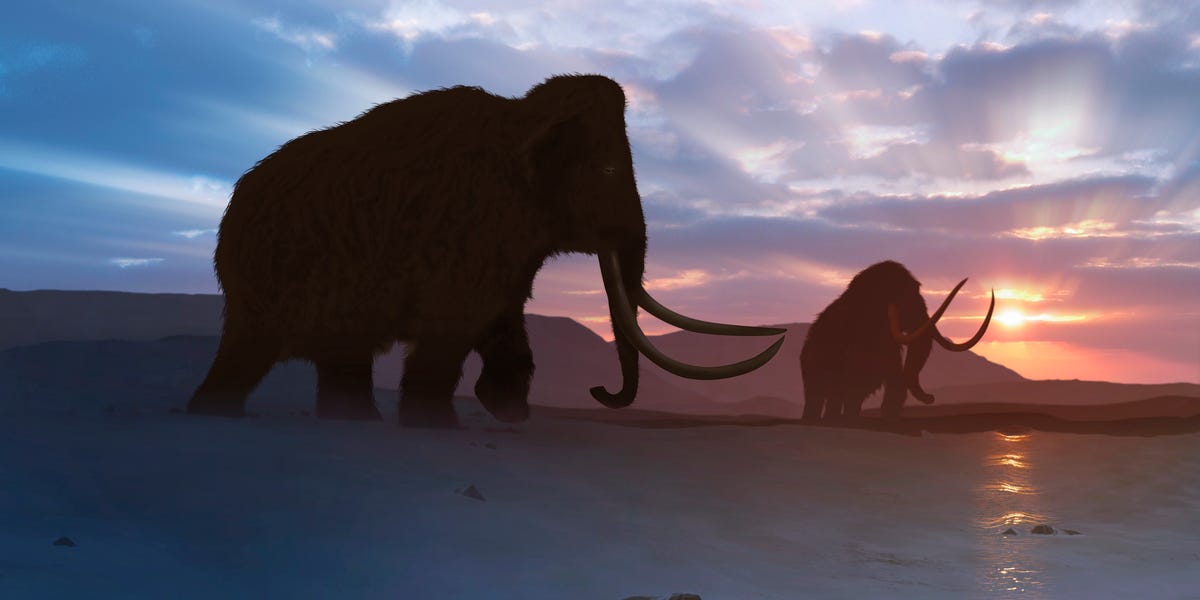
Somewhere in the Siberian permafrost, nature accidentally ran the world’s most extreme deep freezer. No power bill, no warranty, no blinking kitchen light at 2 a.m.just ice, time, and one remarkably preserved woolly mammoth. Now, scientists have done something that sounds like it wandered out of a science-fiction movie wearing a lab coat: they reconstructed the three-dimensional DNA structure of a woolly mammoth that died about 52,000 years ago.
This is not just another “ancient DNA found in fossil” headline. Researchers did not merely read scattered genetic fragments like torn pages from an Ice Age instruction manual. They rebuilt the spatial organization of the mammoth’s genome, showing how its chromosomes were folded inside living cells. In simple terms, they did not just recover the words of the book; they found clues about how the book was arranged on the shelf.
The breakthrough gives scientists a deeper look into woolly mammoth biology, gene activity, evolution, ancient preservation, and the big, slightly dramatic question everyone secretly wants to ask: does this bring us closer to bringing mammoths back? The answer is: maybe a little, but please do not start clearing your backyard for a shaggy elephant roommate just yet.
What Did Scientists Actually Reconstruct?
The main achievement was the reconstruction of the woolly mammoth’s genome architecture in three dimensions. Traditional ancient DNA research usually works with tiny, damaged fragments of DNA. Scientists sequence those fragments, compare them with genomes of living relatives, and gradually piece together parts of the extinct animal’s genetic code.
This study went a step further. Researchers analyzed fossilized chromosomes preserved in a skin sample from a female woolly mammoth. The sample came from remains found in Siberian permafrost, where freezing and dehydration helped lock biological structures in place. The tissue was so unusually preserved that the researchers could detect how DNA strands had been physically arranged inside the cell nucleus.
That matters because DNA is not floating around like spaghetti in a bowl. In living cells, chromosomes fold, loop, and interact in organized ways. This folding influences which genes are active and which remain quiet. By reconstructing the mammoth’s three-dimensional genome, scientists gained clues not only about what genes the animal had, but also how some of those genes may have functioned in its skin.
The Mammoth Was Basically Freeze-Dried by Nature
The preservation of this mammoth is one of the strangest and most fascinating parts of the story. The animal’s remains were not simply frozen like a bag of peas. Researchers suggest that the mammoth tissue underwent a natural freeze-drying process. Moisture was reduced, molecular motion slowed dramatically, and the chromosome structures became trapped in a glass-like state.
Scientists have described this state as “chromoglass,” a term that sounds like either a Nobel Prize-winning discovery or a villain’s lair in a superhero movie. But the idea is serious: dehydration and freezing may have preserved the structure of DNA at an extraordinary microscopic scale. Instead of collapsing completely over tens of thousands of years, the chromosome architecture remained stable enough to study.
Ancient DNA usually degrades into very short fragments. Heat, water, microbes, oxygen, and time are all rude guests at the genetic dinner party. They break DNA apart and make reconstruction difficult. But in this rare case, Siberia’s cold, dry conditions created a preservation miracle. The mammoth became a molecular fossil, not just a fossil with bones, hair, and skin.
How PaleoHi-C Helped Decode the Ice Age
The technique at the center of the research is called PaleoHi-C. It is adapted from Hi-C, a genomic method scientists use to study how DNA folds inside the nucleus. Hi-C detects which pieces of DNA were close together in three-dimensional space. Those contacts can reveal chromosome organization, gene regulation, and structural relationships across the genome.
For modern cells, Hi-C is already powerful. Applying a similar strategy to ancient tissue is much harder. The DNA is old, fragmented, chemically damaged, and contaminated with environmental material. Using PaleoHi-C, the research team was able to identify ancient chromatin contacts and organize the mammoth genome into chromosome- length scaffolds.
The result was a reconstruction with 28 chromosome pairs, matching what scientists see in modern elephants. That is an important detail because woolly mammoths are closely related to Asian elephants. Finding the same chromosome count supports the accuracy of the reconstruction and helps researchers compare mammoth biology with living elephant relatives.
Why This Discovery Matters
It Reveals More Than a DNA Sequence
A DNA sequence tells scientists the order of genetic letters. That is incredibly useful, but it is not the whole story. Two animals can have similar genes, yet use them differently. Gene activity depends partly on how DNA is packaged, folded, and regulated.
With the mammoth’s three-dimensional genome structure, researchers could look at chromatin compartmentsregions associated with active or inactive genetic activity. This makes it possible to infer which genes may have been turned on in the mammoth’s skin cells. For an extinct animal, that is a huge leap. It is like hearing not just the lyrics of an ancient song, but also a little bit of the melody.
It Helps Explain What Made Mammoths Mammothy
Woolly mammoths were not just elephants in vintage fur coats. They were highly adapted to cold Ice Age environments. Their bodies had traits linked to insulation, fat storage, hair growth, and survival in harsh climates. Comparing mammoth DNA with modern elephant DNA can help scientists identify genetic differences tied to those adaptations.
The reconstructed genome architecture gives researchers another layer of evidence. In the skin sample, scientists could study patterns related to genes involved in hair follicles and skin biology. That is especially fitting, because if the woolly mammoth had a brand, it would be “excellent winter outerwear, no zipper required.”
It Opens a New Door for Paleogenomics
Paleogenomics is the study of ancient genomes. For years, the field has transformed our understanding of extinct species, human evolution, migration, disease, and environmental change. But ancient DNA studies often depend on damaged fragments. The woolly mammoth discovery shows that, under exceptional conditions, genome architecture can persist far longer than many scientists expected.
This does not mean every frozen fossil is suddenly a perfect genomic time capsule. The preservation conditions must be unusually good. But the study gives researchers a new reason to reexamine museum specimens, permafrost remains, and other ancient tissues that may have preserved more molecular structure than previously assumed.
Does This Mean Scientists Can Bring Back the Woolly Mammoth?
The honest answer is: not directly. Reconstructing ancient DNA is not the same as resurrecting an extinct animal. A genome is a blueprint, but building a living organism requires cells, developmental biology, pregnancy, epigenetic regulation, and a mountain of ethical and ecological questions. In other words, the mammoth is not waiting in a printer queue.
Still, this research may help de-extinction efforts. Some companies and researchers are exploring whether mammoth- like traits could be engineered into Asian elephant cells. The goal would not be to clone a perfect mammoth from frozen tissue, but to create an elephant-mammoth hybrid with selected cold-adapted traits.
The new 3D genome information could make those efforts more precise by showing which genes were active and how parts of the mammoth genome were organized. However, major challenges remain. Asian elephants are endangered, long-lived, socially complex animals. Any de-extinction project involving them must consider animal welfare, conservation priorities, ecosystem impacts, and whether the scientific excitement is truly worth the biological burden.
The Science Is Bigger Than Mammoths
Woolly mammoths get the spotlight because they are charismatic. They are enormous, furry, and extinct, which is basically the scientific equivalent of having a great public relations team. But the implications extend far beyond one Ice Age celebrity.
If fossil chromosomes can survive in some ancient tissues, researchers may be able to study gene regulation in extinct animals in ways that were previously impossible. That could improve our understanding of saber-toothed cats, ancient horses, giant ground sloths, extinct birds, and even long-dead human relatives if suitable samples exist.
The research also changes how scientists think about preservation itself. Fossils are not always just bones and impressions. Under the right conditions, they can preserve molecular arrangements that carry biological meaning. This shifts ancient DNA research from “What genetic letters survived?” to “How were those letters arranged and used?”
What the Mammoth Discovery Teaches Us About Extinction
There is something humbling about reconstructing DNA from a creature that walked the Earth 52,000 years ago. Woolly mammoths survived ice, predators, migration, and dramatic climate shifts. Yet they eventually disappeared, with most populations vanishing thousands of years ago and the final isolated groups surviving later on Arctic islands.
Their story reminds us that extinction is not just a dramatic ending. It is a slow unraveling of habitat, climate, reproduction, food supply, and ecological balance. Ancient DNA gives scientists a way to study that unraveling in detail. It can reveal population bottlenecks, inbreeding, adaptation, and vulnerability.
Modern conservation can learn from this. The more we understand how species responded to past climate change, the better we can protect living species facing rapid environmental disruption today. The mammoth may be gone, but its DNA still has homework for us.
Why People Are So Fascinated by Mammoth DNA
Part of the appeal is obvious: mammoths are cool. They look like something designed by a committee that said, “What if an elephant needed to survive a blizzard and also appear on every museum poster?” But the fascination runs deeper than appearance.
Mammoth DNA connects us to deep time. It gives us a tangible link to landscapes that no longer exist in the same way: mammoth steppe, Ice Age grasslands, frozen rivers, and human communities that once lived alongside enormous animals. When scientists recover ancient genetic information, the past becomes less abstract. It becomes biological, readable, and surprisingly close.
There is also the thrill of possibility. Ancient DNA research has repeatedly expanded what scientists thought was possible. First came fragments. Then came whole genomes. Now comes three-dimensional genome architecture. Every breakthrough moves the line between “lost forever” and “partly recoverable.”
Common Misunderstandings About the Discovery
Misunderstanding 1: Scientists Found Perfectly Intact Mammoth DNA
Not exactly. The DNA was still ancient and damaged. The breakthrough was that the chromosome structure and three-dimensional organization were preserved well enough for reconstruction. Think of it as a crushed but readable map, not a brand-new GPS device.
Misunderstanding 2: This Means Mammoths Will Return Tomorrow
No. The discovery supports future research, but resurrection is a separate and much more complicated challenge. Rebuilding a genome map is impressive. Creating a healthy living animal from that information is another level of difficulty entirely.
Misunderstanding 3: This Research Is Only About De-Extinction
De-extinction gets headlines, but the scientific value is broader. This research helps scientists understand genome structure, ancient preservation, gene regulation, elephant evolution, Ice Age adaptation, and the limits of biological survival after death.
Experiences and Reflections: What This Mammoth DNA Story Feels Like in the Real World
Reading about scientists reconstructing a 52,000-year-old woolly mammoth’s DNA feels a bit like opening a freezer and finding a message from the Ice Age tucked behind the frozen waffles. The discovery is technical, but the emotional reaction is simple: how is this even possible? We are used to thinking of the past as dusty, faded, and silent. Then a study like this arrives and says, “Actually, some of the past is still folded inside ancient cells.”
One of the most interesting experiences connected to this topic is visiting a natural history museum after learning about ancient DNA. A mammoth skeleton no longer looks like only a display of bones. It becomes a biological archive. The tusks, teeth, hair, and preserved tissue represent chapters in a much larger story. You start imagining the animal not as a museum object, but as a living creature that moved through cold wind, searched for food, protected itself, and carried genetic instructions that scientists can still study today.
The discovery also changes how people think about cold places. Permafrost is often described in climate discussions as frozen ground that stores carbon and ancient organic matter. But it is also a natural archive. It can preserve animals, plants, microbes, and molecular traces of vanished ecosystems. That makes thawing permafrost both scientifically exciting and environmentally concerning. More ancient remains may appear as frozen ground changes, but the same process also signals serious climate stress.
For students, science fans, and curious readers, this mammoth DNA research is a perfect reminder that science is not just a list of facts. It is a process of asking better questions. At one time, researchers asked whether any ancient DNA could survive. Then they asked whether whole genomes could be sequenced. Now they are asking whether the three-dimensional structure of ancient chromosomes can reveal gene activity. Each question unlocks a more detailed version of the past.
There is also a useful lesson in patience. The mammoth did not become famous because someone found a dramatic bone and immediately solved every mystery. The breakthrough required careful sampling, advanced sequencing, computational modeling, comparison with modern elephants, and collaboration across many scientific fields. Big discoveries often look sudden from the outside, but inside the lab they are usually built from years of slow, precise work. Science is less “lightning strike” and more “very organized people refusing to give up.”
Finally, the story invites a healthy kind of wonder. Not every discovery needs to end with a cloned mammoth walking across the tundra. Sometimes the greatest achievement is understanding life more deeply. The ability to study chromosome architecture from a 52,000-year-old animal shows that biology can leave traces far beyond a lifetime. The mammoth is extinct, but its cells still teach. That is not resurrection, but it is a kind of scientific afterlifeand honestly, that is impressive enough.
Conclusion
The reconstruction of a 52,000-year-old woolly mammoth’s DNA structure is one of the most remarkable advances in ancient genome research. By using PaleoHi-C and studying exceptionally preserved skin from Siberian permafrost, scientists rebuilt the mammoth’s three-dimensional chromosome architecture and gained clues about gene activity in an extinct animal.
This discovery does not mean mammoths are coming back next week, or even anytime soon. But it does give researchers a richer, more detailed view of Ice Age biology. It also expands what paleogenomics can do, showing that ancient fossils may preserve not only genetic sequences but also the physical organization of genomes.
In the end, the woolly mammoth’s DNA is more than a scientific curiosity. It is a reminder that the past is not always as lost as it seems. Sometimes it is frozen, folded, and waiting for the right tools to read it.