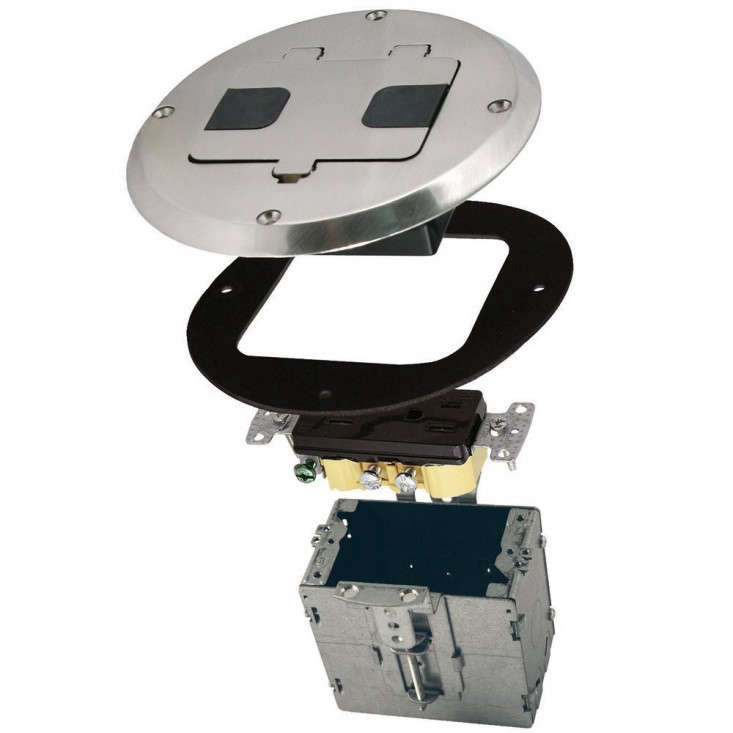
Some electrical products are flashy. Some are mysterious. And some quietly solve a problem that has annoyed homeowners, remodelers, designers, and office managers for decades: “Where do I plug this in without dragging an extension cord across the room like a tripwire in an action movie?” The Raco recessed 18 cubic-inch round floor box sits in that practical, underappreciated category. It is not trying to be the star of the living room, conference room, kitchen island, or reading nook. In fact, its greatest talent is disappearing neatly into the floor while still giving you power where you actually need it.
A recessed round floor box is designed to place an electrical receptacle below the finished floor surface, usually with a round cover that blends into hardwood, tile, carpet, or other flooring. RACO, a Hubbell brand, is known for electrical boxes, covers, fittings, and floor box kits used in residential and light commercial projects. The model often associated with this category is the RACO 6239NI recessed round floor box kit, a nickel-finished, single-gang floor box with a recessed duplex receptacle. Some retail listings describe this product family as an 18 cubic-inch steel floor box, while current manufacturer information for catalog 6239NI lists a larger cubic capacity. That difference matters, so smart buyers should verify the exact catalog number, cut sheet, and box-fill requirements before installation.
In plain English: this is the kind of product you consider when the wall outlet is too far away, the furniture layout is too good to ruin, and you are tired of cords doing their best impression of spaghetti across the floor.
What Is the RACO Recessed Round Floor Box?
The RACO recessed round floor box is a floor-mounted electrical box kit intended to provide convenient power access in a finished floor. Instead of installing a standard outlet in a wall, the electrician installs a box into a wood subfloor or compatible floor assembly, then finishes it with a round cover. The receptacle sits below the floor surface, helping the plug remain more concealed than it would with a surface-mounted outlet.
The common nickel-finished version, often sold under catalog number 6239NI, is a single-gang floor box kit. It typically includes the adjustable steel box, round nickel cover, gasket components, screws, and a 15-amp, 125-volt tamper-resistant duplex receptacle. The recessed design reduces plug protrusion, which is a fancy way of saying your lamp cord is less likely to stick up like a tiny electrical speed bump.
Why the “18 Cubic-Inch” Description Can Be Confusing
Many shoppers search for this product using the phrase Raco recessed 18 cubic-inch round floor box because that wording appears in some distributor-style product descriptions. However, current product data for RACO 6239NI may list a different cubic capacity. That does not automatically mean the listing is useless, but it does mean you should not rely on a product title alone. In electrical work, cubic inches are not decoration. Box capacity affects wire fill, device space, and code-compliant installation.
Before purchasing, compare the product name, catalog number, UPC, finish, included receptacle, and current spec sheet. If a retailer title says 18 cubic inches but the manufacturer sheet says 28 cubic inches, treat the manufacturer’s current documentation as the starting point and ask your electrician or supplier to confirm the item in the box. Product names age. Spec sheets get revised. Electrical inspectors, unfortunately, do not accept “the website title sounded right” as a magical approval stamp.
Key Features of the RACO Recessed Round Floor Box
A good floor box needs to do more than look nice. It must be sturdy, practical, safe, and appropriate for the flooring system. The RACO recessed round floor box checks several important boxes for residential and light commercial use.
Recessed Duplex Receptacle
The recessed receptacle is the main attraction. By placing the outlet lower inside the box, the plug connection is better protected and less visually intrusive. This is especially useful behind sofas, under desks, near reading chairs, or in open-plan spaces where wall outlets are inconvenient. It does not make cords disappear completely, but it does help the room look cleaner.
Round Nickel Cover
The round cover gives the installation a finished look. Nickel is popular because it blends with many flooring styles and hardware finishes, from cool-toned hardwood to contemporary tile. It is not as loud as brass and not as invisible as black, landing in that dependable middle ground that says, “I am here, but I will not ruin your interior design mood board.”
Tamper-Resistant 15A, 125V Receptacle
A tamper-resistant receptacle includes internal shutters that help reduce the risk of objects being inserted into the outlet slots. In modern residential electrical work, tamper-resistant receptacles are common and often required depending on the application and local code adoption. For families, rental properties, offices, and public-facing spaces, this feature is less of a luxury and more of a sensible baseline.
Adjustable Steel Box
One of the most useful features is adjustability. Floors are not always perfectly predictable. Subfloor thickness, finished flooring height, underlayment, and installation tolerances can all affect the final fit. An adjustable box helps the cover sit neatly with the floor surface, reducing the chance of a proud edge, awkward gap, or cover that looks like it was installed during a caffeine shortage.
Use With Wood Floors and Finished Flooring
This product family is commonly used for wood subfloor applications and may be compatible with carpet, tile, hardwood, or similar finished floor surfaces when installed correctly. The important phrase is “installed correctly.” A floor box is not just dropped into a random hole and wished good luck. It needs proper support, wiring method, grounding, box fill, cover attachment, and compliance with local electrical code.
Where This Floor Box Makes the Most Sense
The RACO recessed round floor box is useful anywhere a wall outlet is too far from the action. It is especially helpful in rooms where the best furniture layout does not care where the electrician put the original outlets twenty years ago.
Living Rooms and Family Rooms
Open living rooms often place sofas, recliners, and side tables away from walls. That looks great until someone needs to plug in a lamp, phone charger, laptop, or holiday decoration. A recessed floor outlet near the seating area can reduce cord clutter and make the space more functional.
Home Offices
Home offices are cord magnets. Laptop chargers, monitor power cords, printer cables, desk lamps, docking stations, and phone chargers all want a seat at the electrical table. A floor box under or near a desk can keep cords shorter and cleaner, especially when the desk floats in the room instead of hugging a wall.
Kitchen Islands and Dining Areas
Depending on layout and code requirements, floor boxes may be considered near certain built-in or freestanding furniture arrangements. However, kitchens are high-detail electrical zones with special rules, GFCI considerations, and moisture concerns. Do not guess here. If the installation is near food prep areas, sinks, islands, or damp locations, consult a licensed electrician before selecting any floor box.
Conference Rooms and Small Commercial Spaces
In a meeting room, extension cords are the unofficial mascot of poor planning. A properly located floor box can provide power for laptops, projectors, displays, or conference equipment without forcing cords to cross walkways. For commercial use, verify whether this specific product is appropriate for the floor type, traffic level, cleaning method, and applicable code requirements.
Benefits of Choosing a Recessed Floor Box
A recessed floor box is not always necessary, but when it fits the room, it can feel like a tiny renovation miracle. The main benefits are convenience, cleaner design, improved cord management, and reduced reliance on extension cords.
Cleaner Room Layouts
Designers love flexibility. Electrical layouts do not always share that enthusiasm. A recessed floor outlet lets you place furniture where it works visually and functionally, instead of forcing every lamp and charging station to huddle near a wall outlet like campers around a fire.
Less Cord Clutter
Cords are not evil, but they are rarely beautiful. By putting power closer to the device, a floor box can shorten visible cord runs. This is especially useful in rooms with area rugs, open seating, or freestanding desks.
Better Protection for Plug Connections
Because the receptacle is recessed, the plug connection is more sheltered than it would be on a surface outlet. The cover and gaskets help manage the opening when plugs are in use, allowing cords to exit in a more controlled way.
A More Finished Look
A round nickel floor box cover can look intentional, especially when aligned carefully with the flooring pattern. In a well-executed installation, it becomes part of the room rather than an afterthought. That is the difference between “custom electrical planning” and “someone panicked with an extension cord.”
Potential Drawbacks to Know Before Buying
No product is perfect, and floor boxes are not an exception. Before choosing the RACO recessed round floor box, consider the practical limits.
Installation Is More Involved Than a Wall Outlet
Cutting into a finished floor is not a casual Saturday experiment unless you enjoy expensive surprises. The installer must know what is below the floor: joists, plumbing, HVAC, radiant heat, low-voltage wiring, or other obstacles. A licensed electrician should handle the wiring, and in many areas, permits and inspections may apply.
Placement Must Be Planned Carefully
A wall outlet in the wrong spot is annoying. A floor box in the wrong spot is a long-term reminder that measuring matters. Think through furniture location, walking paths, rug placement, plug direction, and future room changes. The best floor box location is useful now and not ridiculous later.
Not Every Floor Is a Good Candidate
Wood subfloors are commonly associated with this type of kit, but concrete slabs, engineered assemblies, radiant floors, and commercial floors may require different products. Use a floor box listed and designed for the actual installation environment.
Cleaning and Moisture Require Common Sense
Floor outlets live where shoes, dust, pet hair, snack crumbs, and the occasional mystery object gather. Do not flood-clean around the cover. Keep the lid closed when not in use, and inspect the gasket and cover condition periodically. Electricity and careless mopping are not friends.
Installation Considerations
This article is not a substitute for the manufacturer’s instructions, the National Electrical Code, or a licensed electrician. Still, understanding the basic installation logic can help homeowners and project planners ask better questions.
1. Confirm the Exact Product
Match the catalog number, finish, receptacle type, cubic capacity, and included parts. If the listing says 18 cubic inches but the current manufacturer data says otherwise, pause and verify. This is especially important if the circuit includes multiple conductors, larger wire sizes, or extra low-voltage components.
2. Choose the Location
Plan the box location around furniture, cord paths, and access from below. A great spot is close enough to be useful but not in the middle of heavy foot traffic. Avoid locations where chair legs, table bases, rug seams, or rolling furniture will constantly fight with the cover.
3. Check the Floor Structure
The installer should inspect the joist direction, subfloor thickness, finished floor material, and any hidden mechanical systems. Cutting through the wrong thing can turn a small convenience upgrade into a home improvement story people tell at parties.
4. Follow Box-Fill Rules
Box fill determines how many conductors and devices can be safely installed in the box. This is where the cubic-inch rating becomes important. Do not assume. Calculate based on wire size, conductors, device yoke, grounds, clamps, and applicable code rules.
5. Use the Correct Wiring Method
Cable clamps, grounding, conductor protection, and strain relief must be handled properly. The box should be secured according to the instructions, and the cover must be attached in a way that remains stable under normal floor use.
RACO Recessed Round Floor Box Specifications at a Glance
| Feature | Typical Detail | Why It Matters |
|---|---|---|
| Product Type | Single-gang recessed round floor box kit | Provides power access in finished floors |
| Common Catalog Number | 6239NI | Useful for matching the exact product |
| Finish | Nickel | Blends with many modern floor and hardware finishes |
| Receptacle | 15A, 125V tamper-resistant duplex | Supports common household and office plug-in needs |
| Cover Shape | Round | Creates a clean, finished floor appearance |
| Application | Wood floor and compatible finished flooring applications | Must match the actual floor assembly |
| Cubic Capacity | Verify current listing and manufacturer cut sheet | Critical for safe box-fill calculations |
How to Decide If This Floor Box Is Right for You
Choose this type of recessed floor box if you need convenient power in the middle of a room, want a low-profile cover, and are working with a compatible wood floor assembly. It is especially practical when furniture floats away from the walls or when cord management is becoming a daily irritation.
Skip it or choose another product if the installation is in a wet location, a concrete slab, a heavy-traffic commercial setting, or a floor assembly that requires a specialized box. Also reconsider if you constantly rearrange furniture. A floor box is semi-permanent. It is not a power strip with commitment issues.
Buying Tips for the RACO Recessed 18 Cubic-Inch Round Floor Box
When shopping online, pay close attention to the description. Product listings may use slightly different names, including RACO recessed floor box, RACO round floor box kit, RACO 6239NI floor box, recessed duplex floor outlet, or nickel plated concealed receptacle floor box. These names can refer to similar or related items, but they are not always identical.
Check These Details Before Ordering
- Catalog number and UPC
- Finish color and cover material
- Receptacle rating and tamper-resistant status
- Box cubic capacity
- Compatibility with wood floors, carpet, tile, or hardwood
- Included parts such as cover, gasket, screws, and receptacle
- Current installation instructions
- UL or CSA listing information
If you are buying for a contractor, send the product link and spec sheet before ordering. If you are the contractor, ask the homeowner how they actually plan to use the room. A floor box installed exactly where a future sofa leg will sit is technically impressive and practically annoying.
Maintenance and Everyday Use
Once installed, the floor box should be treated like any other electrical device with a little extra respect because it sits in a floor. Keep the cover closed when not in use. Do not force oversized plugs into the recessed cavity. Avoid letting dirt, pet hair, or debris collect around the opening. If the cover loosens, the gasket deteriorates, or the receptacle feels unstable, stop using it and have it inspected.
For homes with children or pets, the recessed design and tamper-resistant receptacle are helpful, but they are not an excuse to ignore safety. Teach children not to play with outlets, keep cords managed, and avoid placing water bowls, planters, or drink stations near floor receptacles. Yes, the dog may believe every object on the floor is part of his kingdom. The electrical system disagrees.
Real-World Experience: Living With a RACO Recessed Round Floor Box
The biggest difference a recessed floor box makes is not always obvious on day one. At first, it feels like a small convenience: you plug in a lamp beside a sofa, connect a laptop near a reading chair, or power a small table without running a cord from the nearest wall. Nice. Practical. Not exactly fireworks. But after a few weeks, the real value becomes clearer. The room simply works better.
In a typical living room, the best furniture arrangement often puts the sofa in the center of the room instead of against a wall. That layout feels more spacious and conversational, but it creates the classic lamp problem. Without a floor outlet, the cord usually runs under a rug, around a table leg, or across an open pathway. None of those options feels ideal. With a recessed floor box near the seating area, the lamp cord drops almost directly into the floor outlet. The result is cleaner, safer-looking, and less irritating during daily use.
The recessed design is especially helpful when the plug needs to stay connected for long periods. A standard plug sticking out of the floor can feel vulnerable. Someone can kick it, snag it, or slowly loosen it without noticing. A recessed plug sits lower, which helps protect the connection. It also looks more intentional. Instead of a cord shouting, “Temporary solution!” the floor box says, “Yes, this room was planned by an adult.”
Another pleasant surprise is how useful the round cover becomes when the outlet is not in use. Closed, it keeps the floor looking tidy. Open, it gives access to the receptacle without making the whole area look like a workshop. Nickel is a good everyday finish because it does not demand attention. It pairs well with many modern and transitional interiors, especially spaces that already use brushed nickel, stainless steel, chrome, or cool-toned hardware.
There are, however, a few real-life lessons worth mentioning. First, placement is everything. Before cutting the floor, simulate the room layout. Put painter’s tape where the box might go. Move the sofa, chair, desk, rug, and side table into position. Walk around the room. Sit down. Plug in a fake cord if necessary. The perfect electrical location on paper may become a toe-stubber in real life.
Second, think about cleaning. A floor box is naturally exposed to dust and crumbs. In a dining area, that means it may meet toast fragments. In a home office, it may meet paper clips. In a pet household, it may meet fur. Keep the cover area clean and dry. If you use rugs, make sure the rug edge does not bunch around the cover or hide a cord in a way that creates a trip hazard.
Third, do not underestimate the value of professional installation. A floor box requires careful cutting, secure mounting, correct wiring, and code compliance. A skilled electrician can also help determine whether the selected RACO box is appropriate for the circuit, floor type, and expected use. That advice is worth far more than saving a few dollars and discovering later that the box location, capacity, or wiring method was wrong.
Overall, the experience of using a RACO recessed round floor box is best described as quiet satisfaction. It is not glamorous, but it removes a daily annoyance. It gives power where people actually sit, work, read, charge devices, and live. And in home improvement, the best upgrades are often the ones you stop noticing because they simply do their job.
Conclusion
The RACO recessed 18 cubic-inch round floor box is a practical solution for adding power access to open rooms, furniture-centered layouts, home offices, and other spaces where wall outlets fall short. Its recessed duplex receptacle, round nickel cover, adjustable steel box, and tamper-resistant design make it a strong candidate for wood-floor installations when the exact product is verified and installed correctly.
The most important takeaway is simple: do not shop by title alone. Because some listings describe this product family as 18 cubic inches while current manufacturer data for RACO 6239NI may list a different capacity, always confirm the catalog number, cut sheet, and box-fill requirements before installation. With careful planning and professional wiring, this small floor box can make a room cleaner, safer, and much easier to live inwithout turning your beautiful floor into a cord obstacle course.
Note: Electrical products should be selected and installed according to the current manufacturer instructions, local electrical code, and the advice of a licensed electrician. Product specifications can change, so verify the latest catalog data before purchasing or publishing final technical claims.