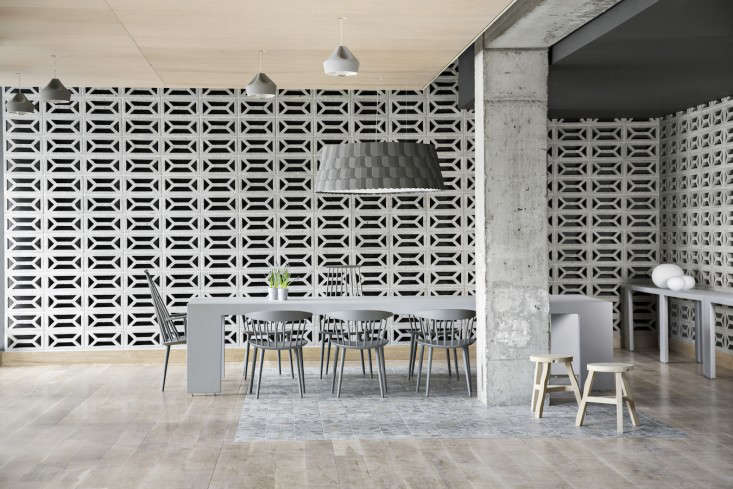
Cross the East River from Midtown Manhattan and the mood changes quickly. The towers remain visible, but the streets become wider, the warehouses more expressive, and the creative energy less interested in wearing a suit. In this setting, Boro Hotel introduced a hospitality concept that felt unusually right for Long Island City: Scandinavian calm layered over the honest, unfinished character of Queens.
Designed by New York architecture studio Grzywinski+Pons, the hotel is not a literal Nordic cabin dropped beside Queensboro Plaza. There are no reindeer in the lobby, and nobody hands guests a ceremonial wool blanket at check-in. Instead, the design borrows the most useful principles of New Nordic interiorsclarity, warmth, craftsmanship, natural materials, and human-scale comfortthen mixes them with concrete, cinder block, industrial windows, and broad views of New York City.
A Boutique Hotel Shaped by Long Island City’s Industrial Character
Boro Hotel opened in 2015 in Dutch Kills, a historic section of Long Island City near the border of Astoria. At the time, the neighborhood already had plenty of practical lodging, but relatively few hotels that treated architecture as part of the travel experience. Boro arrived as a design-led alternative: urban without being severe, polished without looking suspiciously untouched, and stylish without requiring guests to whisper around the furniture.
The architects inherited a completed structural shell rather than designing the building from an empty site. That limitation became the project’s strongest idea. Instead of disguising the existing concrete and masonry, Grzywinski+Pons approached the structure almost like a found object. Cast-in-place concrete, cinder-block walls, visible services, and high ceilings were treated as assets rather than construction problems waiting for cosmetic intervention.
The result is a hotel that feels connected to the manufacturing history of Long Island City. It does not imitate an old factory with decorative gears and a few strategically placed Edison bulbs. Its industrial atmosphere comes from the building itself, giving the interior a level of authenticity that themed design rarely achieves.
What Makes Boro Hotel’s Interior Feel “New Nordic”?
Nordic design is often reduced to pale wood, gray upholstery, and the heroic absence of clutter. Boro Hotel uses those familiar elements, but its interpretation is broader. The spaces prioritize daylight, tactile materials, functional furniture, simple forms, and social comfort. Those choices create a calm background for New York’s visual noise rather than competing with it.
Raw Materials Meet Warm Surfaces
The central design tension is easy to understand: concrete can feel cold, while a hotel needs to feel welcoming. Boro solves the problem by placing warm, aging-friendly finishes against the raw structure. Hand-scraped white oak floors soften the public areas. Painted pallet wood appears as paneling and soffits. Leather, cork, sisal, and other textured materials add depth without turning the rooms into a catalog of decorative gestures.
This combination is intended to improve with use. Leather develops character, wood gains subtle marks, and natural fibers make spaces feel lived in. In a city where hotel interiors are frequently renovated into shiny anonymity, materials that can acquire a patina are refreshingly confident. Boro does not panic at the thought of time passing.
A Palette That Lets Light Do the Decorating
Muted gray, blue-gray, charcoal, natural oak, and off-white tones dominate the hotel. The palette is restrained but not lifeless. Color-blocked corridors, copper-toned stools, greenery, books, and occasional accent pieces keep the environment from drifting into grayscale sleep mode.
More importantly, the quiet colors give daylight and skyline views the starring role. Sunlight changes the concrete from cool silver in the morning to warmer beige and gold later in the day. At night, Manhattan becomes the decorative feature no wallpaper company could reasonably compete with.
Modern Furniture Without Showroom Stiffness
The public spaces combine custom pieces with recognizable contemporary furniture. Early design coverage highlighted chairs from Danish brand HAY, seating by Patricia Urquiola for Kartell, Tom Dixon stools and pendant lights, and barstools from Blu Dot. The mix is international rather than strictly Scandinavian, which is precisely why it works. Nordic restraint supplies the grammar, while individual pieces add personality and a little New York swagger.
A monochromatic conference area, built-in lounge seating, communal tables, and a library encourage guests to use the lobby rather than march through it. The furniture looks considered, but the room still functions as a place to drink coffee, open a laptop, meet friends, or quietly pretend to answer important emails.
The Lobby Reimagines How a Hotel Welcomes Guests
Traditional hotel lobbies often organize themselves around a large reception desk that clearly separates staff from visitors. Boro’s original design softened that hierarchy. A large shared table allowed check-in activity, conversation, and casual work to happen in the same zone. Mobile technology helped free service from a single imposing counter.
Elsewhere, seating clusters and architectural elements create semi-private areas within the open room. Guests can feel part of the lobby’s energy without feeling as though they have accidentally joined a networking event. A central fire feature adds warmth, while a library stocked with books from New York’s Strand Bookstore gives the space a local cultural connection.
The lobby cafe continues that social purpose with comfortable seating, Wi-Fi, and power outlets for hotel guests and neighborhood visitors. This is an important part of the hotel’s appeal: the public floor feels less like a sealed tourist bubble and more like an urban living room. Good hospitality design does not merely photograph well; it gives people reasons to stay downstairs.
Guest Rooms Put the New York Skyline in the Right Frame
Large windows are fundamental to Boro Hotel’s identity. When the architects had limited opportunities to alter the inherited exterior, they concentrated on glazing because it would transform the experience inside. Industrial-style mullions give the windows scale and echo the proportions of older neighborhood buildings, while the glass opens rooms toward Manhattan, Queens, and Brooklyn.
At launch, architectural publications documented 108 rooms. Current hotel materials describe 99 guest rooms and suites, suggesting that the inventory has evolved over time. The core design language remains recognizable: hardwood floors, custom beds, minimal furnishings, porcelain-tiled bathrooms, teak benches, and broad floor-to-ceiling windows.
Some room categories include private balconies or terraces, while larger studios and suites add seating areas, soaking tubs, or more generous outdoor space. Manhattan-view rooms range from compact urban retreats to larger corner accommodations flooded with natural light.
The rooms avoid the common boutique-hotel trap of squeezing ten dramatic ideas into a modest floor plan. Furniture is limited, lines are clean, and visual clutter is controlled. That simplicity makes the view feel larger and the room more restful. It also means travelers who pack as though they are relocating permanently may need to practice a little Scandinavian discipline with their luggage.
Industrial Luxury Without the Velvet Rope
Boro’s version of luxury is not based on chandeliers, gilded moldings, or a lobby fragrance powerful enough to follow guests into the elevator. It comes from space, daylight, texture, comfortable bedding, thoughtful bathrooms, and a strong relationship with the city outside. The penthouse and Manhattan-view rooms amplify that formula, but even street-facing rooms benefit from the same material consistency.
The Rooftop Completes the Architecture
Long Island City has one of New York’s great geographic advantages: it can look directly at Manhattan. Boro Hotel turns that fact into an amenity. Its rooftop faces the skyline from a perspective that makes familiar landmarks feel newly arranged, with the East River and layers of Queens adding depth to the view.
The seasonal rooftop bar serves cocktails, wine, and beer from Long Island City breweries. Yet the design experience matters as much as the drinks. Moving from the enclosed, materially rich lobby to the open skyline above creates a satisfying architectural sequence. Downstairs, the hotel frames community and texture; upstairs, it frames distance and light.
Sunset is the obvious showstopper, but early evening can be even better. The skyline gradually switches on, the concrete cools, and the hotel’s industrial palette begins to blend with the surrounding city. New York rarely whispers, but from this rooftop it occasionally lowers its voice.
Why the Design Belongs in Long Island City
Boro Hotel would lose some of its meaning if placed in a conventional Midtown block. Its design is tied to Dutch Kills and the larger Long Island City landscape, where former industrial buildings, new residential towers, artists’ studios, cultural institutions, and active infrastructure exist side by side.
Nearby destinations strengthen that connection. MoMA PS1 brings experimental contemporary art to a former school building. The Noguchi Museum presents Isamu Noguchi’s sculpture, furniture, landscape thinking, and material sensitivity in spaces that reward slow observation. Socrates Sculpture Park places large-scale art outdoors, while Gantry Plaza State Park turns industrial waterfront relics into a dramatic public setting for skyline views.
These places share a useful design attitude with Boro Hotel: they do not erase industrial history. They adapt it, frame it, and make it part of contemporary life. Staying at Boro therefore feels less like choosing a cheaper base outside Manhattan and more like selecting a neighborhood with its own architectural identity.
Design Details Worth Borrowing at Home
Balance Hard Materials With Natural Texture
The hotel demonstrates how oak, leather, cork, woven fibers, and warm lighting can soften concrete, masonry, tile, and metal. A home does not need exposed structural columns to use the same idea. A pale wood table, leather chair, textured rug, or cork accessory can introduce warmth without creating visual clutter.
Choose Fewer Pieces With Stronger Silhouettes
Boro’s rooms rely on furniture with clear forms rather than excessive decoration. Select pieces that are attractive from several angles and give them enough space to be noticed. One excellent chair will usually contribute more than a committee of small accessories arguing for attention.
Protect Natural Light
Keep tall furniture away from important windows, use restrained window treatments, and arrange seating toward daylight or a view. Boro Hotel proves that a well-framed window can perform more decorative work than an entire wall of accessoriesand it never asks to be dusted.
Who Will Appreciate Boro Hotel Most?
Design-minded travelers will notice the details immediately, but the hotel is not only for people who can identify a Danish chair at twenty paces. It suits couples seeking skyline views, creative professionals who prefer a usable lobby, repeat New York visitors ready to explore beyond Manhattan, and travelers who want access to both Midtown and Queens.
It is also a practical choice for guests interested in architecture, museums, food, and neighborhood walking. Nearby subway connections make Manhattan accessible, while Astoria, the Long Island City waterfront, and several major cultural destinations are close enough to become part of the stay rather than optional side trips.
Travelers should still consider their priorities. The surrounding blocks can feel quieter and more industrial than central Manhattan, and the most scenic waterfront attractions are not directly outside the entrance. Room layouts and storage vary, while rooftop operations are seasonal. For visitors who enjoy discovering a neighborhood rather than stepping immediately into Times Square, those trade-offs are often part of the appeal.
Conclusion: Scandinavian Calm With a Queens Accent
Boro Hotel remains a persuasive example of how boutique hospitality can respond to place. Grzywinski+Pons did not hide the inherited concrete shell or force a decorative story onto it. The architects used the building’s rough structure as a foundation, then introduced oak, leather, cork, custom furniture, soft colors, daylight, and social spaces that make the hotel feel human.
Its “New Nordic” quality comes less from nationality than attitude: use fewer materials, choose them carefully, make comfort visible, and allow architecture to age with dignity. Add industrial windows, a Queens address, and a rooftop view of Manhattan, and the result becomes something more specific than Scandinavian minimalism. It becomes New York design with room to breathe.
Extended Experience: A Design-Focused Day at Boro Hotel and Around Long Island City
Begin the morning in a Manhattan-view room before the city becomes fully alert. Pull back the curtains, make coffee, and watch light move across the skyline. The best part is not simply recognizing the Empire State Building or Midtown towers. It is seeing them from a room where the interior does not fight for attention. Oak floors, quiet colors, and clean furniture keep the foreground calm while New York performs in the distance.
Head downstairs to the lobby cafe and choose a seat near the communal table or library. This is the moment to study how the public space works in real life. Concrete columns establish rhythm, wood adds warmth at eye level, and furniture clusters create different degrees of privacy. Order breakfast, read for a while, or plan the day without rushing. The lobby rewards lingering, which is a surprisingly rare luxury in a city built around the phrase “keep moving.”
From the hotel, walk toward MoMA PS1. Its experimental exhibitions offer an energetic contrast to Boro’s controlled material palette, yet both places share an interest in adaptive space. Afterward, continue toward Court Square or travel north to the Noguchi Museum. Noguchi’s work makes stone, wood, light, and negative space feel emotionally charged, providing an ideal companion experience for anyone interested in Boro’s quieter design decisions.
Visitors with additional time can continue to the Museum of the Moving Image in nearby Astoria. Its exhibitions explore film, television, digital media, production design, and interactive entertainment. The museum adds another layer to a design-focused itinerary by showing how environments, images, costumes, objects, and technology work together to construct experiences.
For lunch, explore Long Island City’s restaurant scene rather than automatically returning to Manhattan. The neighborhood’s mix of New American, Mexican, Greek, Japanese, Indian, and casual cafe options reflects Queens more accurately than any single “must-eat” list. Choose somewhere local, then make your way to Gantry Plaza State Park. The restored industrial gantries, lawns, piers, and direct skyline views turn the waterfront into an outdoor lesson in reuse and urban scale.
Walk slowly along the river rather than treating the park as a photography checkpoint. From the water, Midtown appears almost theatrical, while the old gantries reveal how much of Long Island City’s modern identity still rests on its industrial past. Benches, lawns, ferry traffic, apartment towers, and preserved machinery occupy the same visual field.
Return to the hotel in late afternoon and spend time in the room while the light changes. A balcony is worth using even briefly. Listen to the city, notice the contrast between the hard exterior landscape and the tactile interior, and resist the urge to fill every minute with another attraction. Design hotels are best experienced when guests actually inhabit them.
Finish the day on the seasonal rooftop. Arrive before sunset so the view can unfold gradually rather than appearing all at once. Order a local beer, wine, or cocktail, then look back across the East River as Manhattan’s windows begin to glow. The scene captures the hotel’s entire design argument: Long Island City is not merely a place from which to reach New York. It is one of the best places from which to see, understand, and enjoy it.