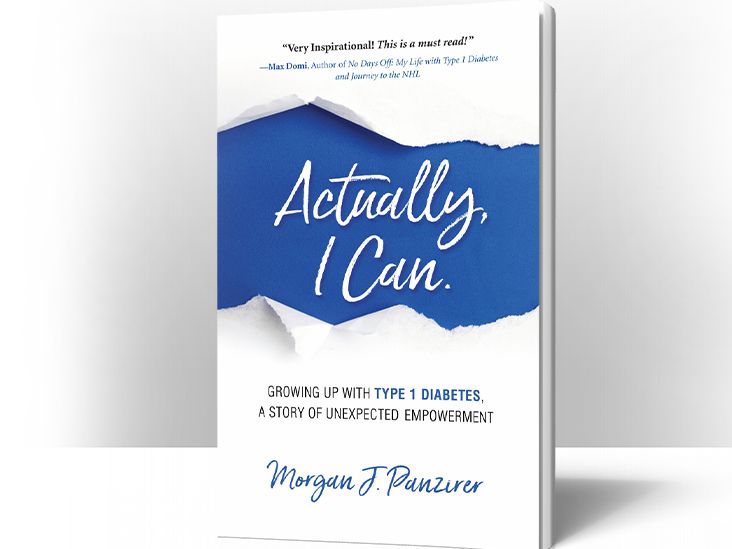
Some book titles whisper. Some politely clear their throats. And then there is Actually, I Can, a title that walks into the room wearing sneakers, a glucose monitor, and the confidence of someone who has had to explain type 1 diabetes to strangers more times than anyone should have to before breakfast.
Actually, I Can: Growing Up with Type 1 Diabetes, A Story of Unexpected Empowerment is a memoir by Morgan J. Panzirer, who was diagnosed with type 1 diabetes at age six. Published in 2020 by T1D Media, the book is both personal story and patient advocacy. It is not a textbook, although readers will learn plenty. It is not a pity parade, although it is honest about fear, frustration, and the exhausting math of daily diabetes management. Most importantly, it is not a sugary motivational poster. Thank goodness. We have enough posters telling us to “hang in there” while showing a cat on a branch.
This diabetes book review looks at what makes Actually, I Can meaningful, who should read it, where it shines, and why its message still matters for families, teens, caregivers, educators, and anyone who has ever assumed that type 1 diabetes means “can’t.” Spoiler alert: the book’s answer is right there in the title.
What Is "Actually, I Can" About?
At its core, Actually, I Can is a coming-of-age story shaped by type 1 diabetes. Morgan Panzirer writes about growing up with a chronic autoimmune condition that demands attention every single day. Type 1 diabetes is not caused by eating too much sugar, and it is not something a person simply outgrows. It happens when the immune system destroys insulin-producing beta cells in the pancreas, meaning the body can no longer make enough insulin to move glucose from the bloodstream into cells for energy.
That medical reality turns everyday life into a balancing act. Food, activity, stress, illness, sleep, hormones, and even excitement can affect blood sugar. For a child, that can feel like being handed a calculator, a science experiment, and a backpack full of emotional homework all at once. Panzirer’s memoir explains this world through lived experience rather than clinical distance, which is exactly why it works.
The book follows her diagnosis, adjustment, school years, advocacy, family support, diabetes technology, and the emotional growth that came from learning to manage a condition she never asked for. The phrase “Actually, I can” becomes more than a snappy title. It becomes a response to every misconception: Can you play sports? Can you eat carbs? Can you travel? Can you go to college? Can you chase big goals? Actually, yes.
Why This Diabetes Memoir Feels Different
Many health memoirs fall into one of two traps. Some become so inspirational that they float three feet above real life, where no one ever has a bad blood sugar day and everyone learns a lesson under perfect lighting. Others become so heavy that readers need a nap, a snack, and possibly a therapy llama. Actually, I Can finds a better middle lane.
Panzirer does not pretend type 1 diabetes is easy. She recognizes the fear of lows, the worry of highs, the awkwardness of medical devices, the emotional burden of being “different,” and the constant background noise of diabetes decisions. But she also refuses to let type 1 diabetes become the whole definition of a person. That distinction is powerful.
The best part of the book is its voice. It reads like a young person talking directly to other young people, not like an adult committee trying to sound “relatable” after Googling teen slang. The tone is warm, direct, and practical. When the book discusses pumps, continuous glucose monitors, injections, diabetes camp, advocacy events, school life, and family routines, it does so with the authority of someone who has lived the details.
A Strong Book for Newly Diagnosed Families
For families facing a new type 1 diabetes diagnosis, the first weeks can feel like being dropped into a country where everyone speaks in acronyms: T1D, CGM, A1C, DKA, basal, bolus, correction factor. Suddenly, lunch is not just lunch. It is carbohydrates, insulin timing, trend arrows, activity plans, and an anxious parent trying to look calm while internally screaming into the void.
Actually, I Can is helpful because it makes that world feel less lonely. Panzirer shows that fear is normal, confusion is normal, and progress can happen even when the beginning is messy. She also gives non-diabetic readers a better understanding of what daily management looks like. That matters because children and teens with type 1 diabetes often spend large parts of the day around people who may not understand what they are managing.
The book can be especially useful for siblings, grandparents, teachers, coaches, camp counselors, and friends. It explains without lecturing. It advocates without scolding. It says, in effect, “Here is what this life is like. Please stop staring at the devices like they are spy equipment from a low-budget action movie.”
The Main Theme: Empowerment Without Denial
The word “empowerment” can be tricky in health writing. Used well, it means giving people confidence, tools, language, and support. Used badly, it can sound like, “Just think positive and your pancreas will send an apology letter.” Thankfully, Panzirer’s book uses empowerment in the better sense.
The memoir does not suggest that attitude replaces insulin, medical care, blood glucose monitoring, nutrition planning, or support from health professionals. Instead, it argues that a diagnosis does not cancel ambition. A child with type 1 diabetes can still have dreams. A teen with a pump can still be stylish, funny, athletic, academic, creative, dramatic, and occasionally annoyed by parents. In other words: a full human being.
This theme is important because chronic illness can shrink a person’s self-image if every conversation becomes about limitations. Panzirer pushes back against that shrinkage. She shows how education, family involvement, medical technology, community, and self-advocacy can help someone live a bigger life with diabetes.
How the Book Handles Type 1 Diabetes Misconceptions
One of the strongest parts of Actually, I Can is the way it addresses common type 1 diabetes myths. Many people still confuse type 1 and type 2 diabetes, assume all diabetes is caused by diet, or think insulin is optional. These misconceptions are not just annoying; they can be harmful. They make people with diabetes feel blamed for a disease they did not cause and judged for medical needs they cannot ignore.
Panzirer’s story helps clarify that type 1 diabetes is an autoimmune disease. People with type 1 diabetes need insulin to survive. They may use injections, insulin pens, or pumps. They may check blood sugar with finger sticks or continuous glucose monitors. None of this means they are fragile porcelain dolls who must be stored on a shelf away from carbohydrates and soccer balls.
Misconception One: People With Type 1 Diabetes Cannot Eat Carbs
This myth needs to be gently escorted out of the building. People with type 1 diabetes can eat carbohydrates, but they must manage insulin and blood glucose carefully. Food decisions may require planning, math, and timing, but the presence of insulin therapy means life is not limited to lettuce and sadness.
Misconception Two: Diabetes Technology Fixes Everything
Devices can be life-changing, but they are not magic wands. A continuous glucose monitor provides data; it does not make decisions, pack school lunches, silence anxiety, or explain itself to curious classmates. Pumps and monitors can reduce burden, but the person still carries the mental load.
Misconception Three: Kids With Diabetes Should Avoid Big Goals
This is the myth the title demolishes. Actually, I Can makes a clear case that children with type 1 diabetes should be supported, not underestimated. They need preparation and safety plans, yes. They do not need adults quietly lowering expectations while pretending it is “for their own good.”
Writing Style: Honest, Accessible, and Surprisingly Light
The writing style is one reason this book is easy to recommend. It is approachable enough for teens and clear enough for readers new to diabetes. The tone is personal and reflective, but it avoids turning every chapter into a grand speech. That is good. Grand speeches are for movie trailers and people standing on cliffs in capes.
Panzirer’s strength is that she writes from inside the experience. She understands the small moments: the awkward questions, the medical gear, the sudden blood sugar checks, the private fears, the public explanations, and the strange maturity chronic illness can demand from a child. The book feels useful because it respects both the emotional and practical sides of type 1 diabetes.
Who Should Read "Actually, I Can"?
This book is a strong choice for several groups of readers. Teens with type 1 diabetes may appreciate seeing someone speak openly about experiences that often feel invisible. Newly diagnosed kids may not understand every detail at first, but families can read sections together and use the book as a conversation starter.
Parents and caregivers can also benefit. The memoir offers a reminder that children with type 1 diabetes need protection, but they also need independence. That balance is hard. Parents want to keep their child safe, while the child wants to feel normal, capable, and trusted. The book helps show how confidence can grow gradually through education, practice, and support.
Teachers, school nurses, coaches, and youth leaders should read it too. A student with diabetes is not being dramatic when they need to check a number, treat a low, carry supplies, drink water, use the restroom, or respond to an alarm. Understanding this can make school and activities safer and kinder.
What the Book Does Best
The book’s biggest success is emotional translation. It translates type 1 diabetes from a medical condition into a lived reality. That does not mean replacing science with feelings. It means showing the human side of the science.
For example, a medical website can explain that low blood sugar needs prompt treatment. That information is essential. But a memoir can explain what it feels like to be a kid trying to handle a low during class, sports, a sleepover, or a public moment when everyone suddenly seems to be looking. That kind of insight builds empathy.
Actually, I Can also does a strong job highlighting advocacy. Panzirer’s story includes education, awareness, and the importance of speaking up. Advocacy does not always mean giving a speech to hundreds of people. Sometimes it means telling one classmate, “No, I did not get this from candy.” Sometimes it means asking for accommodations. Sometimes it means correcting a myth for the tenth time with the patience of a saint and the facial expression of someone who deserves a cookie.
Where the Book May Not Be for Everyone
No book is perfect for every reader. People looking for a detailed medical manual may need additional resources from diabetes educators, endocrinologists, registered dietitians, or trusted health organizations. Actually, I Can is a memoir first. It gives perspective, not personalized medical instructions.
Some adult readers with long-term type 1 diabetes may already know many of the basics the book explains. However, even experienced readers may still enjoy the personal storytelling and advocacy angle. The book is especially valuable for readers who want to understand the emotional side of diabetes in childhood and adolescence.
Why the Book Still Matters Today
Although Actually, I Can was published in 2020, its message remains relevant. Type 1 diabetes continues to affect children, teens, and adults in the United States. Health organizations emphasize that type 1 diabetes can develop at any age, requires insulin management, and can bring both physical and mental health challenges. Technology has improved, but the daily work has not vanished.
That is why stories like Panzirer’s matter. They help readers understand that diabetes care is not just numbers on a screen. It is sleep, school, sports, friendships, family routines, medical appointments, food decisions, insurance questions, and the courage to keep going when the day has already asked too much.
Final Verdict: A Warm, Useful, and Encouraging Diabetes Book
Actually, I Can is a heartfelt and practical diabetes memoir that deserves attention from families, young readers, educators, and anyone interested in type 1 diabetes advocacy. It is not a cure-all guide, and it does not pretend that diabetes is easy. Its value is more personal: it gives readers a voice that is honest, hopeful, and grounded in lived experience.
The book’s best audience is probably newly diagnosed families and teens who need reassurance that life after diagnosis can still be full, ambitious, funny, and meaningful. It also serves as a gentle education tool for people outside the diabetes community. If you have ever wondered what daily life with type 1 diabetes really involves, this memoir offers a clear window.
The title may sound simple, but it carries the whole argument. When the world says diabetes means “you can’t,” Morgan Panzirer answers with the sentence many people with chronic illness need to hear and say: Actually, I can.
Extra Reader Experience: Living With the "Actually, I Can" Mindset
Reading Actually, I Can can make you think about the difference between encouragement and real support. Encouragement says, “You’ve got this!” Real support says, “You’ve got this, and I also learned how to recognize a low blood sugar, keep fast-acting carbs nearby, respect your medical devices, and not make weird comments about your lunch.” See the difference? One is a greeting card. The other is a plan.
For many families, the most relatable part of the book is not one dramatic scene but the repeated pattern of adapting. A diagnosis arrives, and suddenly the ordinary parts of life need new instructions. Birthday parties require carb estimates. Sports require planning. Sleepovers require trust. School requires communication. Travel requires supplies, backup supplies, and backup supplies for the backup supplies. Basically, packing for diabetes can make a weekend trip look like a moon mission.
The “Actually, I Can” mindset does not mean pretending everything is fine. It means building skills until the scary things become manageable. The first injection may feel impossible. The first pump site change may feel intimidating. The first time explaining diabetes to classmates may feel awkward. But each repeated action can become part of a new kind of confidence.
Parents may have their own emotional journey. At first, many want to monitor everything, because love sometimes shows up wearing the costume of panic. Over time, a child needs room to practice independence. That does not happen overnight. It happens through small steps: counting carbs together, packing supplies, recognizing symptoms, speaking up to adults, and learning when to ask for help. A book like this can reassure parents that independence is not neglect. It is preparation.
Teens may connect with the social side of the story. Diabetes can interrupt moments when all a young person wants is to blend in. A device alarm in class can feel louder than a marching band in a library. Checking blood sugar at lunch can invite questions. Wearing visible technology can make privacy feel complicated. Panzirer’s story helps normalize those experiences and reminds readers that embarrassment is not the same as weakness.
For friends and classmates, the book offers a simple lesson: be curious without being intrusive, helpful without being bossy, and kind without turning someone into a medical project. Ask what support looks like. Do not assume. Do not police food. Do not say, “Should you be eating that?” unless you are also prepared to be launched emotionally into the sun.
The most useful takeaway from Actually, I Can is that chronic illness can shape a person without shrinking them. Diabetes may influence choices, routines, emotions, and responsibilities, but it does not erase personality. A person with type 1 diabetes can be ambitious, tired, hilarious, annoyed, brave, insecure, determined, and completely uninterested in being inspirational before 8 a.m.
That honesty is what makes the book worth reading. It gives diabetes families a language for hope that does not deny the hard parts. It gives outsiders a better understanding of what support should look like. And it gives young readers a message that is both simple and sturdy: life may require extra planning, but extra planning is not the same as a closed door.
Note: This article is an original book review and educational commentary based on publicly available information about the book and reputable U.S. diabetes resources. It is not medical advice. People with diabetes should follow guidance from their licensed health care team.