Editorial note: This article discusses publicly reported allegations, consumer-protection concerns, and animal-welfare issues connected to mislabeled fur products. It is written for informational and editorial purposes.
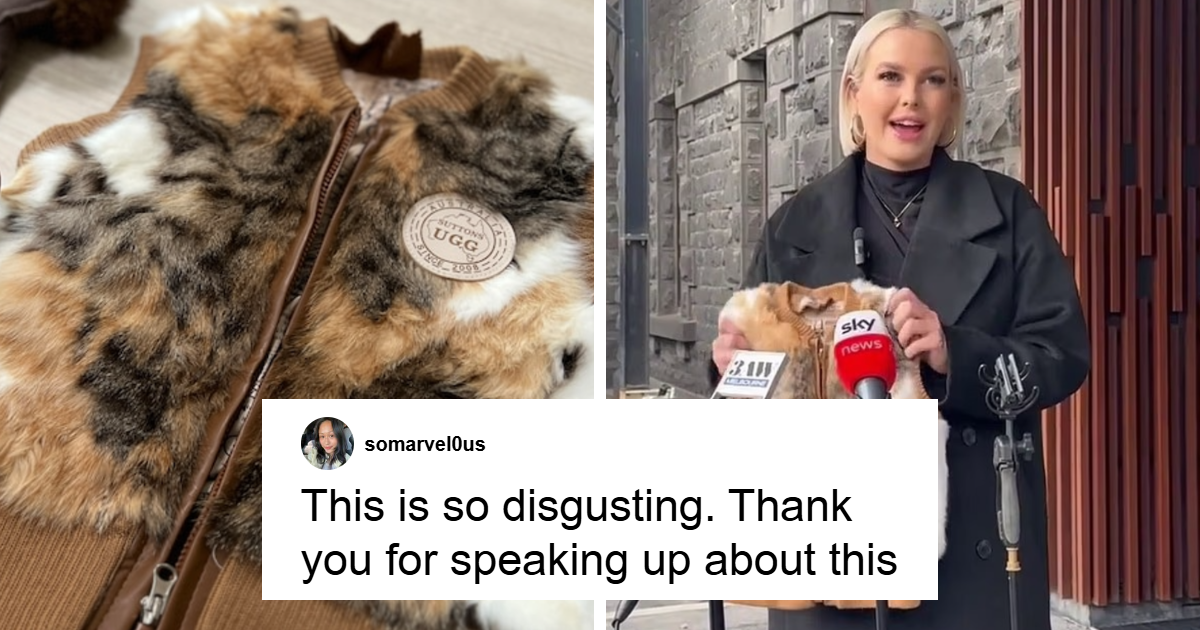
There are fashion surprises people enjoy: a jacket that actually has pockets, a clearance rack miracle, or jeans that fit without emotional negotiations in the dressing room. Then there are fashion surprises that make shoppers want to throw the whole closet into witness protection. One of those moments erupted after a children’s vest sold by fashion brand Suttons UGG in Victoria, Australia, was reportedly found to contain domestic cat fur and rabbit fur despite being labeled as “100 per cent Australian sheepskin or wool.”
The discovery triggered public outrage because it combined three consumer nightmares at once: possible illegal animal-fur imports, misleading product labeling, and the deeply upsetting idea that a shopper could unknowingly buy clothing made with cat fur. For many consumers, the issue was not simply that the vest contained animal material. It was that the label allegedly told one story while forensic testing told another. In the court of public opinion, that is the retail equivalent of saying “gluten-free” on a loaf of bread made entirely of pasta.
The story also landed at a time when consumers are already more skeptical about fashion supply chains. Shoppers want to know what they are buying, where it came from, whether animals were harmed, and whether a brand’s “ethical” language is more than a decorative sticker. This scandal put all of those questions under a very bright, very uncomfortable spotlight.
What Happened in the Cat Fur Vest Scandal?
According to public reports, a joint investigation by Collective Fashion Justice and Australia’s Animal Justice Party purchased and tested clothing items sold in Victoria. One of the most shocking findings involved a children’s vest sold by Suttons UGG. The label reportedly described the garment as “100 per cent Australian sheepskin or wool,” but forensic fiber analysis identified domestic cat fur and rabbit fur.
That finding was explosive for several reasons. First, shoppers generally understand wool and sheepskin as sheep-derived materials, not mystery pelts from other animals. Second, cat and dog fur imports have long been prohibited in several major markets, including Australia and the United States. Third, children’s clothing naturally raises the emotional temperature. A mislabeled adult coat would be bad enough. A mislabeled child’s vest containing cat fur? That is how a retail controversy becomes a public-relations bonfire.
Reports also noted other allegedly mislabeled items, including beanies sold at Melbourne’s Queen Victoria Market that were labeled as acrylic but tested as containing fox and raccoon dog fur. Together, these findings suggested a wider problem than one incorrect tag on one vest. They pointed to a supply-chain system where real animal fur can be disguised as wool, faux fur, acrylic, or other materials that shoppers may consider safer, cheaper, or more ethical.
Why the Public Reaction Was So Intense
The fury was not hard to understand. Cats are companion animals in many households. For millions of people, they are not “materials”; they are family members with whiskers, opinions, and a personal belief that every cardboard box is a luxury condo. So when shoppers heard that cat fur may have entered a clothing supply chain and appeared in a child’s vest, the reaction was immediate and emotional.
But emotion was only part of the backlash. Consumers also felt deceived. A label is supposed to be the product’s truth-teller. It may be tiny, scratchy, and written in font size “ant wearing glasses,” but it carries important information. When a label says wool, shoppers expect wool. When it says acrylic, shoppers expect synthetic fiber. When the label does not match the material, consumers lose trust not only in that one product but in the retail system around it.
This is why fashion labeling matters. It is not a boring technical detail tucked behind the collar. It affects ethical choices, religious and cultural concerns, allergies, price expectations, animal-welfare values, and legal compliance. A mislabeled garment can trick a vegan consumer into wearing animal fur, mislead a parent buying clothing for a child, or cause someone to pay premium prices for a product that is not what it claims to be.
Wool, Sheepskin, Fur, and Faux Fur: Why the Differences Matter
To understand why this controversy became such a big deal, it helps to separate a few terms that often get tossed together in winter fashion like socks in a laundry basket.
Wool
Wool usually refers to fiber shorn from sheep or other animals such as goats, alpacas, or rabbits, depending on the product. In ordinary consumer language, “wool” suggests a textile fiber, not a pelt from a domestic cat. A wool sweater may be itchy, cozy, expensive, or all three, but it should not be secretly made from an entirely different animal.
Sheepskin
Sheepskin generally refers to sheep hide with the fleece still attached. It is an animal product, but it is specific. If a label says Australian sheepskin, consumers expect the material to come from sheep, not rabbit fur and cat fur. Precision matters because shoppers may make different ethical decisions about sheep-derived materials versus fur from companion animals.
Real Fur
Real fur comes from an animal pelt. Depending on the region and law, it may require specific labeling that identifies the animal, origin, and other details. In the U.S., fur labeling rules are designed to help consumers know what animal produced the fur and where imported fur originated. The entire point is transparency.
Faux Fur
Faux fur is usually synthetic, often made from polyester or acrylic fibers. It can look convincing enough to fool the eye, which is exactly why accurate labeling and testing matter. A consumer trying to avoid animal fur may choose faux fur in good faith. If the product turns out to be real fur, the consumer has been denied a meaningful choice.
The Legal Problem: Cat Fur Is Not Just “Unfashionable”
The scandal is not only about taste or personal ethics. In many places, cat and dog fur products sit in a stricter legal category than other animal materials. Australia prohibits the importation of cat and dog fur under customs rules unless special permission is granted. The United States also prohibits importing, exporting, selling, transporting, or distributing products made with dog or cat fur under federal law.
That legal context makes the label issue even more serious. If a product contains cat fur, it is not merely a mislabeled vest. It may raise questions about customs enforcement, supplier verification, retailer responsibility, and whether existing laws have enough testing muscle behind them. A ban that exists on paper is only as strong as the inspections, penalties, and supply-chain controls that support it.
Critics argue that mislabeling can allow prohibited or unwanted materials to slip through ordinary retail channels. A product labeled as wool may not attract the same scrutiny as a product honestly labeled as cat fur. A product labeled as acrylic may be treated as harmless synthetic fashion. That creates a loophole big enough for bad actors to drive a truck full of questionable pom-pom beanies through it.
Why Fashion Supply Chains Are So Vulnerable to Mislabeling
Modern fashion supply chains are global, fast, and layered. A brand may design a product in one country, source materials from another, manufacture it somewhere else, and sell it through stores, markets, or online platforms. Between the raw material and the retail rack, a garment may pass through suppliers, subcontractors, wholesalers, importers, and distributors.
That complexity creates opportunity for mistakes and deception. Sometimes mislabeling may result from sloppy supplier information. Other times, it may be intentional because real fur can be cheap in some markets and can be passed off as faux fur or another material. Either way, the consumer at the end of the chain is left holding the bag, or in this case, possibly the vest.
Small retailers can be especially vulnerable if they rely heavily on supplier claims and do not conduct independent testing. But “the supplier told us” is not enough in today’s market. Consumers increasingly expect brands to verify, not merely trust. Fashion companies cannot build ethical marketing on a shrug and a shipping invoice.
The Trust Crisis for Fashion Brands
For any fashion brand, trust is part of the product. A vest is not just fabric, stitching, and a zipper. It is a promise: this is what we say it is, this is what you are paying for, and this is how it fits into your values. When a brand’s label is wrong, that promise snaps.
In the Suttons UGG case, the public anger was intensified by the contrast between the label and the alleged test results. “Australian sheepskin or wool” sounds familiar, cozy, and locally reassuring. Cat fur sounds shocking, secretive, and emotionally loaded. That gap is where outrage lives.
Brands facing this kind of scandal need more than a carefully polished statement. They need a clear recall process, transparent supplier investigation, independent testing, cooperation with regulators, and a plan to prevent recurrence. Consumers do not want vague phrases like “we take this seriously” unless the next sentence explains exactly what “seriously” means.
What Regulators and Retailers Can Learn
The scandal offers a practical lesson for regulators: labeling rules need enforcement teeth. Laws that ban certain fur products or require accurate material disclosures are important, but they must be paired with random testing, importer audits, meaningful penalties, and public reporting. Otherwise, dishonest products can hide behind ordinary-looking tags.
Retailers also need stronger procurement standards. If a store sells products with fur-like trims, fluffy linings, pom-poms, or “wool-like” materials, it should ask more questions before stocking them. What is the animal source? Is it real or faux? Has the supplier provided documentation? Has independent testing confirmed the claim? If the answers are vague, the product should not be waved through like a celebrity at a velvet rope.
Online marketplaces face similar pressure. They host millions of listings, many from third-party sellers. Without stronger verification, mislabeled animal products can reach consumers who would never knowingly buy them. Search filters for “faux fur” or “vegan” are only useful if the underlying claims are true.
How Consumers Can Protect Themselves
Shoppers should not have to become textile detectives, but a few habits can reduce risk. First, be cautious with extremely cheap “faux fur” that feels unusually soft, dense, or natural. Real fur can sometimes be cheaper than high-quality faux fur, especially when sourced through questionable supply chains.
Second, check the base of the fibers. Faux fur is usually attached to a woven or knitted backing, while real fur is attached to skin or hide. Part the fibers and look closely. If the backing looks like leather or suede, that is a warning sign. This test is not perfect, but it can help.
Third, buy from brands with clear animal-welfare policies and transparent sourcing. A serious fur-free policy should be public, specific, and backed by supplier requirements. “We love animals” is nice. So is a cat-shaped mug. Neither is a compliance program.
Fourth, report suspicious products to consumer-protection authorities or animal-welfare organizations. If a label seems wrong, consumers can document the item, store, label, receipt, and product photos. Public reporting can trigger testing and enforcement.
The Bigger Shift Toward Fur-Free Fashion
The backlash also reflects a broader shift in fashion. Many major brands, retailers, and fashion institutions have moved away from animal fur. California’s statewide ban on the sale of new fur products took effect in 2023, and New York Fashion Week is set to prohibit animal fur from official schedule collections beginning in September 2026. Luxury houses and department stores have also increasingly adopted fur-free policies.
That does not mean the fashion industry has solved every ethical problem. Faux fur can raise environmental concerns because many synthetic versions are plastic-based. Wool and leather come with their own animal-welfare debates. Even plant-based alternatives must be assessed for durability, chemicals, labor practices, and end-of-life impact. But the direction of consumer expectations is clear: shoppers want fewer secrets and better materials.
The cat fur vest scandal shows why transparency is no longer optional. If brands want consumers to pay attention to sustainability claims, they must first prove that basic labels are accurate. You cannot build a responsible fashion future on a tag that gets the animal wrong.
Why “Mass Fury” Is a Rational Response
Some people may dismiss online outrage as overreaction. But in this case, the anger is rooted in legitimate concerns. Consumers were not merely upset that an item contained fur. They were upset that the product allegedly contained a kind of fur many people find especially disturbing, while the label suggested something else entirely.
Public anger can be messy, but it can also push industries to improve. Outrage brings attention. Attention brings investigation. Investigation can bring better laws, stronger enforcement, and more careful retail practices. In a perfect world, companies would fix these issues before consumers discover them through forensic testing. In the real world, public fury sometimes works like a smoke alarm: loud, annoying, and absolutely necessary.
Experiences and Lessons From the Cat Fur Vest Scandal
One of the most relatable parts of this story is how ordinary the purchase could have seemed. Imagine walking through a market or store, spotting a soft children’s vest, checking the tag, and seeing words like “wool” or “sheepskin.” Most people would not pause and think, “Better verify this with a forensic laboratory before checkout.” They would compare the price, think about warmth, maybe wonder whether it comes in a nicer color, and move on with their day.
That everyday shopping experience is exactly why the scandal feels so unsettling. Consumers rely on labels because they cannot personally test every product. We trust that “cotton” means cotton, “wool” means wool, and “faux fur” means no animal was used. Without that trust, shopping becomes exhausting. Nobody wants to bring a microscope to the mall. It would clash with the tote bag.
This incident also teaches a hard lesson about assumptions. Many shoppers assume that if a product is sold openly in a reputable-looking store or market, it must have passed basic checks. But retail shelves are not magical truth zones. Products can slip through because documentation is weak, suppliers are careless, or enforcement is limited. The presence of a tag does not guarantee the accuracy of the tag.
For parents, the experience hits even harder. Buying children’s clothing is often about comfort and safety. A parent choosing a warm vest may be thinking about school mornings, chilly playgrounds, or a child who refuses to wear sleeves because apparently sleeves are a constitutional crisis. The idea that such an item could contain mislabeled cat fur feels like a violation of parental trust.
For ethical shoppers, the scandal reinforces the importance of buying from companies that publish detailed material policies. A vague “premium materials” description is not enough. Consumers should look for brands that clearly state whether they use animal fur, how they verify materials, and what supplier standards they require. Independent certifications and transparent sourcing are not perfect, but they are better than mystery fluff.
For retailers, the experience should be a wake-up call. Do not wait for activists, journalists, or angry customers to uncover a problem. Test high-risk products before selling them. Train buyers to understand fur-labeling risks. Ask suppliers for detailed documentation. If a product contains fur-like trim at a suspiciously low price, treat that as a red flag, not a bargain.
For regulators, the lesson is equally clear: spot checks matter. If mislabeled fur products can be discovered through advocacy investigations, official agencies can also use targeted testing to protect consumers. Strong laws are important, but without enforcement, they become polite suggestions wearing a badge.
Finally, for the fashion industry as a whole, the scandal proves that transparency is not a luxury feature. It is the minimum entrance fee for modern consumer trust. Shoppers are willing to forgive many things: weird runway hats, confusing size charts, even jeans labeled “relaxed fit” that are clearly plotting against the thighs. But secretly selling cat fur as wool crosses a line that many consumers will not ignore.
Conclusion: A Label Should Tell the Truth, Not Tell a Story
The fury over the cat fur vest scandal is about more than one garment. It is about the right of consumers to know what they are buying. It is about animal welfare, legal accountability, ethical fashion, and the growing demand for supply-chain transparency. A label is small, but its job is enormous. It must tell the truth.
When a product labeled as wool allegedly contains cat fur and rabbit fur, the damage goes far beyond one brand’s reputation. It shakes confidence in retailers, suppliers, customs controls, and the fashion industry’s ethical claims. The solution is not complicated, but it does require commitment: stronger testing, clearer labeling, tougher enforcement, and brands that verify materials before asking consumers to trust them.
Fashion can be creative, expressive, and even a little ridiculous in the best way. But it should never depend on deception. If the industry wants shoppers to believe in its sustainability promises, it must start with the basics: say what the product is, prove it, and do not make consumers discover the truth through a scandal.