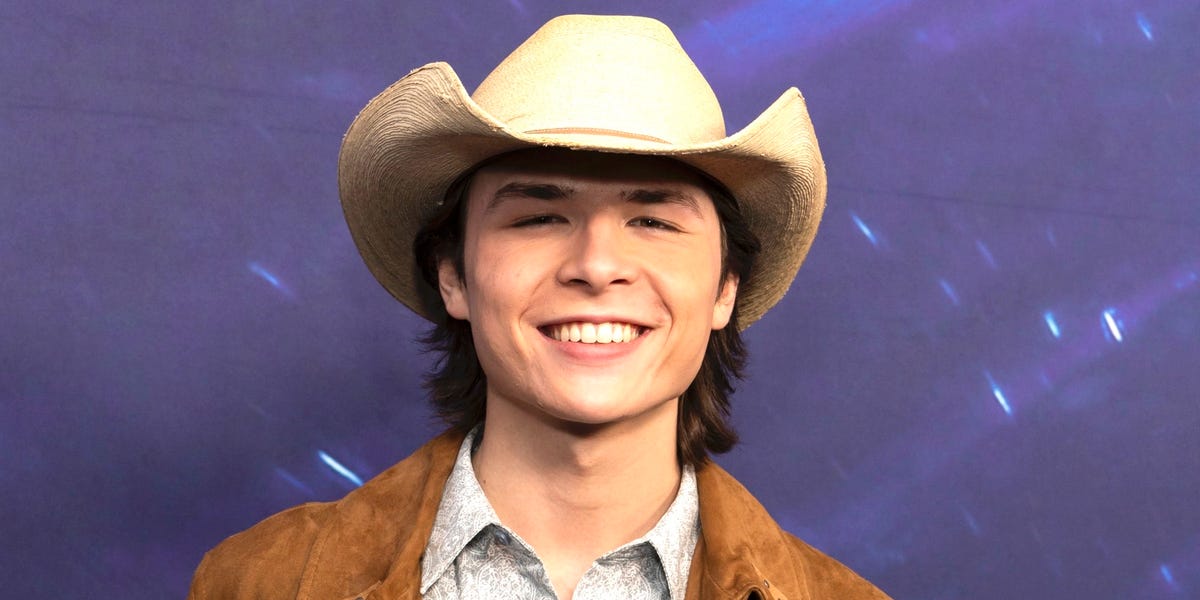
Not every career milestone comes with fireworks, screaming fans, and a giant neon sign that says, Yep, this kid is going places. But in John Foster’s case, the moment came pretty close. After finishing as the runner-up on American Idol Season 23, the Louisiana-born country singer kept the momentum rolling in the most country-music way possible: by stepping onto the Grand Ole Opry stage, then returning again as fans cheered him on like proud cousins at a graduation party.
That reaction did not happen by accident. Foster’s rise has felt personal to viewers from the start. He did not come across as a manufactured reality-show contestant trying to game the system with flashy gimmicks and suspiciously dramatic pauses. He came across as a genuinely talented young artist with a classic country voice, deep roots, and the kind of sincerity that can cut through a noisy entertainment landscape. In an era when many singers are chasing trends, Foster’s appeal has been the opposite: he sounds like he knows exactly who he is.
That is a big reason fans were so proud when he hit this career milestone. It was not just about one performance date. It was about what the moment represented: proof that his American Idol run was not a fleeting TV storyline but the beginning of a real country music career.
Why This Milestone Mattered So Much
For country artists, the Grand Ole Opry is not just another venue on a calendar. It is a cultural landmark, a rite of passage, and the kind of stage that still carries emotional weight in a business that often moves at TikTok speed. If playing a county fair says, “I’m working,” then playing the Opry says, “I belong in the conversation.”
That is why Foster’s Opry debut landed so strongly with fans. He had already built national recognition on American Idol, but the Opry gave his success a different kind of validation. It connected him not just to television fame, but to country music tradition. For an artist whose sound leans neo-traditional and whose public persona is built around faith, humility, and classic influences, the venue fit him almost too perfectly. Frankly, if John Foster had walked onto the Opry stage wearing a futuristic synth-pop cape, the universe might have filed an official complaint.
Fans understood that instantly. They were not just applauding a booking. They were celebrating a symbolic crossing point, the moment where a promising contestant started to look like a legitimate long-term artist.
From American Idol Standout to Country Prospect
John Foster’s national breakthrough came on American Idol, where he quickly stood out as one of the season’s most recognizable voices. His audition helped establish the foundation of his identity: classic song choices, confident delivery, and clear affection for traditional country music. That mattered because reality competitions often reward singers who can impress in a moment, but not necessarily artists who already feel marketable. Foster felt like both.
As the season progressed, he gave viewers more than technical ability. He brought storytelling. He brought emotional intelligence. And, maybe most importantly, he brought consistency. A lot of contestants can have one huge night; fewer can build a full-season narrative that makes people care what happens next. Foster did exactly that.
One of the defining turning points in his journey was his original song “Tell That Angel I Love Her,” a tribute tied to the loss of his friend Maggie Dunn. The performance gave audiences a fuller sense of who he was as a writer and interpreter, not just a vocalist. It also helped explain why fans connected with him so fiercely: Foster did not perform like someone trying to impress the room. He performed like someone trying to tell the truth.
That emotional connection helped carry him all the way to the finale, where he ultimately finished second. But even that result worked in an odd, powerful way in his favor. Rather than being boxed into a neat little winner narrative and left there, Foster emerged with something arguably more valuable: momentum, sympathy, visibility, and a fan base eager to keep following the story.
The Carrie Underwood Effect and the “Proud Mom” Energy
Every reality-show breakout star needs a few key moments that make the audience feel like the industry is paying attention. Foster had one of those when Carrie Underwood responded warmly to his performances and openly praised his development. Her reaction mattered because she is not just any celebrity judge. She is one of the most successful stars ever produced by the American Idol machine, and she knows exactly what separates a television moment from a career foundation.
When Underwood reportedly said she felt like a “proud mom” watching Foster, the line stuck for a reason. It captured how many viewers felt. He was young, talented, grounded, and visibly improving in real time. You could see people recalibrating their expectations from, “He could go far on this show,” to, “He could actually build something durable after the show.”
That shift is huge in entertainment coverage. Plenty of contestants are described as gifted. Fewer start getting framed as artists with a lane. Foster’s lane became clearer with each appearance: classic-leaning country, emotionally direct songs, small-town credibility, and a voice that feels more interested in substance than vocal gymnastics.
A Milestone Built on More Than Television Fame
What makes Foster’s career milestone especially compelling is that it did not arrive in a vacuum. It was supported by a broader pattern of progress. After American Idol, he continued performing, released music, and expanded his visibility beyond the show’s audience. That is what fans were reacting to when they posted messages about being proud of him. They were not seeing a contestant freeze after the cameras stopped rolling. They were seeing movement.
That movement included his Opry debut, return dates, live appearances in Louisiana, and growing presence on the road. His official branding also remained remarkably consistent. He still sounded like John Foster. He still looked like John Foster. He still came across as a young artist who knows his roots and is not interested in sanding off all his edges to chase whatever the algorithm likes this week.
That matters commercially, too. Authenticity is one of the most overused words in entertainment writing, usually because somebody wore cowboy boots once and posted a black-and-white photo. But in Foster’s case, authenticity is actually central to the pitch. His hometown story, his family ties, his faith, and his musical influences all reinforce the same message. The brand is not confusing, which is a huge advantage early in a career.
How His Louisiana Story Strengthened the Narrative
Part of what made fans rally so hard behind Foster is that his story never felt detached from where he came from. Coverage from Louisiana painted a picture of a hardworking young man shaped by family, community, and local pride. He was not introduced to the public as a mysterious industry creation. He was the kid from Addis who had helped out at the family meat market, excelled in school, and brought a whole hometown along for the ride.
That kind of backstory works because it feels lived-in. Foster’s rise did not erase his identity; it amplified it. His hometown celebration, parade, and Louisiana performances made his success feel communal. Fans were not only watching a singer advance. They were watching a community see one of its own break through on a national stage.
And in country music, that matters. The genre still values a sense of place. A singer with strong regional identity often lands harder than one with a slick but generic image. Foster’s Louisiana connection is not just nice biography material. It is part of the emotional engine of his career.
Why Fans Keep Saying They’re Proud
The language around Foster has been telling. Fans are not only calling him talented or exciting. They are repeatedly saying they are proud of him. That word signals something deeper than casual admiration. Pride is the language people use when they feel invested in effort, growth, and character.
In Foster’s case, fans watched the full arc. They saw him audition, grow through the competition, deliver emotional performances, fall just short of the title, and then convert that visibility into meaningful career progress. When he returned to the Opry for major dates, including a birthday performance, the comments reflected that long-view investment. It felt earned.
And that is really the key. Fans tend to celebrate milestones more intensely when they believe the artist did not skip steps. Foster’s story has the opposite of skip-step energy. It feels built piece by piece: hometown support, national exposure, emotional credibility, traditional-country fit, then major stage opportunities. That sequence makes people root harder because they can see the structure being built in real time.
What This Milestone Says About His Future
If Foster’s Opry breakthrough and the surrounding fan reaction proved anything, it is that he has already crossed from “promising contestant” into “developing artist with a real audience.” That does not guarantee superstardom. Country music careers are marathons, not a one-night talent-show sprint. But it does signal that the foundation is real.
More importantly, his trajectory after the show suggests he is building the right kind of career capital. He has tradition on his side, a recognizable point of view, emotional credibility, and a fan base that seems willing to follow him beyond reality TV. Add in later-profile appearances and continued touring, and the picture gets clearer: Foster is not just surviving the post-Idol transition. He is using it.
That is why the milestone mattered so much. It was not simply a proud moment for fans. It was a checkpoint that confirmed their instincts. The young man they believed in on television looks increasingly capable of sustaining that belief on real stages, in real rooms, and in the broader country market.
And for a rising country singer, that is no small thing. It is the difference between being remembered as a favorite contestant and being recognized as the beginning of a career story people will still be following years from now.
The Fan Experience: Why This Milestone Felt Personal
One reason this story traveled so well is that fans did not experience John Foster as a distant celebrity. They experienced him in chapters. First, there was the curiosity of the audition phase, when viewers started noticing that this young Louisiana singer was not trying to out-shout the room. He was choosing songs that reflected his taste and singing them with restraint. That sort of approach can either disappear quickly on a competition show or become magnetic. In Foster’s case, it became magnetic because people sensed intention behind it.
Then came the emotional chapter. When Foster performed material tied to personal loss, fans were not simply evaluating notes and phrasing. They were watching someone reveal what kind of artist he wanted to be. That creates a different bond. Viewers stop asking, “Can he sing?” and start asking, “How far can this person go?” Those are very different questions, and the second one is where loyalty begins.
After that, the experience widened. Local supporters in Louisiana embraced him as a hometown success story. Television audiences saw him as an old-soul country contender. Online fans began reacting not just to performances, but to updates about his next move. By the time news of his Opry milestone arrived, the audience had already been trained to see each step as part of a larger climb. The result was emotional continuity. The applause was not for a random booking; it was for a journey they had already internalized.
That is why the fan comments hit differently. A simple “So proud of you” can sound generic on the internet, where people also claim to be obsessed with a sandwich after two bites. But in this case, the praise felt earned. Fans had watched Foster come close to winning American Idol, handle the loss with grace, and then keep moving. They saw him return to Louisiana, perform for home crowds, and keep talking about faith, family, and staying grounded. For many supporters, that consistency mattered as much as the music.
There is also something undeniably satisfying about seeing an artist reach the exact kind of milestone that suits him. If Foster had suddenly pivoted into a random viral stunt, fans might have paid attention, but they would not have reacted with the same emotional warmth. The Opry made sense. It aligned with his voice, image, influences, and goals. It looked like destiny with a soundcheck.
And that is the real experience surrounding this story: recognition. Fans recognized the fit. They recognized the growth. They recognized that Foster’s path was starting to move from television promise to music-career reality. That is a gratifying thing to witness as a supporter. It feels less like consuming content and more like watching someone step into the life they were built for.
So yes, fans were proud. Not because success appeared out of nowhere, but because it arrived in a way that felt honest, earned, and deeply connected to the artist they had been rooting for all along.
Conclusion
John Foster’s career milestone resonated because it confirmed what many fans had suspected since his earliest American Idol performances: he is not just a memorable contestant, but a serious young country artist with staying power. His Grand Ole Opry breakthrough, growing performance schedule, and steady post-show momentum gave supporters tangible proof that his story is still accelerating.
More than that, the moment felt emotionally satisfying. Foster’s rise has been built on strong storytelling, traditional-country credibility, and a public image rooted in humility rather than hype. That combination makes success feel personal to the audience watching it happen. They are not merely cheering for headlines. They are cheering for follow-through.
If this milestone is any indication, John Foster’s next chapter may be even more important than the TV run that introduced him to the country. And that is exactly why fans are so proud: they are not just celebrating where he has been. They are celebrating where he looks ready to go.