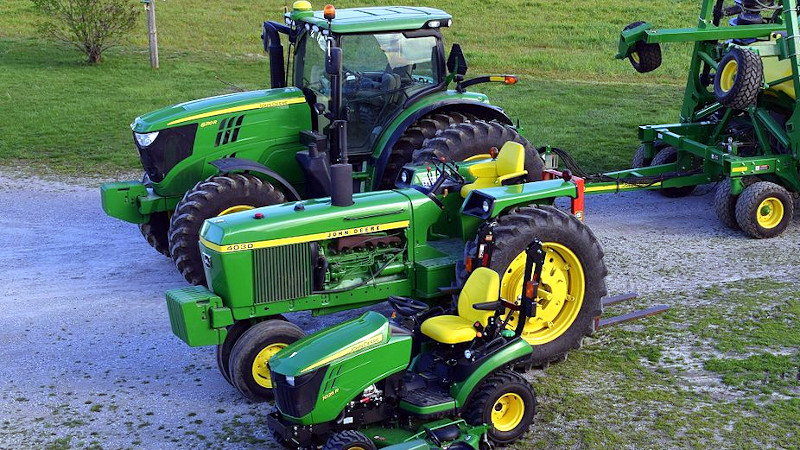
There are few things more frustrating than owning a machine the size of a small apartment building and being told you cannot fully repair it because a computer says no. That, in one sentence, is why the John Deere right-to-repair debate has become one of the most important technology fights in American agriculture. It is not just about tractors. It is about ownership, software, competition, downtime, and whether a farmer who paid six figures for a machine should have to wait for an authorized technician while corn, soybeans, wheat, or hay politely refuse to stop growing.
Nebraska became one of the symbolic battlegrounds in this fight. The state’s proposed agricultural right-to-repair legislation, known as LB543, aimed to give farmers and independent repair providers fair access to the diagnostic tools, software, firmware, manuals, data, and parts needed to fix modern farm equipment. The bill did not become law. But calling it a simple failure misses the larger story. Its defeat helped sharpen the national conversation, exposed the limits of voluntary industry promises, and set the stage for later lawsuits, memorandums of understanding, state-level reforms, and renewed pressure on John Deere.
The aftermath of Nebraska’s failed right-to-repair push is a lesson in how a legislative loss can still change the game. Sometimes a bill dies in committee, but the argument escapes the building and starts driving around the country on very expensive green-and-yellow tires.
Why John Deere Became the Face of the Farm Right-to-Repair Debate
John Deere is one of the most recognizable names in American farming. For generations, its machines have been associated with durability, productivity, and a certain rural pride. But modern John Deere equipment is no longer just steel, hydraulics, belts, bolts, and grease. Today’s tractors, combines, sprayers, and harvesters are rolling computers packed with electronic control units, sensors, embedded software, GPS systems, emissions controls, and proprietary diagnostic platforms.
That technological leap has brought real benefits. Precision agriculture can improve yields, reduce waste, and help farmers manage acres with remarkable accuracy. A modern tractor can feel less like a tractor and more like a land-based spaceship that happens to pull a planter. The problem is that when software becomes central to how the machine works, software access becomes central to how the machine is repaired.
Farmers have long repaired their own equipment or relied on local independent mechanics. That tradition was not just about thrift. It was about timing. If a combine breaks during harvest, the calendar does not care that the nearest authorized dealer is backed up. A few days of downtime can mean lost income, crop damage, missed weather windows, and a great deal of creative language in the machine shed.
Right-to-repair advocates argue that Deere’s control over diagnostic software and repair tools has made farmers too dependent on authorized dealerships. Deere, meanwhile, has argued that it supports customer repair while also needing to protect safety, emissions compliance, cybersecurity, intellectual property, and machine performance. Both sides agree the equipment is complex. The fight is over who gets the keys to that complexity.
What Nebraska’s LB543 Tried to Do
Nebraska’s LB543, introduced by Senator Tom Brandt, sought to create the Agricultural Equipment Right-To-Repair Act. In plain English, the bill would have required original equipment manufacturers to make repair resources available to equipment owners and independent repair providers on fair and reasonable terms. Those resources included items such as documentation, embedded software, firmware, tools, parts, and diagnostic information.
The idea was not that farmers could turn tractors into drag racers, disable emissions systems, or hack safety features like a teenager jailbreaking a phone in 2009. Most right-to-repair bills draw a line between repair and modification. Repair means restoring the equipment to proper working condition. Modification means changing the machine beyond its intended design, potentially affecting safety, pollution controls, warranties, or intellectual property. That distinction matters because opponents often warn that repair access could become a back door to tampering. Supporters respond that existing emissions and safety laws still apply, and that repair access does not grant permission to break federal law.
For Nebraska farmers, the bill represented something practical: more choices. If a sensor failed, a code appeared, or a software reset was needed after replacing a part, the farmer wanted the option to fix it personally or hire a trusted local mechanic. In rural areas, “local” is not a cute lifestyle word. It can be the difference between getting back in the field today and waiting three days while rain clouds line up like creditors.
Why the Nebraska Legislation Failed
LB543 advanced far enough to become a serious policy debate, but it ultimately did not cross the finish line. The bill faced intense opposition from equipment manufacturers and industry groups, who raised concerns about safety, emissions compliance, intellectual property, cybersecurity, and liability. These arguments are familiar across the broader right-to-repair movement, whether the product is a tractor, smartphone, wheelchair, appliance, or pickup truck.
One of the most important political dynamics was the position of farm organizations. Farmers are not a monolith, and neither are the groups that represent them. Some Nebraska farmers and repair advocates pushed strongly for a binding law. Others were willing to consider negotiated agreements between manufacturers and farm organizations. When the American Farm Bureau Federation and John Deere later signed a memorandum of understanding in early 2023, Nebraska’s effort lost some of its immediate legislative momentum.
Senator Brandt said he was willing to give the agreement a chance, while also suggesting that if the promised progress did not materialize, legislation could return. That moment captured the dilemma perfectly: should farmers trust a voluntary agreement, or should they insist on enforceable law?
The John Deere–Farm Bureau Agreement: Progress or Pause Button?
In January 2023, John Deere and the American Farm Bureau Federation signed a memorandum of understanding intended to address right-to-repair concerns. The agreement said farmers and independent repair facilities would have access to many tools, manuals, software, diagnostic resources, and data needed to maintain and repair John Deere equipment. It also recognized Deere’s interest in protecting intellectual property, safety systems, and emissions controls.
On paper, that sounded like a breakthrough. Farmers wanted tools. Deere agreed to provide more tools. Everyone could shake hands, smile for the camera, and pretend the combine never broke down during soybean harvest again.
But the details mattered. The agreement was not the same as a statute. It was a voluntary memorandum, not a law passed by elected officials. It also included language encouraging Farm Bureau organizations not to promote state or federal right-to-repair legislation that imposed obligations beyond the agreement. To critics, that looked less like a final victory and more like a strategic pause button. Supporters saw it as a practical step forward that could deliver repair access faster than years of legislative fights.
The key weakness was enforceability. If a farmer believed access was incomplete, expensive, delayed, or limited, what happened next? A private agreement can guide conduct, but it does not always provide the same remedies, penalties, or public accountability as a law. In other words, a handshake can be useful, but it is not a socket wrench.
Colorado Changed the Landscape
While Nebraska’s legislation stalled, Colorado moved ahead. In 2023, Colorado became the first state to pass a right-to-repair law specifically for agricultural equipment. The law took effect on January 1, 2024, and requires agricultural equipment manufacturers to provide owners and independent repair providers with resources such as parts, tools, embedded software, firmware, documentation, and diagnostic materials needed for repair.
Colorado’s law is especially important because it made clear that a nationwide memorandum of understanding does not erase a manufacturer’s legal duties under state law. That was a direct answer to one of the biggest questions after the Deere-Farm Bureau agreement: could voluntary deals reduce pressure for legislation? Colorado’s answer was, essentially, “Nice agreement. We are still passing a law.”
The Colorado model also preserved limits. It did not authorize owners to disable safety systems, violate emissions law, or infringe intellectual property. This structure undercut the argument that right to repair must equal chaos. The law said farmers should be able to repair equipment, not turn a combine into a rogue science project with a grain tank.
The FTC Lawsuit Put Deere Under a National Spotlight
The debate escalated again in January 2025, when the Federal Trade Commission, joined by state attorneys general, sued Deere & Company over its repair practices. The FTC alleged that Deere restricted access to fully functional repair tools, pushed farmers toward authorized dealers, increased repair costs, and limited competition from independent repair providers.
At the center of the case is access to software and diagnostic systems. Modern farm equipment often needs specialized digital tools to diagnose faults, clear codes, calibrate components, or complete repairs after parts are replaced. The FTC argued that Deere’s most complete tools were available only through authorized dealers, giving Deere and its dealer network control over key repair services.
John Deere denied wrongdoing and described the FTC’s claims as inaccurate and legally flawed. The company has emphasized its investments in customer self-repair tools, including digital resources, manuals, parts access, Equipment Mobile, Customer Service ADVISOR, and planned capabilities through John Deere Operations Center. Deere’s position is that it has been improving repair access while maintaining safety, reliability, and compliance.
That disagreement is the heart of the modern right-to-repair fight. Farmers and regulators ask whether the available tools are complete enough to create real repair choice. Deere says it is expanding access responsibly. The legal system is now one of the places where those competing claims are being tested.
The $99 Million Settlement and What It Means
In 2026, Deere agreed to a proposed $99 million settlement in a private class-action right-to-repair lawsuit brought by farmers. The lawsuit accused Deere of restricting repair access and forcing farmers to rely on authorized dealers. Deere denied wrongdoing, but the proposed settlement included both financial compensation for eligible class members and repair-related commitments lasting for a defined period.
The settlement is significant for three reasons. First, it shows that the right-to-repair debate is not just a public relations issue. It can carry major financial risk. Second, it suggests that farmers’ complaints about repair access have enough legal force to produce large negotiated outcomes. Third, it adds pressure on equipment manufacturers to move from broad promises to concrete repair access.
Still, a settlement is not the same as a universal national right-to-repair law. It may help eligible customers and create useful commitments, but it does not automatically answer every question about future equipment, subscription pricing, independent mechanic access, data control, software locks, or dealer practices. Like many settlements, it is both a milestone and a starting point.
Why the Aftermath Matters More Than the Failed Bill
Nebraska’s failed legislation did not end the right-to-repair movement. It helped define it. The debate around LB543 exposed the practical gap between traditional ownership and software-dependent machinery. Farmers could still change oil, swap filters, replace belts, and handle many mechanical repairs. The conflict came when a repair required digital authorization, proprietary software, or dealer-only access.
That gap is not unique to John Deere. It is part of a much larger shift in the American economy. Products that used to be mostly mechanical now depend on software. Cars, phones, appliances, medical devices, and farm machines all raise the same question: when you buy a product, do you own the whole thing, or only the parts the manufacturer allows you to touch?
For farmers, the stakes are unusually high because downtime is tied directly to seasons. Planting and harvest windows are unforgiving. A broken tractor is not an inconvenience like a cracked phone screen. It can interrupt a business operation with thin margins and massive input costs. If the repair requires a dealer technician with a laptop, the farmer is not simply waiting for convenience. The farmer may be watching income evaporate by the hour.
Specific Examples of the Repair Problem
Consider a farmer replacing a sensor on a modern tractor. Mechanically, the job may be simple: remove the faulty part, install the new one, reconnect the wiring, and confirm operation. But if the equipment’s computer needs a diagnostic reset, calibration, or code clearing that only a dealer-level tool can perform, the farmer is stuck. The wrench work is done, but the software gate remains closed.
Another example involves emissions-related systems, such as diesel exhaust fluid components. These systems are designed to reduce pollution and keep equipment compliant with federal standards. But when a sensor or inducement system fails, the machine may reduce power or stop operating properly. Farmers argue that they need the ability to make temporary, lawful repairs without being forced into dealer-only service. Recent federal guidance has clarified that repair-related temporary overrides can be allowed without weakening emissions standards, which is an important development in separating legitimate repair from illegal tampering.
A third example is data access. Modern equipment produces valuable machine and field data. Repair information can overlap with operational data, performance history, and diagnostic records. Farmers increasingly worry not only about who can repair the machine, but also who controls the data generated by the machine. In agriculture, data is no longer digital exhaust. It can influence planting decisions, input costs, yield analysis, equipment resale value, and competitive advantage.
John Deere’s Argument: Safety, Quality, and Innovation
To understand the issue fairly, it is important to recognize Deere’s stated concerns. Farm equipment is powerful, expensive, and potentially dangerous. A tractor or combine is not a toaster with tires. Manufacturers worry that unrestricted software access could lead to unsafe modifications, emissions violations, cybersecurity risks, warranty disputes, or damage to complex systems.
Deere has also argued that it already provides many repair resources, including manuals, parts, diagnostic information, mobile apps, and customer tools. The company says it is continuing to expand self-repair capabilities, including features that help owners and independent technicians diagnose and maintain machines more effectively. From Deere’s perspective, the issue is not whether customers should repair equipment, but how to provide repair access without compromising safety, compliance, intellectual property, and product reliability.
Those concerns are not imaginary. Bad repairs can cause real harm. But the right-to-repair response is that risk should be managed through clear rules, not blanket restriction. Independent repair shops repair cars, trucks, computers, and industrial equipment every day. They can be required to follow safety laws, emissions rules, and technical standards without being locked out of the repair ecosystem entirely.
The Farmer’s Argument: Ownership Should Mean Control
Farmers who support right to repair often begin with a simple point: they bought the machine. If a producer spends hundreds of thousands of dollars on equipment, they expect to control how it is maintained. They do not want to pirate software, steal trade secrets, or destroy emissions systems. They want the practical ability to keep machines running during the busiest weeks of the year.
The ownership argument also has a competition angle. If only authorized dealers can perform certain repairs, then price competition is limited. Independent repair providers cannot fully compete if they lack access to necessary tools. Farmers may face higher costs, longer waits, and fewer choices. In areas where dealerships have consolidated, the problem can become even sharper because fewer service providers cover larger territories.
This is why the Nebraska debate resonated beyond Nebraska. It framed right to repair as a rural competition issue, not just a gadget-owner complaint. The question became: should software turn a purchased machine into a dealership-dependent service relationship?
Lessons From the Failed Nebraska Bill
1. Voluntary agreements are not enough for everyone
The John Deere–Farm Bureau memorandum showed that pressure can produce concessions. But critics remain skeptical because voluntary agreements can be limited, revised, withdrawn, or interpreted narrowly. Laws provide clearer rights, enforcement mechanisms, and public accountability.
2. Repair access must be specific
Promises to support repair sound good, but farmers need details. Which tools are available? Can software codes be cleared? Can components be calibrated? Can independent mechanics access the same information as dealers? Are subscriptions affordable? Are resources available quickly enough during planting and harvest? The difference between “some repair access” and “functional repair access” is where the real fight lives.
3. State action can shape national behavior
Nebraska’s bill failed, but Colorado’s later law proved that states can move the market. Once one state requires access, manufacturers may adjust systems more broadly rather than create separate repair regimes for each state. That is why even failed bills matter: they create pressure, language, coalitions, and legislative templates.
4. The issue is bipartisan because broken tractors do not check party registration
Right to repair attracts unusual political alliances. Farmers, independent mechanics, consumer advocates, environmental groups, libertarians, antitrust reformers, and some conservative rural lawmakers can all find reasons to support it. The appeal is simple: people like owning what they buy. That idea travels well.
Experience-Based Reflections: What This Fight Looks Like on the Ground
Anyone who has spent time around farm repairs knows that the machine shed is part workshop, part strategy room, part emergency clinic. Something always needs attention. A belt is worn, a hydraulic line is leaking, a bearing is making a noise that no bearing should make unless it is auditioning for a horror movie. Farmers are used to solving problems with what they have, where they are, under pressure.
The right-to-repair controversy feels so personal because repair is built into farm culture. Older equipment invited a kind of hands-on relationship. You could open panels, trace problems, replace parts, weld brackets, test circuits, and keep going. Not every repair was elegant, but many were effective. A farmer with skill, patience, and a good local mechanic could often stay ahead of breakdowns without waiting for a corporate-approved laptop to bless the repair.
Modern equipment changed that rhythm. The machine may still have grease fittings and filters, but it also has software permissions, electronic modules, fault codes, calibration routines, and data systems. A farmer may know exactly what failed and still be unable to finish the job without a diagnostic tool. That is the point where frustration boils over. It is not that farmers hate technology. Many adopted precision agriculture quickly because it makes them more efficient. What they dislike is technology that converts ownership into dependency.
Imagine a producer during harvest. The weather has been difficult, grain moisture is finally right, and every hour counts. The combine throws a code. The farmer checks the obvious things, replaces a suspect component, and the machine still will not operate properly because the system needs a reset. The nearest dealer is swamped because every other farmer in the region is also racing the weather. That delay is not theoretical. It is fuel, labor, crop quality, family stress, and money. A repair bottleneck becomes a business bottleneck.
Independent mechanics experience the issue differently but just as sharply. Many have the practical knowledge to repair equipment, yet lack access to the official tools needed to complete certain jobs. That limits their ability to serve local farmers and compete with authorized dealers. In small towns, an independent repair shop is not just a business. It is part of the local agricultural support network. When software access cuts that shop out of the repair chain, the whole community loses a layer of resilience.
There is also a generational element. Older farmers may still rely heavily on dealers because that relationship has worked for years. Younger farmers, who grew up with software, online forums, and digital tools, may be more comfortable demanding access. They do not see a diagnostic interface as magic. They see it as another tool, like a torque wrench or multimeter. To them, being denied access feels outdated, especially when they can troubleshoot everything from irrigation systems to drones with a phone in their pocket.
The experience of this debate also shows that right to repair is not anti-dealer. Good dealerships provide valuable service, expertise, parts availability, and emergency support. Many farmers will still choose dealer repair for complex jobs. The issue is choice. A healthy repair market lets the farmer decide: dealer, independent mechanic, or self-repair. When the only realistic option is dealer service, trust can turn into resentment.
That is why Nebraska’s failed legislation continues to matter. It captured the lived reality of modern farming: farmers are being asked to operate high-tech businesses while sometimes being denied the high-tech tools needed to maintain their own equipment. The aftermath proves that the issue did not disappear when LB543 failed. It moved into courtrooms, agency actions, state capitols, settlement negotiations, and farm conversations across the country.
Conclusion: Nebraska Lost the Bill, But Not the Argument
John Deere and Nebraska’s right-to-repair battle is often described as the aftermath of failed legislation, but that phrase only tells half the story. LB543 did not become law, yet it helped push agricultural repair rights into the national spotlight. It exposed the tension between ownership and software control, between dealer networks and independent repair, between voluntary promises and enforceable rights.
Since Nebraska’s bill stalled, the movement has only grown. Colorado passed the first agricultural equipment right-to-repair law. Deere signed a memorandum with the American Farm Bureau Federation. The FTC filed a major lawsuit. Private litigation produced a proposed $99 million settlement. More states considered similar bills. Federal agencies clarified repair-related emissions issues. In other words, the Nebraska bill failed, but the topic became impossible to bury.
The future of farm equipment repair will likely involve compromise. Farmers need timely, affordable, functional access to repair resources. Manufacturers need to protect safety, emissions systems, intellectual property, and equipment reliability. The challenge is creating rules that do both without using complexity as an excuse for lock-in.
For now, one thing is clear: the right-to-repair debate is not going back into the barn. Modern agriculture runs on software as much as diesel, and farmers increasingly expect the right to maintain both. Nebraska may not have passed the law, but it helped ask the question that still drives the movement: when you buy the tractor, do you own the tractoror just the parts that do not need a password?
Note: This article is based on publicly available legislative records, legal developments, government actions, industry statements, and agricultural policy reporting. It is intended for informational publishing purposes and should not be treated as legal advice.