Transparency note: This first-person review is a synthesized editorial based on official product documentation, independent testing, and verified owner feedback rather than a new physical laboratory test performed by the writer.
There are two kinds of rug stains: the ones you clean immediately and the ones you strategically cover with a coffee table until moving day. I had become unusually skilled at the second method.
Then I looked into the Hoover CleanSlate, a compact carpet and upholstery spot cleaner designed for spills, pet accidents, muddy footprints, food stains, and the mysterious gray patches that appear wherever people regularly put their feet. Unlike an upright carpet cleaner, it is small enough to carry to a rug, sofa, staircase, or car seat without rearranging half the house.
The big question was whether this portable carpet cleaner could genuinely extract embedded grime or merely make stains wetter and more emotionally complicated. After comparing its design, operating instructions, independent test results, and long-term owner experiences, the answer became clear: the Hoover CleanSlate is a very capable stain-fighting sidekick, provided you use it for the jobs it was built to handle.
What Is the Hoover CleanSlate?
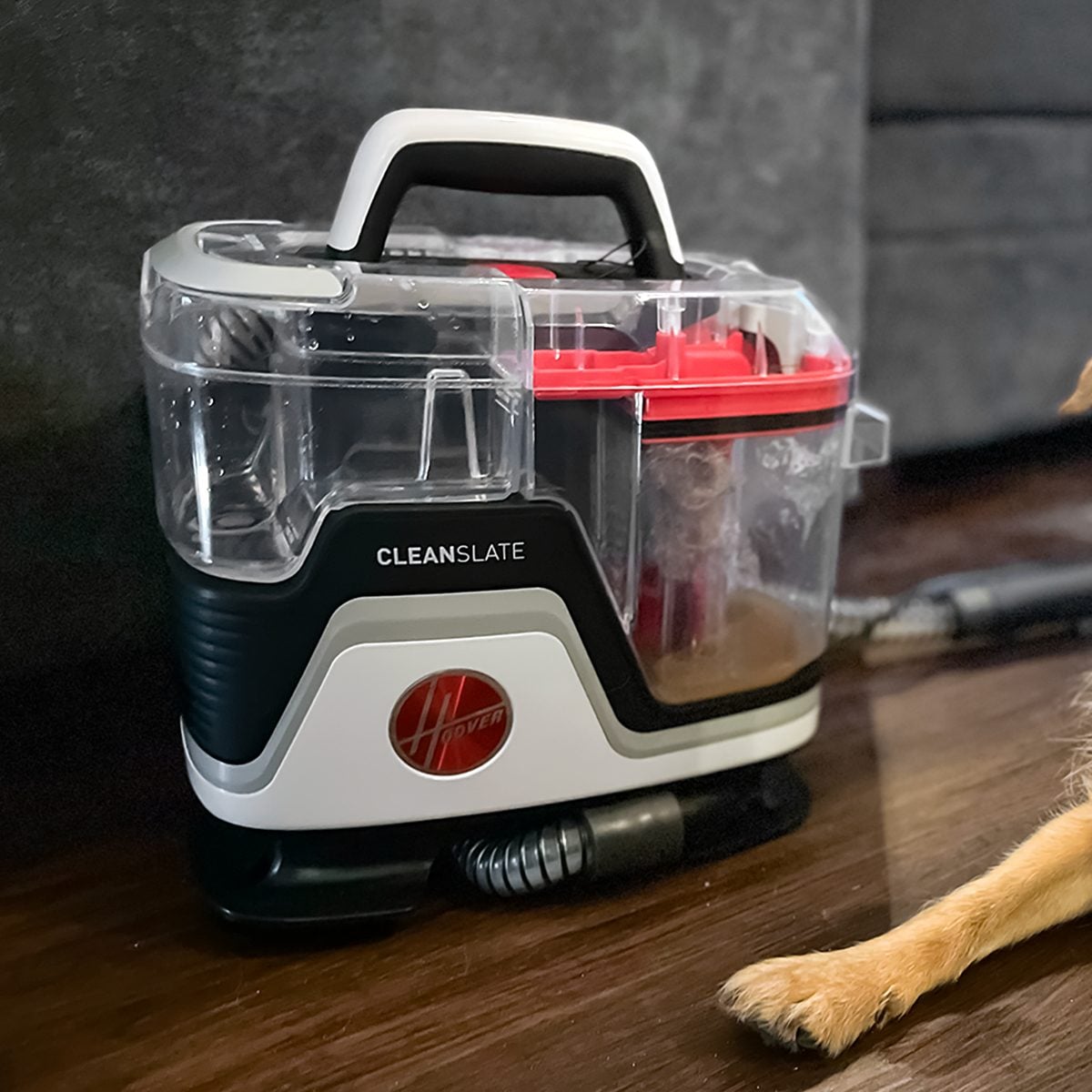
The Hoover CleanSlate is a corded portable spot cleaner that sprays cleaning solution, agitates the stained surface, and extracts the loosened dirt into a separate recovery tank. Hoover sells several CleanSlate versions, including Pet, Plus, Pro, cordless, and larger XL models. Features and included accessories vary, so checking the model number before purchasing replacement tools is important.
This review focuses primarily on the standard corded CleanSlate Pet platform, represented by models such as the FH14000 and FH14000V. It has a 40-ounce clean-water tank, a 23-ounce recovery tank, a 4.5-foot hose, a 15-foot power cord, and a seven-inch cleaning path. The machine weighs approximately 9.4 pounds before water and solution are added. Hoover also lists removable tanks and a two-year limited household warranty for qualifying purchases.
What Comes With It?
A typical CleanSlate package includes a seven-inch WidePath tool, a narrow TightSpot tool, a hose-rinsing attachment, and a small amount of cleaning solution. Some versions also include interchangeable bristle and rubber-nub inserts.
The WidePath tool is intended for larger spills on rugs, carpeted stairs, and upholstery. The TightSpot attachment reaches along baseboards, between cushions, and into corners where crumbs apparently establish permanent residency. The hose-rinse tool flushes clean water through the machine after use, which may be the least glamorous accessory in the box but is arguably one of the most valuable.
Setup Is Refreshingly Simple
The CleanSlate does not require a complicated assembly process. You remove the clean-solution tank, add water and the appropriate amount of compatible formula, reinstall the tank, attach the desired cleaning tool, unwrap the cord, and switch on the machine.
Hoover’s instructions specify different fill lines for small and large jobs. When using its concentrated formula, the manual calls for 0.5 ounce of solution with 20 ounces of water or one ounce with approximately 39 ounces of water. Ready-to-use premixed formula can be poured directly to the appropriate fill line.
This is not a situation in which doubling the detergent produces twice the cleanliness. Excess cleaning solution can leave residue that attracts fresh dirt, turning yesterday’s spotless patch into tomorrow’s gray traffic circle. Carpet-care guidance from the Carpet and Rug Institute similarly warns that overly concentrated solutions may contribute to rapid resoiling.
How the Hoover CleanSlate Cleans Rugs
Operation follows a spray-scrub-extract sequence. You hold the tool above the stain and press the trigger to apply solution. After allowing the cleaner to work, you agitate the area with controlled strokes. Finally, you press the front of the tool against the rug and pull it toward you without spraying, allowing the suction channel to recover moisture and suspended soil.
The final extraction passes matter more than they initially appear. Every dry pass removes additional water, detergent, and dirt. Stopping as soon as the stain looks better may leave the rug unnecessarily damp. Continuing until little moisture is visible through the clear nozzle generally produces a cleaner surface and shorter drying time.
Fresh Spills Are the Easy Victories
Portable carpet cleaners are at their best when a spill has not yet signed a long-term lease. Coffee, juice, tracked-in mud, and fresh pet accidents can often be treated before they migrate into the backing.
First remove solids and blot excess liquid with a plain white towel. Vacuum dry debris before introducing water. Then apply the appropriate treatment and extract the area. Both Shaw Floors and the Carpet and Rug Institute recommend acting promptly, blotting rather than aggressively rubbing, and testing cleaning products in an inconspicuous location.
Old Stains Require Patience, Not Fury
Set-in discoloration may require pretreatment and several extraction cycles. Hoover recommends applying a compatible spot treatment, waiting approximately five to ten minutes, and then cleaning the area with the machine.
The temptation is to scrub like you are trying to erase the event from family history. Resist it. Hard brushing can distort carpet fibers, create fuzzing, and make a cleaned patch look different from the surrounding rug. Controlled agitation, repeated extraction, and a clear-water rinse are safer than attacking the pile with the enthusiasm of a power sander.
Independent evaluations present a useful reality check. Consumer Reports rated the standard CleanSlate’s removal of clay from carpet as fair, while scoring it very good for extracting solution and leaving carpet comparatively dry. Its convenience was rated good, although noise performance was only fair. In other words, it may not erase every deeply embedded stain in one dramatic pass, but its moisture recovery is a meaningful strength.
The Suction Is the Main Attraction
A spot cleaner can have clever attachments and a beautifully organized cord, but none of that matters if it leaves behind a swamp. The CleanSlate’s suction is one of the most consistently praised parts of its design.
Bob Vila’s hands-on upholstery-cleaner testing selected the CleanSlate Plus as a favorite for its compact form and strong cleaning performance. Better Homes & Gardens also rated a CleanSlate XL model highly after comparing portable cleaners on stains including coffee, butter, soil, chocolate, and red wine. The Spruce has similarly highlighted CleanSlate suction as useful for upholstery and pet-related messes. These models are not identical, but the results support the broader CleanSlate line’s reputation for effective extraction.
Owner feedback from major retailers often echoes the same theme: users appreciate how much dirty water the unit removes from rugs, sofas, stairs, and vehicle seats. Complaints tend to center on operating noise, relatively small tanks, hose care, or the need to make multiple passes over stubborn marks.
Where the CleanSlate Works Best
Area Rugs and Runners
The Hoover CleanSlate makes the most sense for localized stains on water-safe, colorfast synthetic rugs. It is especially convenient on runners, entry rugs, washable-style area rugs, and low- to medium-pile pieces that do not justify dragging out a full-size carpet cleaner.
Place waterproof material beneath an area rug before cleaning it, particularly when the rug sits on hardwood or laminate. Moisture can travel through the backing and become trapped against the floor. Hoover explicitly recommends protecting the flooring underneath area rugs and placing the machine on an absorbent towel after use because water can drip from the tool.
Carpeted Stairs
Stairs are where compact machines earn their storage space. Carrying a large upright carpet cleaner up a staircase feels like moving a refrigerator that has recently become angry. The CleanSlate is light enough to reposition from step to step, while the narrow attachment can reach edges and risers.
The hose is adequate for ordinary stair work, although you may still need to move the base several times. The cord provides more uninterrupted power than a small battery-powered spot cleaner, but it also requires attention so it does not become an ankle-level booby trap.
Sofas and Car Upholstery
The machine can clean compatible upholstered furniture and vehicle fabrics, but the care label must come first. Hoover advises using the cleaner only on upholstery marked “W” or “S/W.” A fabric marked “S” requires solvent-based cleaning and should not be cleaned with this water-extraction machine.
Always test a hidden section for color transfer. Dampen a white cloth, gently rub the test area, wait about ten minutes, and check with a white paper towel. This small step is much less stressful than discovering that your navy sofa has developed a pale blue racing stripe.
Where You Should Be Cautious
Do not assume that every rug appreciates water just because it lives on the floor. Antique rugs, hand-knotted pieces, silk, viscose, jute, sisal, unstable dyes, and some wool rugs may shrink, bleed, stiffen, or develop texture changes when treated with a consumer extractor.
Check the rug manufacturer’s care instructions before cleaning. For a valuable or delicate piece, consult a professional rug cleaner. The CleanSlate is also not designed for unprotected hard floors, and Hoover warns that using the extractor directly on hard flooring may cause damage.
It is equally important to understand scale. This machine is a spot cleaner, not a substitute for periodic whole-room or professional cleaning. The Carpet and Rug Institute describes DIY extraction equipment as useful for spills and interim maintenance but recommends professional deep cleaning as part of long-term carpet care.
Cleaning the Cleaner
The dirtiest part of spot cleaning is often what happens after the stain disappears. Recovery water is an unsettling soup of lint, soil, detergent, pet hair, and information you did not request about your household.
The dirty-water tank should be emptied when it reaches the maximum line or when the motor sound changes. Remove the lid, rinse the tank, clean its debris screen, and allow the components to air-dry before reassembly.
Next, remove and rinse the cleaning tool. Hoover’s clear nozzle cover can be unlatched so trapped debris can be washed away. For the hose, fill the solution tank with warm water, attach the hose-rinse tool, run the machine, and hold the trigger for about 30 seconds. Allow suction to continue briefly, then empty the recovery tank.
This maintenance routine helps prevent stale odors and protects airflow. Storing a spot cleaner with dirty liquid in the tank is less “saving time for later” and more “starting a small indoor wetland.” Hoover advises emptying the tanks rather than storing the extractor with solution inside.
What I Like About the Hoover CleanSlate
- Strong extraction: It recovers a useful amount of moisture, helping treated areas dry faster.
- Practical attachments: The wide tool handles ordinary rug stains, while the narrow tool reaches edges and upholstery gaps.
- Separate tanks: Clean solution remains isolated from recovered dirty water.
- Compact storage: The hose and cord wrap around the body instead of demanding an entire utility closet.
- Corded consistency: There is no battery deadline during a long stain-removal session.
- Self-rinsing accessory: The hose-cleaning tool makes proper maintenance easier.
What Could Be Better
- It is loud: Compact does not mean discreet. Conversation may temporarily become a hand-signal activity.
- The dirty tank fills quickly: Its capacity is appropriate for spot cleaning but restrictive for large areas.
- The hose is not extremely long: Expect to reposition the base when cleaning stairs or a large sectional.
- Cleanup is mandatory: Tanks, tools, filters, and the hose should be rinsed after use.
- Not every stain vanishes: Deep dye damage, old pet urine, bleach marks, and heavily embedded soil may require professional treatment.
- Attachments vary: Two CleanSlate packages can look similar while including different tools or formulas.
Who Should Buy a Hoover CleanSlate?
The Hoover CleanSlate is particularly useful for pet owners, parents, frequent coffee drinkers, renters with light-colored carpeting, and anyone whose car seats have experienced fast food.
It is also a practical choice for homes with several area rugs but little storage space. A full-size carpet cleaner offers better coverage for entire rooms, yet it is harder to carry, store, fill, and clean. The CleanSlate occupies the useful middle ground between blotting with towels and scheduling a professional appointment.
It is less suitable for someone who primarily wants to deep-clean wall-to-wall carpeting. It also may not be appropriate for a household filled with antique, natural-fiber, or specialty rugs that require professional methods.
Extended Experience Notes: The Week My Rugs Stopped Holding Grudges
The most convincing part of using a portable spot cleaner is not the dramatic before-and-after moment. It is the change in how quickly you respond to the next spill. A machine can have outstanding specifications, but if retrieving it requires opening six boxes and moving a lawn mower, the stain will probably celebrate a birthday before receiving treatment.
The CleanSlate’s compact shape removes much of that friction. It can sit on a utility-room shelf with its hose and cord wrapped around the body. When muddy footprints appear on an entry runner, the machine feels like a realistic solution rather than a weekend project.
A typical cleanup begins with vacuuming the rug. This matters because dry soil becomes muddy when water is introduced. After vacuuming, I would blot any remaining moisture, protect the floor beneath the rug, and mix only enough solution for the affected area.
The spray trigger delivers solution exactly where it is needed, although restraint improves the result. Saturating a rug does not force a stain to surrender more quickly. It simply creates more liquid for the machine to remove. A moderate application, gentle agitation, and several slow extraction passes are usually the better strategy.
The transparent nozzle adds a strange but useful element of satisfaction. You can watch cloudy liquid travel through the tool, which confirms that the machine is recovering more than surface moisture. The first pass may produce surprisingly dark water. This can be horrifying for approximately three seconds, after which it becomes extremely motivating.
On a broad stain, the seven-inch tool reduces the number of passes. On edges and small furniture marks, the TightSpot tool offers more control. Neither attachment performs magic, but both make the work more deliberate than spraying cleaner from a bottle and repeatedly pressing paper towels onto the floor.
The biggest improvement comes from making dry passes after the visible stain is gone. Continue pulling the tool across the rug without pressing the spray trigger. The recovered water usually becomes clearer, and the rug feels progressively less damp. A fan or good ventilation helps finish the drying process.
Then comes the maintenance test. A machine that cleans rugs beautifully but takes half an hour to scrub afterward may slowly become decorative shelf art. The CleanSlate’s removable nozzle, rinseable recovery tank, and hose-flushing attachment make the process manageable. It still requires several minutes, but the steps are logical and the components are accessible.
There is also a psychological benefit to seeing what was extracted. A rug may look acceptable before cleaning, yet the recovery tank tells a less flattering story. Once emptied and rinsed, however, both the machine and the rug feel reset.
The experience is not flawless. The motor is noticeable, the cord must be managed, and the dirty-water tank can interrupt a larger task. A whole room would be tedious. For a coffee spill, pet accident, sofa cushion, or patch of tracked-in dirt, those compromises feel reasonable.
Most importantly, the machine encourages immediate action. Fresh spills become ten-minute chores instead of permanent decorating features. That may be the CleanSlate’s greatest advantage: it turns stain removal from an event into a routine.
Final Verdict: A Small Machine With a Useful Specialty
The Hoover CleanSlate is not a professional rug-cleaning plant compressed into a countertop appliance. It will not safely clean every textile, erase permanent color damage, or deep-clean an entire house without frequent refilling.
What it does offer is strong spot extraction, sensible attachments, compact storage, and enough portability to make routine stain removal far less annoying. It performs best on everyday spills, synthetic rugs, compatible upholstery, stairs, and vehicle interiors. Its limitationsnoise, modest tank capacity, and required post-use cleanupare typical of this product category rather than fatal design flaws.
For homes where stains arrive regularly and without appointments, the Hoover CleanSlate can quickly earn its shelf space. My imaginary committee of rugs has reviewed the evidence and issued a unanimous statement: they would prefer this to another strategically positioned coffee table.