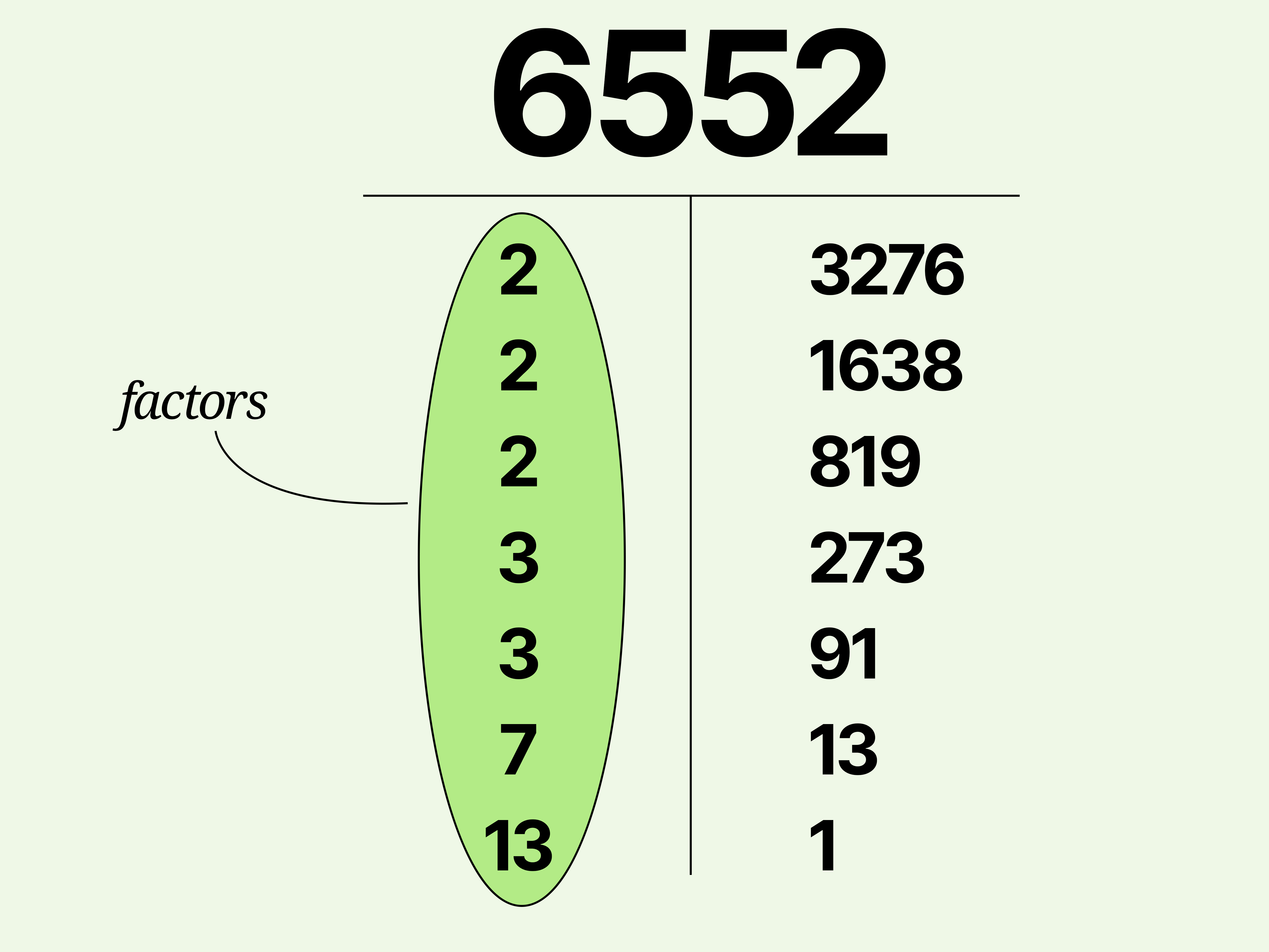
Factoring a number sounds like something that should require a chalkboard, a stern math teacher, and maybe a dramatic thunderclap. Thankfully, it is much friendlier than that. To factor a number simply means to find the whole numbers that divide into it evenly. In plain English: factors are the numbers that can multiply together to make your original number.
For example, the factors of 12 include 1, 2, 3, 4, 6, and 12 because each one divides 12 without leaving a remainder. You can also think of them as friendly little multiplication partners: 1 × 12, 2 × 6, and 3 × 4. No decimals, no leftovers, no mathematical crumbs on the floor.
In this guide, you will learn how to factor a number using two simple methods: the factor pair method and the prime factorization method. Both are easy to understand, useful for schoolwork, and helpful when you later tackle fractions, greatest common factors, least common multiples, algebra, and number theory. Yes, factoring is one of those math skills that quietly sneaks into everything like a calculator-wielding ninja.
What Does It Mean to Factor a Number?
To factor a number means to break it into smaller whole-number parts that multiply together to equal the original number. If a number divides evenly into another number, it is a factor. For example, 5 is a factor of 20 because 20 ÷ 5 = 4 with no remainder. But 6 is not a factor of 20 because 20 ÷ 6 does not produce a whole number.
Here is the simple rule:
If number A divides number B evenly, then A is a factor of B.
So, if you want to find the factors of 18, you are really asking, “Which whole numbers divide 18 evenly?” The answer is 1, 2, 3, 6, 9, and 18.
Factor Pairs Make Factoring Easier
A factor pair is a pair of numbers that multiply together to produce the original number. For 18, the factor pairs are:
- 1 × 18 = 18
- 2 × 9 = 18
- 3 × 6 = 18
Once you know the factor pairs, you know all the factors: 1, 2, 3, 6, 9, and 18.
This is one of the cleanest ways to factor a number because multiplication and division are best friends. They borrow each other’s hoodies. If you can multiply two numbers to get the original number, both numbers are factors.
Why Learning How to Factor a Number Matters
Factoring is not just a classroom trick invented to make homework longer. It is a foundational math skill. Once you know how to factor numbers, you can simplify fractions, compare ratios, find common denominators, solve algebra problems, understand divisibility, and work with prime numbers more confidently.
For example, suppose you want to simplify the fraction 18/24. Factoring helps you see that both 18 and 24 share a common factor of 6. Divide both numbers by 6, and the fraction becomes 3/4. That is factoring doing its quiet heroic work in the background.
Factoring also helps with the greatest common factor, or GCF. If you are trying to find the GCF of 36 and 48, listing or breaking down their factors helps you discover that 12 is the largest number that divides both evenly.
Method 1: Factor a Number Using Factor Pairs
The factor pair method is usually the easiest method for beginners. It works especially well with smaller numbers and numbers you can divide mentally. The goal is to test whole numbers starting from 1 and find pairs that multiply to your target number.
Step 1: Start with 1 and the Number Itself
Every positive whole number has at least two basic factors: 1 and itself. For example:
- 1 × 24 = 24
- So, 1 and 24 are factors of 24.
This is the easiest factor pair. It is also the one that shows up whether the number is prime or composite. Think of it as the “default setting” of factoring.
Step 2: Test Small Whole Numbers
Next, test 2, 3, 4, 5, and so on. If the number divides evenly, you have found another factor pair. Let’s factor 24:
- 24 ÷ 1 = 24, so 1 × 24
- 24 ÷ 2 = 12, so 2 × 12
- 24 ÷ 3 = 8, so 3 × 8
- 24 ÷ 4 = 6, so 4 × 6
Now you have the factor pairs of 24: 1 × 24, 2 × 12, 3 × 8, and 4 × 6.
That gives you the full list of factors:
Factors of 24: 1, 2, 3, 4, 6, 8, 12, 24
Step 3: Stop When the Pairs Start Repeating
You do not need to test every number up to 24. That would be like checking every drawer in the house for your socks after you already found them on your feet.
With factor pairs, stop when the numbers begin to cross over or repeat. In the example of 24, the pair 4 × 6 is the last new pair. If you continue, you will get 6 × 4, then 8 × 3, then 12 × 2. Those are the same pairs in reverse order.
A useful shortcut is to test numbers only up to the square root of the original number. For 24, the square root is a little less than 5, so checking up to 4 is enough.
Example: Factor 36 Using Factor Pairs
Let’s factor 36 step by step:
- 1 × 36 = 36
- 2 × 18 = 36
- 3 × 12 = 36
- 4 × 9 = 36
- 6 × 6 = 36
So the factors of 36 are:
1, 2, 3, 4, 6, 9, 12, 18, 36
Notice that 6 × 6 lands exactly in the middle. Since both numbers in the pair are the same, 36 is a perfect square. This is a nice bonus clue when factoring numbers.
When to Use the Factor Pair Method
The factor pair method is best when the number is small or medium-sized and you want a complete list of factors. It is also helpful when solving problems that ask for all factor pairs, the greatest common factor, or divisibility patterns.
Use this method when you want to answer questions like:
- What are all the factors of 48?
- Which factor pairs make 60?
- Is 7 a factor of 91?
- What is the greatest common factor of two numbers?
Method 2: Factor a Number Using Prime Factorization
The second method is prime factorization. This means breaking a number down into prime numbers that multiply together to make the original number.
A prime number is a whole number greater than 1 that has exactly two positive factors: 1 and itself. Examples include 2, 3, 5, 7, 11, 13, 17, and 19. A composite number has more than two factors. Examples include 4, 6, 8, 9, 10, 12, and 15.
Prime factorization is powerful because every whole number greater than 1 can be written as a product of prime numbers in one unique way, not counting the order. In other words, 60 can be written as 2 × 2 × 3 × 5. You could write those primes in a different order, but the ingredients stay the same. Math is surprisingly strict about its recipes.
Option A: Use a Factor Tree
A factor tree is a visual way to break a number into prime factors. Start with the number at the top. Split it into any factor pair. Then keep splitting composite numbers until every branch ends in a prime number.
Let’s find the prime factorization of 60:
- 60 = 6 × 10
- 6 = 2 × 3
- 10 = 2 × 5
Now all the numbers are prime: 2, 3, 2, and 5.
So:
60 = 2 × 2 × 3 × 5
You can also write this using exponents:
60 = 22 × 3 × 5
The exponent 2 means there are two 2s in the prime factorization.
Option B: Use the Ladder Method
The ladder method is another simple way to do prime factorization. You divide the number by the smallest prime number possible, then keep dividing until the result is 1.
Let’s factor 84:
- 84 ÷ 2 = 42
- 42 ÷ 2 = 21
- 21 ÷ 3 = 7
- 7 ÷ 7 = 1
The prime numbers used were 2, 2, 3, and 7.
So:
84 = 2 × 2 × 3 × 7
Or, using exponents:
84 = 22 × 3 × 7
Example: Prime Factorization of 120
Let’s use the ladder method for 120:
- 120 ÷ 2 = 60
- 60 ÷ 2 = 30
- 30 ÷ 2 = 15
- 15 ÷ 3 = 5
- 5 ÷ 5 = 1
The prime factors are 2, 2, 2, 3, and 5.
120 = 2 × 2 × 2 × 3 × 5
Using exponents:
120 = 23 × 3 × 5
This form is especially useful when finding the least common multiple or greatest common factor of larger numbers.
How to Know If a Number Is Prime
Sometimes factoring is very short because the number is prime. A prime number cannot be broken into smaller whole-number factors other than 1 and itself. For example, 13 is prime because only 1 and 13 divide it evenly.
To test whether a number is prime, try dividing it by prime numbers less than or equal to its square root. For example, to test 97, you only need to check prime numbers up to about 9.8. That means you test 2, 3, 5, and 7.
- 97 is not divisible by 2 because it is odd.
- 97 is not divisible by 3 because 9 + 7 = 16, and 16 is not divisible by 3.
- 97 is not divisible by 5 because it does not end in 0 or 5.
- 97 is not divisible by 7 because 97 ÷ 7 is not a whole number.
So, 97 is prime.
Quick Divisibility Rules That Make Factoring Faster
Divisibility rules are like little math shortcuts. They help you decide whether a number divides evenly without doing long division every time.
Divisibility by 2
A number is divisible by 2 if it is even. If it ends in 0, 2, 4, 6, or 8, you can divide it by 2.
Example: 46 is divisible by 2 because it ends in 6.
Divisibility by 3
A number is divisible by 3 if the sum of its digits is divisible by 3.
Example: 123 is divisible by 3 because 1 + 2 + 3 = 6, and 6 is divisible by 3.
Divisibility by 5
A number is divisible by 5 if it ends in 0 or 5.
Example: 75 is divisible by 5 because it ends in 5.
Divisibility by 10
A number is divisible by 10 if it ends in 0.
Example: 230 is divisible by 10 because it ends in 0.
Common Mistakes When Factoring Numbers
Factoring is simple, but a few common mistakes can make it feel trickier than it needs to be.
Mistake 1: Forgetting 1 and the Number Itself
Every positive whole number has 1 and itself as factors. If you are listing all factors of 28, do not forget 1 and 28. They count, even if they are not flashy.
Mistake 2: Listing Duplicate Factors
When factor pairs repeat in reverse order, stop. For 30, the pair 5 × 6 is enough. You do not need to later list 6 × 5 as a new pair.
Mistake 3: Thinking 1 Is Prime
The number 1 is not prime. A prime number must have exactly two positive factors: 1 and itself. The number 1 has only one positive factor, which is 1.
Mistake 4: Stopping a Prime Factorization Too Early
If your factorization still contains a composite number, you are not finished. For example, 48 = 6 × 8 is a factorization, but it is not prime factorization because 6 and 8 are composite. You must keep going: 48 = 2 × 2 × 2 × 2 × 3.
Factor Pair Method vs. Prime Factorization Method
Both methods are useful, but they solve slightly different problems. The factor pair method is great when you want all factors of a number. Prime factorization is better when you want the number’s prime building blocks.
| Method | Best For | Example Result |
|---|---|---|
| Factor Pair Method | Finding all factors | Factors of 24: 1, 2, 3, 4, 6, 8, 12, 24 |
| Prime Factorization | Breaking a number into prime factors | 24 = 23 × 3 |
If a worksheet asks for “all factors,” use factor pairs. If it asks for “prime factorization,” use a factor tree or ladder method. If it asks for the greatest common factor or least common multiple, prime factorization often makes the work cleaner.
Practice Problems With Answers
Problem 1: Factor 40
Factor pairs:
- 1 × 40
- 2 × 20
- 4 × 10
- 5 × 8
Factors of 40: 1, 2, 4, 5, 8, 10, 20, 40
Problem 2: Find the Prime Factorization of 72
Using the ladder method:
- 72 ÷ 2 = 36
- 36 ÷ 2 = 18
- 18 ÷ 2 = 9
- 9 ÷ 3 = 3
- 3 ÷ 3 = 1
72 = 2 × 2 × 2 × 3 × 3
72 = 23 × 32
Problem 3: Is 29 Prime?
To test 29, check prime numbers up to its square root. The square root of 29 is a little more than 5, so test 2, 3, and 5.
- 29 is not divisible by 2.
- 29 is not divisible by 3.
- 29 is not divisible by 5.
So, 29 is prime.
Real-Life Learning Experiences With Factoring Numbers
One of the best ways to understand factoring is to stop treating it like a mysterious math ritual and start treating it like organized sorting. When students first learn how to factor a number, they often try to guess randomly. They stare at 48 and think, “Hmm, maybe 7? Maybe 11? Maybe my lunch break?” That approach usually leads to frustration. A better experience is to work in order: start with 1, test 2, then 3, then 4, and continue until factor pairs begin to repeat. This small habit makes factoring feel less like guessing and more like following a recipe.
A helpful classroom experience is using arrays. For example, take 24 small objects, such as counters, coins, buttons, or cereal pieces. Arrange them into equal rows. If you can make 2 rows of 12, then 2 and 12 are factors. If you can make 3 rows of 8, then 3 and 8 are factors. If you can make 5 equal rows, things get awkward because 24 does not divide evenly by 5. The leftover pieces are a visual reminder that 5 is not a factor. This hands-on activity makes factors feel real instead of floating around like invisible math confetti.
Another useful experience is connecting factoring to simplifying fractions. Many learners understand factoring more deeply when they see it solve an actual problem. Suppose you need to simplify 30/45. Listing factors shows that 15 divides both 30 and 45. Divide the numerator and denominator by 15, and the fraction becomes 2/3. Suddenly, factoring is not just an isolated skill; it is the reason the fraction got cleaner. It is basically the math version of tidying your room before guests arrive.
Prime factorization becomes easier when learners realize that they do not have to choose the “perfect” first split. For example, with 72, one person may start with 8 × 9 while another starts with 6 × 12. Both paths eventually lead to the same prime factorization: 23 × 32. That is reassuring because it means factoring allows some flexibility. You can take different roads and still arrive at the same mathematical address.
A practical tip from tutoring experience is to always check your work by multiplying the factors back together. If you find that 84 = 2 × 2 × 3 × 7, multiply: 2 × 2 = 4, 4 × 3 = 12, and 12 × 7 = 84. If the product matches the original number, your factorization is correct. This quick check catches many small mistakes, especially when working with larger numbers.
Factoring also builds confidence because it rewards patience. At first, a number like 96 may look bulky and unpleasant, like it skipped leg day but not arm day. But once you break it down, it becomes manageable: 96 = 2 × 48, then 2 × 24, then 2 × 12, then 2 × 6, then 2 × 3. So 96 = 25 × 3. The big number was never the problem; it just needed to be unpacked one step at a time.
Conclusion
Learning how to factor a number gives you a practical tool for understanding multiplication, division, fractions, and algebra. The two simple methods are easy to remember: use the factor pair method when you want all factors, and use prime factorization when you want to break a number into its prime building blocks.
The key is to stay organized. Start small, test divisibility carefully, write factor pairs clearly, and stop when pairs begin to repeat. For prime factorization, keep dividing until every factor is prime. Then check your answer by multiplying the factors back together. Factoring is not about speed at first; it is about accuracy. Speed shows up later, usually wearing sunglasses.
Once you master factoring, many other math topics become easier. Simplifying fractions, finding common denominators, calculating GCF and LCM, and preparing for algebra all become less intimidating. Factoring is one of those skills that looks small at the beginning but turns out to be a surprisingly useful math superpower.