Note: This article is written for web publishing and is synthesized from current U.S.-based pet care, veterinary, and reef-aquarium guidance. Land hermit crabs and marine hermit crabs need different setups; they should not be kept together in one habitat.
Introduction: Tiny Crabs, Big Real Estate Needs
Hermit crabs may look like the low-maintenance roommates of the pet world. They carry their houses on their backs, do not bark at delivery drivers, and rarely complain about your playlist. But here is the twist: a healthy hermit crab habitat is not a plastic box with rainbow gravel and a sponge. It is a carefully planned environment with the right heat, humidity, substrate, water, shells, hiding places, and safety zones.
The title “How to Create a Hermit Crab Habitat for Land and Marine Crabs” sounds like one habitat could work for both. It cannot. Land hermit crabs need a warm, humid “crabitat” with deep digging substrate, fresh water, marine salt water, climbing decor, and air they can breathe through moist modified gills. Marine hermit crabs, on the other hand, live fully underwater in a cycled saltwater aquarium with stable salinity, clean water, live rock, sand, and reef-safe companions.
Think of it this way: a land hermit crab wants a tropical beach bungalow. A marine hermit crab wants a clean ocean apartment with excellent plumbing. Put either one in the wrong place and things go downhill faster than a crab stealing a premium shell at midnight.
This guide explains how to build both types of habitats correctly, what supplies matter, what mistakes to avoid, and how to create an enclosure that supports natural behaviors like climbing, burrowing, molting, grazing, and shell shopping.
Land Hermit Crab vs. Marine Hermit Crab: Know the Difference First
Land Hermit Crabs
Most pet land hermit crabs belong to the genus Coenobita. They live near tropical shorelines, but adults spend most of their time on land. They still need moisture to breathe properly, which is why humidity is not optional. A dry enclosure can cause respiratory distress, failed molts, dehydration, and death.
Land hermit crabs need a terrarium-style habitat with:
- Warm air temperatures, usually around 75°F to 85°F
- High humidity, generally around 70% to 85%
- Deep, moist substrate for safe molting
- Fresh water and marine salt water pools
- Multiple natural shells
- Hiding areas, climbing surfaces, and enrichment
Marine Hermit Crabs
Marine hermit crabs, such as blue leg hermits, scarlet reef hermits, red leg hermits, and dwarf zebra hermits, live in saltwater aquariums. Many are used as part of a reef tank cleanup crew because they eat leftover food, algae, and detritus. They are helpful little janitors, although they may occasionally behave like tiny armored landlords and evict snails if better shells are not available.
Marine hermit crabs need:
- A fully cycled saltwater aquarium
- Stable salinity and temperature
- Live rock or reef-safe rockwork
- Marine sand or suitable substrate
- Excellent water quality
- Extra empty shells
- Careful acclimation before introduction
How to Create a Land Hermit Crab Habitat
Choose the Right Tank Size
A glass aquarium or terrarium is usually the best home for land hermit crabs because it holds heat and humidity well. A 10-gallon tank may work as a temporary starter for two very small crabs, but bigger is better. A 20-gallon long tank gives more room for substrate depth, pools, climbing items, and shell stations. Adult crabs and groups need larger enclosures.
Avoid wire cages, open-top containers, tiny plastic carriers, and novelty “hermit crab kits” that cannot hold humidity. Those are fine for short transport, not long-term living. Your crabitat should have a secure lid, because hermit crabs are excellent climbers and apparently believe escape planning is a respectable hobby.
Maintain Proper Temperature
Land hermit crabs are tropical animals. Most do well with a warm side around 80°F to 85°F and a cooler side near 75°F. Use a reliable digital thermometer on both ends of the tank so you are not guessing. Guessing is great for birthday gifts, not for crab climate control.
Heat mats should usually be placed on the side or back of the tank above the substrate line, not under deep substrate. Heating from below can dry out molting areas or create unsafe hot spots. A thermostat is strongly recommended because it prevents overheating. Ceramic heat emitters can also help, but they should be used carefully so they do not dry the air.
Control Humidity
Humidity is one of the most important parts of land hermit crab care. Aim for about 70% to 85% relative humidity, depending on species and local conditions. Use a hygrometer to monitor humidity daily. If the air becomes too dry, the crab’s modified gills cannot stay moist enough for healthy breathing.
To maintain humidity, use a mostly sealed lid, deep moist substrate, properly prepared water pools, and moss pits if needed. Misting can help temporarily, but if you need to mist constantly, the habitat design probably needs adjustment. A well-built crabitat should hold humidity naturally instead of requiring you to hover over it like a weather wizard with a spray bottle.
Create Deep, Safe Substrate
Substrate is not decoration. It is the crab’s bedroom, storm shelter, and molting bunker. Land hermit crabs dig to molt, and molting is when they shed their exoskeleton and harden a new one. This process can take weeks or even months for larger crabs.
A common substrate mix is play sand and coconut fiber in about a 5:1 ratio. The texture should be moist enough to hold the shape of a tunnel, similar to sandcastle sand, but not swampy. Substrate should be at least three times deeper than the height of the largest crab, with many experienced keepers using 6 inches or more for small to medium crabs and deeper substrate for larger crabs.
Do not use calcium sand, gravel, wood shavings, cedar, pine, or scented bedding. Calcium sand can clump and harden when wet, which may trap or injure crabs. Gravel does not support burrowing, and aromatic woods can be harmful.
Provide Fresh Water and Marine Salt Water
Land hermit crabs need access to both fresh water and salt water. Use dechlorinated water for both. For the saltwater pool, use a true marine salt mix made for saltwater aquariums, not table salt, cooking sea salt, aquarium tonic salt, or homemade mixes.
Water dishes should be deep enough for the crab to submerge if desired, but they must include safe exit ramps such as stones, craft mesh, coral rubble, or plastic canvas. Hermit crabs are surprisingly athletic until they are not, and drowning hazards are easy to prevent.
Add Extra Shells
Shells are serious business. A hermit crab’s shell protects its soft abdomen and helps it retain moisture. Provide at least three to five suitable empty shells per crab in different sizes and opening shapes. Natural, unpainted shells are best. Painted shells may look cheerful to humans, but paint can chip, trap crabs, or expose them to unsafe materials.
Popular shell types include turbo shells and other smooth, appropriately sized options. The opening should be slightly larger than the crab’s current shell opening, but not enormous. A shell shop area in the tank lets crabs browse like tiny retirees at a beachside real estate office.
Design Hiding and Climbing Areas
Hermit crabs are active, curious, and often nocturnal. They need places to hide and things to climb. Use cork bark, cholla wood, driftwood, coconut huts, safe rocks, leaf litter, and artificial or crab-safe live plants. Avoid painted decor, sharp edges, metal parts, and anything treated with chemicals.
Climbing is excellent enrichment. A crab that climbs, explores, digs, and changes shells is showing normal behavior. A crab that sits motionless in a poor setup may not be “easygoing”; it may be stressed.
Feed a Varied, Natural Diet
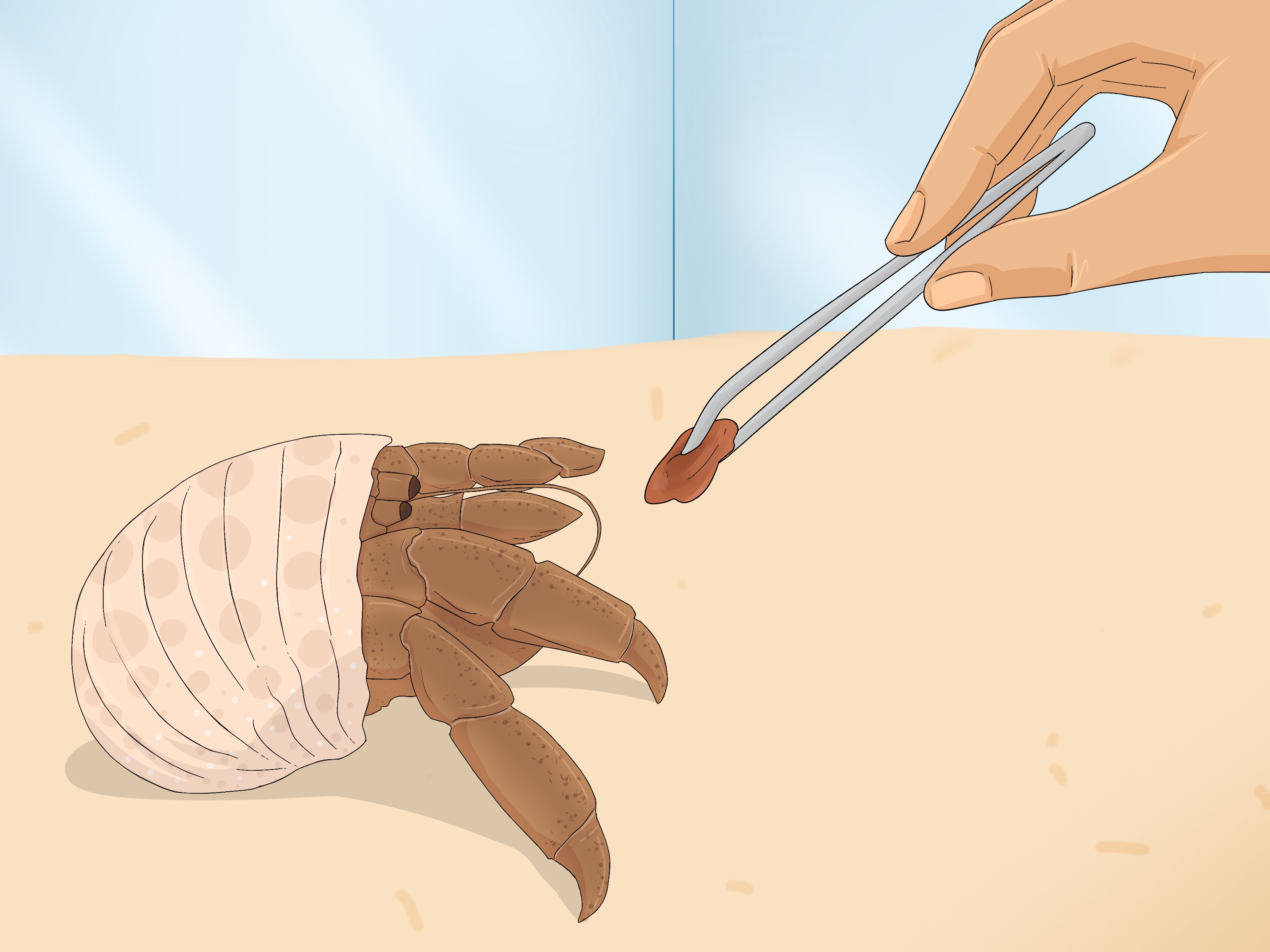
A healthy land hermit crab diet should include protein, calcium, fats, fruits, vegetables, leaf litter, and marine-based foods. Good options include unsalted dried shrimp, fish, egg, worm castings, greensand, crushed oyster shell, cuttlebone, coconut, apple, carrot, spinach, seaweed, and safe dried leaves.
Avoid salty processed foods, onion, garlic, chocolate, dairy-heavy foods, seasoned leftovers, and anything treated with pesticides. Remove fresh food before it molds. Hermit crabs enjoy variety, but the habitat should not become a compost bin with legs.
How to Create a Marine Hermit Crab Habitat
Start With a Cycled Saltwater Aquarium
Marine hermit crabs should only be added to a stable, cycled saltwater aquarium. Cycling allows beneficial bacteria to establish and process ammonia and nitrite. Even hardy hermit crabs can suffer in a new, unstable tank with poor water quality.
For small marine hermits, a 10-gallon saltwater aquarium may work, but larger tanks are more stable. A 20-gallon or larger system gives beginners more room for error. Stability is the secret ingredient in marine aquariums. Unfortunately, it is not sold in a bottle labeled “Instant Ocean Magic Patience.”
Maintain Stable Water Parameters
Marine hermit crabs generally do well in reef-style conditions. Aim for a temperature around 72°F to 78°F, stable specific gravity around 1.023 to 1.025, and a pH around 8.1 to 8.4. Ammonia and nitrite should be zero. Nitrate and phosphate should be controlled through water changes, proper feeding, filtration, and maintenance.
Use a refractometer or reliable hydrometer to measure salinity. Use marine salt mix designed for saltwater aquariums. Never use table salt or freshwater aquarium salt. Marine invertebrates are also sensitive to copper, so avoid copper-based medications in systems that house crabs, snails, shrimp, or corals.
Add Rockwork, Sand, and Hiding Places
Marine hermit crabs spend much of their time grazing over rock, sand, and crevices. Live rock or reef-safe dry rock creates surfaces for algae and biofilm, while also providing shelter. A marine sand bed gives crabs room to forage and helps create a more natural environment.
Make sure rockwork is stable. Larger hermits can bulldoze loose pieces, and even small hermits may wedge themselves into surprising places. If a rock tower looks like it was designed by a sleepy giraffe, rebuild it before adding livestock.
Choose Reef-Safe Species
Not all marine hermit crabs are equally peaceful. Small species are usually better for reef aquariums because they are less likely to rearrange corals or bother tank mates. Common choices include blue leg hermit crabs, scarlet reef hermits, dwarf zebra hermits, and red leg hermits.
Even reef-safe hermits are opportunistic. They may eat leftover food, algae, detritus, and occasionally bother snails if they want a shell. This is not villain behavior; it is crab behavior. Provide extra empty shells to reduce shell-related aggression.
Acclimate Slowly
Marine hermit crabs are sensitive to sudden changes in salinity, temperature, and pH. Float the bag to equalize temperature, then use slow acclimation, such as drip acclimation, to gradually adjust them to the aquarium water. Rushing this step can shock invertebrates.
After adding hermits, keep the lights lower for a short period and watch for stress. Some may hide at first. Others will immediately start exploring like they have been hired to inspect the premises.
Feed When Needed
Marine hermits often graze on algae, detritus, and leftover food, but they should not be expected to survive on scraps alone in a very clean tank. Offer small amounts of marine-safe foods such as algae wafers, seaweed, sinking pellets, frozen mysis, or tiny pieces of seafood. Do not overfeed. Extra food can raise nutrients and cause algae problems.
Common Hermit Crab Habitat Mistakes to Avoid
Mixing Land and Marine Hermit Crabs
Land hermit crabs and marine hermit crabs cannot share one habitat. Land hermits can drown in a full aquarium. Marine hermits cannot live in a dry terrarium. Build the habitat around the species you actually have.
Using Painted Shells
Painted shells may be cute, but natural shells are safer. Paint can chip, peel, or create a poor fit. Hermit crabs do not care if their shell has glitter. They care if it fits, protects them, and does not poison them.
Keeping the Habitat Too Dry
Low humidity is one of the fastest ways to harm land hermit crabs. Always use a hygrometer and create a setup that holds moisture consistently.
Skipping Water Testing in Marine Tanks
Marine hermit crabs may be hardy, but they are not indestructible. Test salinity, ammonia, nitrite, nitrate, pH, and temperature regularly. Clean water is the foundation of marine crab care.
Disturbing Molting Crabs
If a land hermit crab buries itself, do not dig it up unless there is a true emergency. Molting crabs are soft, vulnerable, and easily injured. Mark the area if needed and let nature do its slow, mysterious, crabby thing.
Practical Habitat Setup Checklist
Land Hermit Crab Checklist
- Glass tank with secure lid
- Digital thermometer and hygrometer
- Side or back-mounted heat source with thermostat
- Deep sand and coconut fiber substrate
- Fresh water pool with dechlorinated water
- Marine salt water pool
- Safe ramps in both pools
- Natural extra shells in multiple sizes
- Hides, climbing wood, moss, and leaf litter
- Varied natural diet with calcium and protein
Marine Hermit Crab Checklist
- Cycled saltwater aquarium
- Marine salt mix and refractometer
- Heater and thermometer
- Filter, water movement, and regular testing
- Live rock or reef-safe rock
- Marine sand or suitable substrate
- Extra empty shells
- Slow acclimation supplies
- Supplemental marine foods
- Compatible tank mates
Experience-Based Tips for Building a Better Hermit Crab Habitat
After setting up a hermit crab habitat, the first lesson many keepers learn is that the tank’s numbers matter more than the tank’s decorations. A beautiful enclosure with the wrong humidity is like a luxury hotel with no oxygen. It may photograph well, but nobody wants to live there. Before buying fancy decor, invest in accurate gauges, a safe heat source, deep substrate, and proper water dishes.
One useful habit is to place the thermometer and hygrometer where the crabs actually spend time, not at the very top of the tank where conditions may be different. In a land crabitat, check both the warm side and the cool side. If the warm side is perfect but the cool side is chilly and damp, your crabs may avoid half the enclosure. If everything is too hot, they may become stressed or spend too much time near water. Small adjustments, such as moving a heat mat, covering part of the lid, or adding deeper substrate, can make the habitat much more stable.
Another experience-based tip is to create zones. For land hermit crabs, place water pools on one side, a shell shop in a dry-access area, climbing wood in the center, and hides in several corners. This helps prevent crowding. Hermit crabs are social, but social does not mean they want to share one doorway at 2 a.m. while everyone is wearing a shell and carrying opinions.
For marine hermit crabs, add them only after the aquarium has cycled and begun growing enough natural film algae or detritus to support grazing. A brand-new sterile tank may look clean, but it can be a buffet with no food. Start with a modest number of hermits. Too many cleanup crew animals can starve once the first algae bloom disappears. In reef tanks, balance is better than crab chaos.
Shell management is another area where experience helps. Do not wait until you see fighting to add shells. Offer extras before there is a problem. For land hermits, boil and cool natural shells before adding them. For marine hermits, rinse shells in saltwater and scatter them where crabs can find them. Choose different sizes and shapes because hermit crabs can be oddly picky. One crab may reject ten shells, then celebrate over the eleventh like it found oceanfront property with free parking.
Cleaning routines should be gentle and consistent. In a land crabitat, remove spoiled food daily, spot-clean waste, rinse water dishes, and avoid tearing apart the substrate unless necessary. Deep substrate contains tunnels and buried molting crabs, so aggressive cleaning can be dangerous. In a marine aquarium, perform regular water changes, remove excess food, clean equipment, and test water before problems become visible.
The best long-term habit is observation. Healthy hermit crabs explore, climb, dig, eat, change shells, and respond to their environment. A crab hiding for a molt may be perfectly normal. A crab sitting above ground without moving, leaving its shell, losing limbs, or appearing weak may be signaling a habitat problem. Watch patterns instead of panicking over one quiet day.
Finally, build the habitat before bringing the crab home. This sounds obvious, but many people buy the animal first and research later. Hermit crabs are often marketed as easy pets, but they are specialized animals with specific needs. A prepared habitat gives them the best chance to thrive from day one. The reward is a fascinating little ecosystem full of digging, climbing, shell-swapping, algae-grazing, and the occasional dramatic crab argument over a piece of food nobody else wanted five minutes ago.
Conclusion
Creating a hermit crab habitat is not about copying a beach scene in miniature. It is about understanding the biology of the crab you keep. Land hermit crabs need warm, humid air, deep molting substrate, fresh and marine salt water, natural shells, and enrichment. Marine hermit crabs need stable saltwater aquariums, clean water, rockwork, sand, slow acclimation, compatible tank mates, and extra shells.
The most important rule is simple: match the habitat to the species. A land hermit crab belongs in a humid terrarium-style crabitat, while a marine hermit crab belongs in a cycled saltwater aquarium. When you provide the right environment, hermit crabs become active, curious, and surprisingly entertaining animals. They may be small, but their habitat needs deserve serious respect. Also, they will absolutely judge your shell selection.